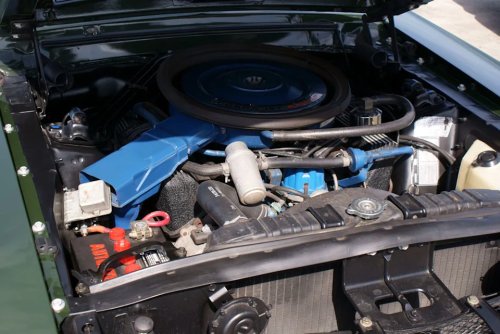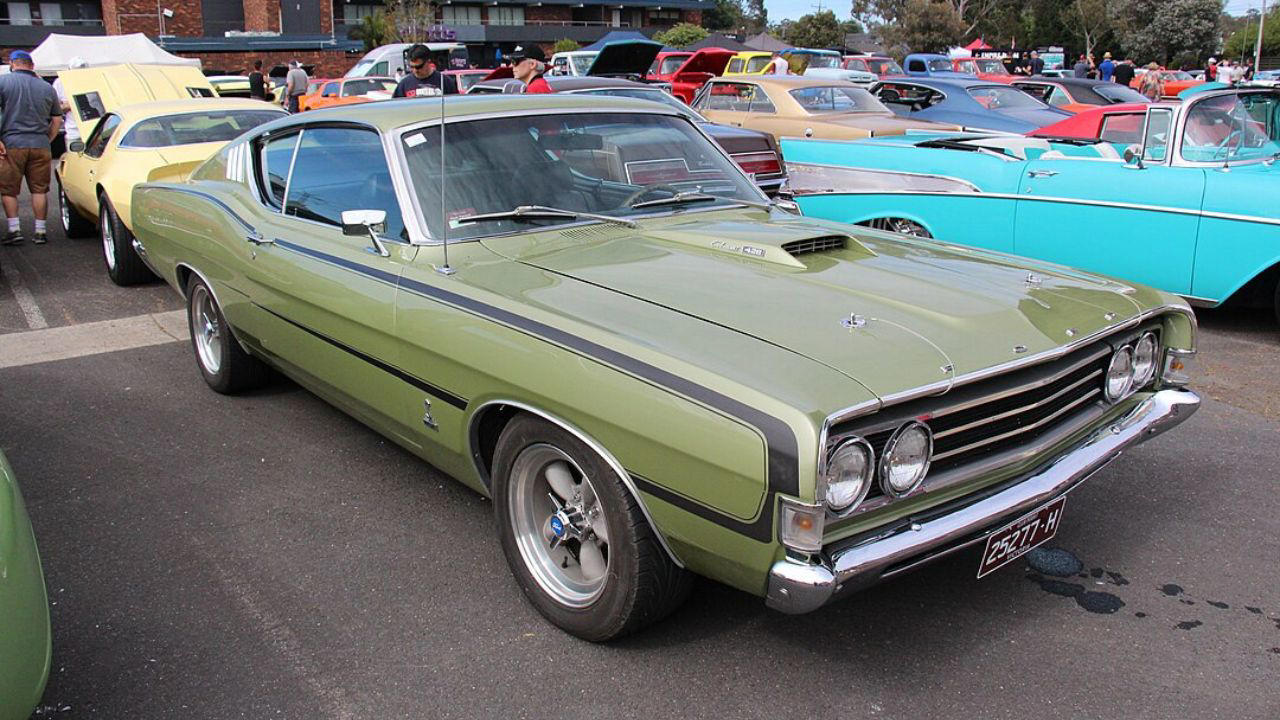



















Ford built the Torino Cobra to compete and it didn’t hold backThe Ford Torino Cobra arrived at the height of the muscle car wars with a single objective: beat its rivals on the strip and on the track using sheer displacement and purposeful design. Built around the big block 429 and stripped of frills, it was engineered as a blunt instrument for straight-line speed and NASCAR credibility. More than five decades later, it stands as one of Ford’s most focused attempts to turn a mid-size family car into a factory weapon. The road to the Torino Cobra Ford did not jump into this fight cold. The company had already experimented with turning its intermediates into budget supercars, starting with the 1969 Cobra that packed big power into a relatively plain wrapper. Period comparisons show how that earlier 1969 Cobra stacked up against rivals from Chevrolet and Plymouth on price and performance, and that template would shape the Torino that followed. By 1970 the muscle car market had become a horsepower arms race. Ford already had the Mustang to pull in younger buyers, yet the company wanted something more menacing and less fashion-driven, a car that could anchor its NASCAR and drag racing image. Enthusiast coverage describes how the 1970 Ford Torino Cobra was positioned as Ford’s answer to the peak of the muscle car era, with big engines, aggressive styling and serious straight-line intent. That intent was not just marketing language. The Torino line had already produced the Ford Torino Talladega, a car developed specifically for NASCAR competition. The Talladega’s story, retold in modern clips, frames it as Ford’s Banned Beast, the Ford Torino Talladega that was so fast NASCAR had to intervene. That experience taught Ford how far it could push an intermediate chassis in the name of competition, and it set the tone for the street-focused Torino Cobra that followed. Styling with a mean streak The 1970 Torino body already had a long, low look, and the Cobra version amplified that attitude. Contemporary descriptions of the car emphasize a fastback roofline, a blunt nose and a tail that seemed to taper around the rear wheels. The design was not delicate; it was shaped to look like it belonged on a superspeedway and in a drag strip staging lane. Unlike some rivals that piled on chrome and brightwork, the Torino Cobra leaned into a no-nonsense image. Enthusiast retrospectives describe how the car skipped luxury trim and instead focused on functional cues like hood scoops and bold graphics. One account notes that the Torino Cobra was not fancy, just built to dominate, and that simplicity is part of why it still reads as serious hardware among collectors. That visual aggression has aged well. At modern shows, coverage from events such as Ford-themed gatherings highlights how a clean Ford Torino Cobra still pulls a crowd. The car is often described as a no-nonsense, high-performance machine built for speed, power and dominance on both street and strip, and that reputation starts with the way it looks standing still. The 429 that made the name Under the hood, the Torino Cobra’s identity revolved around one number. The big block 429 was the centerpiece, and in performance form it turned the car from a mid-size coupe into a serious piece of muscle. Technical coverage of Ford’s big blocks explains how the company developed the 429 Cobra Jet and Super Cobra Jet as part of its 429 / 460 family, with 429 Cobra Jet variants tuned for street and strip torque. In the Torino Cobra, this displacement came in several flavors. A detailed profile notes that with the available shaker scoop, the engine was called the 429 Cobra Jet Ram-Air, and that with this setup the rating stayed at 370 bhp. The description, introduced with the phrase with the shaker scoop, underlines how the Cobra Jet Ram-Air system combined visual drama with real airflow. Period and modern writeups agree that the 429 was the Torino Cobra’s defining trait. One enthusiast list puts it bluntly, stating that The Torino Cobra Was All Power With The 429 CJ and that the Cobra Jet and engines were not something to be toyed with. Another technical overview of Ford’s big block program repeats the emphasis on Cobra Jet and Super Cobra Jet hardware, even using the phrase Cobra Jet and Super Cobra Jet twice to distinguish the two levels of tune. The Super Cobra Jet, often abbreviated SCJ, sharpened the package further. A social media spotlight on the 1970 Ford Torino Cobra 429 Super Cobra Jet (SCJ) describes how this configuration earned a reputation for brute force and racing pedigree. That same piece highlights the 429 figure again, reinforcing how central that displacement was to the car’s image. The post refers to the Super Cobra Jet and SCJ by name, and frames the car as a standout in Ford performance history. Drag strip intent and street reality The Torino Cobra was not a paper tiger. Modern tests and retrospective drives point out that a well-tuned 1970 Ford Torino Cobra could deliver quarter-mile times in the 13-second range, performance that put it squarely in the mix with the quickest factory muscle of its day. One video profile of the car describes how the 1970 Ford Torino Cobra delivered 13-second quarter miles for pocket change, while also noting that Ford killed its racing dreams before they could fully develop. Factory pricing helped explain why the car built such a reputation on the street. A detailed breakdown of 1970 FORD TORINO COBRA SPECIFICATIONS lists a base PRICE of $3,270 and notes that the options on the car profiled included the 429-cu engine. The same piece specifies that the engine type was Ford 38, and it repeats the capitalized terms FORD, TORINO, COBRA, SPECIFICATIONS and PRICE as part of the data layout. That relatively accessible $3,270 starting point, combined with the ability to order serious big block power, made the Torino Cobra a value play compared with some rivals. For buyers willing to spend a little more, the factory offered the Super Cobra Jet Drag Pack. A separate profile explains that for that $155, buyers received an engine with four-bolt main caps on the middle three bearings, forged aluminum pistons and other heavy-duty internals designed for sustained high rpm use. The coverage, dated in Mar, frames this $155 upgrade as the option that truly gave the Torino its fangs and turned it into a weapon for serious drag racers. On the street, the car’s character was equally focused. A feature on the Sensation that Was Torino describes how Ford was no stranger to building intermediates with a very fatal bite, and it uses the phrase The, Sensation, That, Was, Torino to emphasize the badge’s impact. That same piece underlines that the Torino Cobra was not a plush cruiser but a street fighter that traded some refinement for raw performance. NASCAR dreams and the King Cobra detour While the Torino Cobra built its reputation in showrooms and on drag strips, Ford had even more radical plans for the NASCAR side of the program. The company developed the Torino King Cobra as a specialized aerodynamic version aimed squarely at rivals like the Dodge Daytona and Plymouth Superbird. A short video recap calls the 1970 Torino King Cobra the NASCAR that never was and notes that it was intended to be Ford’s answer to the Dodge Daytona and Plymouth Superbird on the NASCAR circuit. The clip also mentions that Ford had been pushing the limits with its aero cars, including the Ford Torino Tallaladega, before the sanctioning body stepped in. More detailed coverage of the project explains that Prototypes Ever Made of the Ford Torino King Cobra numbered only three. The Ford Torino King Cobra was developed in secrecy with a single goal, to reach 200 M, or 200 MPH, on the superspeedways and put Ford back on the top step of the podium. That same account stresses that The Ford Torino King Cobra was a Prototype effort, a pure racing tool that never transitioned into a full production run. Another clip, shared on social platforms, promotes the story of the 1969 Ford Torino Tallaladega as the car that NASCAR banned for being too fast then begged to return. The video, credited in Oct, ties directly into the broader narrative of how NASCAR and Ford sparred over aerodynamic advantages. A separate TikTok from Oct, focused on the Ford Torino Tallaladega, repeats the idea that NASCAR had to react to Ford’s speed on the track. Those racing politics had consequences. As rules shifted and the aero wars cooled, the full-scale production of the Torino King Cobra never happened. The road-going Torino Cobra, already engineered and ready for buyers, became the car that carried the performance torch instead. It might not have worn the wild nose of the King Cobra, but it delivered much of the same big block punch to ordinary customers. From underrated to cult favorite For a long time, the Torino Cobra lived in the shadow of the Mustang. A recent video essay titled Unleashing Ford’s Ultimate Street Fighter points out that in the golden age of muscle cars, Ford’s name often evokes thoughts of the Mustang, and rightfully so, however in the shadow of the Mustang sat the Torino with serious performance credentials. That Dec piece frames the Torino Cobra as a kind of secret weapon in Ford’s catalog. Modern enthusiasts often describe the 1970 Ford Torino Cobra as an unsung legend. A detailed social post from Feb calls the 1970 Ford Torino Cobra an unsung muscle car legend and stresses that Ford went all in with big engines, aggressive styling and serious straight-line performance. The same post repeats the full model name Ford Torino Cobra and the company name Ford to underline the brand’s commitment. Another spotlight from Feb focuses on the 1970 Ford Torino Cobra 429 SCJ and again calls out the SCJ by name. The feature notes that the 429 Super Cobra Jet package gave the car raw power and racing pedigree, and it uses the terms Ford Torino Cobra, Super Cobra Jet and SCJ together to cement the association. This kind of modern coverage has helped elevate the Torino Cobra from a footnote to a sought-after piece of Ford history. Social media clips also play a role in that rediscovery. A TikTok video shared by hamza_bouberbouche in Oct, accessible through a short video, revisits Ford’s Banned Beast and the Ford Torino Tallaladega, reminding younger viewers how wild Ford’s late sixties and early seventies NASCAR projects really were. That content naturally leads viewers toward related Torino Cobra clips and helps build a broader appreciation for the family. Why the Torino Cobra still matters The Torino Cobra’s legacy rests on more than nostalgia. It represents a moment when a major manufacturer was willing to build a car that looked and behaved like a competition machine, then sell it to ordinary drivers. The combination of a relatively attainable base price, as reflected in the $3,270 figure, and the availability of serious big block options like the 429 Cobra Jet Ram-Air and the 429 Super Cobra Jet, created a package that punched far above its weight. More from Fast Lane Only Unboxing the WWII Jeep in a Crate 15 rare Chevys collectors are quietly buying 10 underrated V8s still worth hunting down Police notice this before you even roll window down The post Ford built the Torino Cobra to compete and it didn’t hold back appeared first on FAST LANE ONLY.