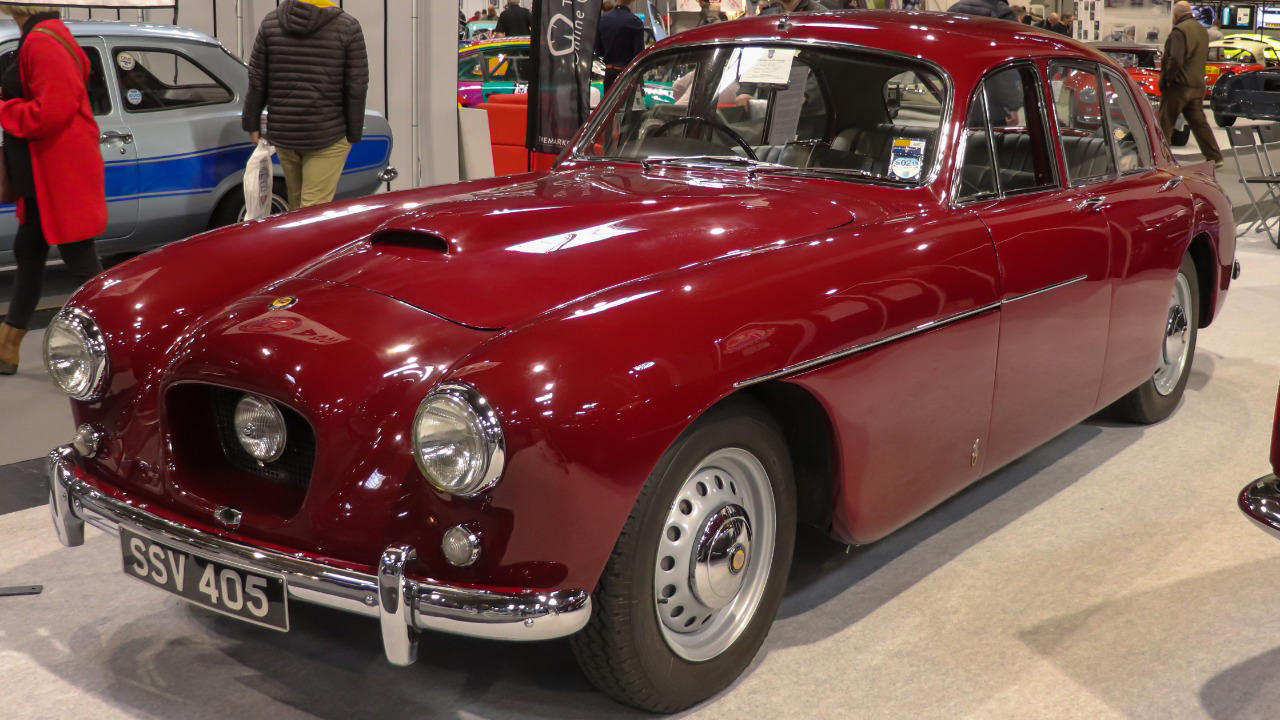



















The 1955 Bristol 405 rarely comes up in casual car conversations, yet it stands as one of the most distinctive interpretations of the post‑war British sports saloon. Built in tiny numbers and engineered with aircraft‑style obsessiveness, it refused to follow the styling and mechanical trends that defined its era. Rather than chasing mass appeal, it doubled down on eccentric packaging, hand‑built quality and quietly serious performance. Look closely and the 405 reveals a different vision of what a luxury four‑door could be in the mid‑1950s. From its bomber‑inspired nose to its intricate cabin and highly tuned six‑cylinder, almost every element runs against the mainstream grain, which is exactly why it still fascinates enthusiasts who discover it today. A saloon born from an aircraft company The Bristol 405 arrived as an evolution of the earlier 404, but it was far more than a simple stretch of the two‑door coupe. Bristol Aeroplane Company had turned to car building after the war, and the 405 carried that aviation heritage into its structure and detailing. The body used aluminium panels over a steel and ash frame, mounted on a substantial horse‑shoe shaped chassis, a layout that echoed aircraft thinking more than mass‑production saloon practice of the time, as period descriptions of the 404 and 405 explain. Styling marked a clear break from the rounded, upright look that still defined many British four‑doors. The front of the car featured the new bomber nose, inspired by the Beaufighter airplane built by Bristol during WWII, with a low, pointed grille and faired‑in lamps that made the saloon look more like a grand touring coupe from some angles. On the radiator’s grille, the manufacturer installed the third headlight to improve the night driving experience, a detail that set the car apart visually and hinted at its focus on serious long‑distance use, as contemporary profiles of the Bristol 405 highlight. While rivals leaned on chrome and visual drama, the 405 looked restrained and almost severe. Its long bonnet, slim pillars and high tail gave it a purposeful stance, more engineer‑led than stylist‑driven. That restraint carried through to the way the car was built. Only 308 Bristol 405s left the Filton factory, and all were largely hand‑assembled and fell into the reassuringly expensive category, according to owners who share their experiences of how Only 308 Bristol cars of this type reached customers. Engineering that refused to compromise Under the bonnet, the 405 continued Bristol’s habit of doing things its own way. The car used the firm’s iconic 6‑cylinder engine of 1,971 cc, a layout derived from pre‑war BMW designs but reworked with aircraft‑style attention to detail. The standard version offered only 105 hp, while a special, more highly tuned specification raised output to 125 hp, both figures quoted directly in technical summaries of the Bristol 405. In a mid‑1950s four‑door saloon, those numbers placed the car firmly in sports territory, especially given its relatively light aluminium body. Power reached the rear wheels through a 4‑speed manual gearbox. For the 404 and 405, Bristol introduced an improved gearbox with a much shorter gear lever, which made for quicker shifts and a more sporting feel than the long, wand‑like selectors that many contemporaries used, as period notes on the 404 and 405 explain. The mechanical package was closer to a gentleman’s racing car than a family saloon, yet it was wrapped in a discreet four‑door body that drew little attention. Chassis tuning followed the same philosophy. The 405 used a substantial ladder frame and carefully developed suspension aimed at high‑speed stability rather than soft, floaty comfort. Period owners describe the car as light in weight, with a body that they believe is all aluminum, which contributed to a surprisingly agile feel for a four‑door of its size, as enthusiasts commenting on an unusual saloon example point out. That focus on engineering over fashion extended to the braking system. Period documentation shows that Bristol introduced front disc brakes as an option in this era, a relatively advanced feature for a mid‑1950s saloon, as detailed in technical notes on a right‑hand‑drive 1955 Bristol 405. The combination of strong performance, serious stopping power and high‑speed stability gave the 405 real long‑distance capability at a time when many family cars still struggled at sustained motorway pace. A cabin that treated the driver like a pilot Inside, the 405 continued to ignore conventional saloon norms. The interior featured an instrument panel with seven dials and a two‑spoke steering wheel, an arrangement that looked closer to a cockpit than a typical dashboard, as period specifications for the BRISTOL 405 Specs record. The array of gauges gave the driver detailed information about the car’s mechanical state, from oil pressure to electrical charge, reflecting Bristol’s aircraft heritage and its assumption that owners cared about such data. The steering wheel itself became one of the car’s visual signatures. The funky batwing style two‑spoke steering wheel is another Bristol feature that stands out in photographs of surviving cars, a design that looked futuristic at the time and still feels unusual compared with the three‑spoke wheels that dominated later decades. Commentators examining a well‑preserved 405 saloon note that this wheel sits in front of a full set of instruments and what should be 105 HP form of the engine, underlining the car’s blend of style and substance, as described in a detailed look at a Mar Bristol example. Practicality, however, was not sacrificed. On a right hand drive car, the locker on the driver’s side held the spare wheel and jack, whilst that on the passenger’s side housed tools and other equipment, an arrangement that kept the boot floor clear and weight well distributed, as period sales material for a right‑hand‑drive example explains. Such details show how Bristol thought about the car as a long‑distance machine where roadside repairs or wheel changes might be part of real‑world use. Trim quality matched the mechanical seriousness. Surviving cars show deeply padded leather seats, carefully matched wood veneers and neatly integrated switchgear. Owners and specialists describe these cars as largely hand‑assembled, with panel gaps and interior finishes that reflected the time invested at the Filton works rather than the speed of a moving production line. That craftsmanship helped justify the high price and gave the 405 an atmosphere far removed from mass‑market saloons. Variants, rarity and the drophead mystique Although the 405 is best known as a four‑door saloon, Bristol also produced a highly sought‑after open version. It was the Bristol 405 drop‑head that carried the same mechanical package in a more glamorous body, and this derivative followed after the successful Bristol 404 coupe had established the company’s sporting credentials, as model histories of the BRISTOL 405 explain. The drophead shared the saloon’s long bonnet and distinctive nose but added a folding roof that turned it into an elegant touring convertible. Numbers for the open version were tiny. One of the three left‑hand models of the 405 Drophead is described as very rare, with surviving examples on the road even rarer, and one such car has been offered with the promise that it will sell at no reserve, as highlighted in coverage of a very rare Bristol sale. For collectors, that scarcity adds another layer of appeal to a car that was already built in low numbers. Even among the saloons, survival rates are modest. A detailed listing of Bristol 405 classic cars for sale notes the History of the Bristol 405 and describes how The Bristol 405 marked a significant chapter in British coachbuilding, yet only a handful of cars tend to appear on the open market at any given time, as reflected in specialist marketplaces that track History of the Bristol 405 models. That rarity, combined with the car’s engineering quirks, has helped it develop a small but passionate following rather than broad recognition. Specialists who trade in these cars often emphasize their aircraft connection and build quality. One sales listing describes a 405 that features an all aluminium body with aircraft technology and that it is powered by Bristol’s iconic 6 cylinder 1971cc engine, an arrangement that reinforces the idea that this was effectively an aircraft engineer’s take on a luxury saloon, as a short film about a Jun Bristol example explains. Another specialist site, which Discovered the car via an Untitled reference, highlights how well preserved examples still feel tight and mechanically precise decades later, as seen in a listing for a Discovered 405 that has been carefully maintained. Why the 405 stayed obscure while others became icons Given its specification and build quality, the Bristol 405 might seem like a candidate for mainstream classic status alongside Jaguars and Aston Martins of the period. Instead, it has remained a connoisseur’s choice. Several factors explain that relative obscurity. First, Bristol never chased volume. Only 308 cars left the Filton factory, so the 405 never had a chance to become a common sight on British roads. That limited production run, confirmed by enthusiasts who stress that Only 308 Bristol 405s were built at Filton and that All were largely hand‑assembled, meant that even period awareness of the model remained low, as shared in a personal account of a family’s Apr 7, 2022 car. Second, Bristol’s sales approach was unusually discreet. The company operated its own showroom and dealt directly with clients, often by appointment, rather than relying on a broad dealer network. That strategy suited the brand’s image but limited exposure. Period advertisements were restrained, and the cars often sold to professionals and enthusiasts who valued privacy as much as performance. Third, the 405’s styling and layout were out of step with fashion even in the 1950s. The bomber nose, the third headlight and the almost formal roofline did not follow the emerging trend toward lower, wider saloons with panoramic glass. Where rivals leaned into glamour, Bristol leaned into function. To some eyes, that gives the 405 a timeless appeal. To others, it made the car seem conservative or even anonymous, especially without obvious badging. Yet among those who know it, the 405 inspires strong loyalty. Enthusiasts on auction platforms describe these as very rare and wonderful cars that have build quality far beyond what most contemporaries offered, with one commentator recalling that a visitor familiar with many classics called a well‑preserved 405 a splendid machine after a short drive, as seen in discussion around an Aug Bristol sale. Others point out that Later Bristols just did not have this degree of lightness and simplicity, which adds to the 405’s appeal for drivers who enjoy a more analogue experience, as another comment on the same Aug they discussion notes. Today, surviving cars continue to surface through specialists and auctions. Some, like a well‑documented right‑hand‑drive example that spent time in a London showroom, show how carefully maintained 405s can still serve as usable classics with strong performance and comfortable cruising ability, as detailed in sales material for a 1955 Bristol 405. Others emerge from long‑term family ownership, where they have been cherished as part of personal history rather than traded as investments. More from Fast Lane Only Unboxing the WWII Jeep in a Crate 15 rare Chevys collectors are quietly buying 10 underrated V8s still worth hunting down Police notice this before you even roll window down The post You’ve never heard of the 1955 Bristol 405 but it didn’t follow the crowd appeared first on FAST LANE ONLY.