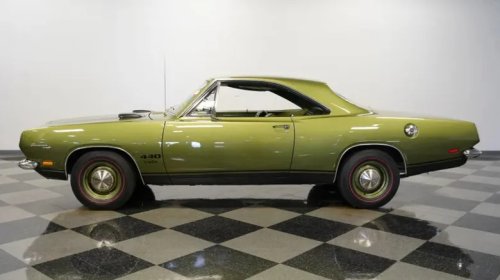
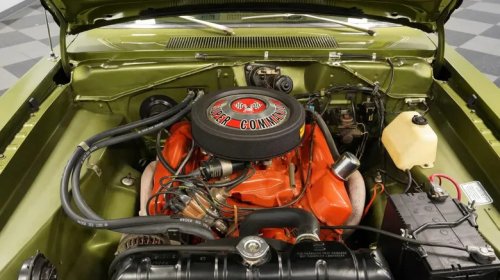
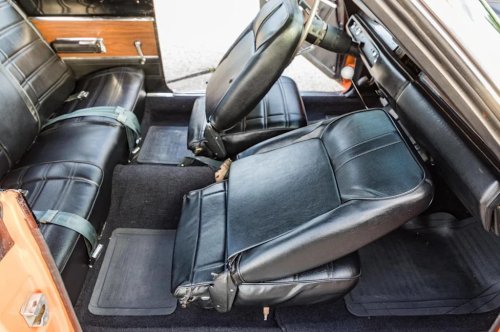
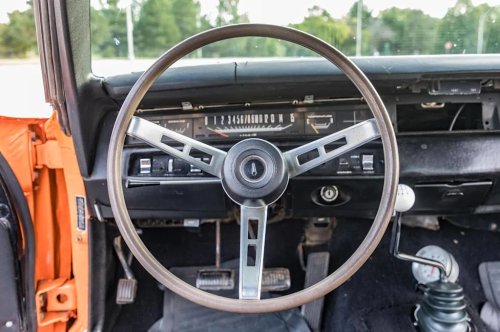
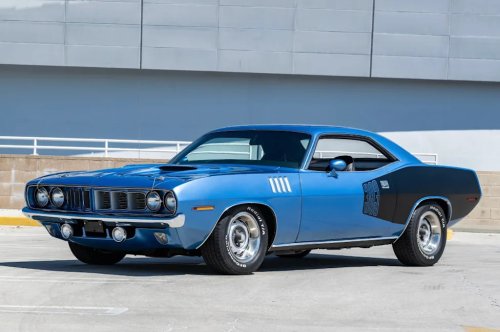
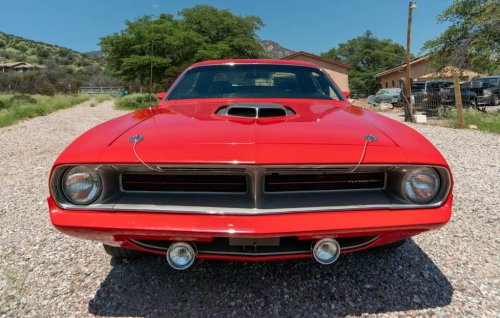
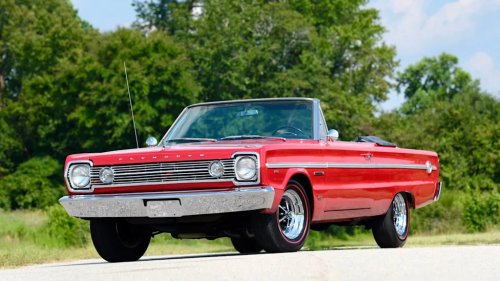
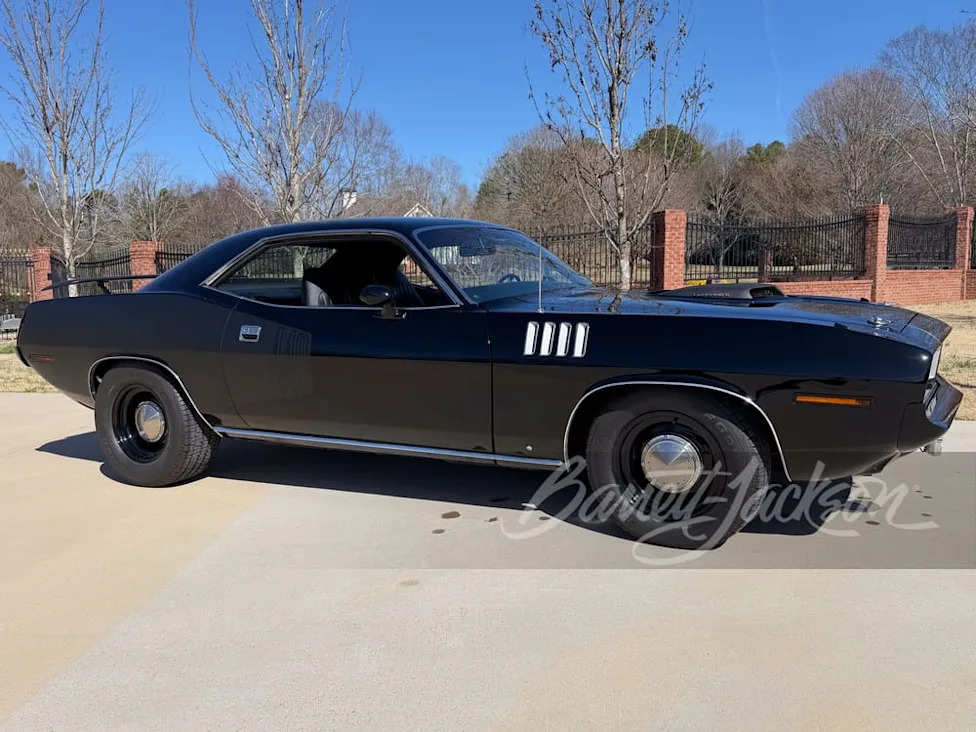
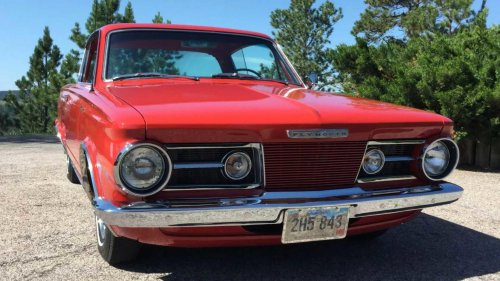
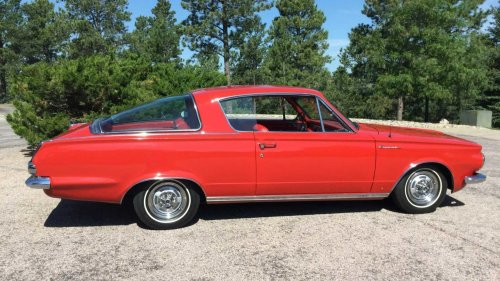
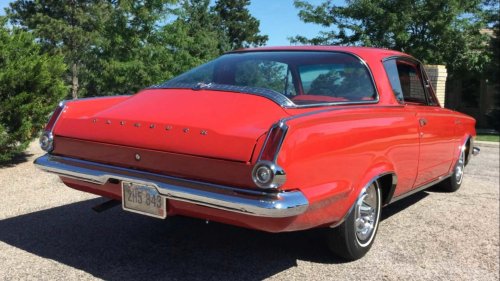
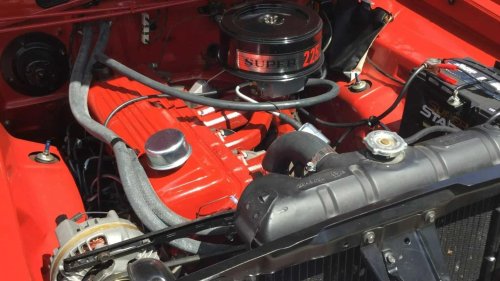
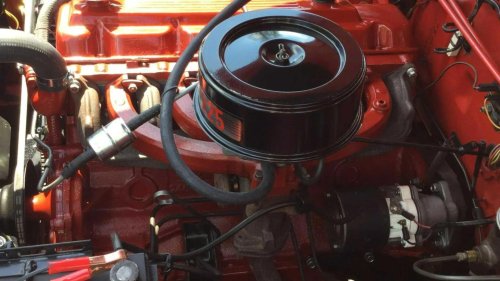
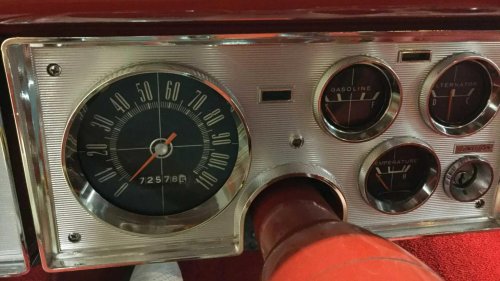
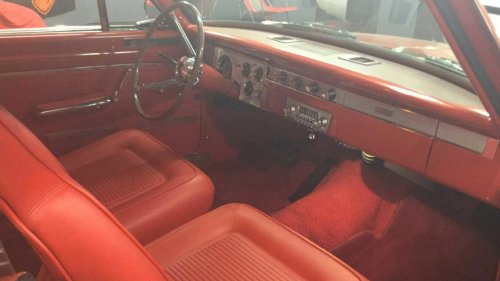
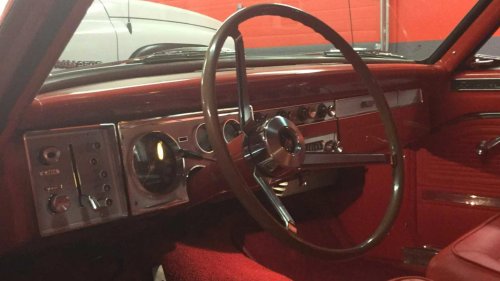
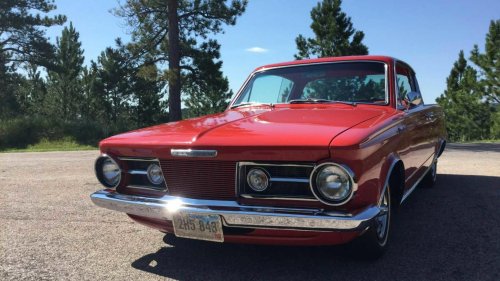
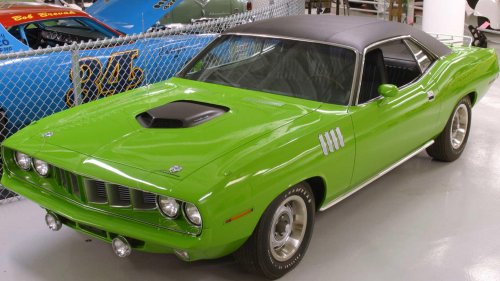
Quick LinksQuick Facts About The 1964 Plymouth BarracudaDevelopmentCurrent PricingFollowing the close of World War II, the American automotive market began changing rapidly. In 1949, Oldsmobile unleashed the world's first high-compression engine, called the Rocket V8. In the years following, nearly every US-based brand was busy trying to out-do one another in terms of power and performance. Chevrolet's famous small-block engine came about in 1955, and the controversial first-ever muscle car, the Pontiac GTO, was unleashed into the world in 1964.During these changing times, many Americans were tired of buying large, heavy cars, and were looking for something more compact. The rear-engined Chevrolet Corvair was one of the first, and it sparked a semi-revolution. Seeing promise, Ford began working in secret on what would be the very first Mustang. However, Ford's project wasn't a well-kept secret, and the folks at Chrysler got wind of a sporty, small, two-door car in the works. The Detroit Giant's answer was the Plymouth Barracuda, the Ford Mustang's first direct competitor. Plymouth's Pony Car Bring A Trailer Quick Facts About The 1964 Plymouth Barracuda Based on the Plymouth Valiant Features a unique, curved rear window Offered both six and eight-cylinder engine options Built upon Chrysler's A-Body platform Was originally to be named the Panda The Plymouth Barracuda's story begins in a unique way, as it was born out of anticipation of a threat, rather than as a reaction to one. In the early '60s, Ford's Mustang project, while meant to be kept under wraps, was a badly-kept secret. While details on the upcoming model were sparse, other automakers knew of the incoming small sports car, and Chrysler, in particular, was keen to meet Ford at the proverbial gates with its own small, two-door, sporty coupe.However, Chrysler wasn't doing very well in terms of finances at the time. Because the Detroit Giant was heavily involved with the design and development of the Chrysler Turbine Car at the time, there wasn't a lot of scratch to go around. So, despite Chrysler's top brass green-lighting the project, the as-yet-unnamed Barracuda project had to make do with components sourced from existing models. This meant it would be heavily based on the Plymouth Valiant, with only some minor changes to its styling. Development Bring A Trailer Initially, Chrysler's leaders wanted to name their Mustang-fighter the "Panda." Luckily, a man called John Samsen, one of Chrysler's senior designers assigned to the project, suggested the name Barracuda in the nick of time, and the Panda namesake was dropped. After a brief period of R & D, the Plymouth Barracuda was put on sale on April 1st, 1964, just a short time prior to the first Ford Mustangs hitting showroom floors.Bring A Trailer The few weeks separating the Barracuda's and the Mustang's introductions showed the Plymouth performing well in sales. Excitement for the model was palpable, and folks were keen to place their orders. The Barracuda's fastback design was something not often seen at the time, and the huge, wraparound rear window was a signature and attractive feature that conveyed the sort of sportiness that the Barracuda was all about. The Ins And Outs Of The 1964 Plymouth Barracuda Bring A Trailer In keeping with its sporting nature, Plymouth offered the Barracuda with a choice between three engines. At base level sat a 170 CID Chrysler slant-six engine, with a 225 CID slant-six also on offer. A single V8 was offered, as well, measuring at 273 cubic inches. The Barracuda's V8 engine option belongs to Chrysler's LA V8 engine family, which had been introduced in 1964 and lasted for 39 years, until 2003. Reportedly, the 273 CID V8 was the most popular engine option.Bring A Trailer As for transmission options, the '64 Barracuda came with a choice between three. The standard option was a three-speed manual with a steering column-mounted shifter. Optionally, buyers could spring for a four-speed manual with a floor-mounted, Hurst-branded shifter, or a three-speed, push-button automatic called the TorqueFlite. Both the four-speed manual and the TorqueFlite automatic were only available for the 225 CID slant-six and the 273 CID V8.Bring A Trailer The '64 Barracuda's handling was regarded as "good", according to anecdotal reports. Its suspension system was made up of Chrysler's Torsion-Aire configuration up front, and a live axle supported by leaf springs in the rear. Stopping was taken care of by a set of drum brakes, although later cars were available with optional discs up front. As the Barracuda was meant to be a car that anyone can drive, its ride was meant to be soft enough to handle around-town bumps, but firm enough to take a bit of abuse through the corners.We'll lay out the 1964 Plymouth Barracuda's basic specs in the table below:*Specs courtesy of Hagerty.com & J.D. PowerBring A TrailerBecause the Barracuda was meant to be an affordable, sporty coupe, it didn't come with much in the way of luxurious amenities and features. As standard, buyers were granted the use of manual windows, manual mirrors, and a single-speaker AM radio. Other standard features included a pair of front seats without an armrest, and a rear bench seat. Upgrades such as power steering, vacuum-assisted brakes, and a safety-padded instrument panel were offered as options. Current Pricing Bring A TrailerWhile the 1964 Plymouth Barracuda did beat the Ford Mustang to the punch, it didn't fare well when it came to sales. However, because of its lack of popularity compared to the Mustang, it's quite a lot cheaper these days. So, if you do end up finding yourself with a yearning for some old-school Plymouth sportiness and fancy a '64 Barracuda for yourself, you can expect to pay much less than you would for a Ford Mustang from the same year. We'll outline the '64 Barracuda's current average pricing in the table down below:*Pricing courtesy of Hagerty.com The Plymouth Barracuda Wasn't Up To The Challenge Bring A TrailerDespite its very quick initial popularity, the surge was short-lived. The Ford Mustang hit showroom floors on April 14th, 1964, exactly two weeks after the Barracuda. Once it was out and ready for sale, the Mustang went to work outselling Plymouth's Barracuda in huge numbers. By 1965, Ford was selling nine Mustangs for every one Barracuda that Plymouth managed to shift. After its first full model year, the Barracuda managed to sell approximately 64,600 times. For contrast, Ford sold 559,451 Mustangs after its first full model year.Sales of the first and second-gen Barracuda never even got close to touching the Mustang's numbers, prompting Chrysler to make a change. By 1970, the Plymouth Barracuda had grown in stature, and now occupied Chrysler's E-Body platform, the same architecture used by the Dodge Challenger. However, the Mustang grew, too, and it still sat in its direct line of fire. With the Barracuda's changes came a renewed interest in the model, and 1970 marked the 'Cuda's most prominent year-to-date in terms of power.PlymouthSadly, the entire classic sports car and muscle car era came to an abrupt end at the beginning of the 1970s. The US government levied a slew of new emissions regulations and mandated the use of unleaded fuel, forcing automakers to significantly de-tune engines by lowering compression ratios. Because of this, the Barracuda couldn't cut it in this new market anymore, and it was axed following the 1974 model year. There are some whispers of the famous name getting revived, but until they're confirmed, the Barracuda sits happily in the halls of automotive history.



















 +18 others