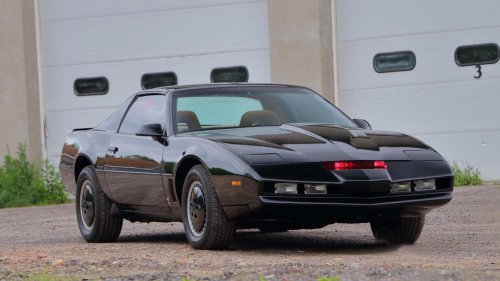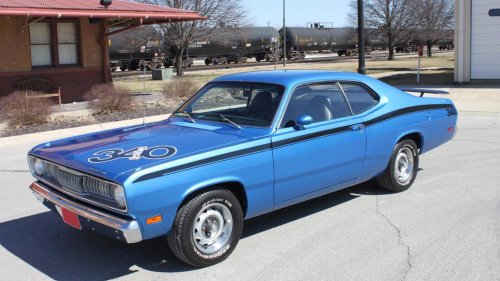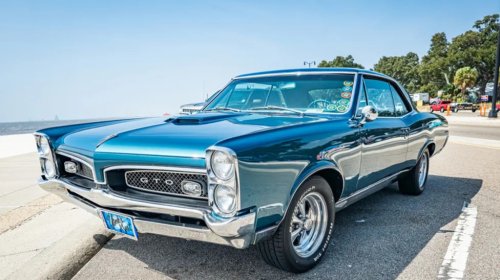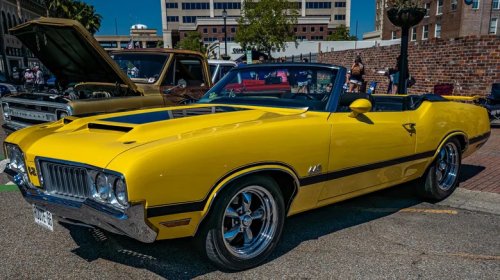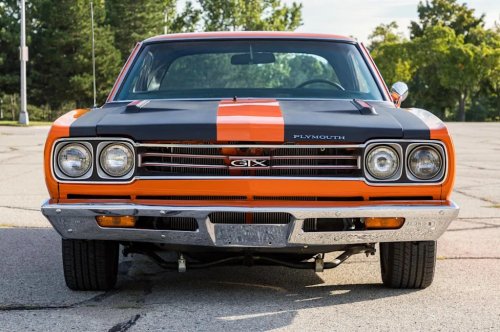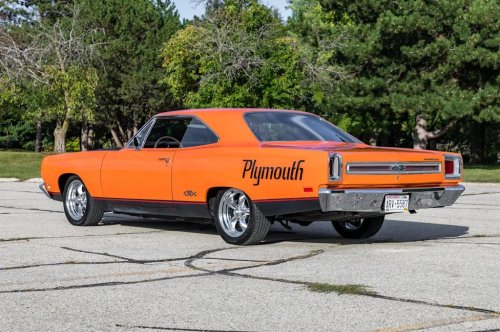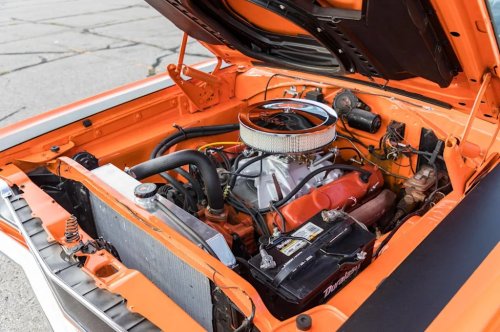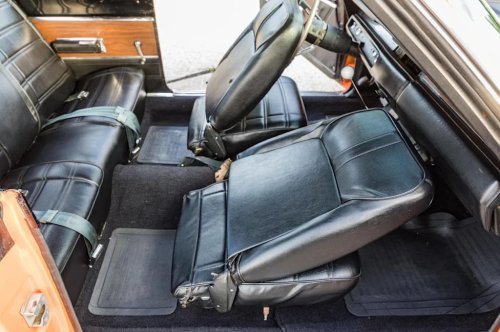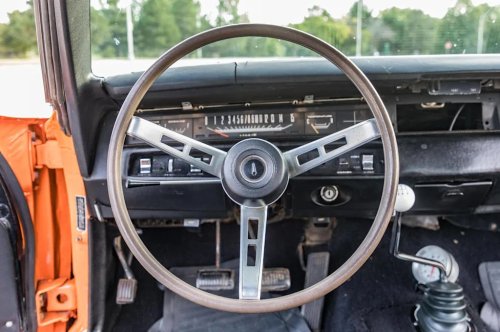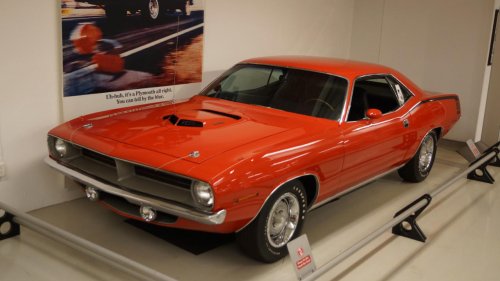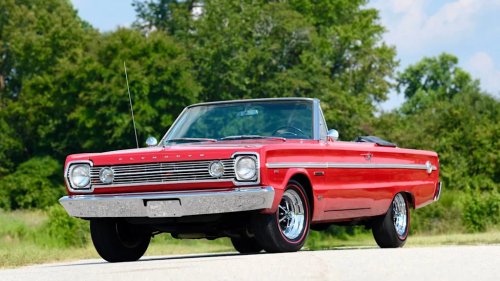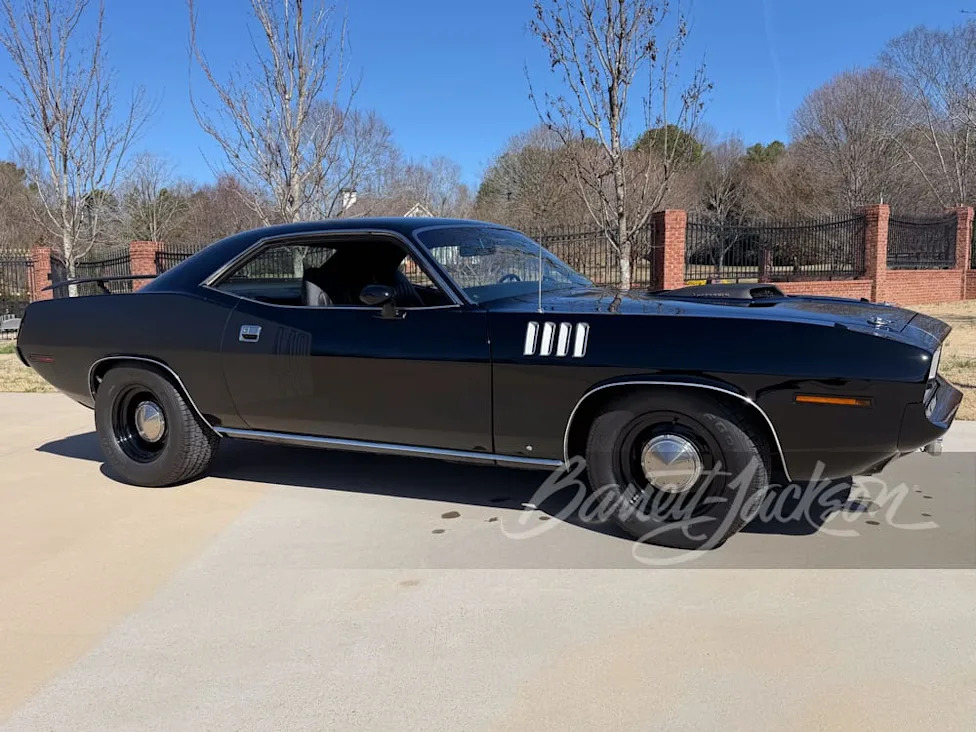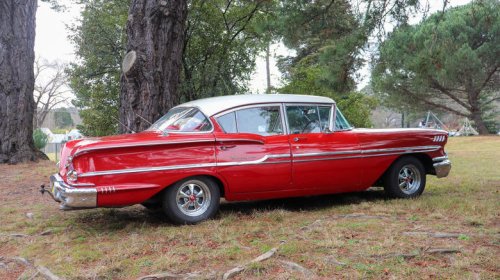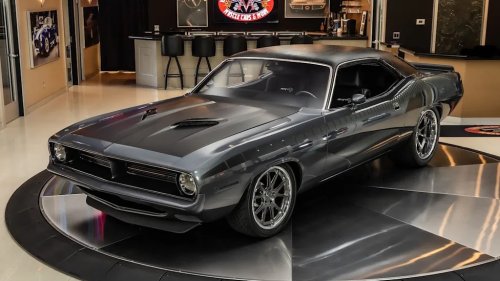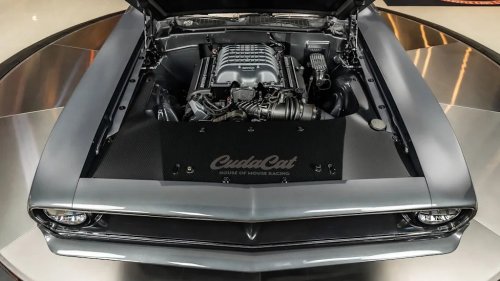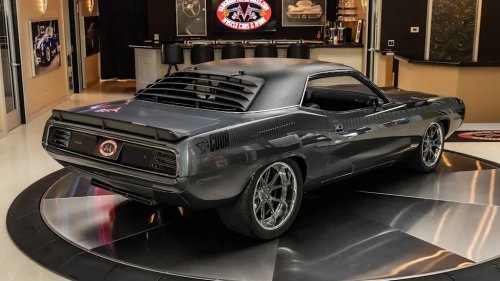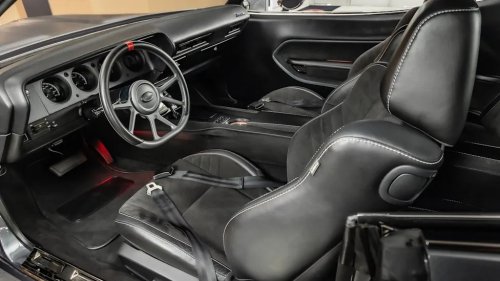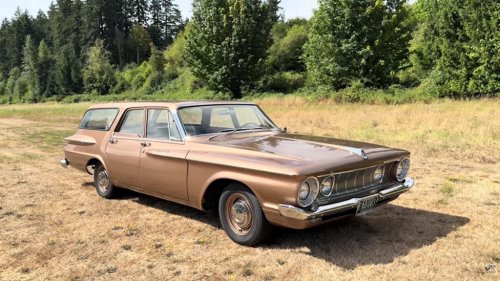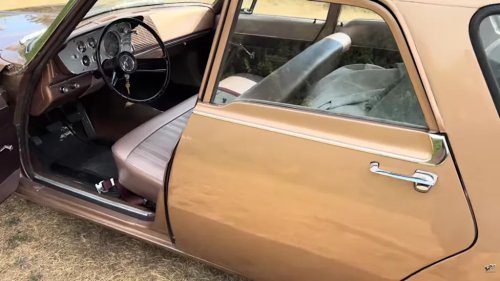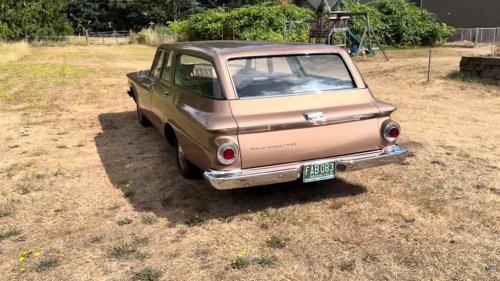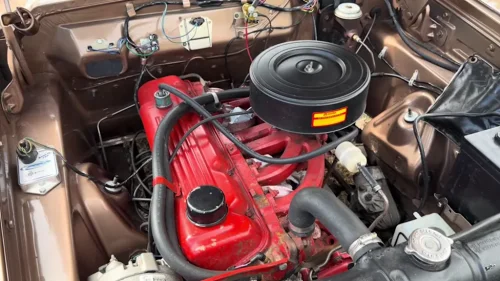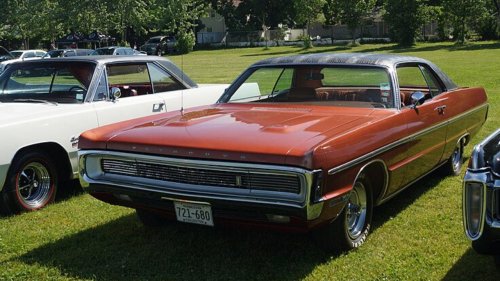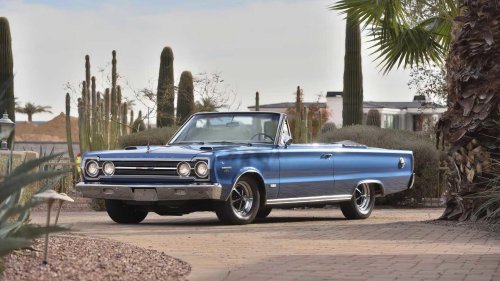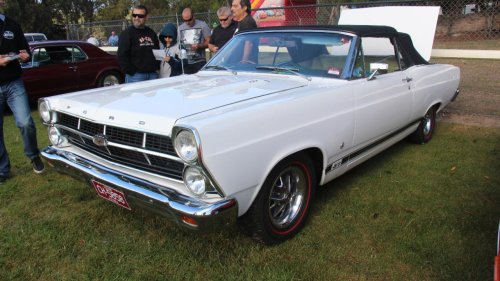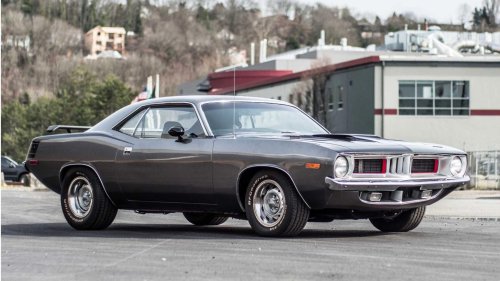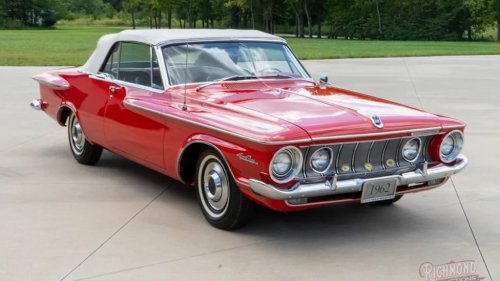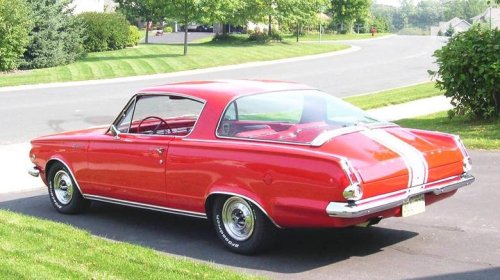
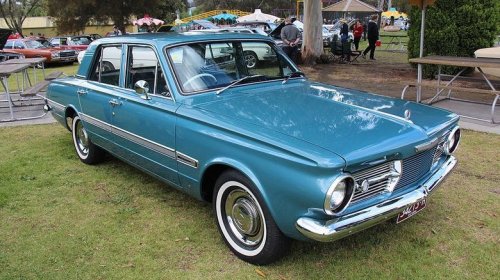
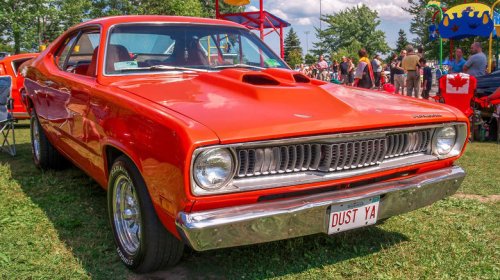
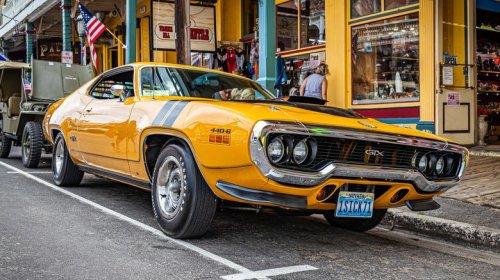



















1964 Plymouth BarracudaWith most of the recognition for the Plymouth Barracuda going to versions that came out later in the '60s, people might forget that the original 1964 Barracuda was a sight to behold. Built on the chassis of the Plymouth Valiant, the top-of-the-line '64 Barracuda offered up a four-speed manual transmission to power its 273-cubic-inch V8 engine.What made the '64 Barracuda especially unique was its fastback styling and its enormous wrap-around rear window. It had a style that gave a nod to the past of older American car designs but also looked futuristic with a sort of science-fiction vibe. On the inside, the dash was simple, with a large speedometer and three other gauges for fuel, an ammeter (to measure electric current), and temperature. It came standard with bucket seats up front and a bench-like seat in the back, which you could fold down to access the trunk from inside the car.While the bigger guns would come later for the Barracuda line, this first offering was truly a unique-looking car with enough horsepower to make any driver take notice.1965 Plymouth ValiantThe 1965 Plymouth Valiant, indeed, was more of an economy car aimed at the largest swath of drivers, but with the right options, it was a reliable car that also packed a punch. You could get it as a two or four-door sedan with a hard top, a convertible, or even a station wagon. Its convertible version, in particular, was popular because it was more affordable than other convertibles on the market during that time.The Valiant had several different engine offerings, with many on the line featuring a slant-six. But it also had the option of a 235 horsepower 273 cubic inch V8. Not too shabby for an economy car! You could get it with bucket seats in front as an option, but you could also go for bench seats in front and back to seat six. While the Valiant was never going to be named a peak muscle car, it had the option for more horsepower in a package that was much more affordable.1971 Plymouth DusterOne lesser-known Plymouth model had plenty to be proud of, even if it was outshone by some of the top-tier muscle cars. The 1971 Duster had a mean look with sleek lines and a meaty 340 cubic inch V8 to get it to nearly 300 horsepower. It cost less money than other top-tier models, so it sold well, but it was known more as a mini-muscle car, which is why it's often overlooked.What's crazy is that this particular Duster model offered several different paint options to give it a unique look. It had 18 different trim variations with cool names, like the Gold Duster with gold accents in the design or the Duster Twister, which made the car look like one of the higher-tiered models but didn't offer the same horsepower.The Duster model was only in production from 1970 to 1976, but as with all muscle cars of the era, it lost a lot of its "mini muscle car" power due to new emissions standards and the auto industry-wide evolution towards unleaded gasoline after 1972. Still, it remains an affordable offering from Plymouth that had more muscle than most everyday vehicles.1971 Plymouth GTXThe 1971 Plymouth GTX — though opinions are subjective when it comes to taste — is one of the meanest-looking muscle cars out there. With that opinion out of the way, it was certainly formidable among the cars of its time. It had a few different optional engine types, but for its peak power, you had to get the 370 horsepower, 440 cubic inch V8. Along with its impressive-looking front grill, it also had flared wheel wells to protect the large wheels and tires (at least for that time).Though it had the look and power you would want in a muscle car, it wasn't without its flaws. For one thing, it had an unusually stiff suspension for its class, and it wasn't great for breaking, pulling to the sides, and making drivers fight the steering wheel on harder stops. That said, it was a 4,000-pound car, and it's not easy to get all that weight to come to a quick halt.1971 was the final year of the Plymouth GTX, and the company, for the most part, didn't hold back on the specs, even though the writing was on the wall for muscle cars as new earth-friendly emissions regulations were starting to go into effect. We don't know for sure, but maybe the GTX was pulled at just the right time; perhaps Plymouth didn't want to compromise on this tough-looking muscle car.