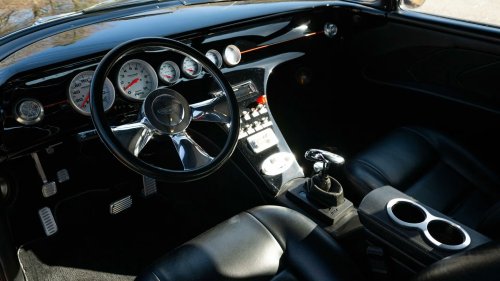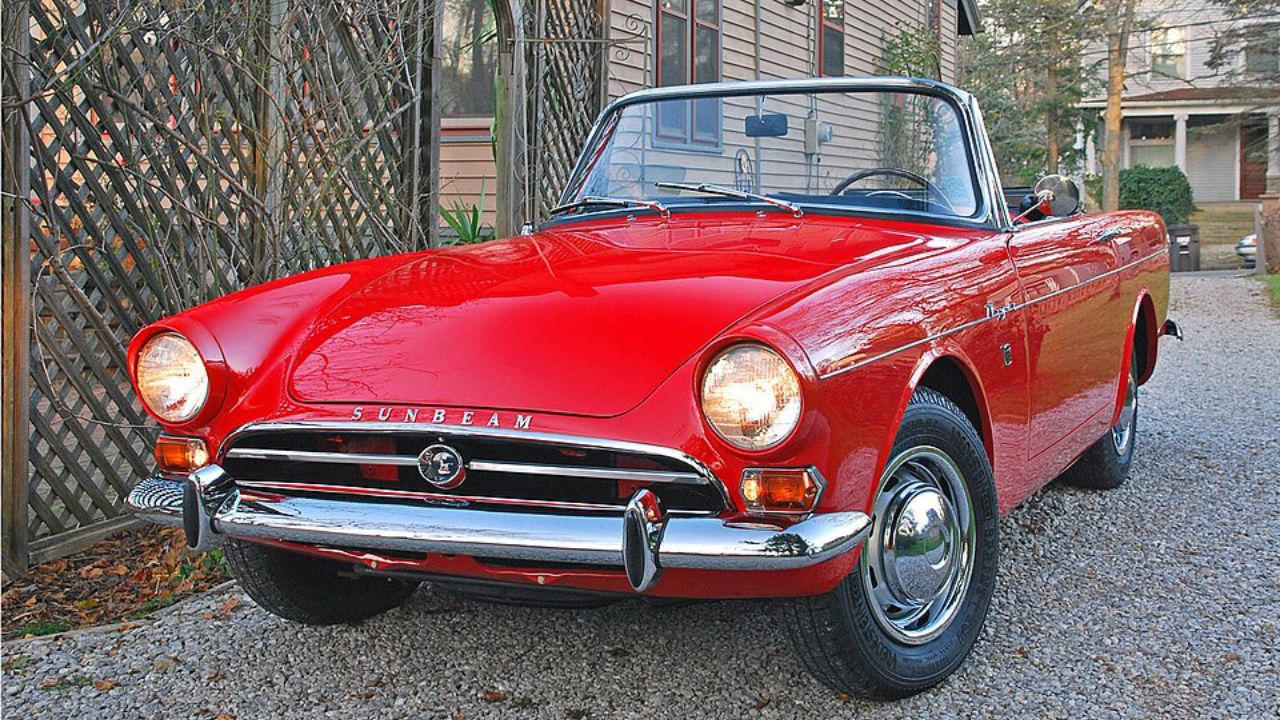




















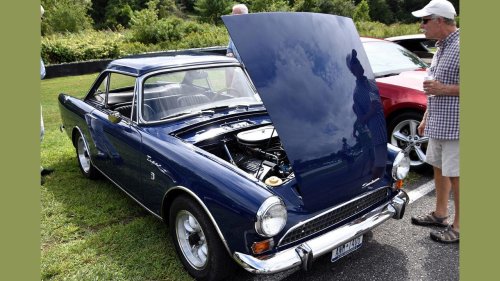
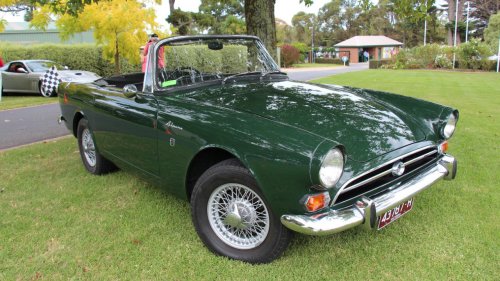
At first glance the 1966 Sunbeam Tiger looked tame until the V8 came aliveAt rest, the 1966 Sunbeam Tiger could pass for a tidy British runabout, its modest chrome and compact proportions suggesting a Sunday picnic more than a pit lane. Only when the small roadster’s V8 cleared its throat did the façade fall away and the car reveal what it really was: an Anglo American hot rod hiding in plain sight. That contrast between mild appearance and ferocious character turned the Tiger into one of the most intriguing hybrids of the 1960s sports car boom, a machine that looked tame in the driveway yet came alive with a violence that startled drivers used to MGs and Triumphs. The polite British body that hid a brawler The starting point for the Tiger was the Sunbeam Alpine, a neat open two seater from the Rootes Group that prioritized style over speed. Contemporary enthusiasts have described the earlier Sunbeam sports car as pleasant but slow, especially when compared with rivals from MGs and Triumphs, which set expectations for how a small English roadster should behave. From the curb, the Tiger barely disturbed that template. The bodywork remained recognizably Alpine, with clean fenders, a simple grille and restrained trim. One period account of the later The Alpine made clear that the visual lineage to the Ace and Cobra was more about shared open roadster proportions than overt aggression. Inside, a 1966 example such as a silver car documented with Specifications listing an Exterior Color of Silver and an Interior Color of Black looked more gentlemanly than gladiatorial. Wood veneer, simple Smiths gauges and a thin steering wheel did little to hint at the torque waiting under the hood. Rootes Group, Carroll Shelby and the Anglo American formula By the time the Rootes Group decided to transform its Alpine into something more serious, the Anglo American sports car formula was already proven. One account of the project notes that By the time the Rootes Group began building a V8 powered derivative of its Alpine, the Anglo American idea of fitting an American engine into a British chassis had been made famous elsewhere. Rootes executives in Britain, including the Rootes Group of, wanted an English sports car that could capture the American market, and they turned to a man who understood that market better than almost anyone: Carroll Shelby. Promotional material later showed Carroll Shelby urging buyers to “unleash” the Sunbeam Tiger, underscoring how closely his name became tied to the car’s image. On the engineering side, the idea was straightforward. A British roadster would be fitted with an American V8, creating a compact machine with outsized power. One description of the British roadster fitted with an American engine captures the essence of the Tiger 289 concept even as the production 1966 cars relied on a slightly different displacement. The 260 V8 that changed everything The transformation from mild Alpine to ferocious Tiger hinged on the engine. Period guides list the 1966 car with an Engine Specifications entry that states the Engine as 260 cu in (4.3 liters). Another enthusiast description of a later British and American Roadster repeats that the car used a 260-cubic-inch 4.3L Ford V8, highlighting how central that figure remains to the Tiger’s identity. Technical summaries of the model explain that The Ford V8 as fitted to the Tiger produced 164 bhp (122 kW) at 4400 rpm, which was enough to give the car a 0 to 60 m (97 km) per hour time of around eight seconds. For a compact English two seater of the mid 1960s, those numbers moved it from pleasant tourer into serious performance territory. The combination of modest curb weight and that 260 V8 meant that the Tiger delivered acceleration that caught drivers off guard. Owners who had grown up with earlier Sunbeam products or with Triumphs suddenly found themselves in a car that leapt forward in a way that felt more Detroit than Devon. From “nice car” to “little badass” Contemporary enthusiasts have drawn a sharp line between the earlier Sunbeam roadsters and the Tiger. In one conversation, a collector recalls that he had been in the Sunbeam sports car, which was a nice car but slow and “just sort of a” cruiser compared with more focused rivals. The Tiger, by contrast, earned descriptions like “little badass little car” from presenters who encountered a 1965 example that they knew carried a Ford V8 but could not quite categorize at first glance. A video walkaround of a mid decade example points out how the car looked like a small British convertible until the hood opened to reveal what the presenter recognized as a Ford powerplant. That reaction mirrored what many buyers experienced in period, when the Tiger’s understated styling hid an engine bay stuffed with American iron. Other commentators have gone further, calling the Sunbeam Tiger a car that history often forgets, but describing it as the next best thing to a Shelby Cobra. The comparison rested on more than shared involvement from Carroll Shelby. Both cars followed the same basic recipe of pairing a relatively light British chassis with a muscular American V8 to create performance that belied their size. Inside the 1966 Sunbeam Tiger Mark IA For 1966, the Tiger line included the Sunbeam Tiger Mark IA, which carried incremental refinements over the earliest cars. Technical references such as Sunbeam Tiger Mark and related navigation materials lay out details on the chassis, suspension and valuation, illustrating how the model evolved while keeping the core 260 V8 formula. Surviving examples, such as the silver car with VIN B382001478LRXFE, show how the specification balanced comfort and aggression. The VIN record lists a 260ci V8 and a 4 speed manual transmission, a pairing that gave drivers direct control over the engine’s torque curve. Yet the car still featured a relatively upright windshield, a usable trunk and an interior that would not have seemed out of place in a more sedate Sunbeam. That dual personality helped the Tiger appeal to buyers who wanted American style acceleration without the visual drama of a full Cobra or big block muscle car. It could be parked outside an office or club without drawing unwanted attention, yet on a back road it behaved like a compact dragster. A British and American Roadster that felt like a mistake on purpose Some modern commentators have described the Sunbeam Tiger as a British car with an American heart that looked like a mistake someone made on purpose. One widely shared video on why the model disappeared refers to the Sunbeam Tiger as a tiny British sports car with a massive American V8 shoved together, a combination that felt improbable yet somehow coherent. The same theme appears in a later discussion of why the Sunbeam Tiger was killed off, which again emphasizes the clash between British chassis and American engine. The car straddled two automotive cultures: the tidy, handling focused tradition of English sports cars and the straight line power obsession of Detroit. Social media posts from enthusiasts underline that dual nationality. One description of a 1967 example calls it This British and American Roadster, created with a 260-cubic-inch 4.3L Ford V8 and capable speeds of 120 miles per hour. The phrase “British and American Roadster” captures the Tiger’s identity more accurately than any single national label. Performance numbers that backed up the attitude On paper, the Tiger’s performance figures placed it near the front of the 1960s sports car pack. As noted earlier, The Ford V8 as fitted to the Tiger produced 164 bhp and 122 kW at 4400 rpm, and that power delivered a 0 to 60 m (97 km) sprint in roughly eight seconds. For context, many period four cylinder British roadsters took several seconds longer to reach the same speed. Enthusiast accounts of modified examples sometimes quote even higher outputs, with one 1965 collaboration car described as a 2400 pound machine with 300 horsepower. Even in standard trim, however, the Tiger’s blend of torque and compact size meant that it felt quicker than its numbers suggested, particularly in the mid range where the 260 V8 pulled strongly. Guides such as the 1966 MMP Rating material, which lists detailed Engine Specifications, helped buyers of the time compare the Tiger against rival models. The 260 figure stood out among small sports cars, and the combination of American parts availability with British styling gave it a unique niche. Marketing the sleeper: Shelby, Rootes and celebrity cachet Rootes did not shy away from the Tiger’s dual character. Advertising featured Carroll Shelby himself, with one piece of period creative circulating today that shows Carroll Shelby encouraging drivers to “unleash it.” The tagline played on the Tiger name while hinting that the car’s real personality only emerged under hard acceleration. Other period commentary points out that employing celebrities to pitch cars was nothing new. A feature on the Sunbeam Tiger MK and its Lost Photos reflects on how Employing famous figures could help a modest brand compete for attention, but also raises questions about how much Rootes Mo actually gained from the association when the car remained a niche product. At auction events, presenters such as Jeff from the Collector Car Network at Las Vegas Barrett Jackson have revisited the Tiger’s story, highlighting how the Shelby connection, the compact size and the V8 powertrain combine to make the model a conversation piece on the block. Why the Tiger disappeared despite its bite Given its performance and pedigree, the Tiger’s relatively short production run has long puzzled enthusiasts. Modern explainers on why the car vanished focus on several factors, starting with the internal tension at Rootes and later corporate changes that complicated engine supply. The video that frames the British and American mix as a “mistake on purpose” also suggests that the very qualities that made the Tiger exciting created headaches for its makers. Practical issues included the difficulty of packaging a V8 in a compact engine bay, the cost of certification for evolving safety and emissions rules, and the challenge of marketing a car that did not fit neatly into existing categories. The Tiger was neither a pure British sports car nor a conventional American muscle car, and that ambiguity limited its volume. Unverified based on available sources are some of the internal corporate decisions that finally ended production, but the pattern matches other Anglo American hybrids of the era that shone brightly and briefly before disappearing. The Tiger’s legacy as a forgotten Cobra alternative Today, the Sunbeam Tiger occupies a curious place in enthusiast culture. Commentators in one video call the Sunbeam Tiger the rare V8 powered budget alternative to an AC or Shelby Cobra, a car that offered a similar concept at a lower cost and with a subtler image. Yet they also describe it as often forgotten by history, overshadowed by the more famous Cobras and by the broader muscle car boom. Posts from clubs and collectors keep the model’s story alive. One description of The Sunbeam Tiger calls it an English iconic two seater roadster, built during the 1960s by the Rootes Group of Britain to capture the American market. That summary neatly ties together the car’s origins, form and intended audience. More from Fast Lane Only Unboxing the WWII Jeep in a Crate 15 rare Chevys collectors are quietly buying 10 underrated V8s still worth hunting down Police notice this before you even roll window down The post At first glance the 1966 Sunbeam Tiger looked tame until the V8 came alive appeared first on FAST LANE ONLY.