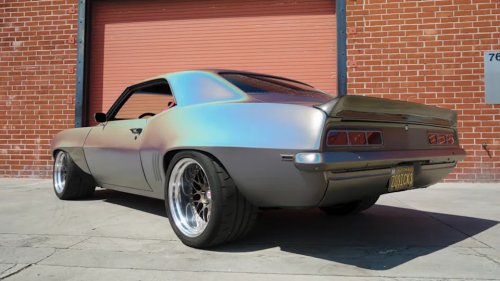
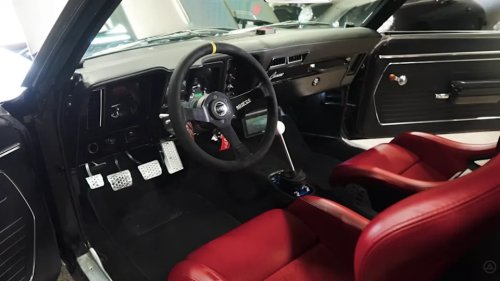
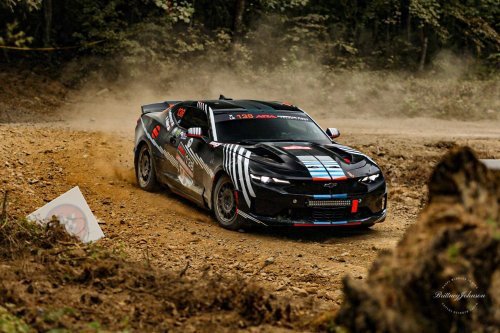
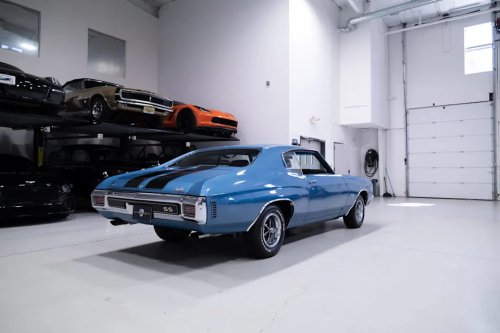
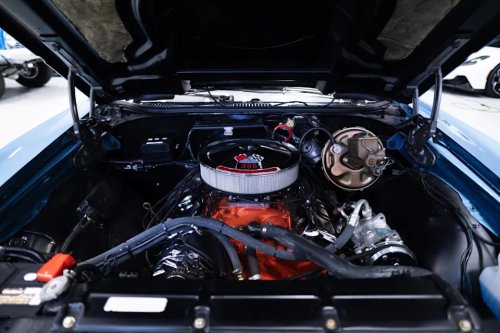
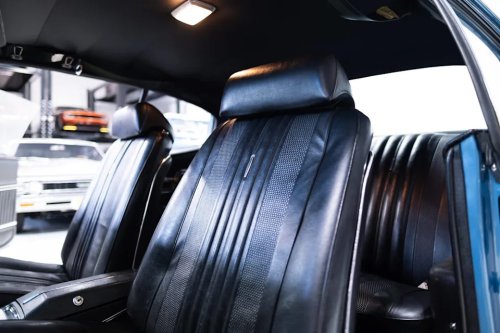
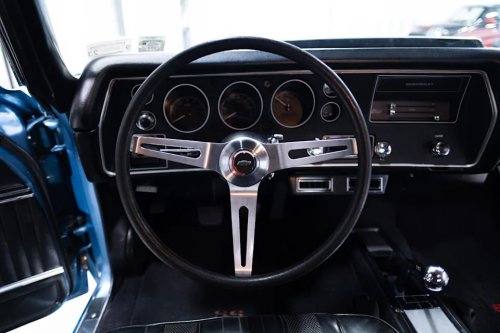
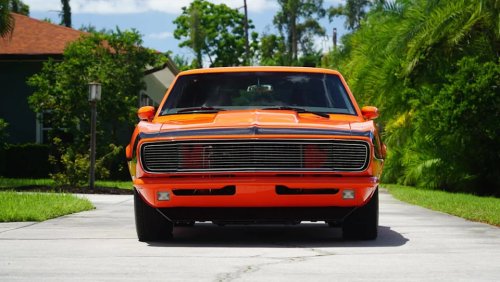
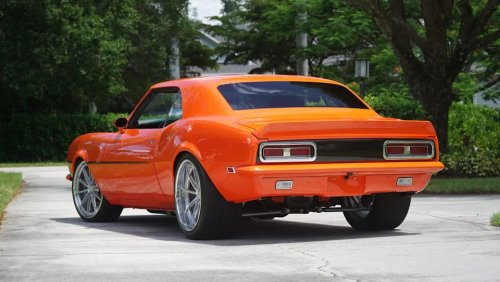
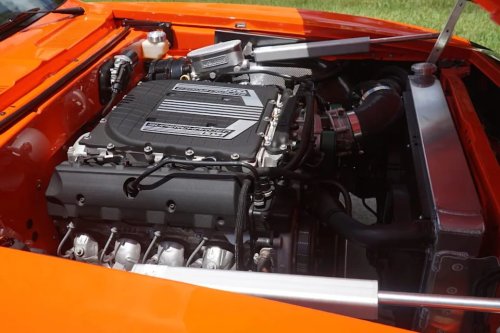
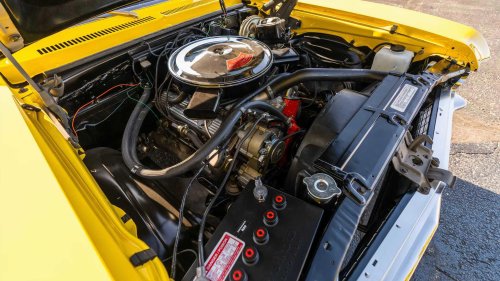
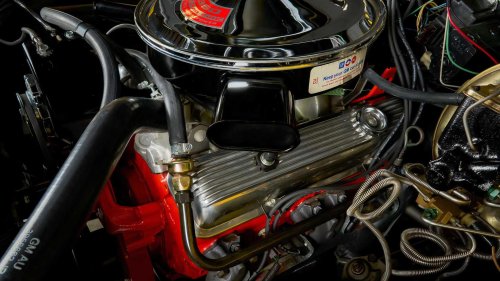
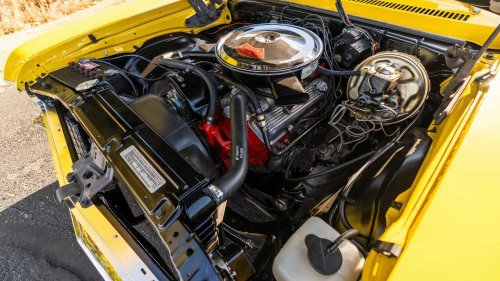
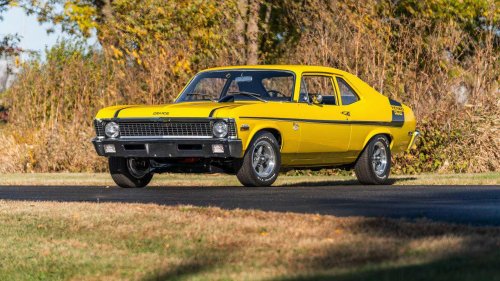
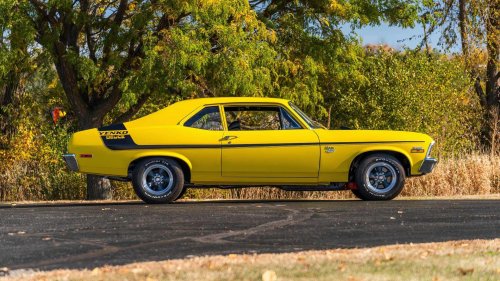
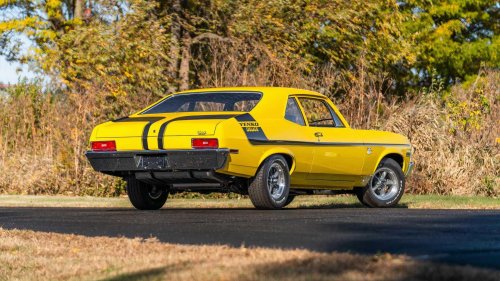
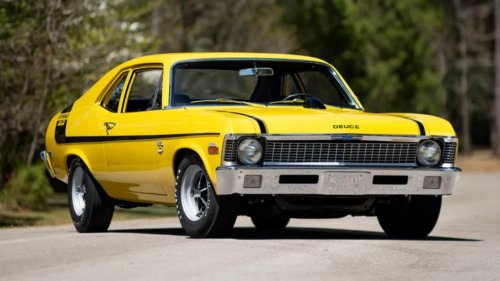
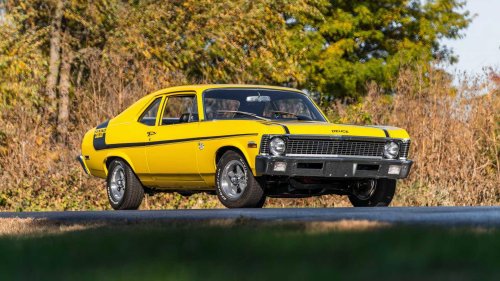
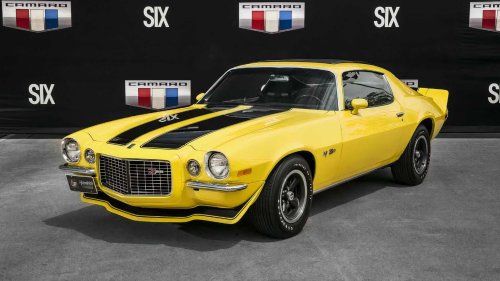
The 1970s marked a transformative era for , with Chevrolet at the forefront of high-performance engineering. The late '60s and early '70s was when Chevy pumped out a number of different muscle car models with incredible engines, some mass-produced, and some not, but most of them are incredibly valuable in the used market today.However, it's the un-massy kind we're keen on today, and as far as rare goes, this particular one's right up there. Coming courtesy of Chevy's COPO (Central Office Production Order) program, which allowed independent dealers to spec Chevy models with specific engines or packages not available through the standard route, one Don Yenko took the opportunity to build the rarest small block V8-engined Chevy in the '70s. Spoiler: it was a hoot. The COPO LT-1 V8 In The Nova Is The Rarest '70s Small Block Made By Chevy Units Produced: 175 While the LT-1 normally featured in the Camaro and Corvette models, its inclusion in the Chevrolet Nova was exceptionally rare. In 1970, a limited number of Novas were equipped with the LT-1 engine through a special collaboration with Don Yenko, a renowned Chevrolet dealer and performance tuner. These models, known as the "Yenko Deuce," featured the LT-1 engine and were distinguished by unique badging and performance enhancements. Only 175 Yenko Deuce Novas were produced, making them exceedingly rare and highly sought after by collectors.The LT-1 V8 engine was only offered between 1970 and 1972 and was brought in as a replacement for the 302 ci V8 small-block that had been designed for use in Camaros that ran in the Trans-Am racing series. A rule change by series organizers SCCA to get Mopar to enter meant the 305 ci engine limit was upped, allowing Chevy to introduce a 350 ci unit instead. The engine cylinder heads and block itself were made of durable cast iron, which was needed to deal with the extensive 11.0:1 compression ratio. The LT-1 V8 Wasn't Short On Power 1970 Chevrolet Nova LT-1 Key SpecificationsIntroduced in 1970, the LT-1 engine was a high-performance variant of Chevrolet's small-block V8 lineup. With a displacement of 350 cubic inches (5.7 liters), it was engineered to deliver substantial power and responsiveness. Key features included an 11:1 compression ratio, solid lifters, a high-performance camshaft, and a 780 CFM Holley four-barrel carburetor mounted on a special aluminum intake manifold. This configuration enabled the LT-1 to produce a factory-rated 360 horsepower at 6,000 rpm and 370 lb-ft of torque at 4,000 rpm, with a redline of 6,500 rpm.The LT-1's design emphasized high-revving performance, making it a favorite among enthusiasts. Its solid lifter camshaft and high-flow intake system allowed for surprisingly good acceleration and sustained high speeds, characteristics that were highly desirable in both street and track applications. The LT-1-Equipped Novas Were Quick For The Time The LT-1-equipped Novas had seriously impressive performance figures for their time. With 360 horsepower on tap, these Novas could accelerate from 0 to 60 mph in approximately 6 seconds, with quarter-mile times in the mid-14-second range. The combination of a relatively lightweight Nova body and the high-revving LT-1 engine resulted in a nimble and responsive vehicle that could theoretically compete with the era's top muscle cars.The engine's high compression ratio and aggressive cam profile required premium fuel and regular maintenance to ensure the best performance, though. Owners needed to be diligent with valve adjustments and other upkeep tasks, typical of high-performance engines of that era. What Went Into The Making Of The Yenko Deuces 1970 Chevrolet Yenko Deuce LT-1 Nova Highlights Improved springs and shocks New sway bars Limited-slip differential New wheel design Bespoke Yenko decals As mentioned earlier, the small-block LT-1 V8 that found itself in the Chevy Nova was a rarity, and that's because Don Yenko was particularly keen on taking his time to add his own ingredients to the Nova. Aside from the LT-1 small-block V8 itself, the Nova featured an uprated suspension system that included improved springs and shocks, as well as new sway bars, and even a limited-slip differential. To break the total number of Yenko Deuce Novas down, he initially ordered a total of 125 cars with the COPO 9010 order, which contained the small-but-capable LT-1 small block V8. Once he got the delivery of the vehicles, he swapped the wheels out for ones of his own design, and fitted extras like a hood-mounted tach and bespoke Yenko decals. The first 125 units sold quickly, so he ordered another 50. However, a further two were built by Chevy and were destined for a Canadian dealer (who, according to Hemmings, actually ordered 10 units but only ever received two), making for a grand total of 177 units.The Yenko Deuce Novas were not just about straight-line speed; they were equipped with performance-oriented suspension and braking systems to complement the powerful LT-1 engine. This holistic approach to performance made them formidable competitors on both the drag strip and road courses. How The LT-1 Influenced Subsequent Chevys The LT-1 engine's influence extends beyond its original production years. Its design principles have inspired subsequent generations of small-block V8s, including the modern LT1 introduced in the 1990s and the Gen V LT1 that debuted in the 2014 Corvette Stingray (which, in 2024, won our best sports car award). These engines continue the legacy of combining high performance with reliability, a hallmark of the LT-1 name.At the heart of the enduring appeal of the LT-1 engine is its blend of solid engineering and real-world performance. It remains a symbol of Chevrolet's commitment to pushing the boundaries of what a small-block V8 can achieve, even to this day. Why The Yenko Deuce Is So Underrated Today Despite its rarity, the Chevrolet Yenko Deuce doesn’t always get the same spotlight as big-block legends like the Chevrolet Camaro COPO or Chevrolet Chevelle SS. That mostly comes down to perception. In the muscle car world, bigger engines tend to dominate the conversation, and cars packing 427 or 454 cubic-inch V8s have long been seen as the ultimate expression of American performance. Against that backdrop, the Deuce’s high-revving small-block LT-1 can seem almost understated, even though it’s anything but.But that’s exactly what makes it special—and increasingly appealing today. Instead of relying purely on displacement and brute force, the Deuce leaned into a more balanced performance philosophy. Its lighter Chevrolet Nova platform gave it an agility that many heavier muscle cars simply couldn’t match, while the LT-1 engine delivered power in a more responsive, high-revving manner. This wasn’t just a car built for straight-line dominance; it was one that felt alive in a broader range of driving situations.That distinction becomes even more important when you look at how enthusiast preferences have evolved. Modern collectors are starting to appreciate cars that offer more than just raw numbers—vehicles that deliver engagement, feedback, and a sense of connection behind the wheel. In that context, the Yenko Deuce feels ahead of its time. It behaves less like a traditional muscle car and more like a precision instrument, rewarding drivers who are willing to explore its full rev range and handling capabilities.There’s also an element of rarity working in its favor. Because it never had the same cultural spotlight as its big-block counterparts, the Deuce has remained something of an insider’s car—highly respected among those who know, but still flying under the radar in broader collector circles. How Much An LT-1 V8 Nova Is Worth Today Understandably, owing to their rarity and brilliance, LT-1-equipped Novas don't come cheap nowadays. Finding one for sale in itself is a massive accomplishment, and if you do, you should be ready to cough up a pretty penny.To give you an example of the kind of premium attached to LT-1 Novas, a blue example that had undergone a restoration sold for a whopping $154,000 through Bonhams Auctions in 2022. Then, there was the yellow Nova with an automatic transmission that sold for an eye-watering $165,000 on Mecum in 2023.At the time of writing this piece, there's a brilliant Sunflower Yellow Yenko Deuce up for sale on Mecum, with the auction ending on January 16, 2025. The estimate? Between $125,000 and $175,000. The Special Edition, One-Off LT-1 Camaro Carrs1970 Chevrolet Camaro Hurst Sunrise Special Key SpecsThe tag for the rarest production small-block V8 by Chevrolet is held by the Nova's LT-1 which, as we mentioned, had only 177 units. That said, if we consider a non-production LT-1, then the Hurst Sunshine version of the Camaro snags that title, with just three made, and only one still known to exist.Back in 1970, drag race star Dick Jesse ordered a Daytona Camaro. Once he got it, however, he was immediately approached by the Hurst Company, who manufactured parts for muscle cars back then. They wanted to test various modifications and changes that they could bring to the muscle car world, and promptly set about installing a brand-new design of one of their automatic shifters.Aside from that, Hurst also outfitted Dick Jesse's Camaro with a sliding fabric sunroof, which was quite novel considering the option to add a fabric sunroof to a Camaro never happened back then. That's where Hurst's contribution ended, and to top things off, Chevy also put the Z/28 Camaro through various rounds of tests, and added spoilers front and back.


















 +44 others