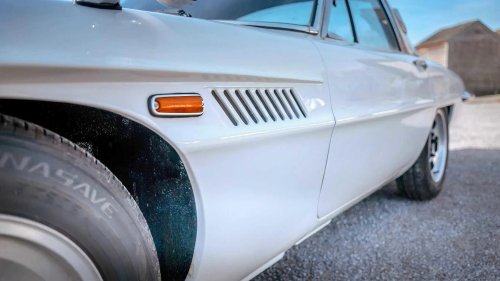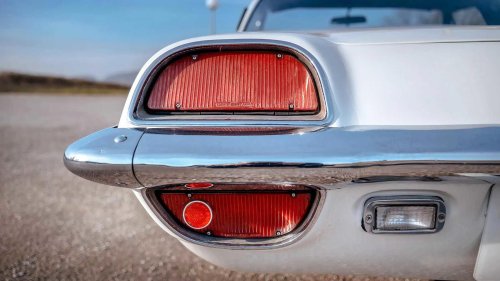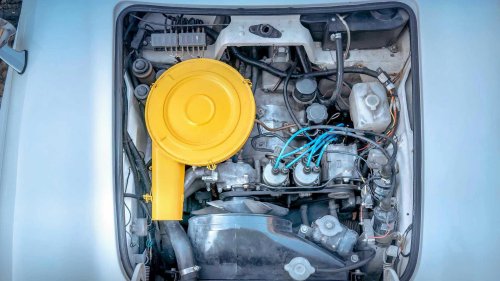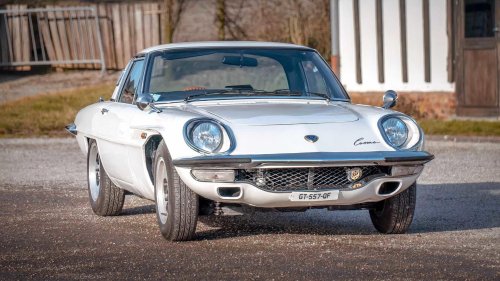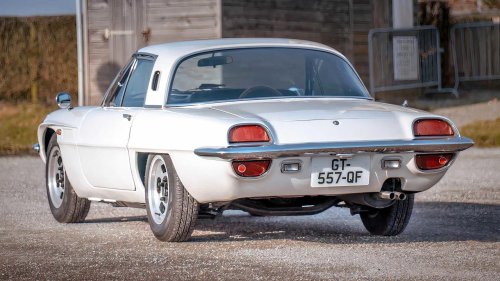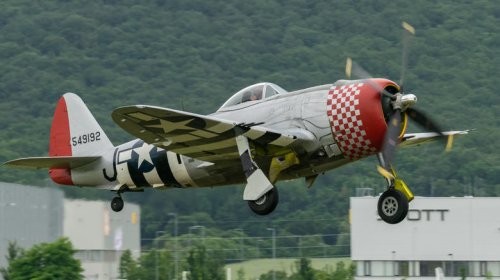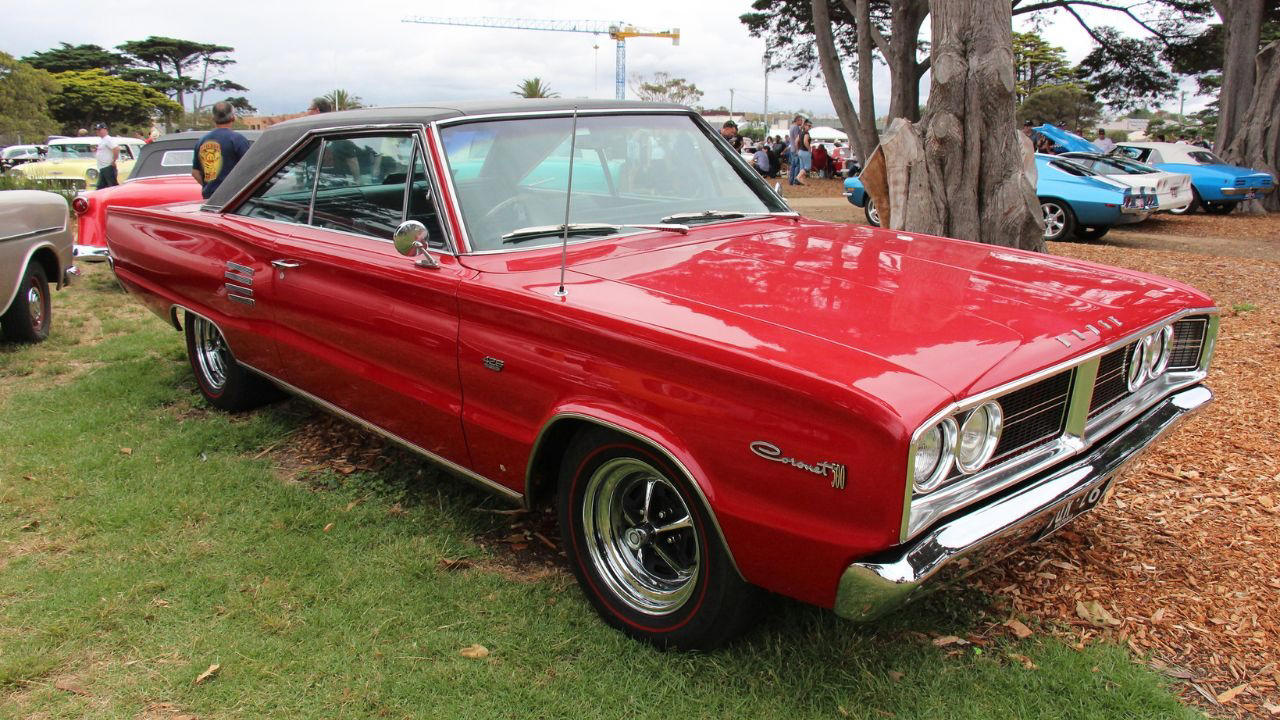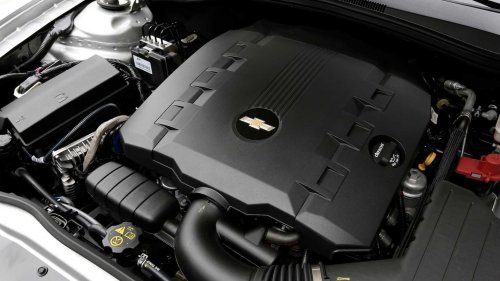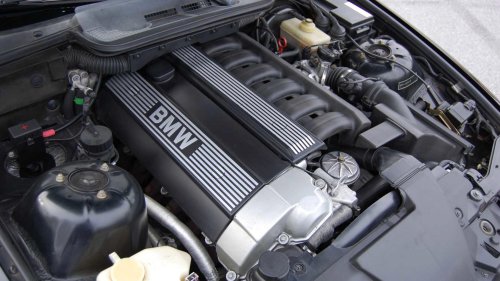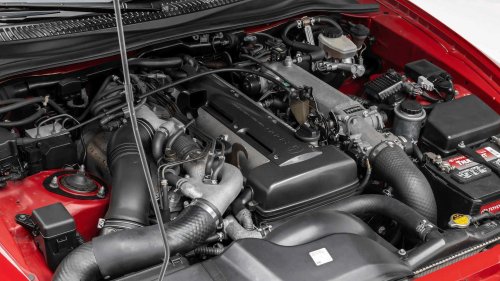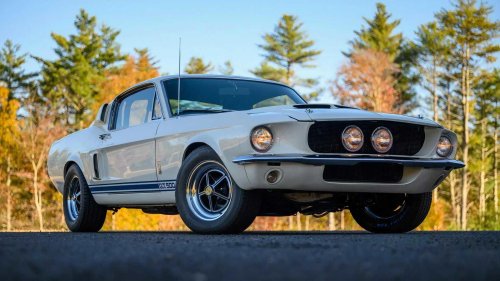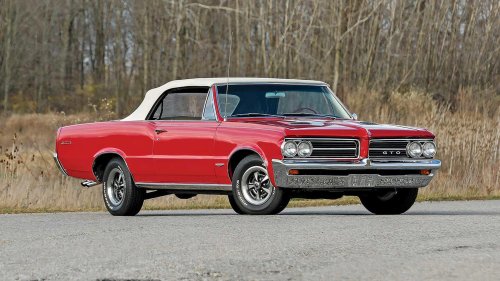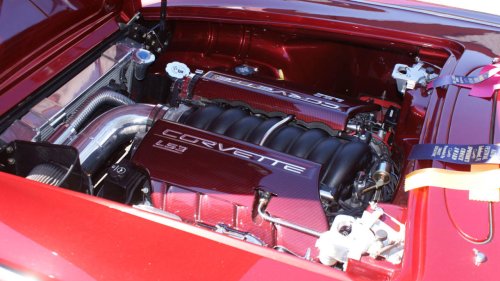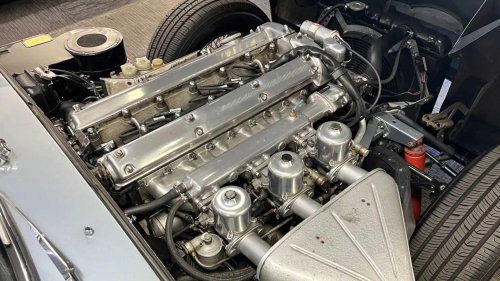
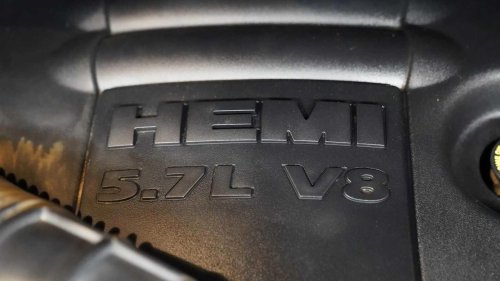
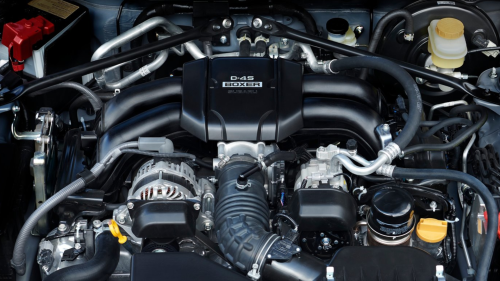
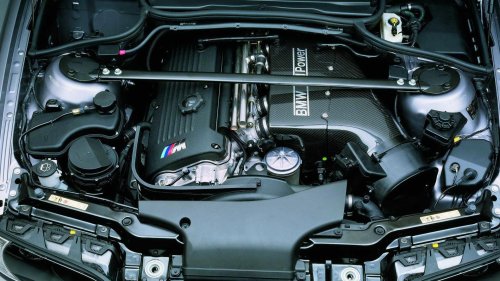
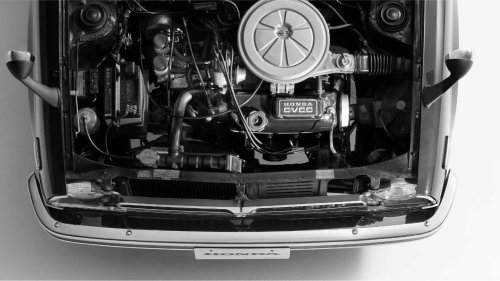
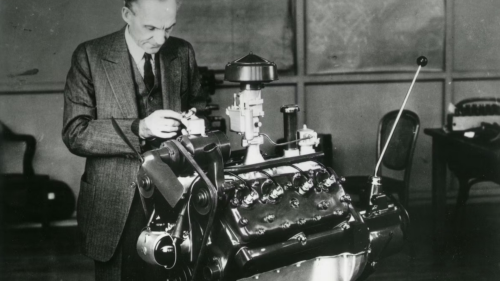
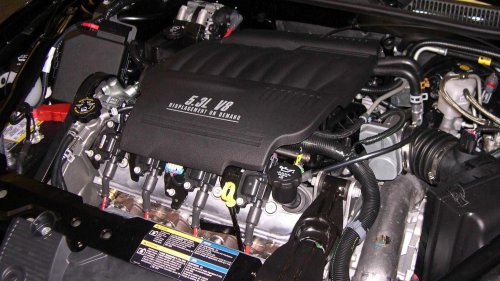
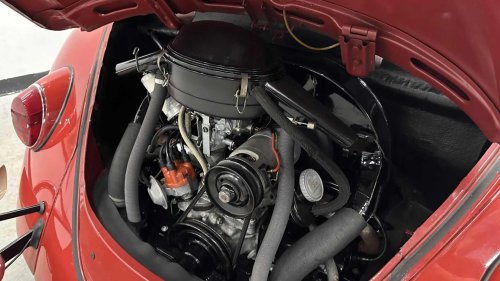
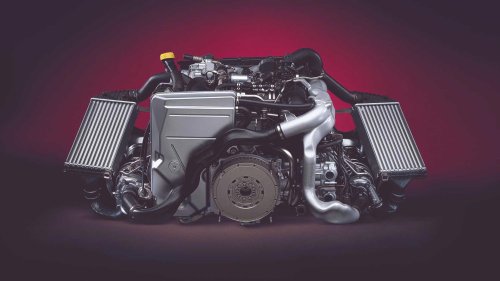
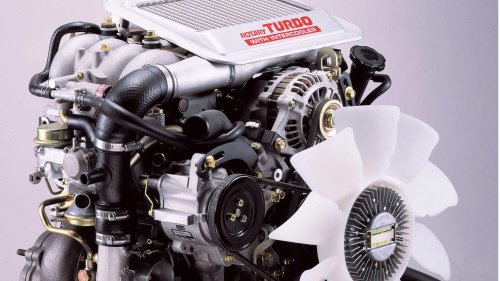



















It's a cliché, but that's because there's truth in the statement: The engine is the heart of an automobile. In many cases, it's a defining feature, and not just for sports cars, muscle cars, or supercars. The way any vehicle drives is, ultimately, defined by its engine. For an automaker like Toyota, its reputation for reliability is based on the longevity of its powerplants.Some automakers will forever be associated with a particular engine type. For example, think of the Porsche flat-six engine or Mazda's rotary mills. Let's take a look at 10 brands with famous powerplants. Jaguar: XK 1967 Jaguar XKE engineJaguar's flagship E-Type was known for its big V12 engine, but the earlier straight-six XK engine made Jaguar famous. The XK ran in the brand's cars from 1949 until 1987, which fit the original design brief. Sir William Lyons wanted a powerful series of powerplants with high outputs that wouldn't need revisions for a long time to keep up with the competition. The designers settled on a layout with hemispherical combustion chambers and displacements ranging from 2.4 to 4.2 liters.The Jaguar straight-six found its first fame in the XK120 sports car when it started breaking speed records as well as winning races all over the world, including NASCAR's first Grand National road race in 1954. The XK engine went on to power the majority of the E-Types, the MKII sedan, and the long-serving XJ series. Oddly enough, though, the Jaguar model called XK was only sold with a V8. Chrysler: Hemi V8 Hemi 57 (1)Speaking of hemispherical combustion chambers, the technology has been around since at least 1901, but Chrysler popularized it with the trademarked Hemi V8. The story of the Hemi V8 is wild. It started as an experimental engine for the World War II-era Thunderbolt fighter plane. That experience led to the FirePower engine, which faded away in 1958. In 1962, however, Chrysler decided it wanted the Hemi engine to win stock-car and drag races. The result was the first engine designated as a Hemi by Chrysler and ran in NASCAR.In 1966, just as the muscle car era was in full swing, Chrysler introduced the so-called "street Hemi" to homologate the 426 cubic-inch engine for racing. Between 1966 and 1970, the optional engine could be ordered for a long list of cars, including the original Dodge Charger, the Dodge Super Bee, Plymouth GTX, Plymouth Roadrunner, and Plymouth Hemi 'Cuda – all cars from the muscle car hall of fame. And that's all before the Hemi found its way into pickup trucks. Subaru: Boxer Subaru D-4S Boxer H4 EngineA boxer engine is a horizontally opposed engine, like Porsche's flat-six, but the key difference is that the pistons opposite each other move in and out together. Think of a boxer practicing left-right jabs in front of a mirror. By the start of the 21st century, most automakers had given up entirely on flat-four engines. However, Subaru had been building them since 1966, including competing successfully in rallying with the Impreza. The biggest advantages of a boxer engine are that it's well-balanced internally, efficient, and has a low center of gravity.For Subaru, specifically, the four-cylinder boxer engine works well as its compact size and longitudinal mounting allow the automaker to use its symmetrical all-wheel-drive system in small cars. The symmetrical part of its all-wheel-drive design means that the length of each half-axle to each wheel is the same, improving balance. The boxer engine and symmetrical AWD have been the brand's mechanical identity since the mid-1980s. BMW: Inline-Six 2001-2007 BMW M3 E46 3.2L NA S54B32 I6 EngineWhile BMW has used and still uses a variety of engines, its inline-six engines have been class-leading since its 19.1-liter unit was installed in an airplane in 1917. It wasn't until 1933 that it put an inline-six in a car, though. Not only did the 303 sedan feature BMW's first automotive inline-six, but the model also introduced the world to its signature kidney grille. The BMW inline-six left a mark on car racing early with the 328 sports car, winning its debut race at the Nürburgring, then going on to take over 100 class wins in 1937 alone.BMW's approach to the straight-six hit its stride in the 2000s-era 3 Series and 5 Series, delivering plenty of power and leveraging the inline-six's natural smoothness. The BMW straight-six helped define BMW as best-in-classfor fast yet comfortable sedans, and also for its high-performance M cars. Honda: CVCC overhead shot of the Honda CVCC engine fitted to a CivicThe engine technology people most closely associate with Honda now is VTEC, but the company has a history of making great powerplants long before that tech. The CVCC engine helped launch Honda as a global brand due to its amazing technology and perfect timing. CVCC stood for Compound Vortex Controlled Combustion. Essentially, the design used a vortex generated in the main combustion chamber to increase combustion speed, but in a controlled manner.The biggest upshot was that CVCC engines were incredibly efficient and met Japanese and American emissions standards in the 1970s without a catalytic converter. It was just in time for the global oil crisis. At the time, American automakers were complaining that they weren't able to meet emissions standards, even with expensive catalytic converters. Honda started selling the N600 in the US in 1969, but the CVCC engine landed with the Civic in 1974 and changed the automotive landscape forever. Ford: Flathead V8 henry ford with ford flathead v8Ford was a pioneer when it came to affordable and mass-produced cars, but power was expensive in the 1920s. One of its biggest achievements was introducing the first affordable, widely available V8 for passenger cars and trucks. The flathead name came from the shape of the combustion chamber with its valves mounted on the side rather than above the piston.The V8 was inherently more powerful than smaller engines, and Ford's flathead design effectively democratized that power. The automaker installed the powerplant in a wide variety of products, including early F-Series trucks and passenger cars from 1932 to 1953.Not only had Ford introduced V8 power to the American masses, but the engine was instrumental in the rise of drag racing and hot rodding. Troops returning from World War II had newfound mechanical skills and the money to tinker with cars. Aftermarket firms such as Offenhauser and Isky Racing Cams sprang up to offer performance parts for getting the most out of the flathead. Racers and tuners quickly moved to working with more sophisticated V8s in the 1950s, such as Chevy's famous small-block, but the flathead Ford V8 had done its job by then. Chevrolet: Small Block V8 2006 Chevrolet Impala SS 5.3L NA LS4 V8 EngineChevrolet was doing fine with its "stovebolt" inline-six-cylinder engine throughout the 1940s. However, the brand didn't have a competitive V8 to take on the Ford flathead. Chevy solved this problem with the introduction of the small-block V8, so-called, despite the first line of engines ranging in size from 4.3 to 6.6 liters. The 1955 model year Corvette and Bel Air were the first models to receive the powerplant. It soon spread across the Chevy lineup and eventually appeared in other General Motors vehicles. In 1966, the era-defining 302 cubic-inch (4.9-liter) version debuted for the Camaro Z/28 and racing.The Chevy small-block V8 was reinvented in the early 1990s as the LT series, introduced in the C4-generation Corvette. It later continued with the LS designation in 1997. The LS design is not just one of the best V8s ever built, but also one of the most adaptable, powering everything from trucks with its relentless reliability to high-performance sports cars and race cars. It takes very well to turbocharging and supercharging, too. Volkswagen: Air-Cooled Boxer 1967 Volkswagen Beetle flat four engineThe original Volkswagen Beetle is one of the most important cars ever to reach the road, but a large part of that success hinges on the engine. It needed to be small, light, and easy to maintain. The Beetle was designed with the engine at the back, close to the rear wheels, and used an air-cooled design to avoid the weight and complexity of water cooling. The design was likely heavily influenced, if not much copied, from the Czechoslovakian company Tatra, but it was the Beetle that endured.The story of Volkswagen's rise from the ashes of Nazi Germany is well documented, but the air-cooled flat-four engine powered the vehicle to become a cultural phenomenon. The value of a simple, affordable, easy-to-run, and easy-to-fix engine carried on from the 1940s until the last air-cooled Beetle left the production line in 2003. Porsche: Air Cooled Flat-Six 2002 - 2005 Porsche 911 GT2 flat-six engine-1Volkswagen's flat-four leads us to Porsche's flat six. The Porsche engine is an evolution of the Volkswagen four-cylinder boxer, but designed for performance. It has been one of the defining features of a Porsche 911, along with being rear-mounted, since it arrived in 1963. Porsche finally switched to water cooling in 1994, bringing a huge uproar from the 911 purists. The air-cooled design survived for so long because it worked so well and was continually refined by Porsche.The benefit of the flat-six for Porsche is close to the benefit of Subaru's flat-four. The unit is compact and has a low center of gravity, but because it's air-cooled, it's lighter since there's no need for a pump, hoses, a radiator, or cooling fluid. Mazda: Wankel Rotary Turbocharged Mazda 13B Rotary EngineThe rotary engine has a complicated history. Felix Wankel came up with the idea of a triangular rotor spinning in an oval-shaped chamber and patented it in 1934. The design dispenses with the common engine layout of a piston and cylinder head containing the valvetrain components, making the Wankel compact while delivering good power. The German automaker NSU, which eventually became part of Audi, struggled to make it work. Mazda became interested and, to cut a long story short, the 1967 Mazda Cosmo was born.Mazda was absolutely determined to make the Wankel design work. It wanted to take advantage of the size-to-power ratio and inherent smoothness of the design in action. While Mazda's rotary engine was used in cars and trucks for decades, it shined in sports cars and racing where fuel economy wasn't so important. The most famous Mazda rotary engine is the twin-turbo 13B-REW engine in the legendary RX-7, which produced 252 horsepower with just 1.3 liters of displacement in 1992.The most impressive, however, is the 2.6-liter, four-rotor Wankel engine in the 787B race car, which made over 700 horsepower and won the 1991 24 Hours of Le Mans. Unfortunately, Mazda had to give up on the rotary engine due to the perception of poor reliability on top of actual poor fuel efficiency and emissions. Mazda has kept talking about the rotary and promising to bring it back, but it has never quite happened.