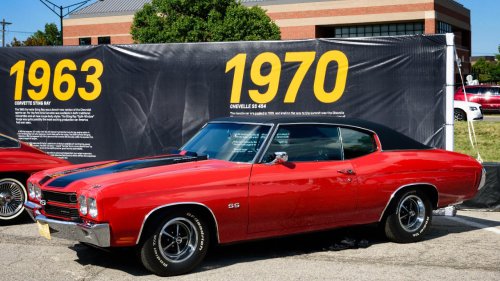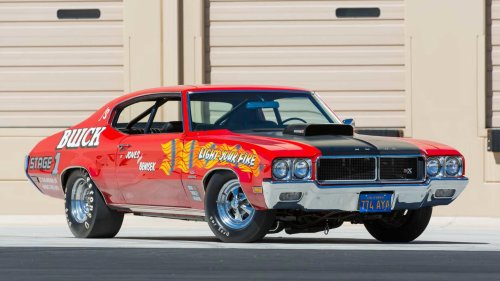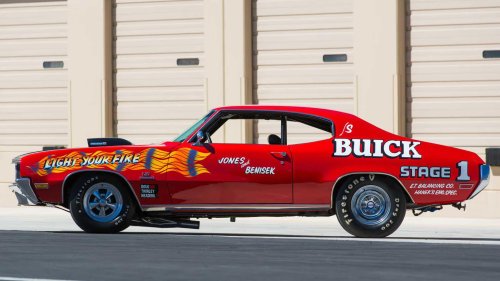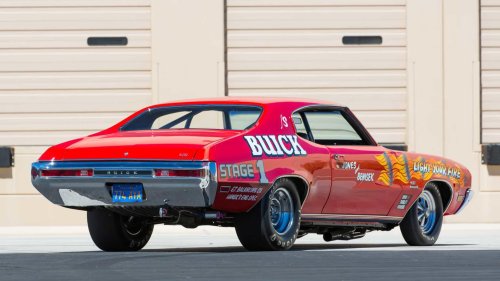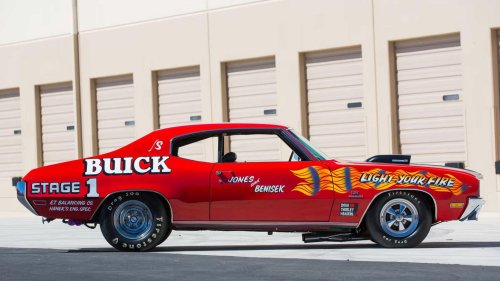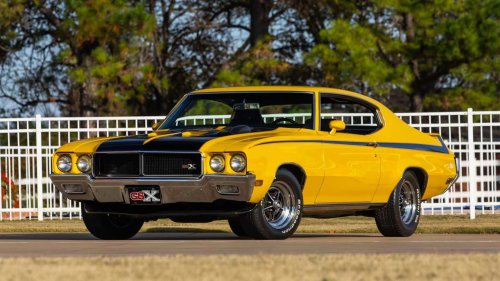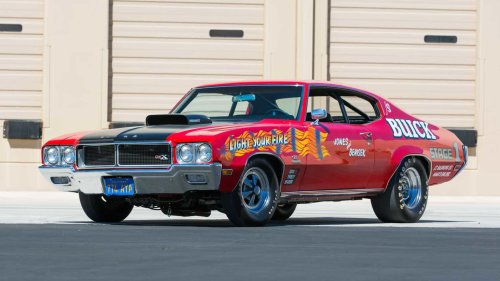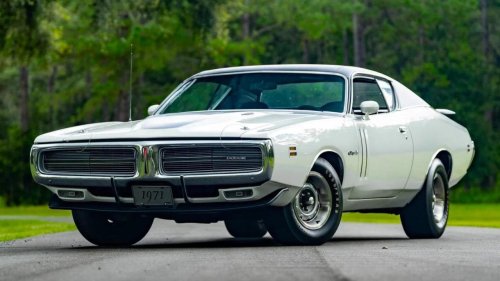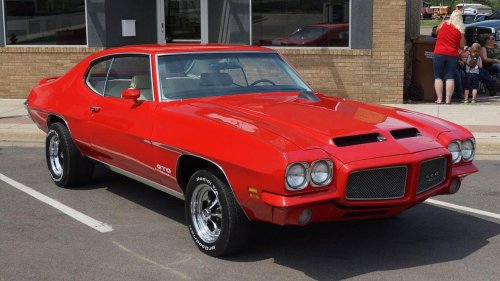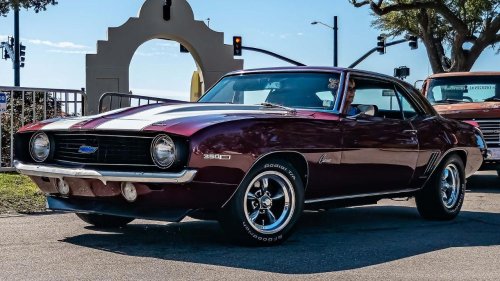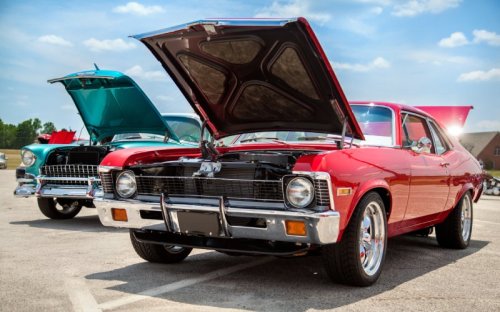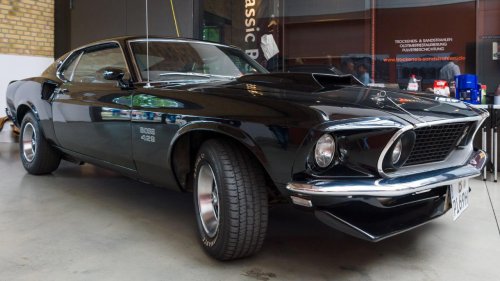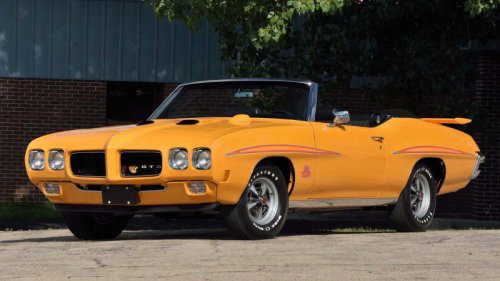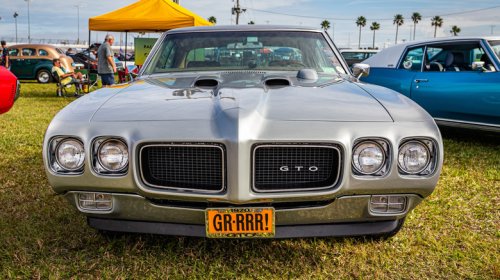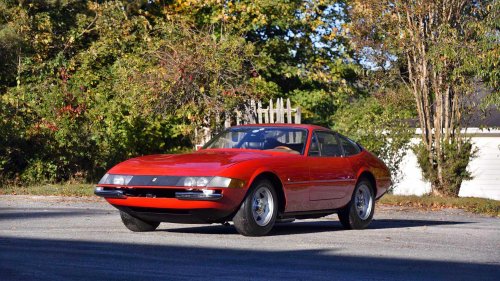
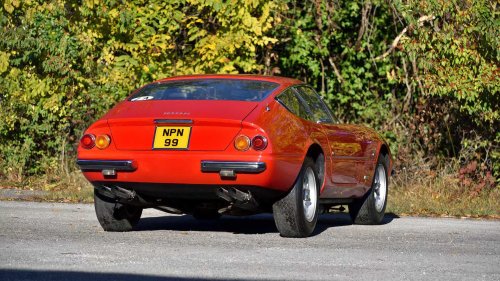
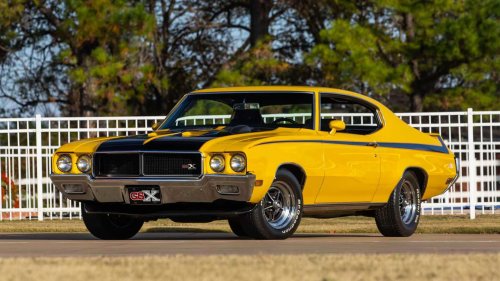
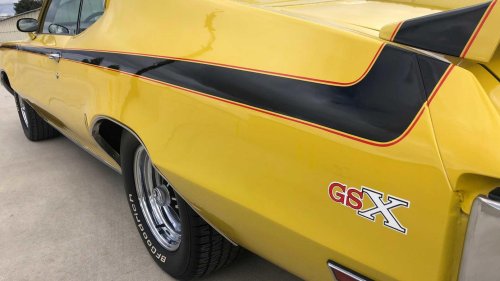
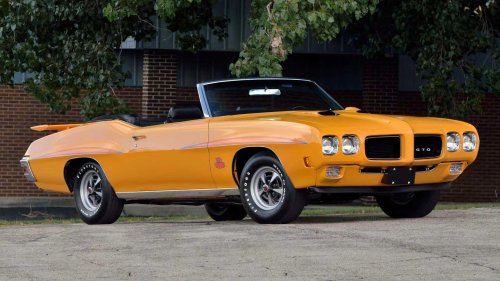
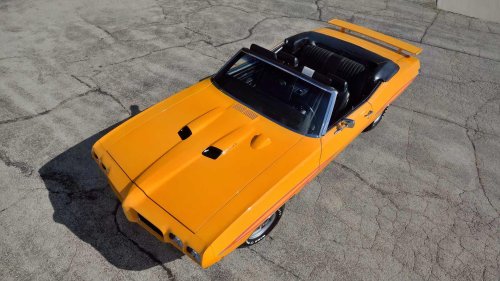
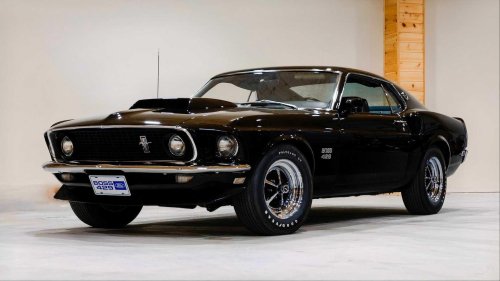
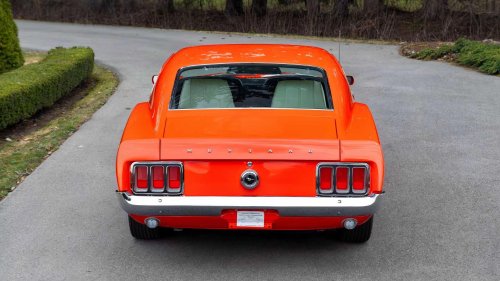
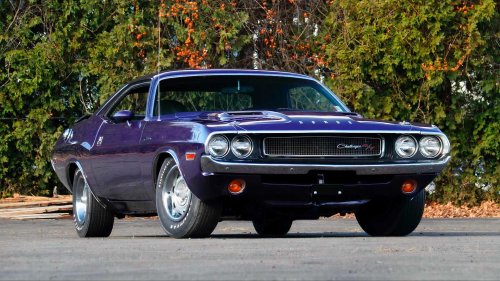
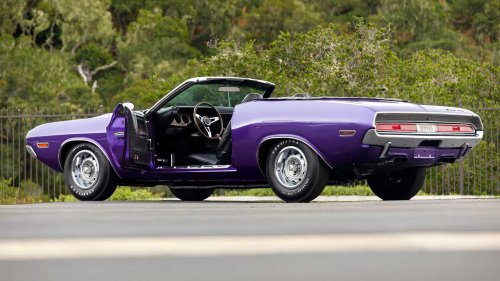
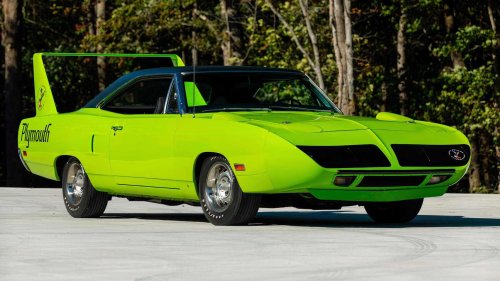
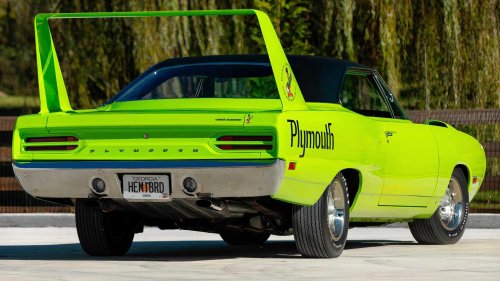
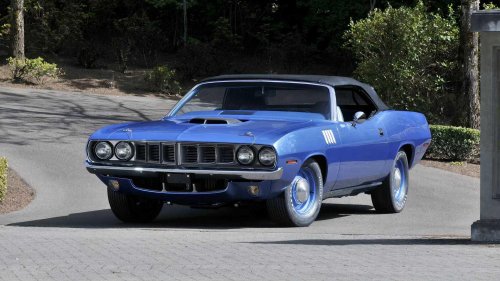
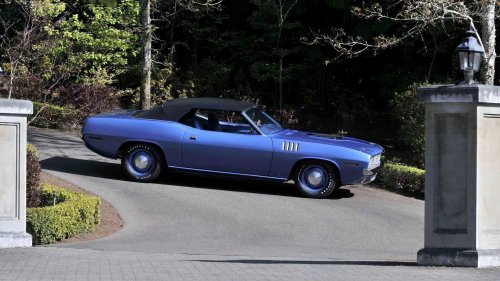
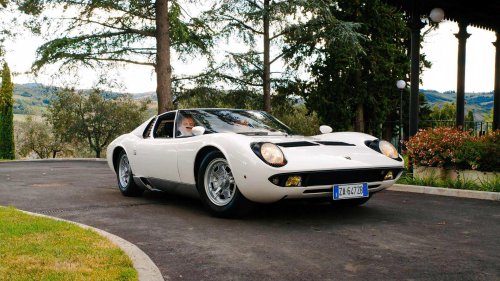
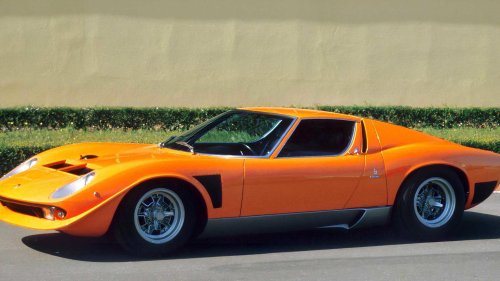
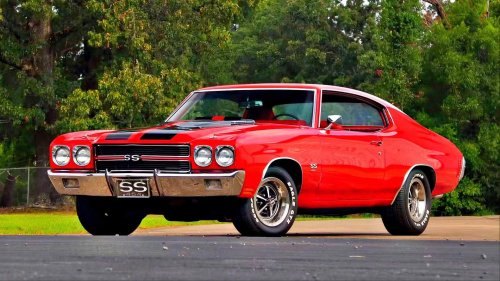
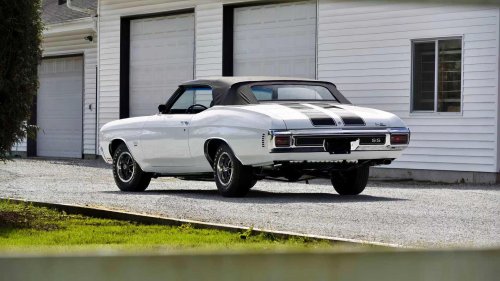


















1970 was a landmark year for the automotive industry, particularly Stateside, where the "golden era" of muscle cars was at its absolute zenith. Not only did muscle cars reach their peak in design, with well-defined coke bottle curves, crazy decals, and high-impact colors we still remember fondly today, 1970 was also a last hurrah moment in performance, when Detroit gave us the largest and most powerful engines before stricter emissions, new insurance rates, and fuel shortages stopped the party shortly after.At the same time, the Europeans were also seeing major shifts, but in a completely different way. While the Americans were looking to take a few steps back in the performance department, European automakers had already shifted towards sophisticated engineering and aerodynamics, cementing their position as the clear leaders in the sports car world and launching the world's first modern supercar as well. This overlap between the swan song of the muscle car golden era and advanced European engineering is why 1970 is often regarded as the pinnacle year for performance cars, and looking at this list, it's hard to argue against that notion. Ferrari 365 GTB/4 Daytona Horsepower: 352 HP Via Mecum AuctionsWhen it comes to Ferraris, it rarely gets more iconic than the Daytona. Introduced in the late '60s, the Daytona was built to celebrate Ferrari's historic 1-2-3 finish at the 1967 24 Hours of Daytona, which restored Maranello's dignity after Ford humiliated them at Le Mans the year before. The Daytona was also the final masterpiece of Ferrari's classic front-engine V12 era before the industry shifted to mid-engined layouts. Via Mecum AuctionsThe beating heart of the Daytona was a naturally aspirated V12 whose 352 hp output almost makes it seem like it shouldn't be on this list, but it was enough to make it the fastest production car in the world briefly, with a top speed of 174 mph before (more on that later) reclaimed the prestigious title. Buick GSX Stage 1 Horsepower: 360 HP Mecum AuctionsBuick isn't typically associated with performance cars, but it built one of the best golden era muscle cars — the 1970 GS 455 and the similarly-engined special appearance package, the GSX. When GM lifted the ill-advised engine displacement ban in 1970, the GS 455 was one of the biggest beneficiaries as it was equipped with Buick's take on a gargantuan 455 V8. BaTBuick's engine was not only lighter than Pontiac's and Oldsmobile's 455s, but it also produced more torque at a lower RPM (510 lb-ft at 2,800 rpm), earning it the nickname "the Torque King". When paired with the Stage 1 performance package, this massive low-end torque resulted in brutal acceleration and a quarter-mile run of 13.38 seconds at 105.5 mph, giving Buick performance credentials it previously lacked. Pontiac GTO Judge Ram Air IV Horsepower: 370 HP Via Mecum AuctionsThe Pontiac GTO launched the muscle car segment in the early '60s, but by the end of the decade, it was facing stiff competition from virtually every automaker in Detroit, especially in the performance department. As such, Pontiac introduced "The Judge" in 1969, a high-performance, stripped-down version of the GTO. Via Mecum AuctionsIn 1970, the GTO Judge had three engine options - a 400 cubic-inch V8 with Ram Air III heads was standard, the same engine with Ram Air IV heads was optional, and a massive 455 cubic-inch "High-Output" V8 was introduced mid-year. While the 455 offered more low-end torque and faster launches, the Ram Air IV option was more popular among enthusiasts as it was regarded as a high-revving street-legal race car that sacrificed low-end torque for explosive top-end power. The Ram Air IV option included high-flow round-port cylinder heads, a significantly hotter cam, and an aluminum intake manifold, boosting power marginally to 370 hp. Ford Mustang Boss 429 Horsepower: 375 HP MecumTired of Mopar dominating NASCAR with the Hemi, Ford built the Boss 429 engine and changed the game in 1969. The Boss 429 was the only engine capable of reliably running with the Hemi, and it instantly accomplished its mission when the Fords and Mercury racers it powered dominated the 1969 NASCAR season with 26 race wins and the Manufacturer's Championship. Via Mecum AuctionsFord had to build at least 500 street-legal cars to homologate the engine, and even though its 375-hp output was far lower than the race cars, it was still enough to cause chaos on the drag strip. The Ford Mustang was used to homologate the engine, but Ford's NASCAR body programs moved forward with Ford Torino and Mercury Cyclone variants rather than a Boss 429 Mustang racer. Only about 1,359 Ford Mustang Boss 429 units were built in 1969 and 1970, which explains why collectors pay a fortune to acquire one today. Iso Grifo IR-9 (Can-Am) Horsepower: 395 HP It's always a beautiful thing when European design is blended with raw American V8 power, and the little-known Iso Grifo IR-9 is one of the best examples of that. Penned by the renowned Giorgetto Giugiaro at Bertone, the IR-9 was a high-performance version of the Grifo Series II and featured classic Italian GT lines: a long, low-slung hood, a redesigned nose with sleek hideaway headlights, and muscular rear fenders that communicated its performance intentions.One of the most notable design features in the IR-9 was its tall, rectangular hood scoop, often nicknamed the "Penthouse" or "Pagoda." While it did add some pizzazz to the IR-9's design, it was more of a functional requirement to fit the monstrous Chevy 454 cubic-inch big-block V8. While this doom-bringer of an engine made the IR-9 one of the fastest cars in the world, it also made the car more reliable and easier to live with than most Italian sports cars of the era, which is why it's often described as a mechanical handshake between Italian elegance and American muscle. Only 24 Grifo IR-9s were built, making it one of the rarest sports cars ever. Dodge Challenger R/T Hemi Horsepower: 425 HP MecumThe Hemi is widely considered to be one of the greatest V8 engines and a key piece of Mopar's performance puzzle in the '60s. We could easily fill this list with Hemi-powered cars from 1970, but we chose three great representatives, starting with the Dodge Challenger R/T. Debuting in 1970, the Challenger was developed to be an upscale pony car alternative to the Plymouth Barracuda within Chrysler's lineup and a rival to "luxury" pony cars like the Pontiac Firebird and Mercury Cougar. Via Mecum AuctionsThe Challenger blended upscale features with crazy performance in the top-of-the-range R/T trim, particularly for the buyers who opted for the 425-hp Hemi, which was actually believed to make a lot more. Period tests show that the Hemi-equipped Challenger R/T could cover the quarter-mile in a brisk 14.1 seconds at 103.20 mph, putting it in great company. However, a 1970 Challenger R/T with the Super Track Pack option allegedly recorded a 13.1-second run, putting it in rarified air. Plymouth Superbird Hemi Horsepower: 425 HP MecumAnother Hemi-powered monster, the Plymouth Superbird was built with one goal — to win in NASCAR, extending Mopar's dominant run that had been kicked off by the Dodge Charger Daytona a year earlier. Like the Charger Daytona, the Superbird was nicknamed the "Winged Warrior" in reference to its extreme aerodynamic enhancements, including a towering rear spoiler that helped it achieve the aerodynamic efficiency needed to dominate the 1970 NASCAR season. MecumPlymouth had to build road-legal versions of the Superbird to meet homologation requirements, and while they weren't the 200-mph speed demons the race versions were, they still delivered hair-raising performance thanks to the Hemi sitting under the long hood, just behind the unusual nose cone. Plymouth Hemi 'Cuda Horsepower: 425 HP Via Mecum AuctionsIf we had to choose just one car to represent the golden era of muscle cars, it would have to be the Hemi 'Cuda, even though it's technically a pony car. The Hemi 'Cuda is considered to be a holy grail car because it combined aggressive, muscular styling, extreme performance, and exceptional scarcity. Via Mecum AuctionsFrom a looks perspective, the 1970 Hemi 'Cuda is tough to beat with its gorgeous coke bottle curves, iconic shaker hood, high-impact colors, and menacing, low-slung stance. It's even more impressive on the performance side of things since, unlike most other Hemi-powered Mopars, it was built on a shorter, lighter, and more performance-focused platform. This improved power-to-weight ratio allowed the Hemi 'Cuda to paint drag strips across the country with rubber, with quarter-mile runs in as low as 13.1 seconds at 107 mph. Lamborghini Miura Horsepower: Up To 440 HP In Jota Variant LamborghiniIn 1963, Ferruccio Lamborghini established Lamborghini to compete with Ferrari, and in just a few years, the Sant'Agata Bolognese company had already accomplished its mission after it built what's regarded as the world's first proper supercar — the Miura. The Miura not only nailed the Italian grand tourer design, but it also had a transversely-mounted 3.9-liter V12 that allowed the 'P400S' version to clinch the production car speed record in 1968 with a top speed of 179.3 mph. Via LamborghiniAs fast as the Miura was, Lamborghini chief test driver Bob Wallace wasn't satisfied, so he created a one-off experimental test mule called the Miura Jota to push its limits even further and see if the Miura could meet FIA "Appendix J" racing regulations. The Miura Jota was put on a diet to shed off some weight, while the engine was tuned to produce 70 hp more than the P400S (440 hp), resulting in a machine that reached a factory-quoted top speed of 199 mph. Unfortunately, the Miura Jota was destroyed in an accident in 1971. Chevrolet Chevelle SS 454 LS6 Horsepower: 450 HP MecumFollowing GM's decision to lift the engine ban in 1970, Chevrolet quickly dropped a massive 454 cubic-inch V8 into the Chevelle, creating the "King of the muscle cars." Remember the Chevy 454 we mentioned in the Iso Grifo IR-9 entry? Well, the Chevelle used the same high-displacement iron block, but with different internal components and induction systems to create the highest factory horsepower rating in 1970. Via Mecum AuctionsDubbed the LS6, the Chevelle's 454 had solid lifters, an 800-cfm Holley four-barrel carburetor, and a stratospheric 11.25:1 compression ratio, resulting in a factory-rated 450 hp and 500 lb-ft of torque. Paired with a heavy-duty Muncie M22 "Rock Crusher" 4-speed manual or a Turbo Hydra-Matic 400, the Chevelle 454 LS6 was a feared drag weapon that recorded quarter-mile runs in as low as 13.12 seconds at 107.1 mph. It really was the last great hurrah of the muscle car golden age.Sources: Mecum Auctions, Car and Driver