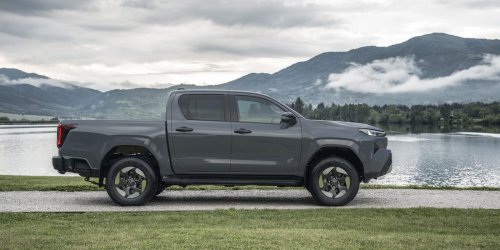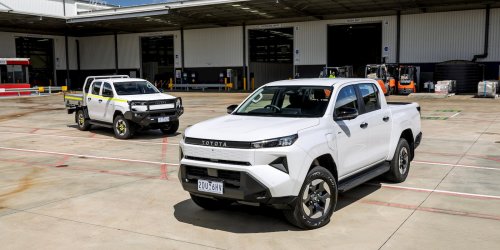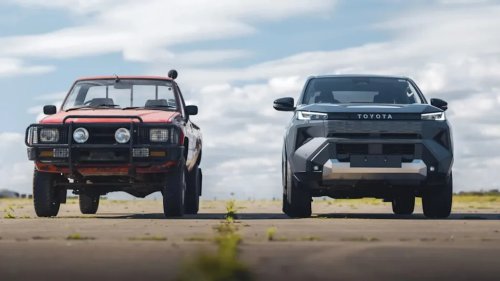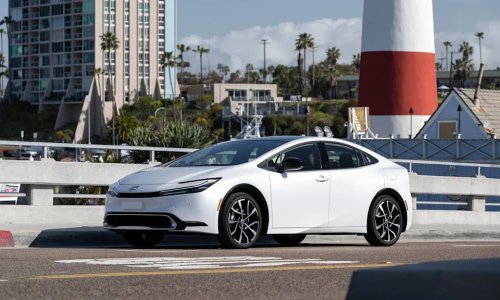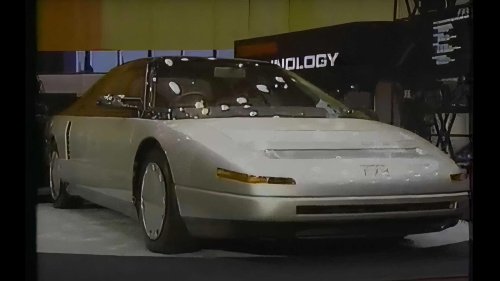
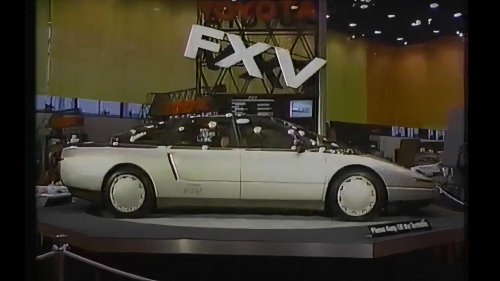
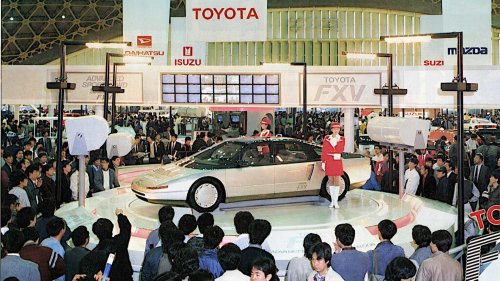
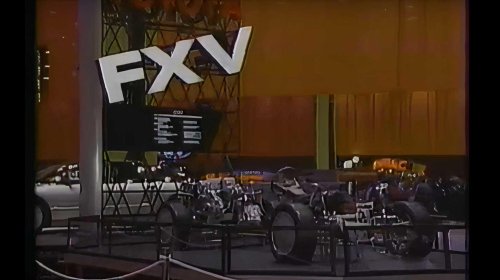
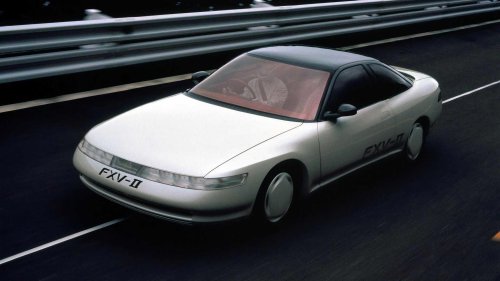
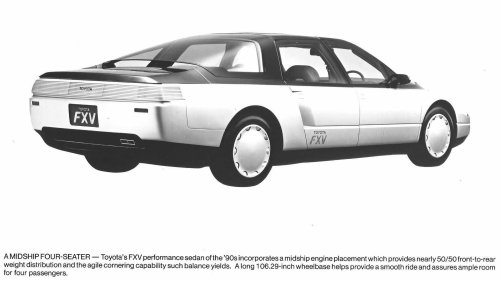
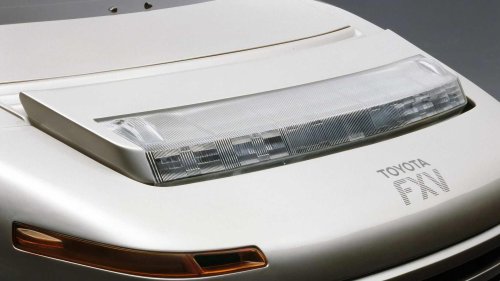
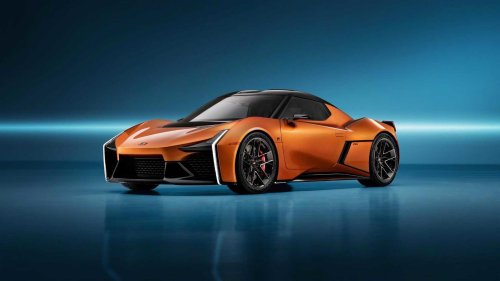



















Whether it was the world’s first mass-produced hybrid car, the Prius, in 1997, or the pioneering use of hydrogen in the Mirai in 2014, Toyota has always been a car company that revels in groundbreaking innovation. But it was in the eighties, a time when sci-fi Arnold Schwarzenegger blockbusters such as Terminator and Running Man filled movie theaters, that Toyota created one of its most iconic sportscar concepts.The year 1985 marked the 100th anniversary of the production of the first gasoline engine vehicle and the theme of that year's Tokyo Motor Show was: "The Culture of Motoring: The New Generation of Vehicles". Toyota planned to steal the show with a new concept that would stand out among the record-high 1,032 exhibited vehicles at the city's 26th motor show – and it didn't disappoint. The company, best known for the everyday Corolla, which still sells well today, arrived with a concept car (flanked by two women looking like they worked in check-in at a spaceport) that showcased a number of features that would change the automobiles of the future. The 1985 Toyota FXV Concept Predicted The Future For Toyota Models Highlights Of The Toyota FXV Concept Youtube/ ChicagoAutoShow The FXV was the work of Toyota’s Calty studio, the American branch of the company that created the iconic Toyota Celica in 1978 and the groundbreaking 1989 Toyota MR2. The FXV showcased future road car tech, with four-wheel steering, four-wheel drive and electronic stability control. The mid-mounted 2.0-liter engine was turbocharged and supercharged, producing 230 hp. With its short, stubby nose and wedge-like profile, the Toyota FXV was a concept that looked out of this world. The design doesn't look that different to new electric cars of today – the Lucid Air Grand Touring has a similar pebble-like design – and compared to the boxy hatchback vehicles of the mid-eighties, it was no wonder this was a showstopper at the 1985 Tokyo Motor Show.Youtube/ ChicagoAutoShow The FXV was created by Toyota’s Calty studio, the American branch of the company that had masterminded the firm's most exciting cars, from the iconic Toyota Celica in 1978 to the groundbreaking 1989 Toyota MR2. The game-changing Future Experimental Vehicle (FXV) Concept car was Calty's idea of what its saloons and coupes in the 1990s would look like, with a sleek body that would indeed influence the look of both Toyotas and Lexus's in the not-to-distant future, such as the third generation Soarer which arrived in 1991. The FXV's Sleek Body Showcased Toyota's Saloon Car Innovations Toyota The FXV was packed full of tech. It featured both four-wheel steering and four-wheel drive, with Electronic Skid Control, an early electronic stability program designed to keep the car from leaving the tarmac. It was one of the most striking Toyota concepts since the EX-7 concept of the seventies.Just like vehicles of today, the FXV had a cutting edge full color touchscreen display for the driver to control suspension settings, as well as the CD player, cell phone, air conditioning and 8mm video display. Driving information such as speed was projected onto a head-up display. The headlights were placed on a bar that raised out of the nose and was more aerodynamic than the traditional pop-up headlights you see on old school sports cars today. A Closer Look At The Toyota FXV YouTube/ ChicagoAutoShowToyota FXV SpecsAt the 1986 Chicago Auto Show Toyota showed both the FXV and an exposed chassis alongside, the latter allowing visitors to see the four-wheel steering and components working and in better detail. The 2.0-liter engine was mid-mounted – which allowed for the car's rakish, short-nosed appearance – and had a supercharger and a turbocharger with a ceramic turbine wheel, unlike most fast cars of the 1980s that made do with just a turbo.The engine was revolutionary and was a glimpse into the future of the downsized, forced induction engines that we see now. The pistons were made from magnesium fiber-reinforced metal (FRM), a distributor-less ignition system, and a resin intake manifold.Toyota said that the midship engine placement also provided a near 50/50 front-to-rear weight distribution for excellent balance, grip and agile cornering. The long 106.29-inch wheelbase provided a smooth ride and ensured ample room for four passengers. Toyota Used The FXV's Features In Some Of Its Most Popular Models Toyota While the Toyota FXV concept car never made it into production, there were plenty of advanced features that did make it into the company's mainstream line-up.The four-wheel steering system showcased in the FXV was later seen in production vehicles such as the Toyota Soarer and Lexus SC, while all-wheel drive was fitted to models as diverse as the Toyota Celica GT-Four and the RAV4. The FXV also featured early forms of computer-controlled systems for engine management and climate control, which later became commonplace. The FX name even carried on, still being used as a techy trim level on the Corolla FX. The FXV-II Showcased Even More Of Toyota's Technology Toyota Two years later, in 1987, Toyota unveiled the evolution of the FXV – predictably named the FXV-II – at the Frankfurt Motor Show. The car was a huge step forward, with even more pioneering tech. The Future Experimental Vehicle II (FXV-II), which was exhibited alongside the new Corolla at the show (that car replacing the classic, highly-collectable AE86 Corolla), was now a high-performance two-door coupe. The Tokyo Motor Show of that year also showed another concept, the Toyota GTV, which strongly hinted at the shape of the later Soarer road car.The FXV-II presented Toyota's newly designed "aero-trapezoid form," based on a simple, visually balanced, three-dimensional trapezoid, with a sleek silhouette, wide stance and low center of gravity. The interior was a blend of comfort and airy space, incorporating Toyota multi-information system and IC card-activated operating system. An integrated vehicle management system controlled the engine, brakes, suspension and steering. The FXV-II Had A Bigger Powerplant Than the FXV ToyotaToyota FXV-II SpecsThe FXV-II was powered by a four-cam 32-valve engine. This 3.8-liter V8 was designed to have useable torque throughout the entire rev range, even if 235 lb-ft wasn't exactly earth-shattering, with a quiet and smooth response.Underneath was a four-wheel, double-wishbone suspension packed with advanced technologies, including Toyota's electronically controlled active suspension, active four-wheel steering and full-time 4WD, and traction control system. Despite the fairly modest power for today, the FXV-II was quick, thanks partly to a very low drag coefficient of 0.26, hitting 162 mph flat out. The Toyota Concepts of Today Toyota With the automotive landscape slightly different these days than back in good old 1985, Toyota offers a slightly different type of concept vehicle. In June 2024, Toyota released details of a hydrogen fuel cell Hilux prototype now undergoing evaluation, showing the company's commitment to accelerating development of hydrogen fuel technology.The Toyota FT-Se sportscar concept is a battery electric high-performance two-seater with handling, cornering and braking enhanced by lighter, smaller components – the FT-Se was a glimpse into the future of electric sports cars. The Japanese company hasn't quite given up on V8 one-off concepts, however, showing the FJ Bruiser at last year's SEMA show, a modern take on a 1966 Toyota FJ45 Pickup Truck, powered by a modified version of Toyota’s current TRD, 358 cu.in. V8 NASCAR Cup Car powerplant. Here are some of the highlights of SEMA 2023.