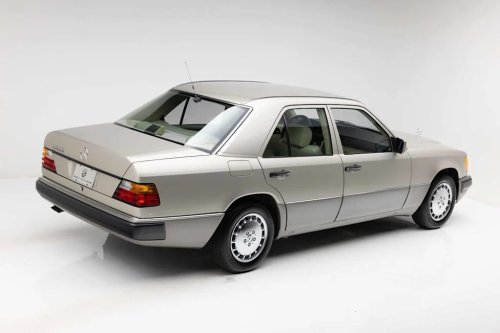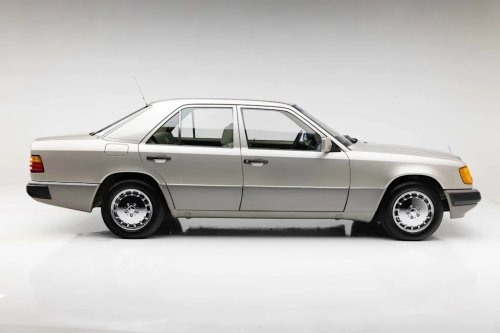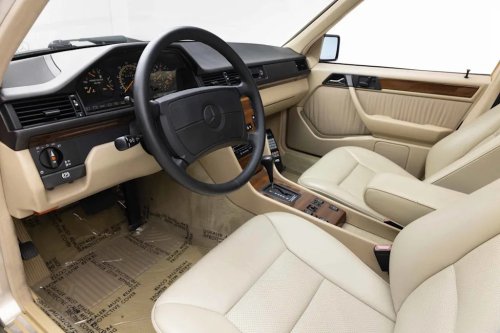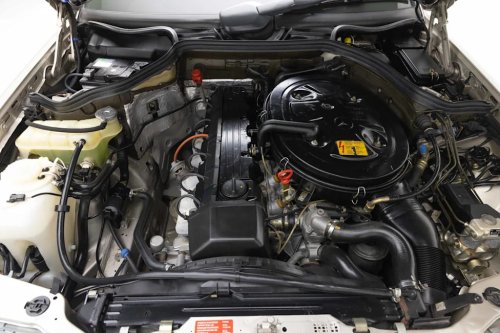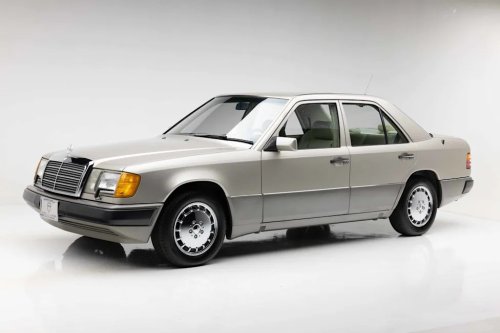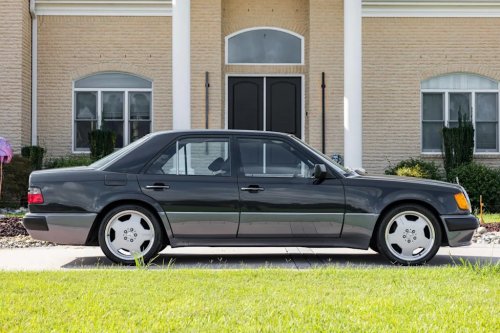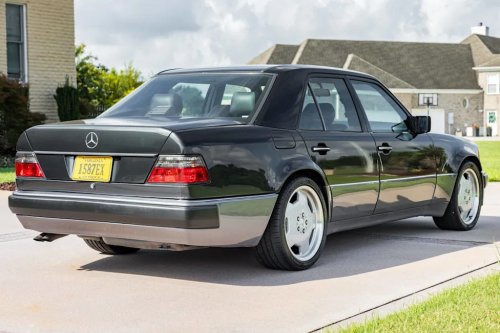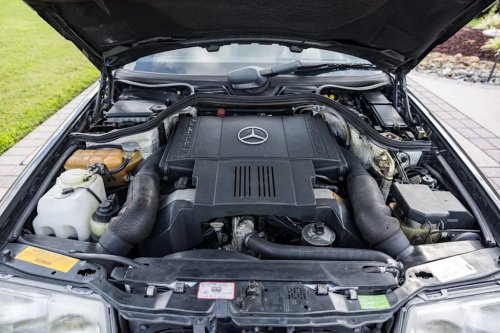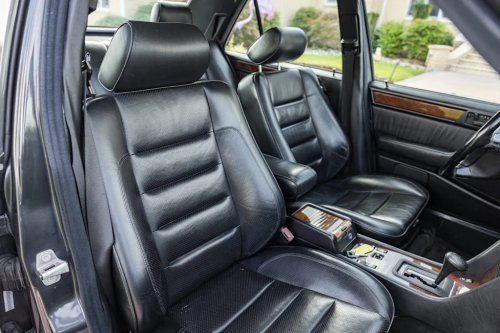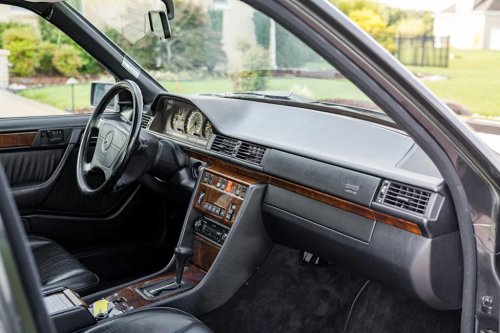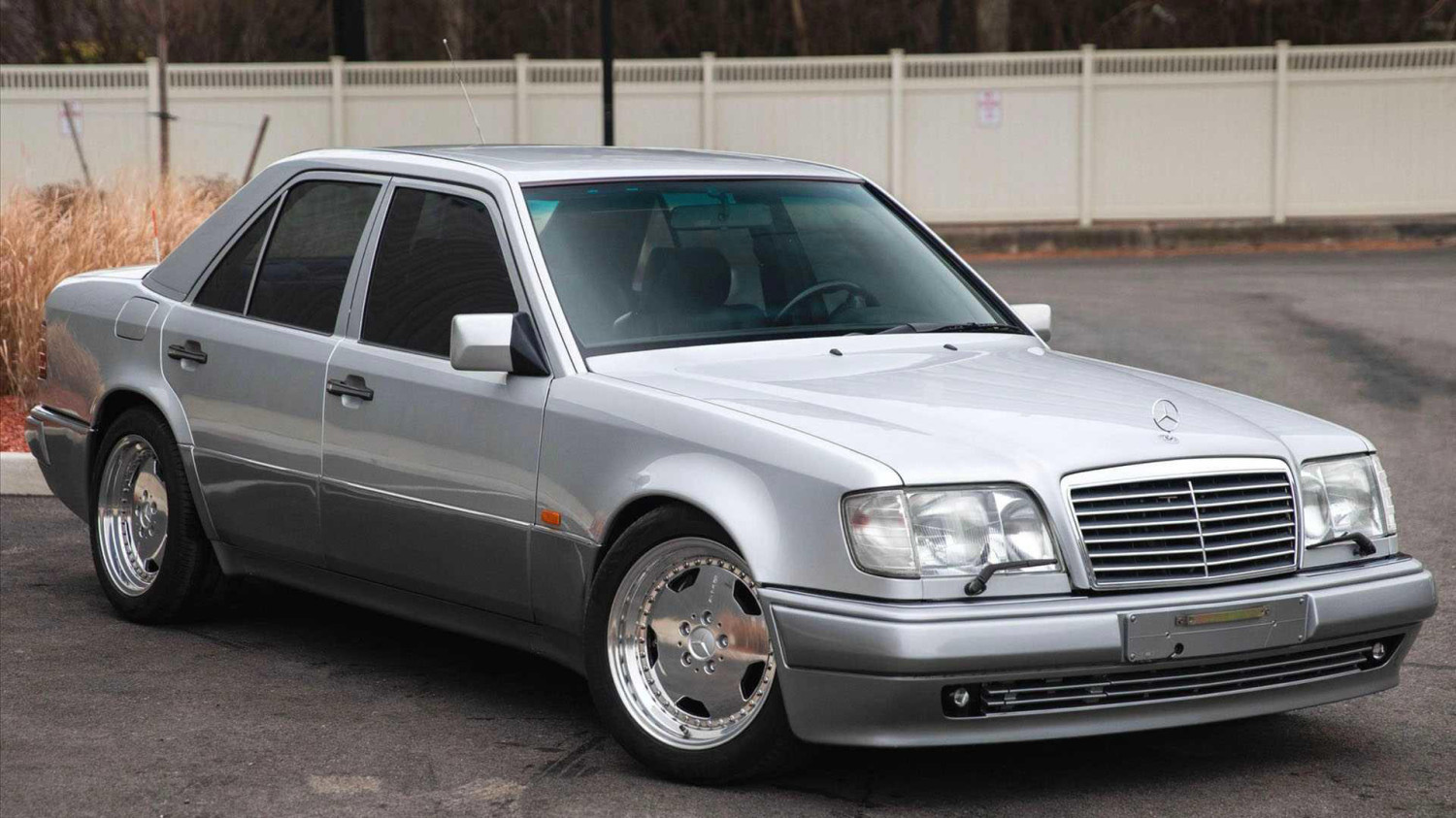

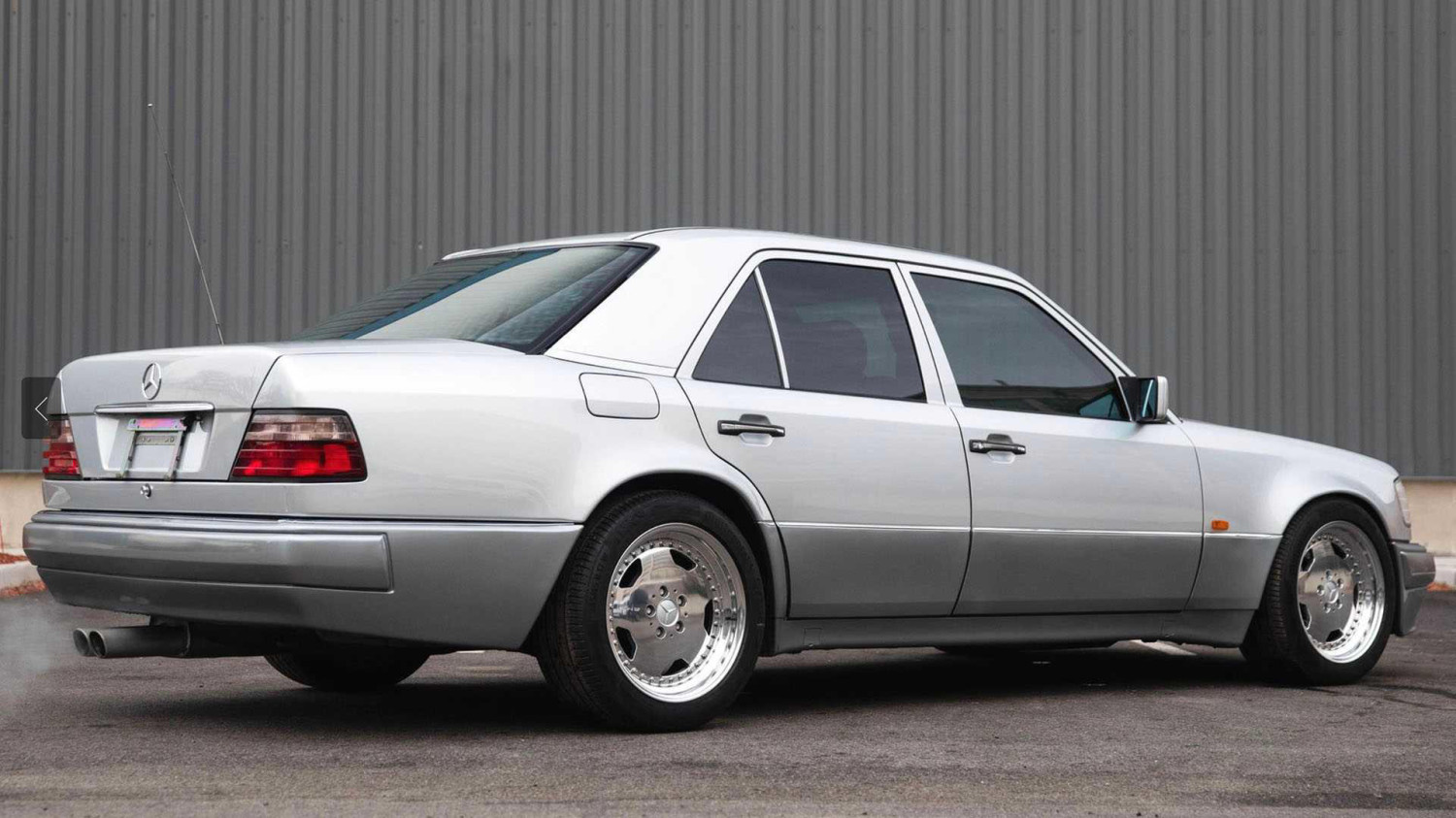



















The 1990s marked a transformative era for performance cars. Sports sedans closed the gap on traditional sports cars, offering a compelling mix of everyday usability and high-performance. Manufacturers from Germany, Japan, and the U.S. shifted their focus toward marrying high-performance engines and corner-carving driving dynamics into comfortable, practical four-door sedans. All the while, challenging the notion that sports cars needed to be lightweight two-seaters with minimal practicality.Through the 90s, automotive technology saw rapid evolution with the move towards electronic fuel injection, advanced suspension systems, and traction control, which became common, allowing engineers to extract greater performance without compromising drivability. Automatic transmissions also started catching up to manuals in shift speed and precision, further broadening the appeal of performance-oriented sedans.Brands like BMW, Audi, and Mercedes-Benz explored this space aggressively, pushing the limits of what a sedan could achieve. These big-three Germans offered powerful engines, revised suspension setups, and discreet yet purposeful styling. Meanwhile, Japanese automakers developed turbocharged four-door models that quickly gained recognition for their reliability and performance per dollar.While sports cars from this period often received the spotlight, a few lesser-known sedans quietly delivered impressive results on both road and track. These cars often flew under the radar due to limited production, high pricing, or lack of widespread marketing. Yet, they earned respect from enthusiasts who valued subtlety, engineering, and balance.We look back at one such Mercedes-Benz from the 90s—a machine that delivered sports car-level performance without sacrificing comfort or everyday usability. The 1993-1995 Mercedes-Benz E60 AMG Is Often Overlooked 1993 Mercedes-Benz E60 AMG Front Three Quarter Mercedes-Benz E60 AMG - Highlights Based on the W124 500E, the E60 was essentially a product of Mercedes-Benz, Porsche and AMG Only around 45 units were manufactured, while some E500 models were converted to similar spec Retained its understated styling and practicality, while offering serious sports car performance Laid the foundations of AMG-tuned performance Mercedes-Benz models, which would eventually lead to AMG's acquisition The Mercedes-Benz E60 AMG is an extremely rare super sedan based on the mighty 500E, manufactured between 1993–1995. As a result, it was the product of Mercedes-Benz, Porsche, and AMG. However, the Mercedes E60 AMG remains one of the least-discussed performance sedans of the 1990s.Overshadowed by more visible rivals like the BMW M5 and later AMG models, the E60 never received the same attention in popular media or enthusiast circles. According to Hagerty, only around 45 examples were manufactured by the factory. Some W124 E500 owners had their cars converted, but the E60 AMG remains an extremely rare machine.Unlike its competitors, the E60 AMG was not positioned as a mainstream performance offering. It existed more as a specialized product, often available only through internal AMG conversions or in specific markets. As a result, it did not enter the broader consciousness of performance car buyers in the way its contemporaries did.Mercedes-Benz developed the E60 AMG at a time when the company still treated AMG as a semi-independent tuner. This approach placed the car outside the conventional AMG lineup that formed later. Without consistent branding, wide dealer support, or press exposure, the E60 never established a lasting public identity. Collectors and enthusiasts who encountered it often viewed it as a rare variant rather than a landmark model.Despite this, the E60 AMG helped redefine the performance sedan, delivering high levels of power, refined chassis dynamics, while remaining understated, without losing any of its practicality. Sure, the 6.0-liter V8 did compromise on fuel economy, rated around 17 mpg combined. However, it demonstrated that a high-output V8, advanced suspension tuning, and discreet styling could coexist in a single package, aimed solely at experienced drivers.The E60 AMG also showed that performance sedans didn’t need to shout their intentions. It catered to buyers who valued understatement and technical excellence over image. In doing so, it laid the foundation for a quiet shift in how future AMG sedans would approach performance—focusing on torque-rich engines, subtle design, and everyday usability. Although it remained in the background during its time, its influence gradually shaped Mercedes-AMG’s philosophy in the years that followed. The E60 AMG Used A Bored Out V8 From The E500 W124 1993 Mercedes-Benz E60 AMG Engine Performance Specifications (Source: Mercedes-AMG)The Mercedes-Benz E60 AMG features the M119, which is a 6.0-liter V8 engine. Essentially, it is a bored-out version of the E500’s 5.0-liter unit. With the enlarged bore and elongated stroke, AMG improved the V8 engine's power output to 381 hp at 5,500 rpm and 428 lb-ft of torque at 3,750 rpm. The engine was known for its strong mid-range performance, aided by the dual overhead camshafts and four valves per cylinder configuration. The naturally aspirated engine offers linear throttle response and consistent power delivery.The engine in the sports sedan was paired with the 722.3 4-speed automatic transmission. However, the gearbox was toughened up and tuned for smooth shifts. While it may not be as quick to shift compared to modern transmission standards, it was built to withstand the high-torque output the V8 engine demanded. Additionally, AMG recalibrated the gearbox for quicker kickdowns and stronger shift points under load.The E60 AMG uses a revised version of the E500’s suspension system. It features MacPherson struts in the front and a multi-link independent setup with self-leveling hydraulic rear suspension. AMG added stiffer springs and dampers to reduce body roll and improve handling and driving dynamics.Performance testing at the time showed the E60 AMG accelerated from 0 to 60 mph in approximately 4.9 seconds. Its electronically limited top speed of 155 mph could be exceeded in delimited versions, reaching over 173 mph. Braking performance improved through larger discs and calipers sourced from the SL600, increasing fade resistance and stopping power. These components collectively supported the E60 AMG’s high-speed touring and performance capabilities. Mercedes E60 AMGs Are Worth $160,445 And Values Are Rising Via: Cars and Bids Mercedes-Benz E60 AMG - Worth Today (Source: Classic.com)The Mercedes-Benz E500 (W124) in the U.S. retailed for $80,000–$85,000 in the early 1990s. While the Mercedes-Benz E60 AMG was never officially sold in the US, the conversion kit in Europe and Japan cost around $25,000–$35,000. This would result in the E60 AMG costing an estimated $110,000-120,000.According to Classic.com, an online aggregator for used classic cars, a 1993-1995 E60 AMG is valued at an average of $160,445. The E60 AMG is so rare, only four sales were recorded over the last five years. The lowest sale recorded was for a modified 1994 model with 89,000 miles that sold for $93,500 five years ago.Three subsequent sales have, however, seen a steady appreciation in value. A model with 91,000 miles sold for $124,444 in 2023. In 2024, values escalated when two examples with lower mileage sold for $199,834 (49,000 miles) and a staggering $224,000 (76,000 miles).These figures highlight the E60 AMG’s growing status as a sought-after collector’s car, driven by its rarity and understated legacy. With only a handful of known examples and rising auction values, the model has quietly become one of the most valuable performance sedans of the 90s.