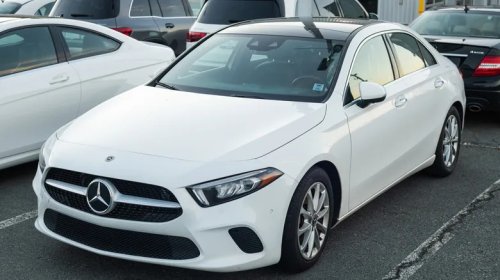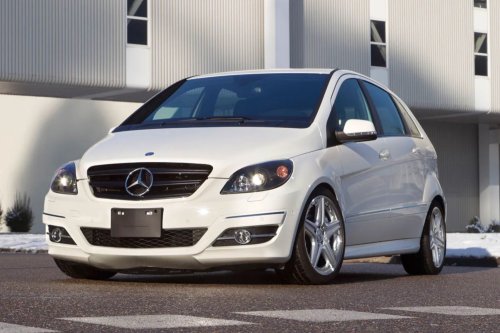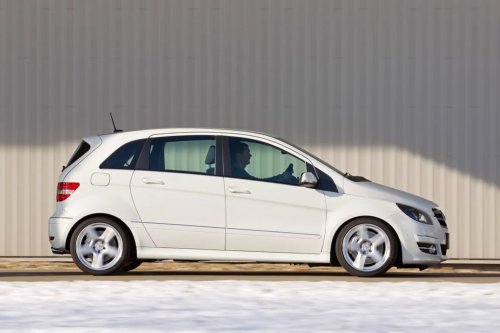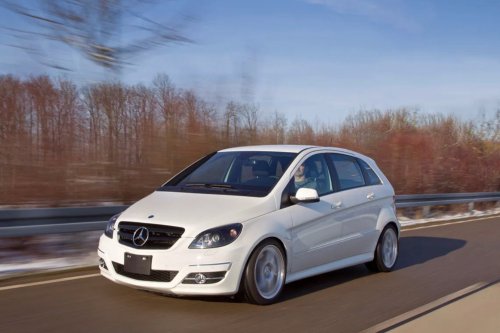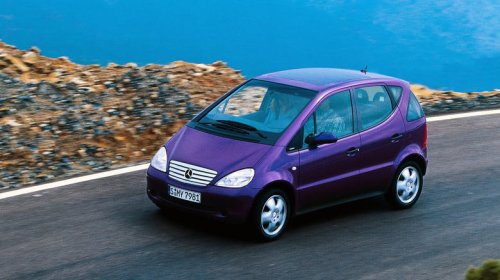
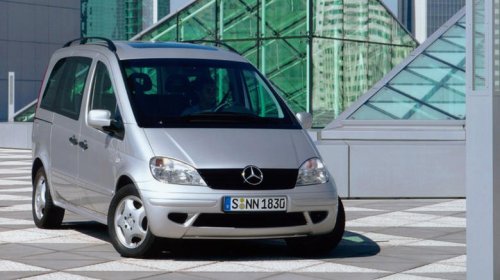
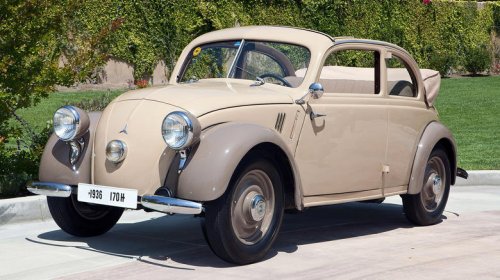
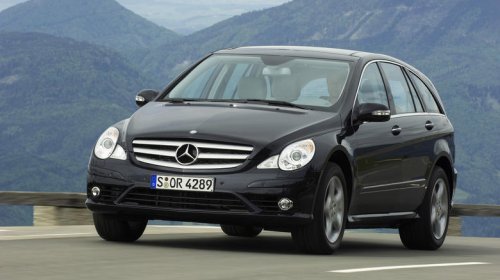
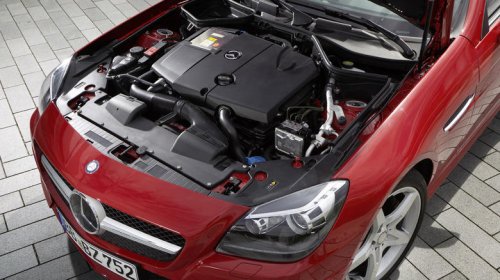



















Mercedes-Benz A-Class W168 (1996-2005)Back in 1997, the biggest news in the automotive landscape was the launch of the A-Class, Mercedes-Benz's first-ever front-wheel-drive passenger car. To say that expectations were high would be an understatement. Mercedes-Benz was still the brand to beat in engineering, and its prowess showed with the sandwich floor, wherein the engine was placed at an angle between the wheels and the cabin. As a result, the A-Class was very roomy, and also safe during a frontal crash.However, the first-gen A-Class proved to be a nightmare. On October 21, 1997, Swedish journalists rolled over an A-Class during a standard moose test at 37 mph. The news took the world by storm. The German automaker was hesitant to accept blame at first, but less than a month later halted production. All sold cars were recalled, and equipped with ESP as standard; same with all new A-Class models. The suspension was reworked, too, though the changes ultimately resulted in a poor ride.The move restored Merc's dignity, as the A-Class was the first compact car ever with ESP as standard. As a result, in the next seven years, Mercedes-Benz built 1.1 million units. However, the automaker also lost 2.5 billion euros on the A-Class project. The moose test misfortunes were mainly to blame, but the woeful reliability also played its part. The car's revolutionary sandwich platform lived for another generation, but in 2015, Mercedes-Benz introduced the W176 A-Class, which followed a more traditional, Golf-like hatchback body style.Mercedes-Benz Vaneo (2002-2005)Although the sandwich had a rough start, Mercedes-Benz wasn't ready to give up on the idea just yet. So, in 2001, the automaker introduced the Vaneo — a minivan version of the A-Class. Designed to ride on the waves of the MPV craze in Europe, the Vaneo had every ingredient to succeed: a very roomy interior, seven seats, practical bits like a passenger seat that could become a picnic table, sliding rear doors. Heck, the longer wheelbase even made it more stable than its smaller brother.However, all these genius features hid a bitter reality — the Vaneo didn't feel like a Mercedes-Benz once it started rolling. Inside, it was a patchwork of low-grade plastic, which rattled almost constantly. The suspension was super-harsh, too, which didn't help matters, and the engines were unrefined. These deficiencies would've been fine in a commercial van, but not in a costly Mercedes. Oh, yeah, and the Vaneo cost as much as the bigger and better Opel Zafira and Renault Scenic.Basically, the Vaneo was a cash grab, playing on the three-pointed star's cachet to lure buyers. It didn't work, though. Mercedes-Benz sold a meager 15,555 Vaneos in 2002, the first full year of production, which has fallen to just 6,417 units in 2005. Predictably, the weird-looking MPV was canceled after only three years in production, making it one of the shortest-lived Mercedes-Benz models during the modern era.Mercedes-Benz 170 H (1936-1939)The 170 H was like the Vaneo of an older era. Imagined as the car for the people, the 170 H was developed with low price and fuel economy in mind. Rear-engine, rear-wheel drive. A traditional "bug" shape. Yup, it looked a lot like the Beetle, which interestingly appeared two years after Mercedes-Benz showed its rear-engine concept.Mercedes-Benz chose the rear-engine concept to streamline the 170 H's body and increase aerodynamic efficiency. As a result, the bug-shaped car got 30 mpg, reaching 72 mph. You might say that's not much, and you'd be right, but keep in mind that the 170 H (Heckmotor, or rear motor) was powered by a measly 1.7-liter inline-four unit producing 38 hp.The 170 H also featured an independent front suspension with a swing axle and hydraulic drum brakes on all wheels. Still, the heavy engine positioned behind the rear wheels made the 170 H a bit tricky to control at the limit. Hardly surprising, as even the modern Porsche 911 can be tricky at times.Despite all these advancements, Mercedes-Benz sold only 1507 units. To put it bluntly, people simply favored the front-engine, rear-wheel drive 170, which had the customary Mercedes grille upfront, not the weird bug-eyed face of the 170 H. Well, at least it gave birth to the Schlörwagen, developed by engineer Karl Schlör in a wind tunnel to achieve an exceptional drag coefficient of 0.11.Mercedes-Benz R-Class (2006-2013)Grand sports tourer. Quite the nickname for a premium minivan that honestly looks like a hearse in black. Yet, like with many pioneering models in its modern history, Mercedes-Benz tried to fix what wasn't broken. Seven spacious seats. Potent engines, including an R63 AMG version with a naturally-aspirated V8 producing 503 hp. 0-60 in 4.6 seconds. A luxurious sporty minivan may sound nice, particularly to deep-pocketed buyers. But buyers still looked the other way. Mercedes-Benz discontinued the R-Class after seven years of average sales. It simply looked too much like a minivan to be taken seriously — an exorbitantly expensive minivan, mind you. But when you have a lot of money lying around, you want to fulfill your dreams. And at the turn of the century, people were dreaming about big SUVs, not minivans.The 2011 refresh made the front end more palatable, but design wasn't the only issue the R-Class had. Sure, Mercedes-Benz imagined it as a grand sports tourer, but its handling didn't earn that designation. It drove like a minivan. And during the 2000s, at least, the market was flooded with practical minivans available for a fraction of the price of an R-Class. Most of them are also not around today, despite being quite popular among families, so maybe the fate of the R-Class was influenced by external factors too.Mercedes-Benz SLK/SLC R172 Diesel (2011-2020)Imagine a lightweight two-seat sports car. Chances are, you are imagining a gas-powered engine, turbocharged or not. But can you imagine a turbodiesel engine in a sports car? Mercedes-Benz tried that recipe in the R172-generation SLK (later SLC) roadsters. The automaker wanted to give its customers a more economical solution, rather than a sportier one.Equipped with stop-start technology, the SLK 250 CDI was good for around 36 mpg. It was quite potent, too with the four-cylinder 2.1-liter engine producing 201 hp. Still, like with most turbodiesel engines, it's the 368 lb-ft of torque that's more impressive, available at just 1,600 rpm. As a result, the SLK 250 CDI sprinted to 62 mph (100 km/h) in 6.5 seconds with the six-speed manual; not bad for such an economical roadster.However, anyone who's driven a boosted four-cylinder diesel knows it's simply not a good fit for a sports car. Press the gas pedal. Wait for a bit. Wait for a bit more, and then — boom! All the torque is available to you instantly, overpowering the rear wheels. The experience is as non-linear as it gets. I've driven this engine in the W204-generation C-Class, and that's exactly how it felt. It was great for the highway because of the amazing torque, but struggled on twisty roads. To no one's surprise, the SLK 250 CDI faded into obscurity and never reached the status of the gas-powered alternatives, like the V8-powered SLK 55 AMG Black Series rocket.