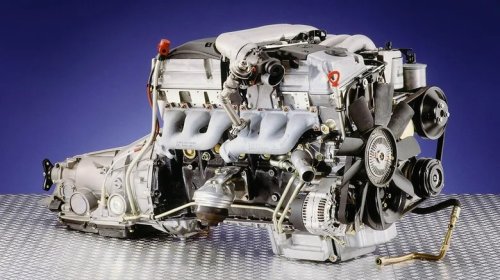
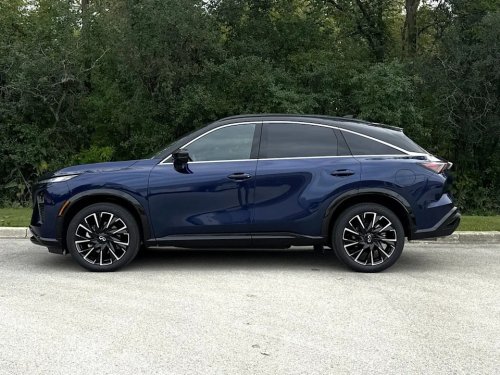
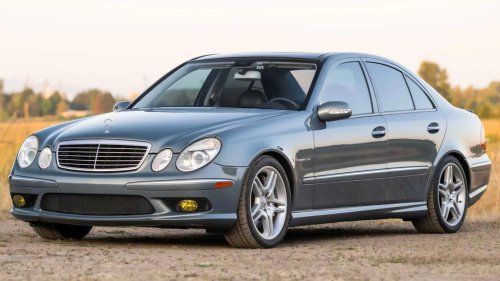
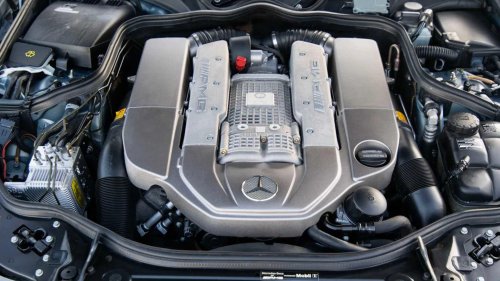
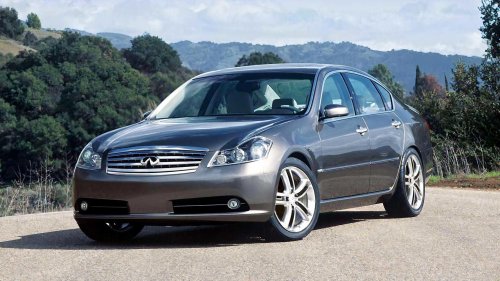
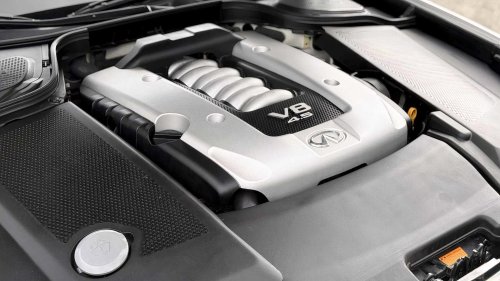
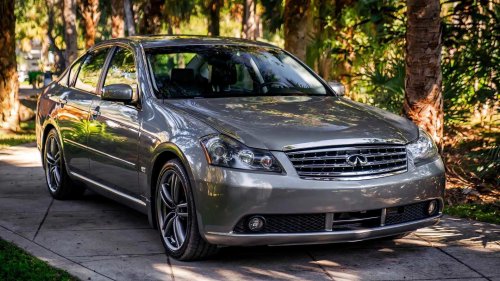
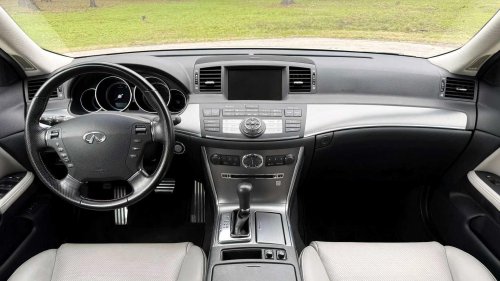
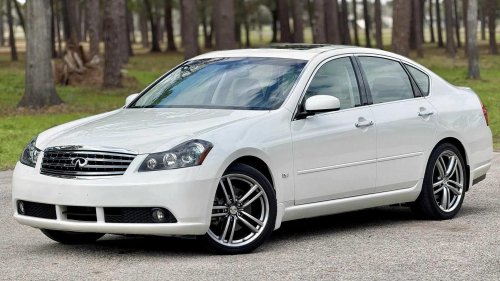
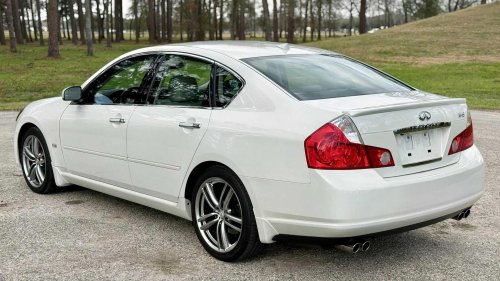
If you were to step back into the mid-2000s, the automotive landscape looked entirely different than it does today. Dealerships weren't filled with crossovers and big SUVs. If you wanted to make a statement, you got yourself a high-performance luxury sedan. For years, only European automakers were able to pull this off with big players like Mercedes and BMW. Audi didn't have as much recognition as they have today. These German titans were pushing the boundaries of engineering with four-door rockets that could keep up with supercars on the Autobahn but also keep their passengers extremely comfortable.But in the other part of the world, a sophisticated rival was quietly being engineered in Japan. It had the muscular, intimidating presence of an elite German cruiser, paired with a bulletproof V8 that could outlast them all. It was a vehicle that executed the high-performance luxury formula quite well, but many of us don't even remember this car exists. Premium Luxury Sedans Were Getting Faster Via: Bring a Trailer The early 2000s marked the return of the modern horsepower wars, but this time, it was led by the Germans. Until this point, luxury sedans prioritized comfort and effortless motion over outright performance despite having powerful V8 and V12 engines. That all changed when Mercedes-Benz decided to drop a bomb on the industry in the form of the W211 E55 AMG. This car sent shockwaves through the industry as it could embarrass almost every sports car and even some supercars when it came to straight line speed.It was powered by a hand-built, 5.4-liter supercharged V8 producing an astonishing 469 horsepower and 516 lb-ft of torque to the rear wheels. It was a luxury car that could hit 60 mph in 4.4 seconds and cross the quarter-mile line in the 12-second range, which was performance that previously belonged exclusively to lightweight supercars or heavily modded drag cars. At the time, the E55 AMG was the fastest factory sedan in the world. Suddenly, a luxury sedan wasn’t just expected to be comfortable and stupidly fast. BMW responded with the screaming, Formula 1-inspired V10 engine in the E60 M5, and Audi countered with its twin-turbocharged V10 S6. These cars created an elite group of super-sedans that could be completely docile when needed but become supercar slayers at the flick of a button. They Became Expensive To Own Via: Bring a Trailer German cars are usually great when they're new, expensive and still under warranty. But as they age, time exposes some of the downsides of these complicated German machines. Owning and maintaining a 20+ year old German luxury car can be a serious financial liability. On the Mercedes E55 AMG, owners began facing terrifying repair bills for the complex Airmatic air suspension systems and the notoriously failure-prone Sensotronic Brake Control (SBC) hydraulic pump.Over on the BMW side, the M5 became a ticking time bomb of rod bearing failures and catastrophic high-pressure VANOS system leaks. Keeping these European cruisers on the road today requires deep pockets, specialized tools, and a high tolerance for regular parts failures. They remain absolute blasts to drive, but their astronomical maintenance costs have turned them into serious gambles for the average enthusiast. Infiniti Wanted A Car That Would Rival The Germans Infiniti During this era of peak German dominance, Infiniti was undergoing a massive brand renaissance. Nissan's luxury division had spent the late 1990s struggling to find a clear identity. That changed in the early 2000s with the introduction of the G35 coupe and sedan, which proved the brand could build a fun, rear-wheel-drive car capable of going toe-to-toe with the BMW 3 Series. Infiniti was suddenly cool and genuinely exciting.However, the brand still lacked a true contender that could take on top-tier executive performance cars. They needed a vehicle that could be as luxurious as most high-end Japanese cars and be a serious highway cruiser like an AMG product, but with the rock-solid mechanical engineering that Japanese luxury was famous for. This was an ambitious goal, but the result was a silent, beautifully sculpted Japanese masterpiece that unfortunately flew completely under the radar of most buyers. The Infiniti M45 Was A Japanese AMG Infiniti When the redesigned Y50-generation Infiniti M45 was shown in 2005, it was clear this car was intended to be a luxury car as it was stunning from every angle, which set it apart from its tamer Japanese contemporaries. While Lexus and Acura were playing it safe with the understated luxury look, Infiniti went with that sporty luxury look with its long wheelbase, short front overhangs, pronounced body lines, quad exhaust tips and sporty wheel design.But the design wasn't enough to make this car appealing, so they copied the AMG formula. Instead of a small, high-revving V6 engine, Infiniti stuffed their largest, most powerful production V8 engine into this mid-sized luxury car, beefed up the suspension, and sent all the power to the rear wheels. The result was a pure Japanese muscle sedan that could easily chase after the European super sedans. The 4.5-Liter V8 Is The Reason You Buy This Car Bring A Trailer For this generation, there was an M35 model that used the famous VQ V6 engine, but the M45 was blessed with the 4.5-liter VK45DE V8. This aluminum-block, double-overhead cam engine had very smooth power delivery and was very durable. It produced a healthy 335 horsepower and 340 lb-ft of torque to the rear wheels only. This engine is the beating heart of the M45 and is the main reason you would want to buy this car, it transforms a comfortable executive cruiser into a serious performance car.The VK45DE didn’t rely on forced induction; its power delivery was linear, predictable, and paired with a deep, V8 rumble that sounded remarkably similar to a European performance motor. But the lack of forced induction meant that it didn't have the immediate torque hit that you would experience from most German heavyweights. However, this engine was so robust that modified racing versions of this exact V8 were used by Nissan to power their top-tier Super GT race cars and LMP2 Le Mans prototypes. It is an engine designed to take a relentless beating without ever breaking a sweat. The M45 Drives Just Like A Sports Car Bring A Trailer What truly shocked automotive journalists at the vehicle's launch was that the M45 didn’t just excel in a straight line, it could actually handle corners with sports car agility. This exceptional driving dynamic was a direct result of the chassis it was built on. The M45 was built upon Nissan’s highly acclaimed FM (Front Midship) platform. By pushing the heavy V8 engine as far back into the engine bay as possible, Infiniti achieved a highly optimized front-to-rear weight distribution.This was the same platform used by the nimble Nissan 350Z, its Infiniti G35 coupe sibling and the G35 sports sedan. These cars were known for their engaging driving and sharp handling but the M45 took it a step further. In the M45 Sport trim, the chassis was further enhanced with a stiffened sport suspension, massive 19-inch alloy wheels, and an innovative Rear Active Steer (RAS) system. This system actively adjusted the angle of the rear wheels in real time, sharpening turn-in response at low speeds and dramatically improving stability during high-speed lane changes. There was also a facelift in 2008 that added the option of all-wheel drive known as the M45x. AMG Power But More Affordable To Own Bring A Trailer Where Infiniti completely separates itself from its German counterparts is long-term ownership. Maintaining an old Mercedes E55 AMG can quickly turn into a financial nightmare due to its electronics and fragile air suspension parts. The M45, on the other hand, delivers its high-performance thrills without the associated financial anxiety.Because the M45 uses a traditional steel coil-spring suspension instead of a complex pneumatic system, you will never walk out to your driveway to find the car sagging to the ground on blown air struts. It relies on conventional, highly reliable vacuum-assisted brakes rather than complex electro-hydraulic pumps. Parts are widely available, highly affordable, and the vehicle can be easily serviced by any competent local mechanic or DIY enthusiast. It offers 80% of the AMG driving experience in a much more reliable package. The Infiniti M45 Sport Deserves More Respect Today Bring A Trailer Despite its incredible capability, the Infiniti M45 was largely overlooked when new, and it continues to be criminally underrated today. A large part of this comes down to the badge. Buyers spending money on a premium luxury car want the social status that comes with owning a Mercedes-Benz or BMW. Infiniti didn't possess that luxury brand image then, and they still don't possess it today. This was a result of the struggles faced in later years with renaming models and an overall industry shift away from sedans to SUVs. Enthusiasts simply forgot that this company was once capable of building a world-class V8 muscle sedan. It is a car that genuinely deserves a spot among some of the best rear-wheel drive sport sedans of that era. The M45 Is A Great Used Car Bargain Bring A Trailer For savvy car enthusiasts shopping the modern-classic market today, the Infiniti M45 is a car you need to look at. You can easily find clean, V8-powered M45 Sport for around $10,000, which is a fraction of the cost of a comparable European super sedan. For that price, you get a timelessly handsome vehicle with an elegant leather-and-wood cockpit, a race-bred naturally aspirated V8, and a genuinely engaging rear-wheel-drive chassis. It stands as a monument to an era when Infiniti dared to build an uncompromising driver's car that offered a flawless blend of executive luxury, sports car dynamics, and bulletproof reliability that remains incredibly tough to beat for the money.Sources: Infiniti, Nissan, Classic.com, Mercedes-AMG.



















 +36 others