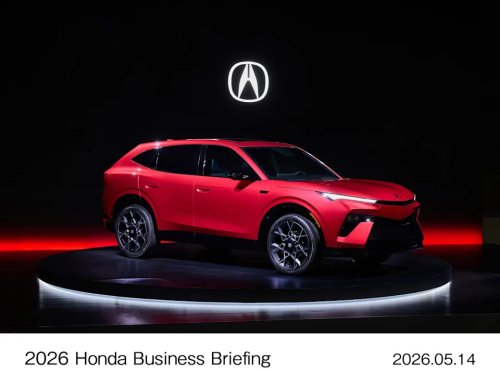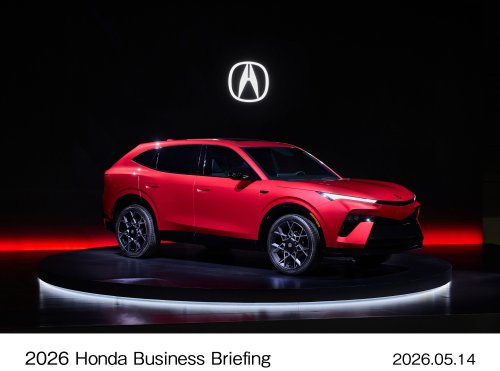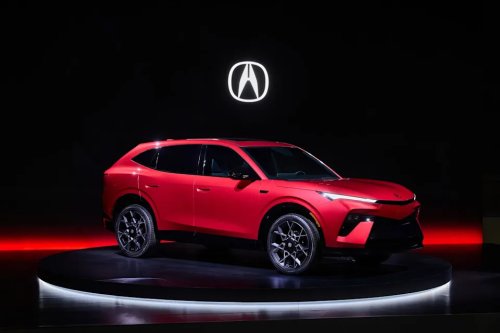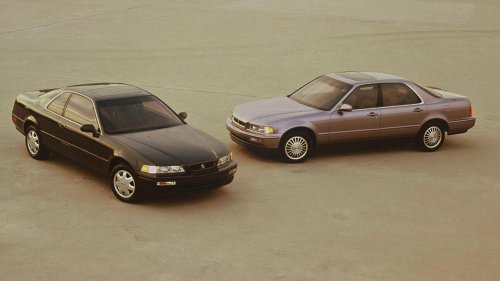
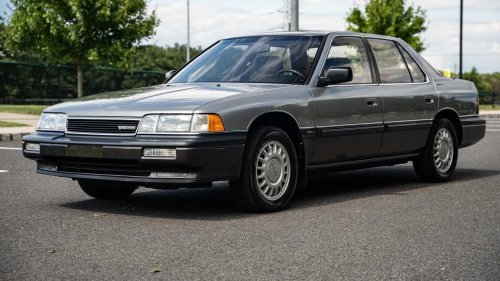
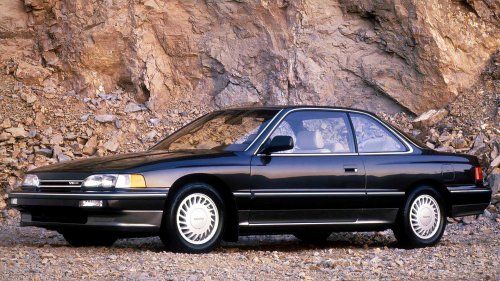
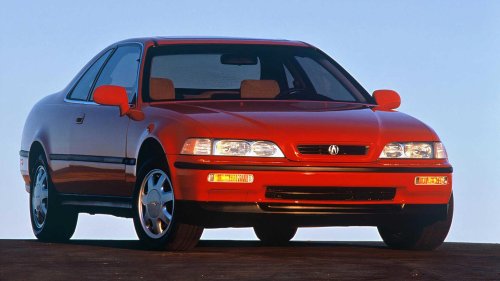
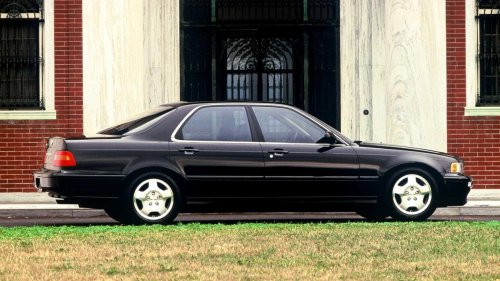
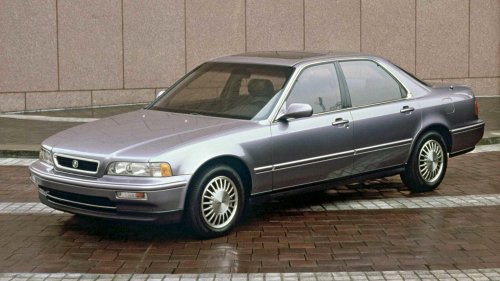


















In the late 1980s, Toyota shocked the car industry, particularly the three German brands, Audi, BMW, and Mercedes. The Lexus LS was developed with an open checkbook and became a legendary luxury sedan, still garnering cult-like status among enthusiasts 40 years later.But, it's often forgotten that Honda delivered the first punch against the premium German stalwarts by forming Acura in 1986 – three years before Lexus. The brand's first car was the Legend, a V6-powered flagship sedan that still commands respect. Later, the nameplate expanded to include a luxury coupe. How Acura Happened Acura Newsroom It wasn't a coincidence that Honda, Nissan, and Toyota all launched premium brands within a few years of each other in the 1980s. Following the late 1970s oil crisis, the Japanese government and United States trade representatives agreed to a voluntary restraint agreement in 1981, squarely aimed at protecting the American automotive industry from an onslaught of economical Japanese cars. It encouraged Japanese automakers to export more profitable, higher-priced cars, but in 1985, the cap on Japanese imports was raised, opening the door for the brand's ambitious projects.Acura was the first Japanese brand out of the gate with the Legend, which was also involved in a joint venture with the UK's Austin Rover Group as part of the British Leyland and Honda alliance. Austin came away with what is generally regarded as its last great car, the Rover 800, and Honda got the car it wanted so it could expand its presence in the US – the Honda Legend. As part of the deal, Honda also developed and built its first production V6 engine. Acura, as a brand, was primarily for the US, and launched with the slogan "Acura. Precision Crafted Automobiles." Enter The Legend 1987 Acura Legend Sedan front 3/4Acura's opening salvo consisted of the Legend flagship executive sedan and the compact, sporty Integra. The Legend came fully loaded with only one factory option – a four-speed automatic transmission or a four-speed manual transmission. Other engines followed, but the Legend went into production in 1985 with a 151-horsepower 2.5-liter V6. It was a modest powerplant, but featured multi-port fuel injection and four valves per cylinder when most American cars were still using carburetors and pushrods. Unlike the premium German brands, the Legend was front-wheel- rather than rear-wheel-drive, which allowed Acura to compete on price and value for money.The North American Legend was close in equipment to the Japanese-market version and came with an upmarket Technics-supplied 80-watt stereo and moonroof as standard. For ride quality, the Legend used four-wheel independent suspension with double-wishbones at the front, while its closest competitors used MacPherson struts and beam axles. As a result, the Legend launched with high praise from the press for its ride, fuel efficiency, cabin space, and general comfort and convenience.Acura In 1987, Acura followed up the halo sedan with a sporty Legend coupe, which arrived with more power and double-wishbone rear suspension. The V6's displacement increased to 2.7 liters, adding 10 hp and 10 lb-ft of torque. The powerplant was the first Japanese vehicle to offer a driver's-side airbag, which came with the top LS trim. It was an important development for the Legend, as the larger engine and double-wishbone rear suspension were also adopted for the sedan version, but not until 1989. The Difficult Second Generation 1992 acura legendFor the 1991 model year, Acura launched an all-new Legend. But now, the brand was competing with Lexus and Infiniti. The Legend grew to over six inches in length and became sleeker, with a bigger engine. The new 3.2-liter V6 made 200 hp and was mounted longitudinally (front-to-back in the engine bay), but despite its proportions, it was still front-wheel-drive. A six-speed manual became available, but the big upgrades were new luxury features.Customers could get speed-sensitive steering, hands-free telephone, automatic climate control, heated leather seats, heated mirrors, and, for safety, dual front driver and passenger airbags, four-wheel disc brakes with anti-lock braking (ABS), and seat belt pre-tensioners. The coupe even featured electric soft-close doors – a feature still available only on some high-end cars. By the end of its run, the GS trim was the top spec, and power was bumped up to 230 hp.It's no accident that the second-generation coupe hints at the same design language as the Acura NSX, which went into production in 1990. The engine being mounted longitudinally for the second generation was an odd choice for a front-wheel drive vehicle. The extra space under the hood and the engine's orientation hinted that Acura might have been planning a V8 or all-wheel drive down the road. Acura never said anything either way, but it became a moot point as the Legend wasn't long for this world. The Legend Ends, Sanctions Are Threatened Acura While the Legend didn't have the monumental impact of the Lexus LS 400, by 1990, Acura was outselling BMW and Mercedes in the US. The situation changed by 1991 as Lexus began to build up steam. Still, the Legend had done its job, putting Acura on the premium car map.Meanwhile, the US government wanted to level the playing field between Japanese luxury cars and American competitors from Cadillac, Chrysler, and Lincoln. In May 1995, the US government threatened to put a 100% tariff on 13 specific models from Acura, Infiniti, and Lexus. The American International Automobile Dealers Association (AIADA) immediately went on the offensive with public relations and lobbying campaigns, pointing out that the tariffs would devastate American businesses and jobs. A month later, President Clinton announced that a deal had been reached, and the threat was over. Acura Continues AcuraWhile the Legend name was dropped in the US, it remained on the flagship Honda in Japan. Honda executives allegedly felt that the Legend nameplate was overshadowing the Acura name in the US, and wanted to follow BMW and Mercedes down the road of using alphanumeric monikers. The next two generations of Acura's large sedan carried the RL name in the US before being changed to RLX for the 2014 model year.The RLX was then retired in 2020, so Acura could concentrate on crossovers and SUVs. The Legend name did live on in Japan until 2022, so expect another few years before Acura revives it with as much fanfare as possible as a nostalgia nameplate for a concept or flagship electric SUV.1991-Legend-Sedan-sourceAcura's existence was, and is, predicated on Honda's observation that it made the first cars that people bought, the family cars they bought later, but not cars for its customers that were in between, and making good money. To this day, Acura seems to follow that thinking with upmarket versions of Honda vehicles. Still, it hasn't committed to crossing the line from premium to full luxury vehicles or to going rear-wheel-drive (outside the NSX). While the Legend initially leaned into the Mercedes market, the sporty coupe version followed. Now, Acura is more of a competitor to BMW's sporty lineup of premium vehicles, aiming for sporty value for money, while BMW isn't afraid to be expensive. And it's still working.