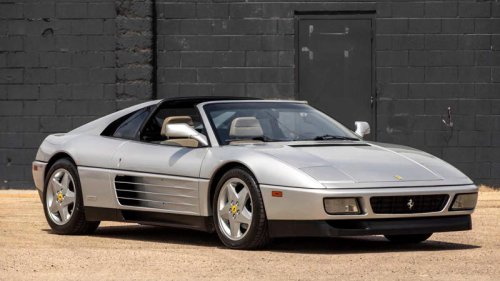
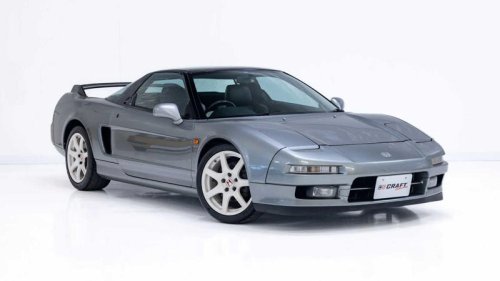
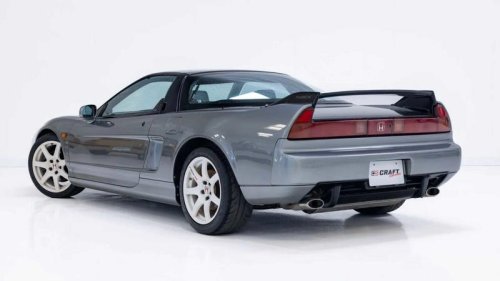
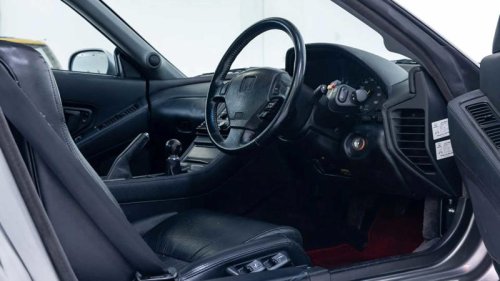
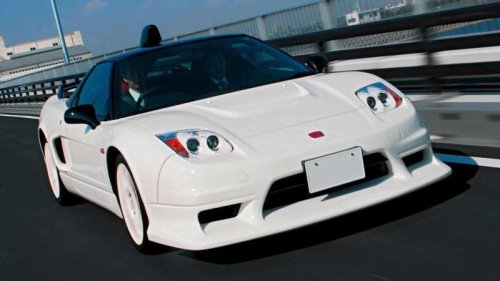
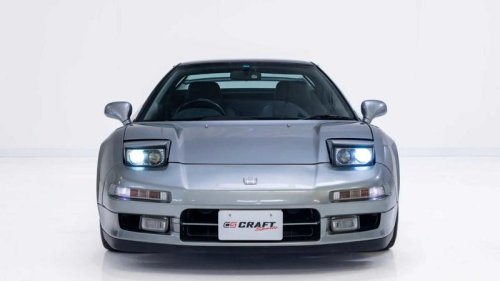
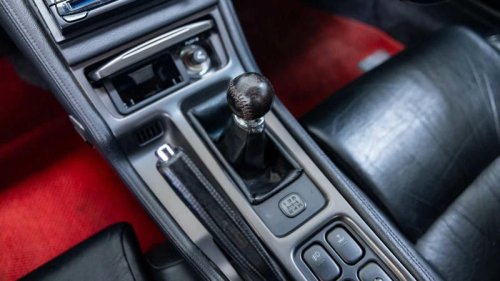
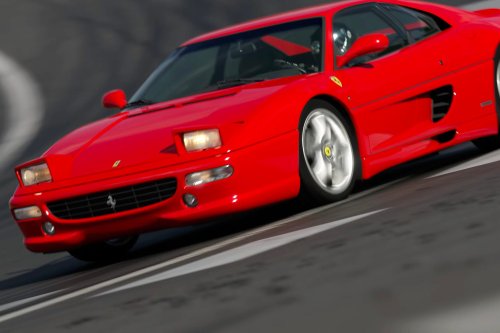
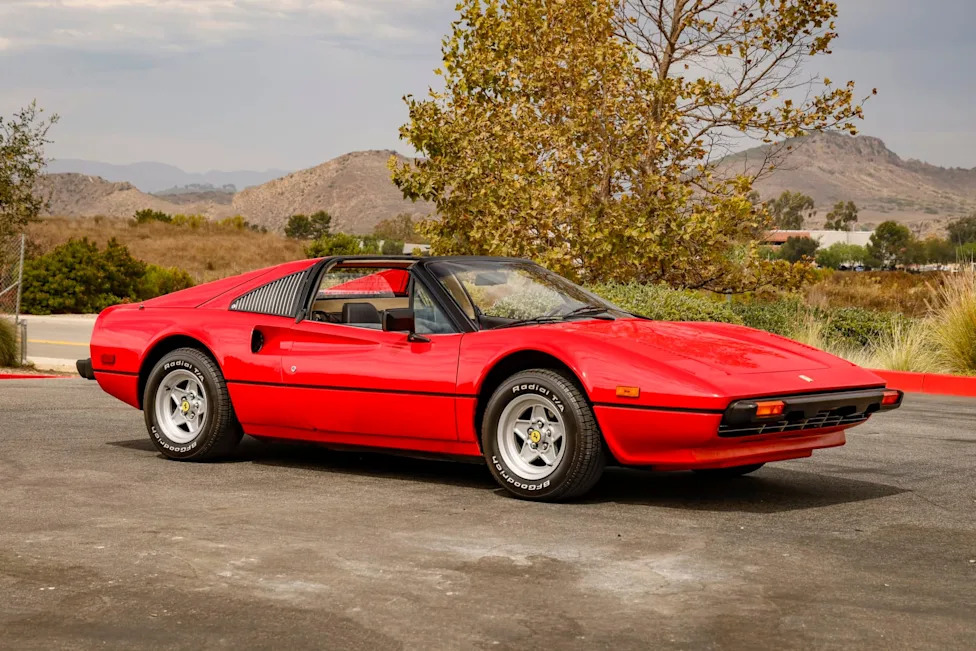
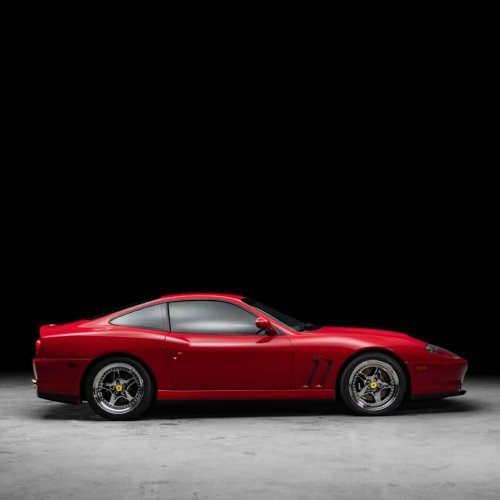
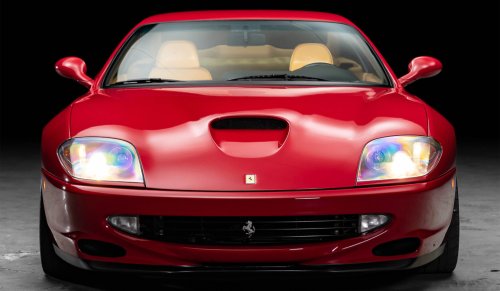
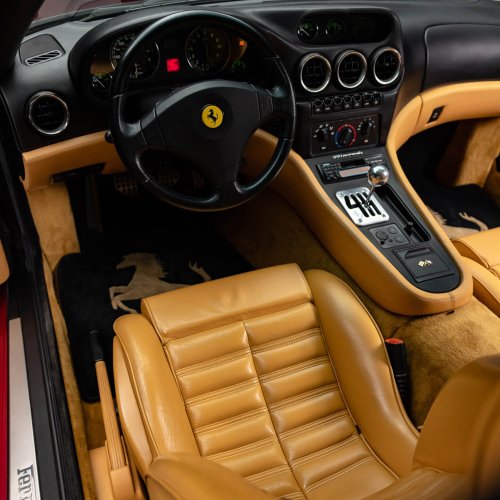
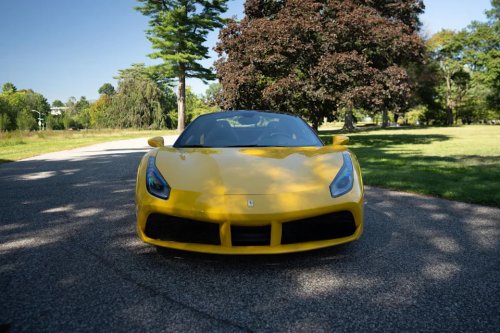
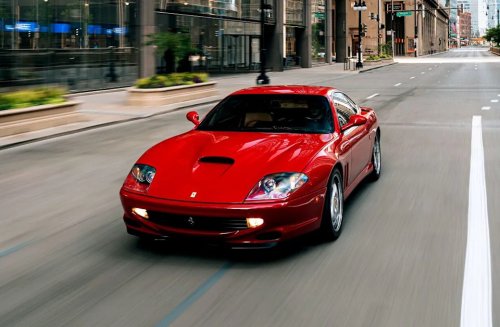
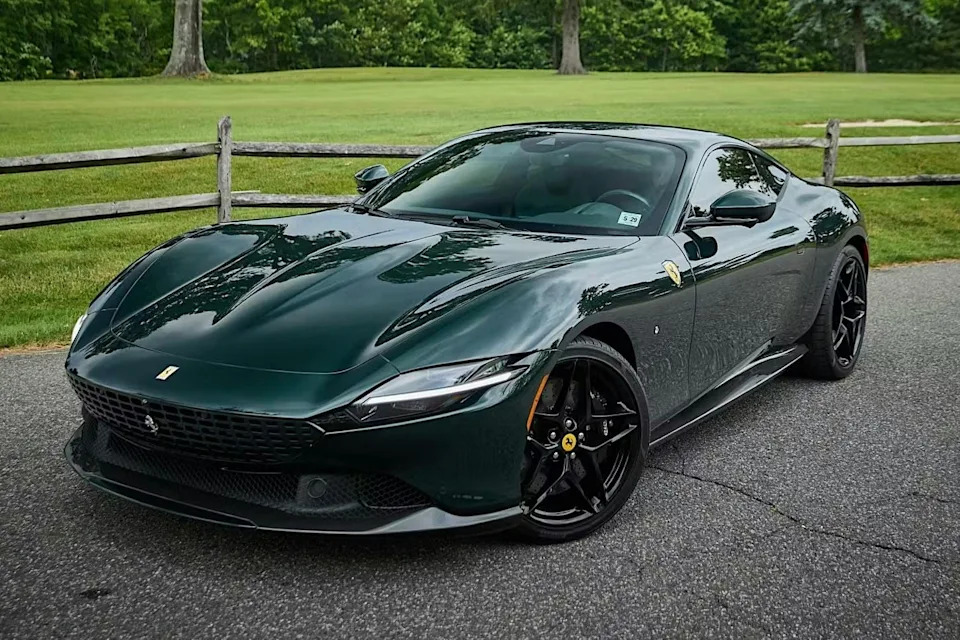
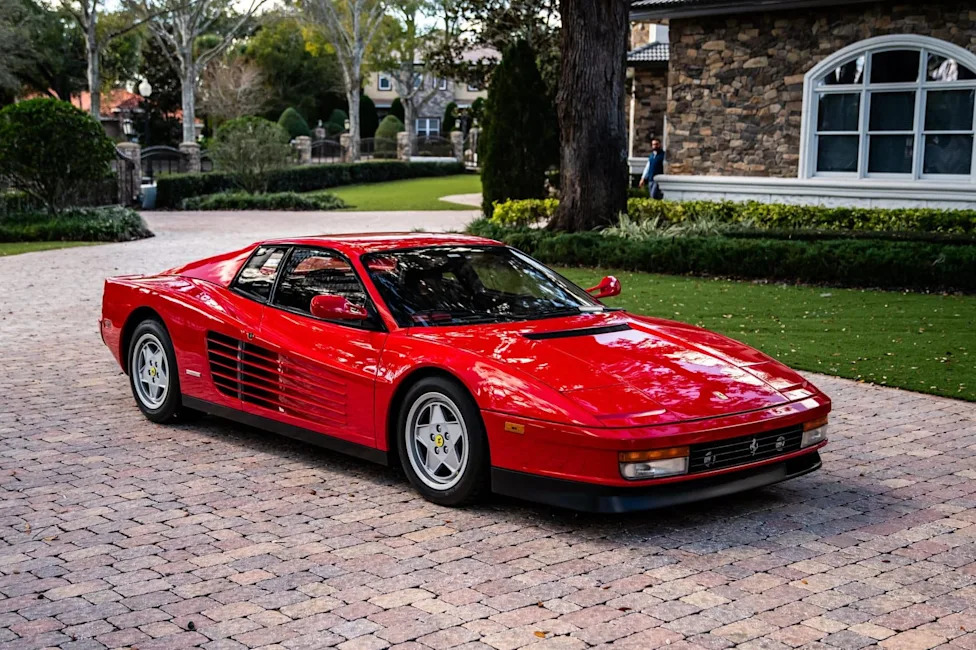
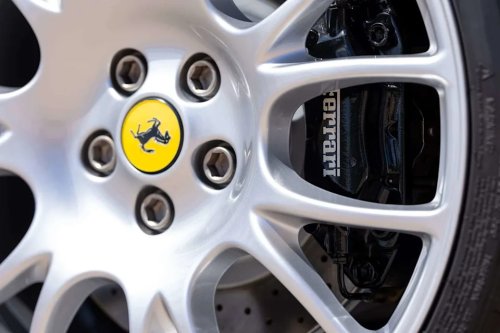
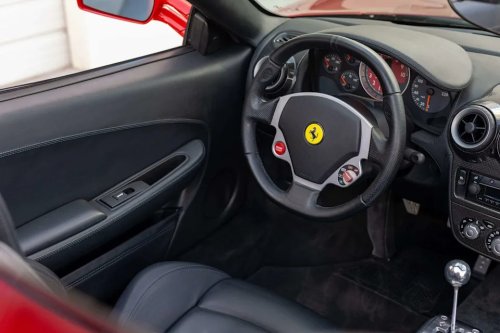
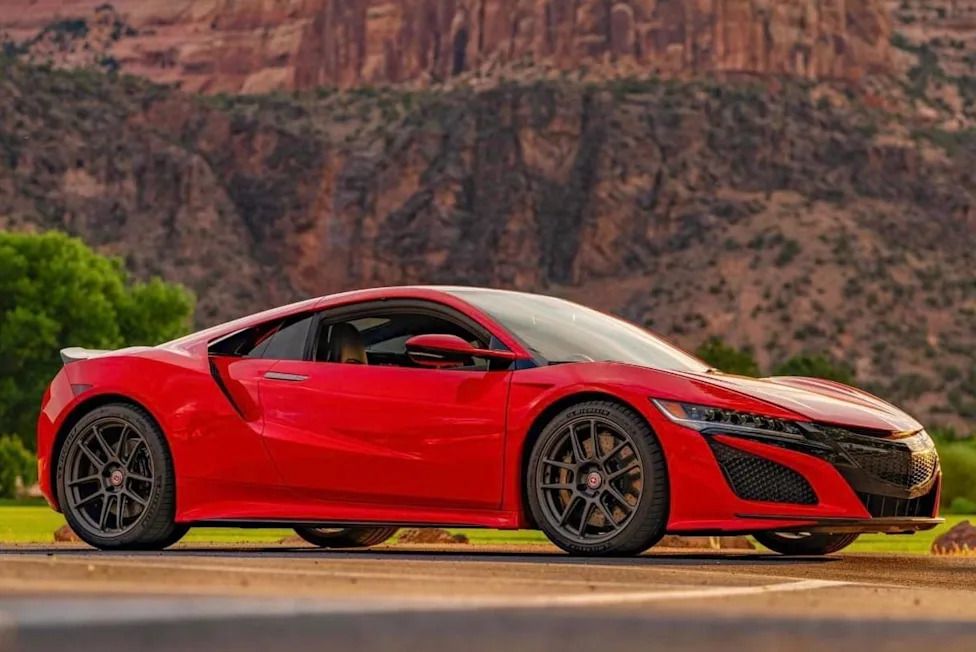
In the mid-1980s, Honda was a company known for building reliable economy cars and winning Formula One races, and nobody expected those two reputations to collide. The Japanese automaker had never built a supercar. It had no heritage in the segment, no existing platform to work from, and no brand cachet that could compete with the established European names. None of that mattered. What Honda had was the engineering talent, the ambition to benchmark the most famous sports car manufacturer on the planet, and the belief that a supercar built with the same obsessive quality that defined its Civic and Accord could expose fundamental weaknesses in how the Italian establishment built its cars. When Beating a Ferrari Meant Building a Better Car, Not a Faster One Bring a Trailer The Ferrari 348, launched in 1989, should have been a triumph. It replaced the beloved 328 with more power, sharper styling, and a new chassis layout that repositioned the engine longitudinally. Instead, it became one of the most criticised Ferraris of the modern era. Automotive journalists found the handling unpredictable at the limit, the build quality inconsistent, and the ownership experience defined by expensive engine-out servicing and temperamental electronics. The 348 was fast in a straight line, but it was also a difficult car to live with, and it represented a broader complacency that had settled over the European supercar market.This was the landscape that a team of engineers in Tochigi, Japan, decided to target. Development began as early as 1984, and the brief was not simply to match the Ferrari's speed. The goal was to build a car that offered supercar performance with the reliability, visibility, and daily usability of a Honda sedan. Every weakness of the 348, from its cramped cabin to its opaque forward visibility to its terrifying tendency to swap ends at the limit, became a design target for the Japanese team. The car they were building would not just compete with the Italian benchmark. It would embarrass Ferrari in every category that mattered to the actual owner. The Honda NSX Benchmarked Ferrari and Beat It at Everything That Mattered Bring a TrailerThe Honda NSX debuted at the 1989 Chicago Auto Show and went on sale in 1990 as a 1991 model, priced at $60,600. The car's 3.0-liter VTEC V6 produced 270 horsepower and 210 lb-ft of torque, numbers that looked modest next to the Ferrari's 300 hp V8. But the NSX weighed less, revved higher, and put its power down through one of the finest six-speed manual gearboxes ever fitted to a production car. It reached 60 mph in approximately 5.2 seconds and topped out at 168 mph. The aluminum monocoque chassis was the first ever fitted to a production car, saving significant weight over the steel construction used by every competitor.Titanium connecting rods, borrowed from Honda's Formula One program, allowed the engine to sustain an 8,000 rpm redline with confidence. Ayrton Senna provided development input on the chassis at the Nurburgring, requesting stiffer tuning that made the production car sharper than the prototype. The visibility, inspired by the F-16 fighter jet's bubble canopy, was a revelation in a segment where most competitors required a leap of faith to park.Period comparison tests left little room for debate. In a landmark 1990 evaluation, the NSX was chosen over the Porsche 911 Carrera 4, the Lotus Esprit Turbo, the Chevrolet Corvette ZR-1, and the Ferrari 348. Reviewers called it the first supercar with impeccable manners. The NSX matched or exceeded the 348 dynamically while costing less than half as much and requiring nothing more than routine Honda servicing to keep running. For the Italian manufacturer, that combination was not just a competitive threat. It was a public humiliation. How the NSX Forced Ferrari to Rethink Everything Bring a TrailerWith approximately 18,685 units built over 16 years, the NSX was never going to win a volume war against Maranello's full lineup. But sales were not the point. The NSX changed what Ferrari's own customers expected, and that shift forced the Italian manufacturer to respond in ways that reshaped its product strategy for the next decade.The first response was the F355, launched in 1994. Where the 348 had been criticized for its inconsistent build quality and difficult handling, the F355 arrived with dramatically improved fit and finish, a more communicative chassis, and an engine that remains one of the most celebrated V8s in automotive history. Ferrari engineers acknowledged that the 348's shortcomings had become impossible to ignore once the NSX provided a direct, affordable comparison point. The F355 was a direct quality response to the criticism the NSX had amplified.The second, more fundamental response came in 1999 with the Ferrari 360 Modena. For the first time, the Italian manufacturer adopted an aluminum space frame chassis, the same construction philosophy the NSX had pioneered nine years earlier. The move from steel to aluminum was not a coincidence. It was a direct acknowledgment that the Japanese automaker's approach to lightweight construction had been correct all along. The 360 Modena was lighter, stiffer, and more refined than anything the company had built before, and it set the template for every mid-engined Ferrari that followed. The McLaren F1 Connection That Proved the NSX's Reach Bring a Trailer The NSX's influence extended beyond Maranello. Gordon Murray, while developing what would become the McLaren F1, visited Honda's Tochigi Research Center with Senna and drove an NSX prototype. In his own words, the moment he drove it, every benchmark car he had been using as a reference vanished from his mind. The NSX's ride quality and handling became the McLaren F1's design target.Murray twice asked Honda to build a V10 or V12 for the F1. The Japanese automaker declined both times. He owned an NSX for seven years, covering 75,000 km, and later admitted to copying its drive-by-wire throttle system and drawing directly from its suspension geometry for the car many consider the greatest supercar ever built. The NSX had not just beaten a Ferrari. It had shown both Ferrari and McLaren how to build a better car. The NSX-R and the Ultra-Rare Variants That Defined the Legend Honda The engineering philosophy behind the NSX found its purest expression in the Type R variants that were offered exclusively in Japan. The first NSX-R, produced from 1992 to 1995, shed a remarkable 265 lbs through obsessive weight reduction: single-pane rear glass, lighter bumper beams mounted to aluminum brackets, thinner sound deadening, forged wheels, and the deletion of the audio system and air conditioning. Just 483 examples were built. Honda retained the same 270 horsepower output, trusting that less weight rather than more power was the path to faster lap times. The approach was vindicated every time an NSX-R appeared on a circuit.The second-generation NSX-R arrived in 2002 with even more aggressive measures. Carbon fiber replaced aluminum in the hood, rear wing, and front splitter, while the 3.2-liter V6 was precision-assembled using methods normally reserved for racing engines. Only 140 were built. A Honda test driver lapped the Nurburgring in 7 minutes and 56 seconds, matching the Ferrari 360 Challenge Stradale despite giving away 135 horsepower. At the extreme end sat the NSX-R GT, a homologation special for the Japanese Super GT series with widened bodywork and an F1-style roof snorkel. Five were built, each priced at the equivalent of roughly $500,000, more than three Ferraris at the time. Why 18,685 NSXs Over Sixteen Years Tells the Real Story Bring a Trailer Total first-generation production reached approximately 18,685 units across all variants over 16 years. For context, Ferrari built roughly 8,700 units of the 348 in just five years. The NSX's lower annual production rate was deliberate: each car was hand-assembled at a dedicated facility in Tochigi by a team of 200 specially selected employees with a minimum of ten years' experience, producing just 25 cars per day.The engine and chassis were never shared with any other Honda product. The F20C in the S2000 was a remarkable piece of equipment, but the C30A and C32B V6s in the NSX were built to a standard of precision that Honda reserved for this car alone. When production ended in 2005, the NSX had outlasted the 348, the F355, the 360 Modena, and the early years of the F430, evolving quietly through incremental improvement rather than wholesale reinvention. What the Honda NSX Costs Today Bring a TrailerThe market has delivered its verdict, and it confirms what the road tests concluded three decades ago. Market analysis shows that a standard NA1 NSX in good condition now averages roughly $65,000, while the NA2 with its 3.2-liter V6 and six-speed gearbox commands closer to $80,000.The Type R variants have entered a different stratosphere entirely. A 2003 NSX-R sold for approximately $1,060,000 at a European auction in May 2025, becoming the first Honda to break the seven-figure barrier. A 2005 NSX-T sold for $322,500 in late 2024, setting a model record for the standard car.The most telling figure in the valuation table is the 348. The car the NSX was built to beat now trades for less than the car that beat it. An excellent-condition 348 averages roughly $75,000, while an equivalent NSX commands more. The Italian manufacturer has since built some of the greatest sports cars in history, and the F355, 360, and their successors owe a direct debt to the wake-up call that arrived from Tochigi in 1990. The NSX did not kill Ferrari. It made Ferrari better. That is arguably a more significant legacy than outselling it ever could have been.Sources: Hagerty, Classic.com, Honda, Ferrari