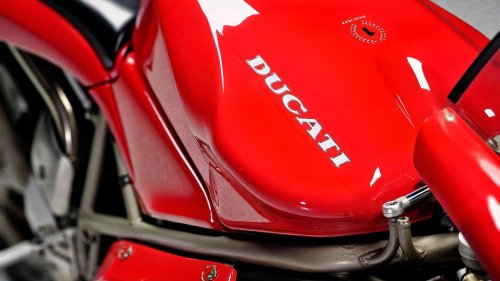
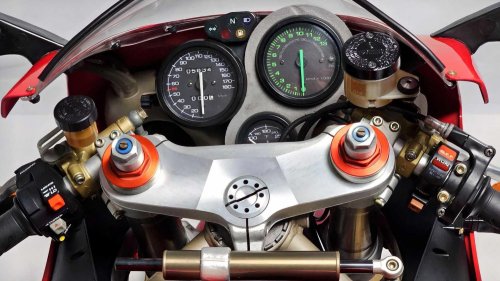
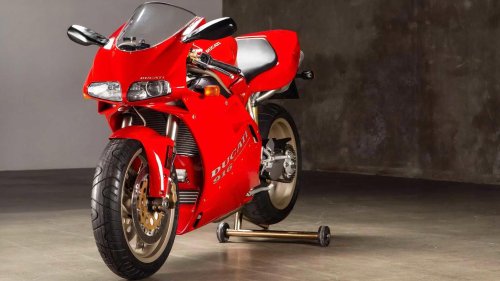
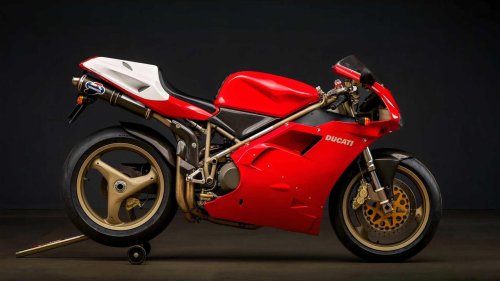
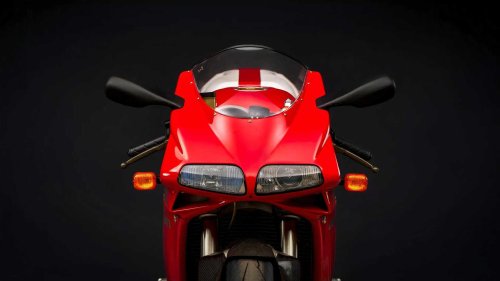
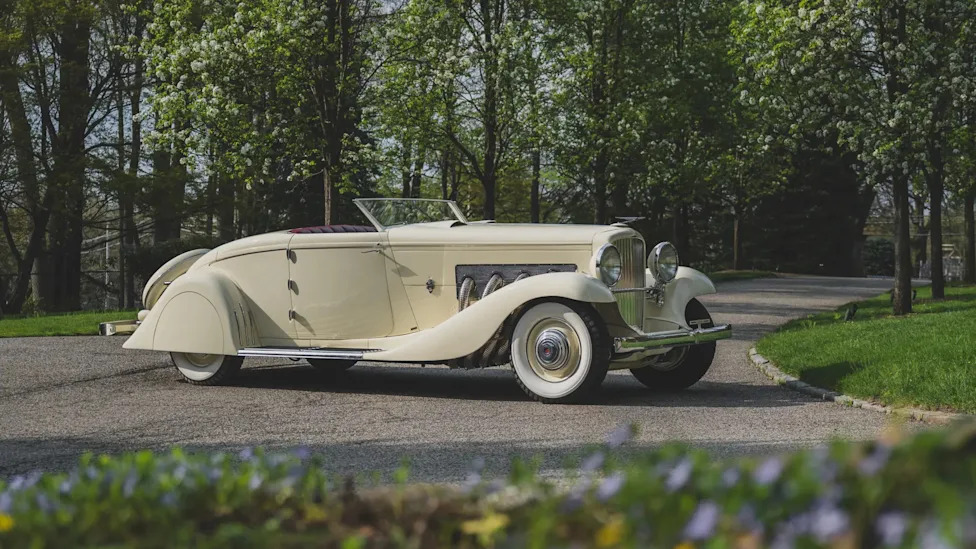
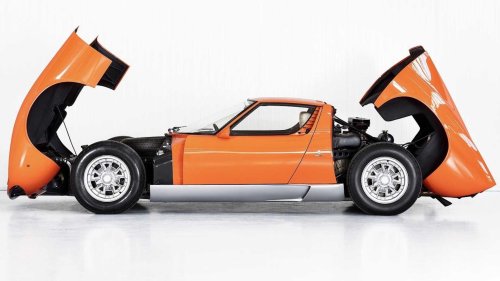
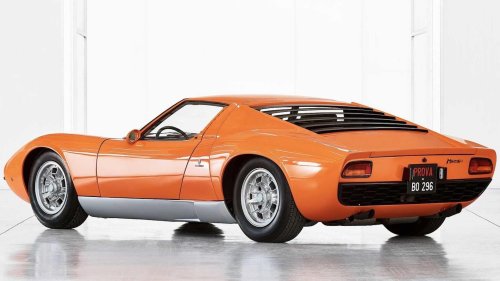
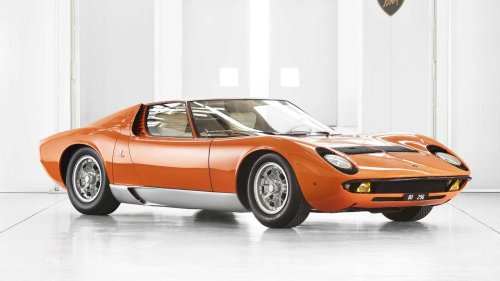
Beauty is in the eye of the beholder, but there will sometimes be a general consensus pointing in a very particular direction. It rarely happens in the car and motorcycle world, as people’s tastes vary massively and different machines are gorgeous for different reasons. The fabled Jaguar E-Type from the sixties is often regarded as the prettiest car ever built, though many would point to the Lamborghini Miura or Ferrari 250 GTO instead. And it’s hard to argue with any of them, because each and every one of these classic gems looks utterly spectacular. But what about the realm of two wheels? Where Engineering Meets Breathtaking Aesthetics Bring a TrailerWell, it should come as no surprise that it, too, is full of disagreement. The MV Agusta F4 is a top contender for the number-one spot as the world’s most beautiful motorcycle, but then you’ve also got the same marque’s Superveloce, vintage icons like the Vincent Black Shadow or Brough Superior SS100, and the Triumph Speed Triple 1200 RR. Still, there is one Italian sport bike that stands head and shoulders above the rest, designed by the same man who brought us the magnificent F4. That individual is none other than Massimo Tamburini, one of founding fathers of Bimota and among the greatest motorcycle designers to ever walk the Earth. The Michelangelo Of Motorcycle Design Bring a TrailerHe came from humble beginnings and slowly climbed his way to global recognition in the motorcycling industry, having nurtured a deep fascination with two-wheelers for as long as he could remember. After leaving Bimota due to disagreements with fellow co-founder Giuseppe Morri, Tamburini went on to meet Cagiva’s Claudio Castiglioni in 1985. Cagiva bought Ducati around that same time, just as the Bolognese firm was inching closer and closer to bankruptcy. Ducati was in dire need of a revival to stay afloat, and Tamburini played a key role in making that happen. What followed were several great models like the Paso 750, the 851 and the 888, but his greatest achievement was yet to come. Ducati 916 - Two-Wheeled Artwork At Its Finest Bring a TrailerIt finally took place in 1993, with the unveiling of what many people still refer to as the best-looking motorcycle ever built. We are, of course, talking about the legendary Ducati 916, a staple of timeless motorcycle design and Massimo Tamburini’s most iconic piece of work. Not only did it save Ducati from financial peril, but it also raised the bar in terms of aesthetics and found great success in World Superbike racing. With its unmistakable dual headlights, distinctive lines and fantastic performance, Bologna’s 916 went down in history as one of the world’s most influential motorcycles.Hidden behind its stunning bodywork was a liquid-cooled 916cc L-twin powerplant, coupled with a six-speed transmission and Ducati’s signature dry clutch. With four desmodromic valves per cylinder and a compression ratio of 11:1, the fuel-injected brute could muster a very healthy 114 horsepower at 9,000 rpm. Peak torque was rated at 66 pound-feet, and all that force ultimately translated into a top speed of around 160 mph. The bike weighed in at 430 pounds without fluids, which was fairly light for its time and a very desirable characteristic in conjunction with a robust chassis. Brembo brakes and Showa suspension were part of the package, too, along with a steel trellis frame to hold everything together. Technical Specifications Yet another one of the model’s distinct features was the exhaust, routed up high to end in twin silencers right below the tail. Tamburini saw a similar setup on the Honda NR750 and decided to try it out on the 916, quickly deciding it was indeed the way to go. And joined by the musical rattle of that dry clutch, the deep exhaust note captivated riders while they got to experience the bike’s incredibly refined handling. Its behavior was aggressive yet well-mannered, much more so than a lot of other sport bikes available to the public at the time. Then there is the machine’s WSBK racing pedigree, etched in stone by legends like Troy Corser and Carl Fogarty. A Fierce Competitor In WorldSBK Racing Bring a TrailerThe latter won as many as four World Superbike titles with Ducati, three of which were achieved on race-bred derivatives of the 916. Of course, WSBK homologation rules required a limited production run for every motorcycle that hit the racetrack, so the world was blessed with an array of mind-blowing 916 homologation specials. Take the 955 SP and 916 SPS, for instance, both extremely rare and sure to fetch a not-so-small fortune when they change hands. Just to give you an idea, an SPS variant was sold for a whopping £55,000 ($73,000) back in 2023, which is considerably more than you’ll pay for a lot of brand-new cars out there.Essentially, the 916 played a key role in solidifying Ducati’s reputation as a performance brand, so its impact is still felt today. Cherished by collectors and diehard Ducatistas alike, it is the sort of head-turner with heaps of mechanical competencies to back up its breathtaking looks. But even as technology evolved and the 916 was succeeded by the 996 and 998, the visual side of things remained pretty much unchanged until the arrival of Pierre Terblanche’s 999. That says an awful lot about the timeless quality of its design, which aged like fine wine while other motorcycles became more akin to spoiled milk. The Race-Winning Beauty From Bologna Becomes A Collector’s Dream Bring a TrailerEven regular 916s remain extremely desirable on the second-hand market, often selling for more than $20,000 at auction. A more extreme example is a pristine 1995 model with just under 600 miles on the clock, which was auctioned off on Bring a Trailer at a cool $33,000. And as for the later 999, it was technologically superior to its predecessors but has never quite achieved the same level of fame. That’s partly due to its polarizing design, of course, and we don’t see it ever catching up with the 916 in terms of desirability.Because Tamburini’s masterpiece wasn’t just a great performer or a force to be reckoned with in World Superbike racing. It brought Ducati back from the brink while simultaneously shaping its brand identity into what it is today, so it shall forever remain among the Italian marque’s greatest hits. And you only need to look at the Panigale lineup to see how far its influence has stretched, as many of the traits you’ll see can be traced back to the one and only 916. With the great Massimo Tamburini having passed away in 2014, glorious motorcycles like this one or the MV Agusta F4 will surely keep his memory alive and well for a long time to come.