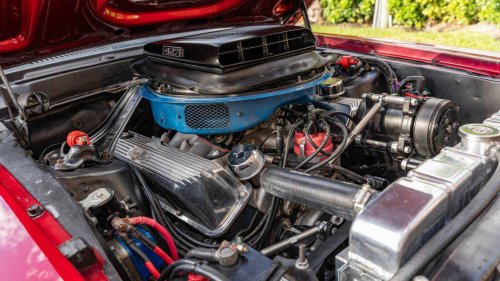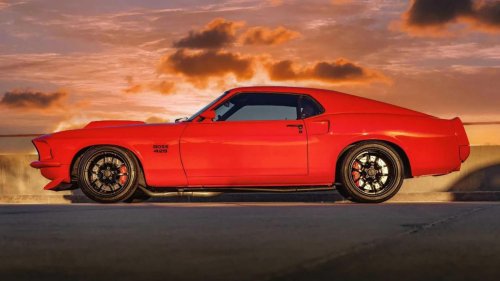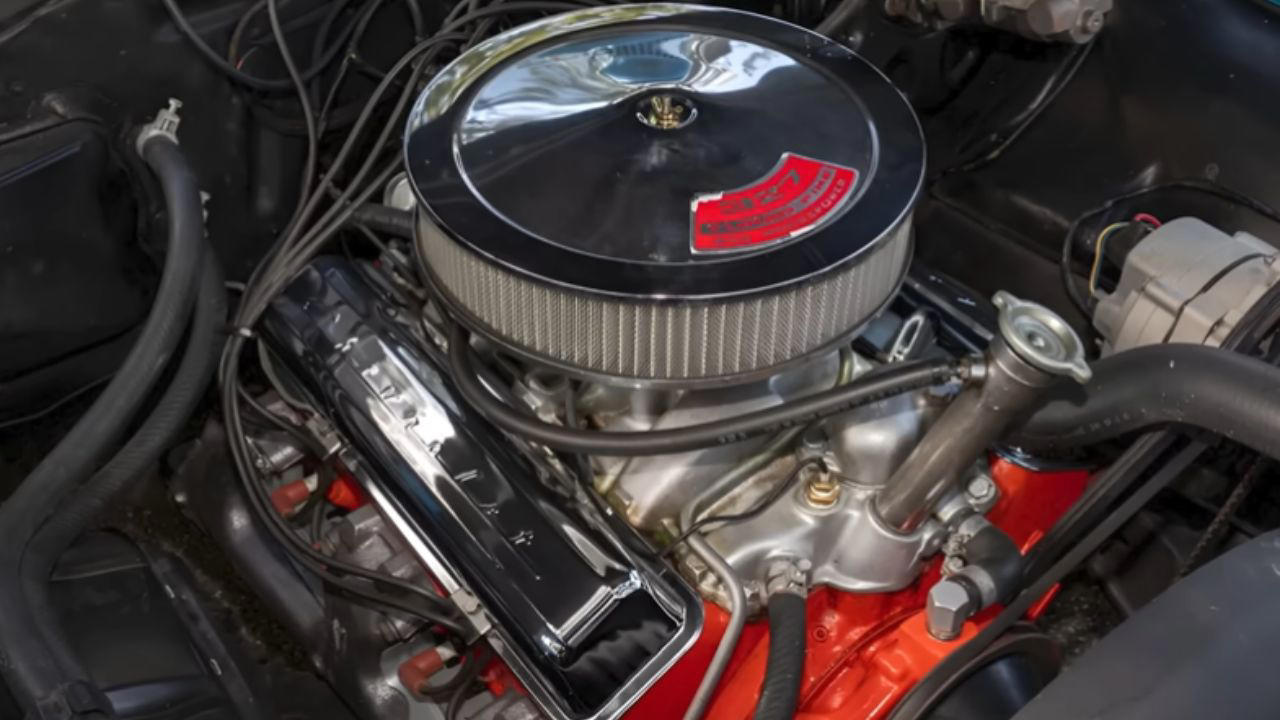
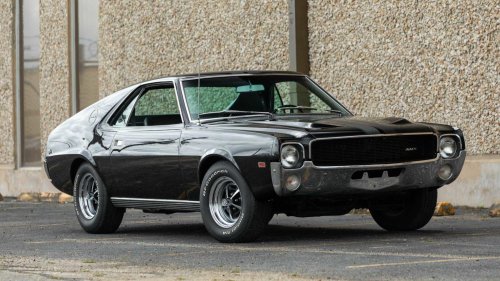
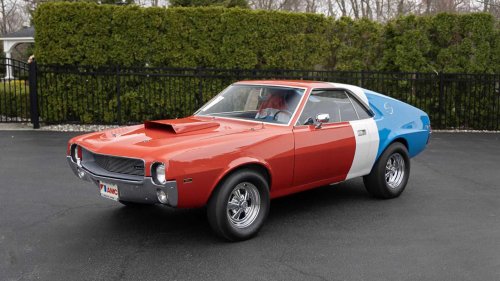
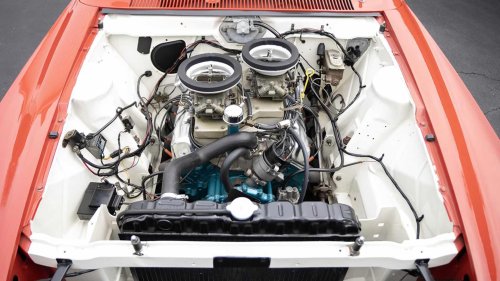
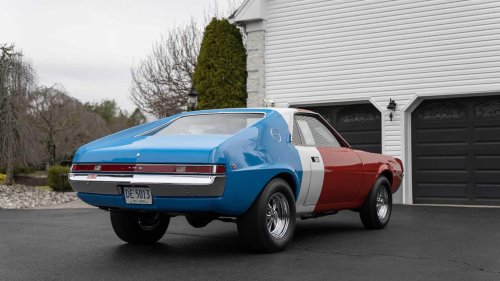



















AMC was a little gremlin (pun intended) that kept poking the sides of Detroit’s big three automakers for the better part of 30 years. For three decades, AMC provided something of a counterweight to the hegemony we see in the American auto biz today. Until Tesla came along, no one else in history had filled the role better. No segment of the market was safe from AMC nipping at its heels. Even the muscle car segment wasn't spared, and in that market, the company quietly gave us a hidden gem of the platform. AMC Enters the Muscle Car Era: A Retelling Mecum Founded out of a merger between Nash-Kelvinator and the Hudson Motor Car Company, the deal very nearly included Packard and Studebaker as well. Ultimately, what became the American Motors Corporation was founded in 1954. Led at first by Nash-Kelvinator’s CEO George Mason until his untimely death later that year, the company was taken over by Mason’s confidant, George Romney.Romney initiated a corporate strategy not rooted in competing directly with the big three, at least at first. Instead, AMC aimed to fill the gaps that Ford, GM, and Chrysler either routinely missed or discounted entirely. Offerings like the Nash Rambler line offered a level of efficiency and sensible transportation that bigger OEMs, focused on size and prestige, routinely left behind. This philosophy helped AMC make it through the turbulent early 1960swhen big names like Studebaker, Packard, and Edsel didn’t.But as the mid-to-late ‘60s approached, American car culture was as tumultuous as the culture surrounding it. That meant AMC had to get smart, instead of just clever. Parlor tricks like "computerized" electronic fuel injection and factory air conditioning may have turned heads before, but now rebellious youths just wanted to drive muscle cars of ever-increasing speed and power. It was a game of automotive brinkmanship that would twist most medium-scale automakers into pretzels without a truly awesome gimmick behind it. The AMX: Machismo Personified, for Three Glorious Years MecumYou can’t tell the history of AMC’s premiere muscle car in one monolithic block like you can with some of its contemporaries. It was an amalgam of nearly 15 years of automotive development and R&D investment that led to real industry firsts. Its flagship 390-cubic-inch V8 had the cubic displacement to match its competition, but at a fraction of the weight and dimensions that made traditional muscle cars unwieldy.Its front windshield, developed in tandem with New York's Corning Glass Works, was thinner yet safer than laminated front windshields in typical family cars of the time. The dashboard was a one-piece injection-molded unit, cutting down on final assembly time in a move all OEMs would soon use. Three years of relentless development went into the AMX project before its 1968 launch, and it culminated in a platform that wore many “hats,” so to speak.At just two inches longer than a Chevy Corvette, the AMX was a serviceable GT sports car as well as a muscle machine. But with that trademark Coke bottle notch where the trunk meets the roof, it could just as easily give a Mustang or Charger a run for their money. Just over 19,000 AMXs were built in the years between 1968 and 1970. Most were lesser fare with smaller 290, 343, or 360-cubic-inch engines and three-speed automatics. But at least a handful were more than that, some were very special indeed. AMC AMX Hurst S/S: The Ultimate AMC Drag Car MecumAdmittedly, the temptation is there to give the title of ultimate AMX to the exceptionally rare California 500 Special. As loaded as it was with green paint on black stripes, a 390 V8 and the Go-Pack handling package as it was, it wasn’t the fastest of the breed. That’s because, in short, it had to follow the rules of a road car. That’s not something its counterpart, the Hurst Super Stock (S/S), had to contend with.It was unrestricted, it was loud, and rocked a red, white, and blue paint scheme that feels pretty special as the nation turns 250. Ostensibly, these Hurst S/S specials were built as homologation compliance cars to allow them entrance into the NHRA’s Super Stock class. By 1969, the class was so prestigious, that they launched an even crazier class called Pro Stock the following year. In the same way the FIA leaped from production-grade Group 4s to tube-frame Group 5s at LeMans around the same time, the AMX was a pioneer for the same movement on the drag strip. AMC AMX Hurst S/S Engine Specs Powering this totally stripped-out drag pack was perhaps the ultimate 390 powertrain. Sporting Crane-ported cylinder heads, JE forged aluminum pistons, tube-steel open headers, and a race-ready Edelbrock aluminum cross-ram intake, the engine breathed through twin 650-CFM Holley four-barrel carburetors mounted side-by-side in the engine bay. The only transmission available was a Borg-Warner T-10 four-on-the-floor with a Hurst Super Shifter, anything else would’ve shattered after just a few pulls in a car this powerful. With 340 horsepower at the crank, and running drag slick tires with 4.44:1 rear gearing, its factory configuration ran a baseline 11.08-second quarter mile pass at 127.11 mph. Next-Level Fast, Next-Level Rare MecumFor some context, a modern BMW M3 Competition runs a roughly 11-second quarter-mile time, as does an Audi RS4. But AMC’s baseline tune wouldn’t stay that way for long. The Hurst S/S might’ve shipped with a stock camshaft profile, but let’s be real, AMC wasn’t stupid. They knew the stock cam was going in the trash the minute the NHRA inspectors moved on.With proper racing cams and professional track side tuning, these AMX Hurst S/S specials could run the quarter in under 11 seconds. The legendary Shirley Shahan managed 10.97 seconds at 1970’s Winternationals. With NHRA champion Gary Clark at the controls, and perhaps the most aggressive tune ever fitted to a purpose-built homologation drag pack, he managed an eye-watering 10.43 seconds at 148 mph.That's pushing current McLaren 720s and Corvette Z06 levels of speed. Sure, it wasn’t street legal, and yes, you needed a prepped drag strip and burnout-warmed tires to even come close to going that fast. But remember, 1969 was nearly 60 years ago. For anything even remotely related to a road car to go that fast in that era is something to celebrate. For race-tuned HEMIS, Chevy big-blocks, and Ford FEs, it was a sign that they weren’t the only names in town. At least, back then, they certainly weren’t. A Real Drag Racing Holy Grail MecumLike its road-legal California 500 Special counterpart, AMC made an almost comically small number of drag-spec Hurst S/Ss. They made 52, to be exact, just enough for the NHRA’s pencil pushers and bean counters to take a hike long enough for a couple of passes, with a couple of personal effects left over. Today, seeing one come up for sale is especially rare.When they were new, the scant dealerships that even sniffed one of them sold them for $8,000. That’s $72,500 and change in modern money. Nowadays, one recently sold at Mecum’s 2026 Indianapolis auction event for $280,500. Now how’s that for some great resale value?Source: Mecum