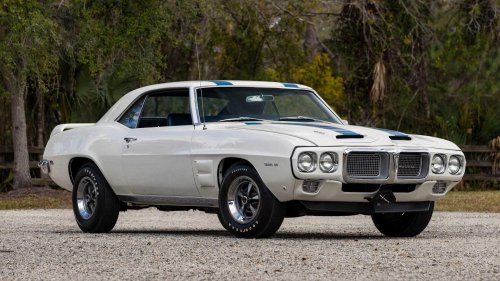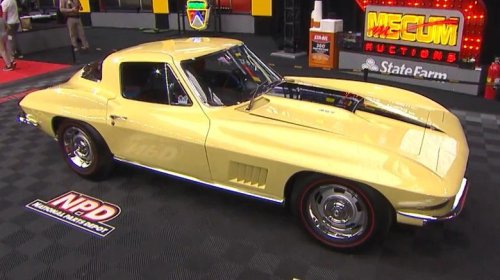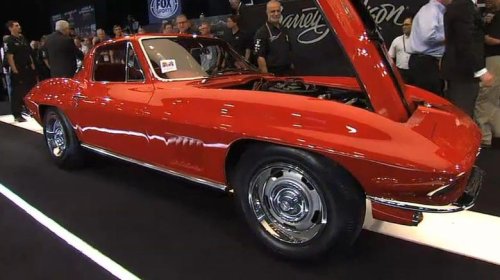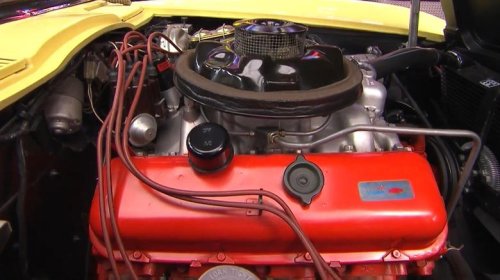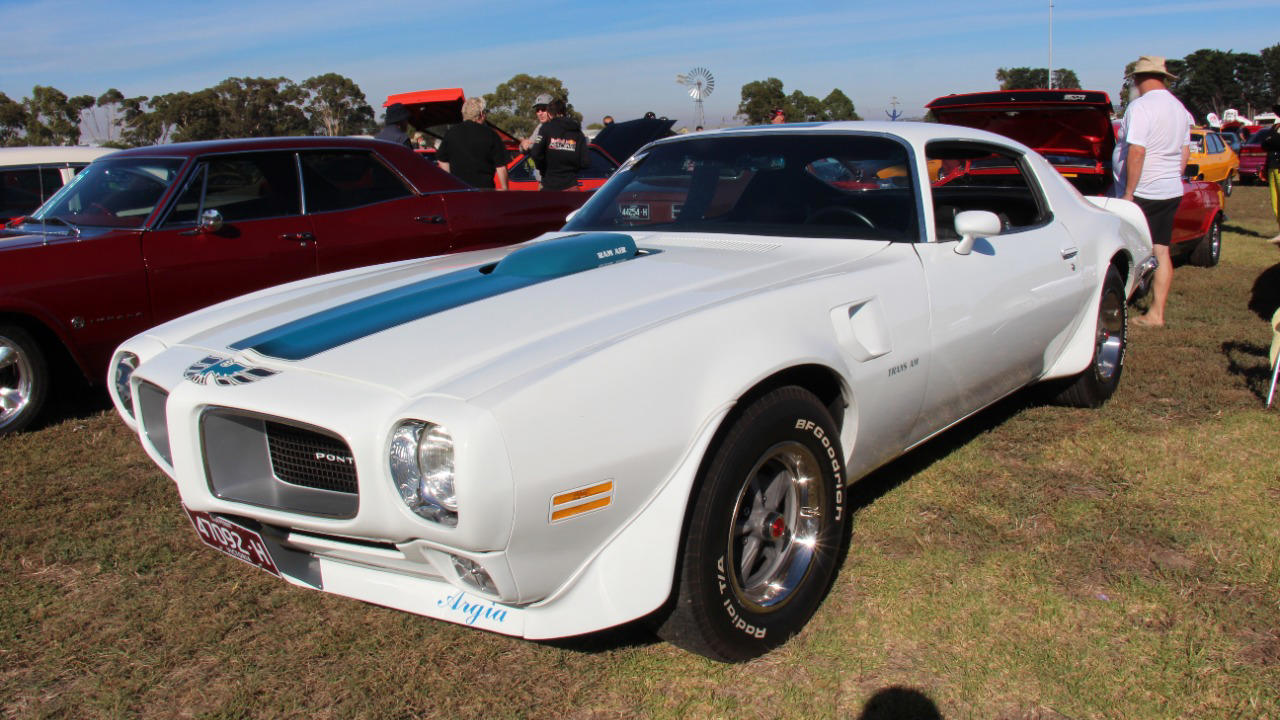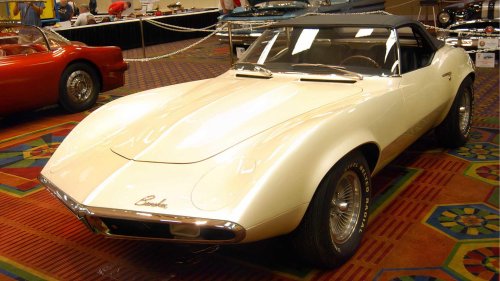
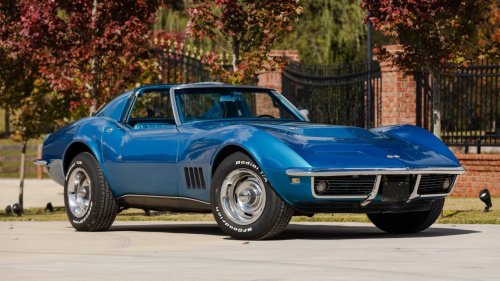
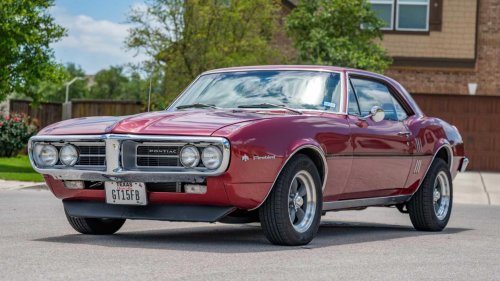
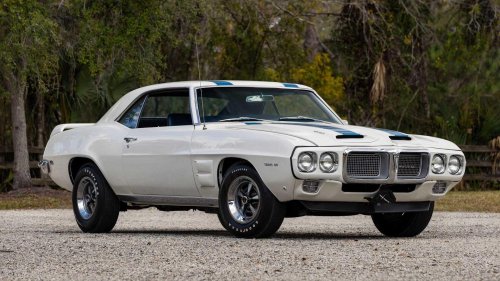
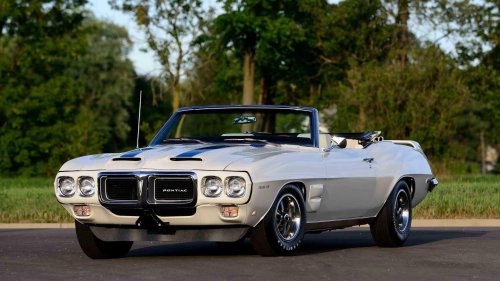
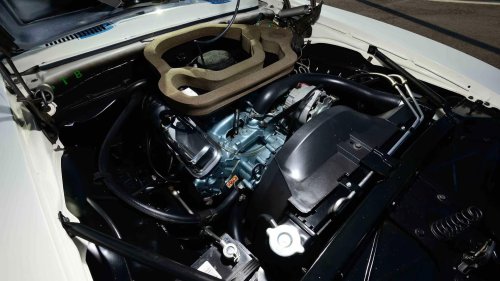
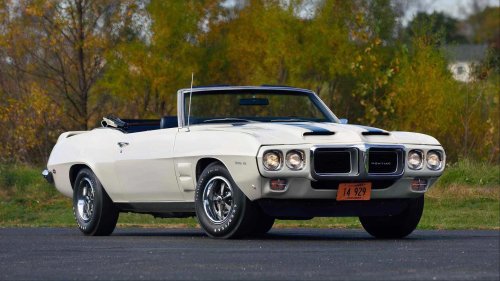
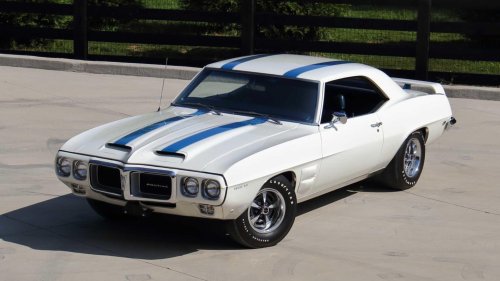
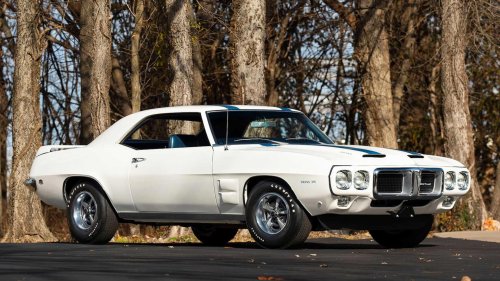
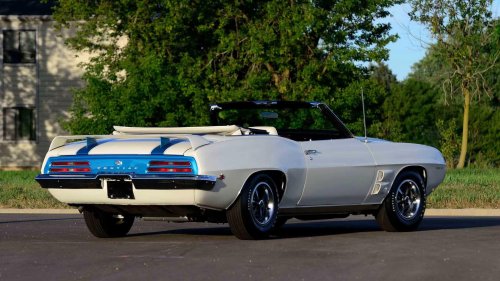



















The Golden Age of American Muscle was over a half century ago, which obviously has made the classic killer street machines that used to reign supreme less of a common sight. The passage of time has made all old-school muscle rare to a certain degree, but there are definitely some models that are more elusive than a Big Foot riding the Loch Ness Monster sighting. AMC, by virtue of being the smallest automaker back then, has plenty of low-production cars, but the real unicorns or Holy Grails lie with Dodge and Plymouth, which have dozens of super-rare models produced in the double and even single digits, that collectors go crazy trying to find.On the other hand, as the largest automaker conglomerate, GM sold millions of muscle cars during the classic era, so their divisions' rides aren't particularly rare. Even something like the 1970 Chevy Chevelle 454 LS6, which had a modest 4,475-unit run, is way more common than the 36 '70 Dodge Super Bees that were equipped with a 426 Street Hemi that year. Pontiac, however, has one of the few GM rarities that make Mopar collectibles look almost mass-produced. There's a Firebird variant with production numbers so low that many collectors question its existence as they've never actually seen one. Pontiac XP-833 Banshee Concept Car artistmac/Wikimedia Commons We know it seems weird, but there's no way to get to Pontiac's Holy Grail Firebird without first discussing their 1964 concept car. Codenamed the XP-833 and retroactively dubbed the Banshee, this prototype started a chain of events that eventually led to the rarest Pontiac of all time. It was a two-seat sports car that then-head of Pontiac John DeLorean called a "Mustang killer." GM, however, saw it as a threat to the Corvette as it was lighter, more powerful, and faster. GM considered the 'Vette the premiere model of the entire company, and put the kibosh on the Banshee to prevent losing sales and prestige to the Pontiac concept car. Chevy Steals the Banshee for the C3 Corvette Mecum Four years after the Banshee was squashed, the C3 third-gen came out, and it looked exactly like the Pontic prototype. The reason for this is because, after banning Pontiac from proceeding with it, GM gave the plans to Chevy with a green light for production. Listen, we don't want to live in a world with no C3 Corvette, because it was, and still is, the baddest generation, but it was kind of a punk move to steal its design from Pontiac. Needless to say, DeLorean and all of Pontiac were like, "What the hell, that's our car that you said couldn't be made." This move came on the heels of GM banning engines over 400 cubic inches in 1963, and then forbidding the multi-carbureted engine of the GTO in 1966. Needless to say, Pontiac was not happy with their parent company at this point. Pontiac Firebird Consolation Prize Bring a Trailer After screwing over Pontiac for so long, GM threw them a bone and allowed them to have their own version of the Camaro, but still made them delay its release until after the Chevy pony car debuted. The 1967 Pontiac Firebird first hit the market in February 1967, a full four months after the Camaro went on sale in September 1966. Despite this homegrown sabotage, the Firebird was cooler than the Camaro in every way, from sheet metal to grille, to performance. The Firebird also drove better with superior steering and suspension, leading many observers at the time to declare the Pontiac a more refined muscle car. The Camaro did vastly outsell the Firebird, 220,900 units to 82,600, but Domino's Pizza is the most popular pie in America, and it's crap, so selling the most isn't the same thing as being the best. ’69 Firebird Gets Ultimate Trans Am Trim MecumMid-model year in 1967, Chevy created the Z/28 "performance" trim for competition the Sports Car Club of America (SCCA) Trans Am racing series, that is coveted by collectors, but was a total weeniemobile back then with a 290-horsepower 302 V8. In 1969, Pontiac responded the with Firebird Trans Am that had a decidedly badder 335-horsepower 400ci Ram Air III V8 standard and upgradable to a 345-horsepower Ram Air IV. This output rating was a joke as it was the same engine as the Pontiac GTO judge that claimed 370 ponies, and the Trans Am was actually the first 13-second GM muscle car, so it definitely had more juice than advertised.Pontiac paid a licensing fee to SCCA, five bucks per car, to use the Trans Am name, but the kicker was, this car never participated in a single race. The SCCA had a limit of 5.0-liters on engines, which is 305 cubic inches, and the Trans Am's 400 vastly exceeded that. The whole point of the Trans Am was to associate the Firebird with racing and performance, while overall generating interest in the brand. Only 697 Trans Ams were produced in '69, making it a pony car unicorn, but things get rarer from there. Most '69 Trans Ams were equipped with the Ram Air III engine, but just 59 were blessed with the higher output Ram Air IV engines, which we suppose makes them blue-striped unicorns. Trans Am Drop-Top Holy Grail Mecum The rarest of all '69 Trans Ams are the convertibles, of which just eight were built, qualifying them as genuine Golden Age Holy Grail cars. We're not sure what a sub-Holy Grail car should be called, maybe the Holiest of Grails, but there were just four '69 drop-top Trans Am 400 Ram Air IV cars made, so that's literally the rarest regular production GM classic-era muscle cat there is. The base '69 Trans Am convertible had a $3,770 starting price, combined with the $724 Trans American package and $558 Ram Air IV upgrade made for a 4,328 ride. That's the equivalent of $48,346, which is a ton of money, but realistically, modern performance cars cost way more than that, and they aren't nearly as cool or collectible. Legendary 400 Ram Air IV MecumNext to the Chrysler 426 Hemi, there is no more famous Golden Age engine than the Pontiac 400 Ram Air IV V8. Because GM banned engines over 400 cubic inches in muscle cars for much of the classic era, Pontiac stretched the limits of performance of their arbitrarily capped V8. 1969 Pontiac Trans Am Ram Air IV Engine Specs This where things get screwy because this engine was rated at 370 horsepower for the GTO Judge, but just 345 under the hoods of Trans Ams. They were identical engines that both delivered 13-second performance, so clearly the Trans Am version was underrated. For the record, with the reduced weight of the convertible, a '69 drop-top could go from 0-60 in 5.4 seconds and obliterate a quarter-mile in 13.7 seconds. Quest For the ’69 Trans Am Convertible Mecum Of the eight 1969 Trans Am convertibles that were built, all of them still exist and are accounted for. When it comes to auctions, however, just two have been in play, so this is not a car anyone, even with deep pockets, has a realistic change of landing. Both of the elusive rides were listed at Mecum auctions and neither sold, failing to hit the reserves. One reached a high bid of $1.4 million at Mecum Kissimmee 2016 and the other (pictured above) topped out at $1.9 million, but couldn't drop the gavel. If that's what bidders were willing to send, that's actually what the cars are worth, but we're siding with the sellers and agreeing that they are actually much more valuable, like multi-million '71 Hemi 'Cuda territory. 1969 Pontiac Firebird Trans Am Prices and Values Mecum The '69 Trans Am starts off with the 335-horsepower Ram Air III hardtop coupe as the most affordable, with Hagerty values ranging from $68,800 in fair condition to $174,000 for a Concours condition car. Next up the ladder is the 345-horsepower Ram Air IV coupe, which goes from $183,000 to $361,100. Finally, there is the convertible Holy Grail which begins at $662,000 for a junker all the way up to $1.35 million for a super-clean car show darling. J.D. Power, which bases their prices on real world sales, has no data for the '69 Trans Am drop-top because apparently nobody has sold one in recent memory. For a '69 coupe with no specified engine, they have a high retail price of $223,600, which seems about right for a Ram Air III. Most Expensive '69 Trans Am Sold At Auction Mecum Since nobody has been able to beat a reserve on a 1969 Pontiac Trans Am convertible, the top seller has a roof on it, and it happens to be that one pictured above. Equipped with a numbers-matching Ram Air IV 400 V8 and four-speed transmission, that beauty sold for $444,000 at Mecum Kissimmee 2023. According to the listing, it is a 1-of-6 car that is known to exist with its original drivetrain, and while we don't know where that number comes from, we can't argue against it either. That's a tremendous amount of money to spend on a classic set of wheels, but it will pale in comparison to when someone finally has the huevos to pull the trigger on a '69 drop-top, which we predict could go for nearly $3 million. Legacy Of The Firebird Trans Am Mecum Pontiac's original intent with the Trans Am package was to generate some excitement and associate the Firebird with racing and high performance, but they unwittingly created a legend. The Trans Am is the only instance of a trim becoming more famous than the host model, and it was produced all the way until 2002, with a solid argument that a lack of a Firebird Trans Am is why Pontiac went belly up in 2010. The Trans Am became an icon as Burt Reynolds' "Screaming Chicken" in the 1977 classic action/comedy Smokey and the Bandit and gained even more fame as David Hasslehoff's 1982 K.I.T.T. car from the Knight Rider TV series. Neither the C3 Corvette, which was stolen from Pontiac, nor the Camaro, which was supposed to be superior, have had quite the cultural impact as the Firebird Trans Am, so maybe that and its insane value makes for a quiet revenge, but definitely a lasting legacy.Sources: Hagerty, J.D. Power, Mecum