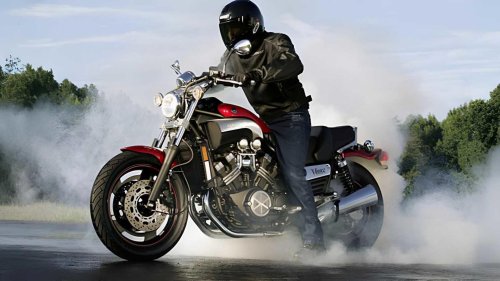
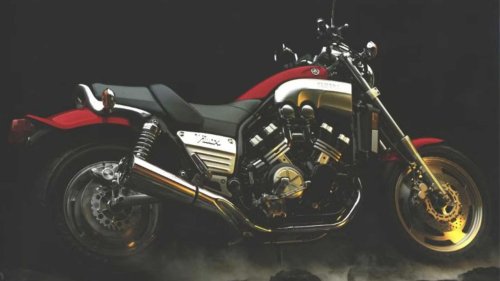
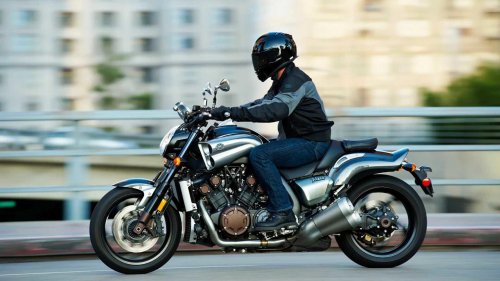
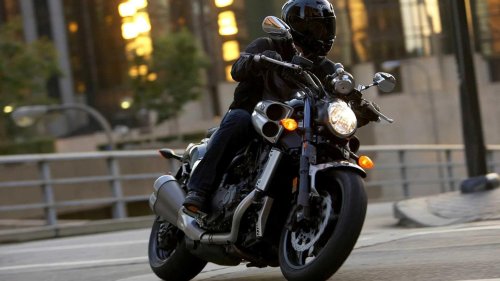
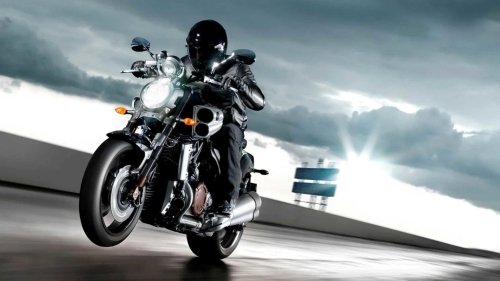
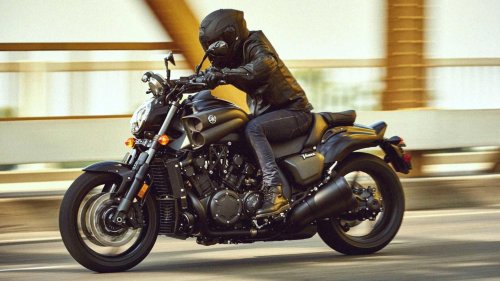



















Cruiser motorcycles usually fall into one of two camps. They either chase old-school nostalgia with acres of chrome and relaxed ergonomics, or they lean hard into touring comfort with giant fairings and enough luggage space to move apartments. But somewhere in the middle of all that, Yamaha created something deeply weird. It looked like a drag bike, accelerated like a sports bike, and scared enough riders to build a reputation that survives decades later. The craziest part is that it wasn’t trying to become a cult classic. It just happened naturally. Power Cruisers Made Cruisers Even More Badass Iconic Motorbike Auctions By the late 1970s and early 1980s, motorcycles were becoming absurdly fast. Japanese manufacturers were locked in a nonstop performance war, each company trying to outdo the other with more displacement, higher top speeds, and quarter-mile times that were getting dangerously close to dedicated race machines. The problem was that most cruisers still felt stuck in another era. They looked cool, but they weren't exactly thrilling once the road opened up.There was a growing crowd of riders who loved the relaxed stance and visual attitude of a cruiser but didn’t want to sacrifice outright speed. They wanted burnouts, brutal roll-on acceleration, and the kind of straight-line performance that made passengers reconsider their decisions. Manufacturers slowly started experimenting with the idea of the “power cruiser,” but most early attempts were still pretty tame compared to what would come later. Japan’s Motorcycle Wars Were Getting Completely Out Of Hand Suzuki At the same time, Japan's motorcycle industry was engaged in an escalating performance competition. Kawasaki had the GPz lineup, Suzuki was pushing performance further every year, and Honda was dominating with technological innovation. Yamaha needed something memorable. Not just another fast motorcycle, but something outrageous enough to stand out in a sea of increasingly capable machines.The timing was perfect because riders were becoming obsessed with excess. Turbocharged motorcycles briefly appeared, sports bikes were getting wilder every year, and drag racing culture heavily influenced street bikes. Manufacturers realized there was real demand for motorcycles that existed purely because they were ridiculous. Nobody needed them, but everybody wanted to talk about them. Yamaha Realized Some Riders Wanted Something Completely Unreasonable YamahaYamaha understood that building another conventional cruiser wouldn’t move the needle. Harley-Davidson already owned traditional American-style cruising, and Japanese brands were still figuring out their identity in that segment. So instead of chasing authenticity, Yamaha leaned into chaos. The company essentially asked what would happen if you mixed a muscle bike, a drag racer, and a cruiser together without caring whether the result made practical sense.The answer was a motorcycle that prioritized brute force above almost everything else. Long wheelbase. Massive engine. Aggressive intake scoops. Fat rear tire. Riding position is somewhere between comfortable and confrontational. It wasn’t designed for canyon carving precision or long-distance touring refinement. It was designed to dominate stoplight races and terrify unsuspecting riders who underestimated it. The Original V-Boost System Sounded Like Science Fiction In 1985 Yamaha When the original V-Max debuted in 1985, its biggest party trick was something called V-Boost. At lower rpm, the 1,197cc V4 engine behaved relatively normally. But once the tach climbed past around 6,000 rpm, butterfly valves between the intake manifolds opened electronically, allowing each cylinder to draw from two carburetors instead of one. The effect was hilariously dramatic for the era.Riders described it like a second engine suddenly waking up mid-acceleration. The bike already had strong low-end torque, but once V-Boost kicked in, the V-Max lunged forward with a violence few cruisers could match. Yamaha advertised around 145 horsepower in unrestricted markets, which was absolutely insane in the mid-1980s for something that looked vaguely like a cruiser. The V-Max immediately gained a reputation as the motorcycle you bought if you wanted to bully nearly everything else on the road. The Yamaha V-Max Flipped The Script When It Came To Cruisers Yamaha The Yamaha V-Max eventually became the VMAX, but the philosophy never really changed. Across multiple generations, it remained unapologetically excessive in a way modern motorcycles rarely are. Riders didn’t buy it because it was practical. They bought it because it was intimidating, loud, physically massive, and completely committed to brute-force performance.The original model stayed in production for an unbelievably long time because nothing else quite replaced it. Sure, competitors appeared over the years, but the V-Max had developed its own mythology. It became the motorcycle people referenced whenever discussions about power cruisers came up. Even non-riders recognized it. The Second-Generation VMAX Turned The Madness Up To Eleven Yamaha Then came the second-generation VMAX in 2009, and Yamaha somehow made the entire concept even more insane. The new bike packs a 1,679cc liquid-cooled V4 producing roughly 197 horsepower and 123 pound-feet of torque. It used ride-by-wire throttle, aluminum chassis construction, fuel injection, and fully adjustable suspension. Despite all the modern technology, it still behaved like an absolute maniac.The final production version featured a five-speed transmission, shaft drive, 52mm throttle bodies, and a wet weight of around 683 pounds. Massive 320mm front brake rotors with radial-mounted calipers gave it serious stopping power, while the aluminum twin-spar frame helped manage the violence happening underneath the rider. Yamaha claimed quarter-mile times deep into the 10-second range, which is absurd territory for a cruiser-shaped motorcycle.The styling also evolved without losing the original attitude. Giant faux tank covers, aggressive side scoops, low stance, and muscular proportions made the VMAX look like a bodybuilder wearing motorcycle parts as clothing. Even parked, it looked angry. And unlike many modern performance bikes loaded with rider aids, the VMAX still demanded respect. Twist the throttle carelessly and it reminded you very quickly that physics still exists. The VMAX Worked Because It Never Tried To Be Sensible Yamaha Part of the VMAX’s appeal came from the fact that it never pretended to be rational transportation. It was thirsty, heavy, expensive, and intimidating for newer riders. The turning radius wasn’t great, the heat output could roast your legs, and the riding experience always felt slightly unhinged. But those flaws became part of the charm because they reinforced the motorcycle’s personality.Modern motorcycles are often engineered to be friendlier, safer, and more approachable. That’s objectively a good thing. But the downside is that many bikes now feel optimized by committees and software simulations. The VMAX came from an era where manufacturers occasionally built machines simply because they thought it would be funny to unleash them onto public roads. There’s a weird honesty to that approach. We Probably Won’t Ever See Another Cruiser Like The VMAX Again Yamaha Motorsports It’s hard to imagine Yamaha building another motorcycle like the VMAX today. Emissions regulations are tighter, development costs are higher, and buyers increasingly prioritize electronics packages, efficiency, and versatility. The market for giant, naturally aspirated muscle cruisers has also shrunk considerably compared to the early 2000s.That’s exactly why the VMAX matters now more than ever. It represents a period when manufacturers still took enormous creative risks and occasionally produced motorcycles that existed purely to make people grin like idiots. It wasn’t subtle, efficient, or particularly sensible. It was gloriously excessive, and riders loved it for that exact reason.Today, earlier V-Max models can still be found for around $7,000 depending on condition, while clean second-generation VMAX examples regularly climb toward the $20,000 mark. That price spread says a lot about the bike’s legacy. The older machines remain accessible enough for enthusiasts chasing old-school muscle bike insanity, while the later VMAX has already started cementing itself as a modern collectible. Either way, few motorcycles have managed to leave such a lasting mark simply by being unapologetically outrageous.Source: Yamaha