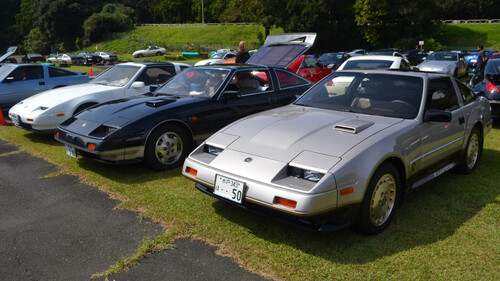
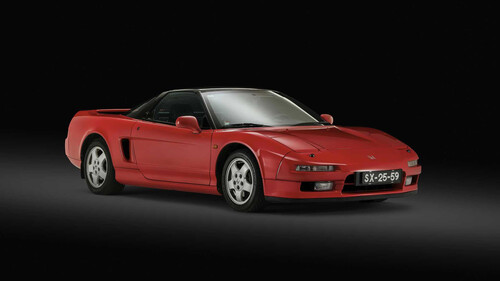
Back in the early 1990s, Japan's performance boom brought positive magazine tests and the quiet panic of European and American rivals that suddenly had company. This was a strange, thrilling moment when sports cars from Tokyo and beyond looked like props from the next century, packed big speed, and asked buyers to stop treating Japan as the sensible choice and start treating it as the ambitious one.One machine stood near the top of that wave. Testers praised it, competitors had to answer it, yet today, when nostalgia gets loud, and the same few Japanese heroes hog the microphone, this car often slips out the side door without applause. This is the story of how Japan earned credibility, how a company chased greatness, and how a benchmark can fade even when it stops feeling current. The Rise Of Japan's Sports Car Scene Bring A Trailer By the end of the 1980s, Japanese brands stopped acting like outsiders asking for a seat at the table. They started building the table, and magazine retrospectives still treat 1989 as a turning point because several Japanese cars landed in the U.S. at once and shook up old assumptions about who made the best driver’s cars. Nissan joined that mood with Project 901, an internal push that aimed to turn the company into the global leader in performance by 1990. That goal sounded bold, maybe even a little cocky, but it also set the tone for what followed.That new confidence showed up in how Japanese engineers chose targets, benchmarking real enemies. Nissan used the Porsche 944 and Chevrolet Corvette as standards for handling, steering response, design, and aerodynamics. The company wanted better stability, less lift, sharper responses, and a shape that looked like the future instead of the past with a body kit. It was engineering with a chip on its shoulder, which often produces the best kind of car.Acura The era also proved that speed alone no longer settled the argument. Cars like the NSX and Miata showed how Japanese companies could pair performance with everyday usability, excellent ergonomics, and superior build quality. Plenty of older sports cars felt fast in one corner and exhausting everywhere else. But Japan’s best new machines felt sorted – they started in the morning, ran cleanly, and did not require the driver to accept nonsense as part of the experience.So when Nissan rolled out a new halo sports coupe under that wider movement, the car landed in fertile ground. Buyers already saw proof that Japan could beat Europe and America at their own games. Engineers had the budget and confidence to stack advanced hardware into one car. The result looked futuristic, drove with real precision, and carried the kind of spec sheet that made enthusiasts grin and mechanics reach for stronger coffee. Even then, nobody needed a crystal ball to know this was not just another mild refresh. The Nissan 300ZX Was One Of The Defining Japanese Performance Cars Via Bring a Trailer That car was the Nissan 300ZX Twin Turbo, the Z32-generation machine that arrived as a 1990 model and yanked the Z line back toward serious performance. Nissan had let the previous Z drift too far into the grand touring lane, but the Z32 corrected that fast. In naturally aspirated form, it already made 222 horsepower. In Twin Turbo trim, it jumped to 300 horsepower and 283 pound-feet of torque, numbers that hit hard in 1990, especially from a Japanese coupe priced around $33,000.The 300ZX also looked right for the moment. It sat low, wide, and smooth, with slanted headlights, a clean tail, and a body that carried far more intent than the older car. As mentioned, Nissan benchmarked the Corvette and 944 during development, and the final shape reflected that ambition. Media outlets later called the Z32 the first Z-car to set a new sports-car style standard – it looked like Nissan had skipped a few steps and gone straight to the good part.Via Bring a Trailer What made the car matter most, though, sat beyond the poster shot. The 300ZX Twin Turbo mixed pace with refinement in a way that fit the era perfectly. It had real straight-line speed, a composed cabin, strong road manners, and enough comfort to make rivals seem crude. That balance became its signature. A Major Technological Leap Forward Via Bring a TrailerUnder the skin, the 300ZX Twin Turbo backed up its attitude with real substance. Nissan reworked the VG30 V6 into a far more modern engine with dual overhead cams, four valves per cylinder, a distributor-less ignition setup, and variable cam timing. Then it bolted on two fast-spooling Garrett turbochargers, fed them through dual intercoolers, and pulled 300 horsepower from 3.0 liters. In an era when Ferrari's new 348 also wore a 300-horsepower badge, that figure carried weight far beyond the Nissan showroom.The company also packaged the engine in a way that still fascinates us today. The bay looked crowded because the clever bits hid in the shadows – the intercoolers sat ahead of the front wheel wells, and the turbos were tucked low and behind the engine. The layout helped response and cooling, but it also helped build the car’s later reputation as a wonderful machine to drive and a wonderful machine to swear at. Interestingly, automatic Twin Turbos made only 280 horsepower because Nissan wanted to protect the transmission.via Bring A Trailer The chassis matched the performance status. The Z32 became the world’s first production model with a four-wheel multi-link suspension. Turbo cars also got Super HICAS four-wheel steering, which could add or subtract about one degree of rear steer above 55 mph, plus big four-piston front brakes and adjustable dampers. This hardware gave the 300ZX its weirdly mature mix of agility, stability, and ride quality. It Earned Genuine Praise From The Automotive Press Via: Bring a trailer When the first test drives of the then-new 300ZX Twin Turbo appeared, the press was amazed. In its 1989 archive test, Car and Driver said the car finally gave Japan a sports car that could run with the established stars. Of course, the numbers backed that up – 0-60 mph in 5.5 seconds, a 14.1-second quarter-mile at 99 mph, 153 mph flat out, 0.89 g on the skidpad, and a 175-foot stop from 70 mph. For a $33,000 car, that looked close to a prank. It was not.Praise got stronger when magazines compared the Nissan with serious rivals. Car and Driver’s 1991 Corvette versus 300ZX test gave the win to the Nissan, praising its styling, comfort, ergonomics, ride, fun factor, and value, while calling it the “thinking man’s supercar.” The same test recorded the highest slalom speed the magazine had logged at the time. Meanwhile, in a 1991 MotorTrend handling test, the 300ZX Turbo finished second out of ten cars, losing only to the Acura NSX while beating a Corvette ZR-1, Porsche 944 S2, Toyota MR2, and Mazda Miata.Awards piled up, too. The 300ZX Turbo won MotorTrend’s Import Car of the Year award. Car and Driver’s 10Best archive shows the 300ZX on the list every year it was eligible from 1990 through 1996. Automobile named the 300ZX its 1990 Design of the Year, then later said its year-long Twin Turbo tester became one of only two Four Seasons cars in the publication's history to earn a perfect five-star rating. Why History Forgot The 300ZX Via Bring a Trailer If the 300ZX Twin Turbo did all that, why does it not dominate every 1990s performance-car conversation? Part of the answer comes down to timing and mythology. Later JDM heroes became easier shorthand—the Supra turned into the tuning legend, the Skyline GT-R became the forbidden fruit, and later the internet's favorite Nissan.Then came the ownership side. The very engineering that made the car special also made it intimidating once the warranty vanished. The engine bay packed twin turbos, intercoolers, tight plumbing, and heat into a cramped space. Buyer’s guides still urge shoppers to chase service records and watch for early engine issues, while others say the Skyline’s relative ease of modification helped make it more famous than the more awkward 300ZX. In other words, the 300ZX aged into a high-tech old sports car, which is a different kind of romance and a much worse slogan.Via Bring a Trailer It also did not help that the Z line went quiet in America after 1996, and there was a long gap before the 350Z let other names fill the space in people’s minds. By the time the internet started building its neat little canon of 1990s Japanese legends, the 300ZX had fewer easy talking points. It was too polished to be scrappy, too complex to be cheap fun, and too balanced to be weird. Yet that balance was the whole point. Nissan Rewrote The Rulebooks Again With The GT-R (R35) NissanThankfully, Nissan did not stop chasing the top shelf, it just changed the weapon. In 2007, the company launched the R35 as the Nissan GT-R, no Skyline badge attached, with a 480-horsepower twin-turbo V6 and a wildly advanced drivetrain that the firm described as the world’s first independent transaxle 4WD system of its kind. The formula looked very different from the 300ZX’s sleek rear-drive grand-tourer approach, but the mission felt familiar – embarrass more expensive machinery and do it with engineering confidence instead of apology.The results hit even harder than they had in 1990. Car and Driver tested the 2009 GT-R to 60 mph in 3.3 seconds, through the quarter-mile in 11.5 seconds at 124 mph, and around the skidpad at 0.99 g, then noted that those numbers toppled much pricier performance cars from Porsche and Lamborghini. Just as the 300ZX had forced buyers to rethink Japanese sports cars in the early 1990s, the GT-R forced the world to rethink what a six-figure supercar actually needed to cost.Nissan That success changed Nissan’s performance identity. The 300ZX Twin Turbo had sold sophistication, balance, and speed in one handsome package, but the R35 GT-R sold destruction by algorithm. Launch control, Nürburgring times, Giant-killer headlines – this was all part of the new halo car’s identity.By the end of 2025, Nissan had built about 48,000 R35 GT-Rs over an 18-year run and formally ended production, while promising that the GT-R name would return. The company tends to write one rulebook, then tear it up and write a harsher one. The 300ZX Twin Turbo deserves a place in that lineage – it was the moment the company proved that a Japanese sports car could stand shoulder to shoulder with the old guard and not blink.