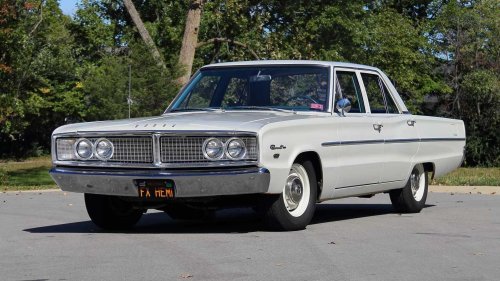
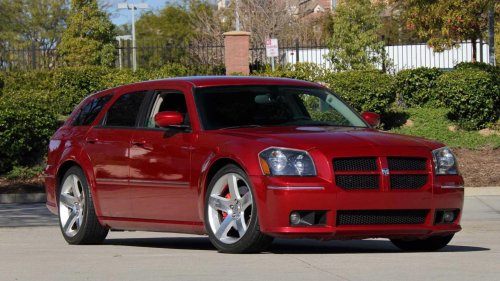
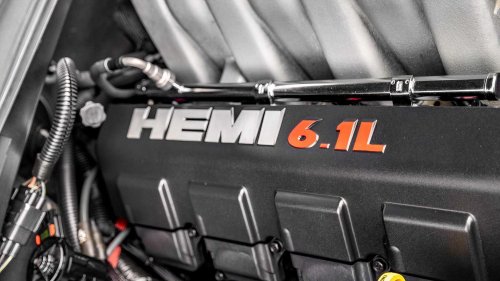
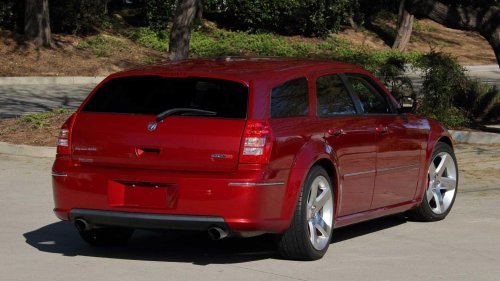
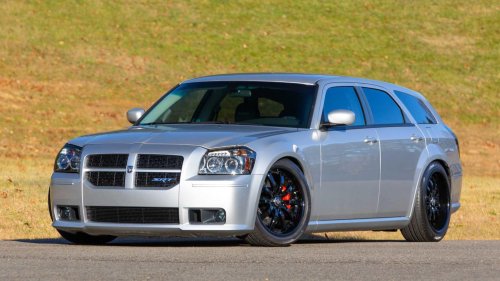
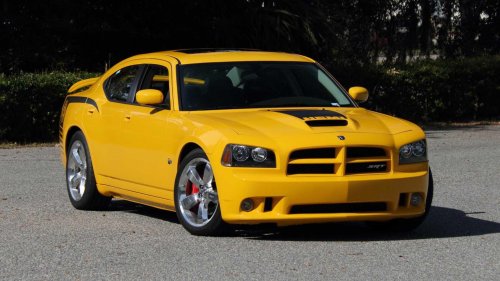
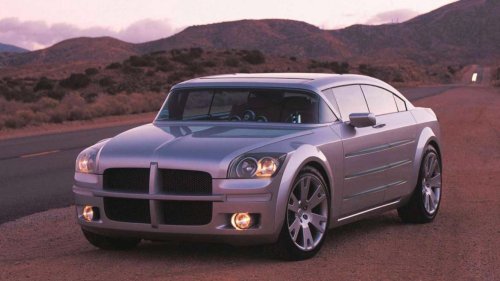
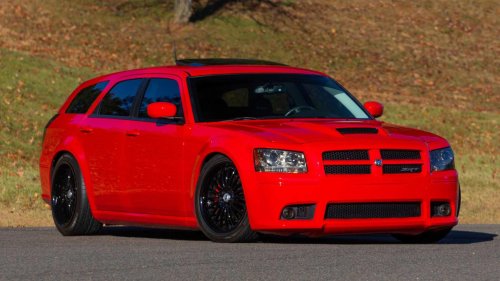



















A sleeper car is basically a harmless-looking set of wheels with tremendous power hidden under the hood, that catches people napping because its a weeniemobile, but then wakes 'em the hell with an epic launch. It's actually a curious segment, as enthusiasts into performance generally buy sporty rides and people in the market for a family car have good fuel economy at the top of their list. There are, however, folks that have settled into parenthood but still have a need for speed, who want something practical, that can also blow some doors off the second the kids get dropped off at soccer practice.Automakers keep churning out sleeper cars, so there is obviously a market for them and, truth be told, there is something perversely cool about a mundane ride that can totally smoke a sports car. The most widely-known sleeper car is the Ford Taurus SHO which, while boring, and some would say hideous, in appearance, didn't have a ton of power until it's fourth generation, and even then it wasn't mind-blowing. There was, however, a Dodge family ride that was definitely designed with Costco runs in mind that also had muscle car power and was capable of freaky fast quarter-mile runs as well. Dodge's OG Sleeper Car Mecum There are a lot of opinions on what makes a muscle car, resulting in endless debate as to which model was the first to qualify, and the definition of a sleeper car is even more vague, so pinning down the first one is open to interpretation. We're pretty sure that the styless, boxy 1966 Dodge Coronet Deluxe four-door sedan with a 425-horsepower, 490 pound-feet of torque 426 Hemi V8 under the hood, qualifies it as the OG Sleeper. Chrysler had just made the street version of the Hemi race engine available in 1966, and some faceless exec in the marketing department thought putting them in the least exciting thing Dodge had to offer. was a swell idea. It was a short-lived program, with only five units ever leaving the factory, but that handful of sleeper cars are now among the most collectible classic Mopars, with values into the millions. B-Body Magnum Charger Replacement Mecum The 1968-1970 second-gen Dodge Charger was the defining ride of the Golden Age of American muscle, and a lot of people probably thought that was the end of the line for the iconic Street King. In reality, the 1971-1974 third-gen Charger was the most popular era, with 327,783 sales versus 235,000 for the legend generation. There was also a fourth generation from 1975-1977, but by then the once sporty muscle car was a personal luxury vehicle. For whatever reason, Dodge designed the fourth-gen Charger in such a way that it didn't qualify for NASCAR competition, so Richard Petty drove a '74 third-gen all the way through the 1977 season, winning 35 races and a Cup Series championship. In 1978, Dodge replaced the Charger with the Magnum, which was NASCAR compliant, but it kind of sucked and Petty bolted for Ford and Chevy cars. Triumphant Return of the Hemi Bring a Trailer The first Chrysler engines with hemispherical combustion chambers were the FirePower series of the late 1950s, and while they were badass like the 375-hp 392 V8, they were never marketed as Hemis. Dodge revisited the idea for passenger vehicles in 1966 with the legendary 426 Street Hemi, that made Mopar muscle cars unbeatable, and that time around, proudly touted them as Hemi big-blocks. The 426 Hemi was discontinued in 1971, which officially brought the Golden Age to an end, and closed the book on the most iconic engine of all time. Then, in the early 2000s, Dodge had an inkling that performance was about to be cool again, and developed a new 5.7-liter Hemi small-block, to the delight of Mopar fans. Initially, the 5.7-liter Hemi produced 345 hp and was only equipped in 2003 Ram pickups, but set the stage for a glorious series of bigger and more powerful Hemi engines that would dominate the Modern Muscle Car Era. 2006 Dodge Magnum SRT8 Family Wagon Mecum A lot of people never realized that during the Daimler Chrysler years (1998-2007) Dodge's were mechanically similar to Mercedes-Benz vehicles, so you could get a finely-tuned European luxury ride for a basic American price. In 2003, with help from their German overlords, Chrysler developed the LX platform upon which their full-size rear-wheel drive cars would be built upon. One of the earliest LX cars was the 2005 Dodge Magnum, which was a five-door station wagon. While the family wagon has traditionally been one of the least visually appealing cars and the most likely to have wood panelling on the doors, the Magnum was actually kind of cool looking. It had a bold stance, aggressive styling, and some real attitude to go along with it.Having such a hot design that looks like it's ready to rock probably disqualifies the Magnum as a sleeper, but our headline only promised you a grocery-getter, which it most certainly is, just meaner looking. As for the street racer component of our piece, the 2005 Magnum had an R/T trim featuring the 5.7-liter Hemi V8, that was enough to make a morning commute a short one and ensure little Jenny and Jimmy got to school on time. For the 2006 Magnum, Dodge seemingly lost their minds by offering the 425-hp 6.1-liter Hemi V8 for the SRT8 trim. This is when the Magnum accidentally on purpose was transformed from a family wagon to a street brawler. Finally, a 425 HP Hemi V8 Bring a Trailer As was mentioned, the original 426 Street Hemi produced 425 hp though it was most certainly underrated, whith some estimates that it was more like a 500+ pony engine. In any case, that 425 number fits with Mopar muscle so perfectly, that any reboot needed to hit it. While it was great that the Hemi came back in 2003, the 345 hp of the 5.7-liter just didn't seem quite right. 6.1 Hemi Specs With the 6.1-liter Hemi V8, however, Chrysler found the sweet spot with a worthy 425-hp, 420 lb-ft of torque engine that properly honored its iconic ancestor. Made from 2005-2010, the 6.1-iter is kind of forgotten as 6.2-liter supercharged Hemi Hellcats and 6.4-liter 392 (nod to the FirePower) Hemis took over, but it was the first of the reboots that truly earned the Hemi title. Getting Groceries in Record Time Mecum2006, was the very beginnng of the Modern Muscle Car Era, and really it was the Hemi-powered Dodge cars that got things rolling, so other manufacturers were behind the curve. A 2006 Dodge Magnum SRT8 could accelerate from 0-60 in 5.1 seconds and close the quarter-mile distance from Krogers to Circuit City (remeber when that was a thing?) from a deadstop in 13.1 seconds. For the first time since the 1971 Plymouth Hemi 'Cuda, there was a 13-second Mopar, ending a 35-year Malasie Era drought. Meanwhile, the 2006 Ford Mustang GT with its 300-hp 4.6-liter V8 was running in the high-13s, meaning it was getting nuked by Dodge's grocery-getter family wagon. Rise And Fall Of The Dodge Magnum Mecum The Dodge Magnum started out as a modest success with 39,217 sales in it's 2005 debut and became a bona fide hit in 2006, moving 52,487 units. For the next two years, sales stabilized, averaging around 35,000 cars, but in 2008, Chrysler decided to pull the plug on it. The Magnum was one of four cars discontinued in 2008, the others being the PT Cruiser, Crossfire, and the Pacifica SUV, because in the words of Chrysler, they "were not earning their keep", but clearly the Magnum was doing well. When it comes to the Magnum SRT8, production is much smaller with a total of only 4,100 units, and just 240 for 2008, its final year. These low numbers make for a modern Mopar unicorn car, and as you will soon see, one that can be had for a song. Magnum Clears Way for Charger’s Return Mecum Obviously, Dodge had the resurrected Charger cooking for years before its eventual 2006 rebirth, but it wasn't a given that is was going into production. The seventh-gen Charger was a risk, mostly because it had four doors and everyone knows that's two too many for a muscle car, but the early success of the Magnum was proof that enthusiasts were ready to accept change. It also showed that there was a genuine thirst for Hemi-powered Mopars that had been absent from the scene for far too long. Maybe the Charger would have launched if the Magnum was a flop or never even existed, but those hypotheticals can't be proven, and it seems logical that the improbable family wagon street assassin helped pave the way for the return of the greatest muscle car nameplate in the history of kicking ass. The Super-Weird Dodge Super 8 Hemi Dodge Back when Dodge was sorting out their strategy for the new millennium, they produced the beautifully bizarre Super 8 Hemi in 2001. As the name would suggest, it was equipped with a 5.7-liter V8, two years before that engine would hit production vehicles. Now, this car was definitely weird-looking, but also kind of awesome at the same time. Looking closely, you can see elements that would eventually grace the Dodge Magnum and Charger, as well as the Chrysler 300, so it's kind of like the missing link of modern Mopar performance. Chances are, if Dodge had green lit this thing, neither the Magnum or the rebooted Charger would have ever seen the light of day, because this was not a car destined for greatness, but it served a purpose of developing design concepts that went into those vehicles. Magnum SRT8 Is The Best Deal On Hemi Street Machine Mecum The 2006 Dodge Magnum SRT8 had an MSRP of $37,320, or $61,648 adjusted for inflation, which is a ton or money, even for a killer 425-hp Hemi-equipped ride. Fast-forward to today, and they're practically giving these cars away. J.D. Power, which bases their values on real-world sales tells us that the average retail for a Magum SRT8 ranges from $6,350 for a 2006 and $8,950 for the ultra-rare 2008 model.Low-to-no mileage Magnum SRT8s can hit the $50,000 mark, which is still below its inflation-adjusted original price, but Bring a Trailer has sold dozens of great condition rides for under-$15,000 including a nearly-flawless one that went for $14,500 a couple of years ago. That 31,962-mile Tor Red 2008 SRT8 with custom upgrades was hammered at just $37,000 at a 2020 Mecum auction, which is a hell of price for such a magnificent Hemi-powered grocery-getter/street machine.Sources: Bring a Trailer, J.D. Power, Mecum