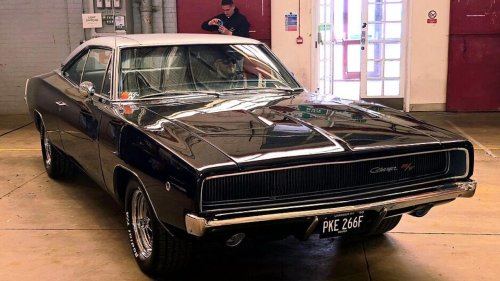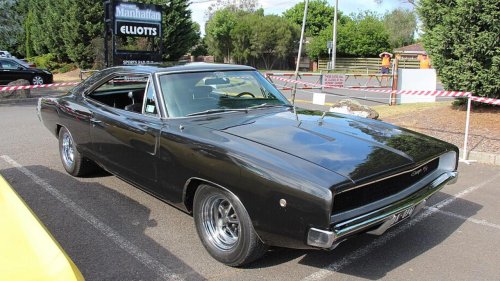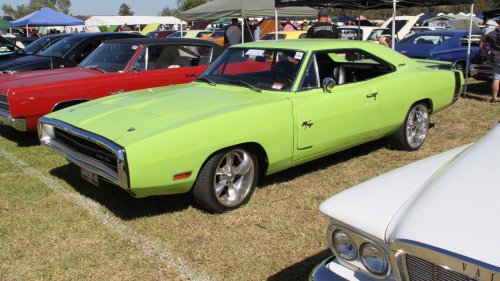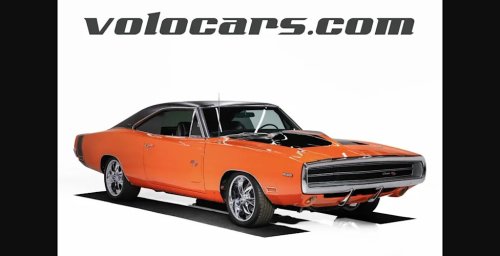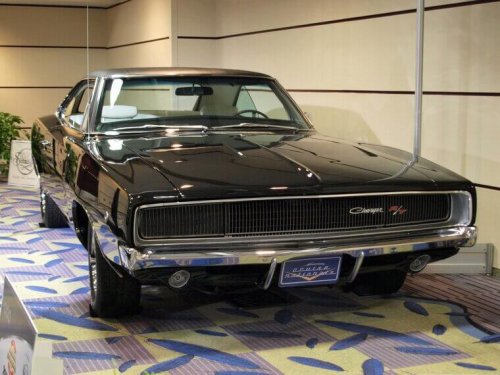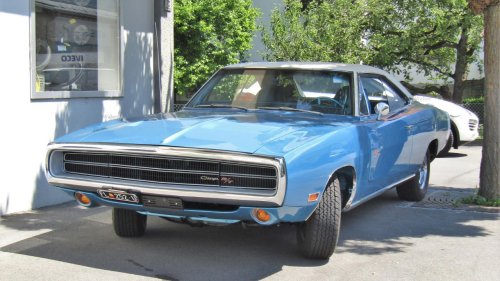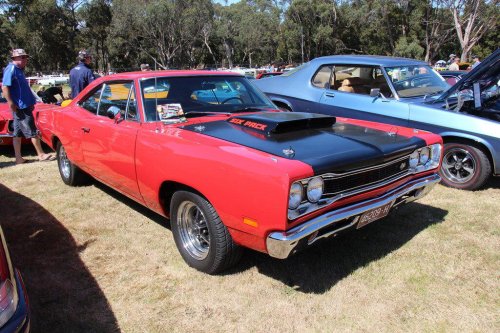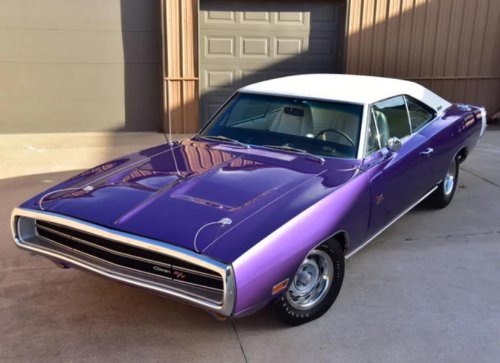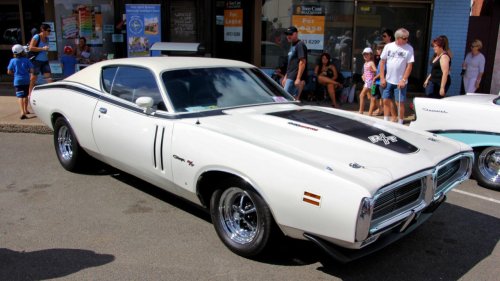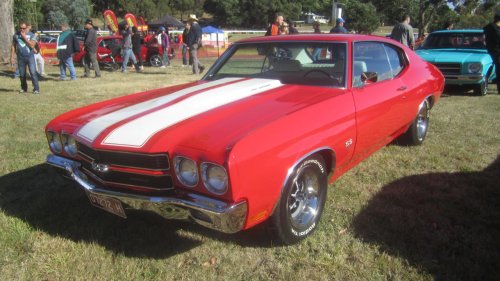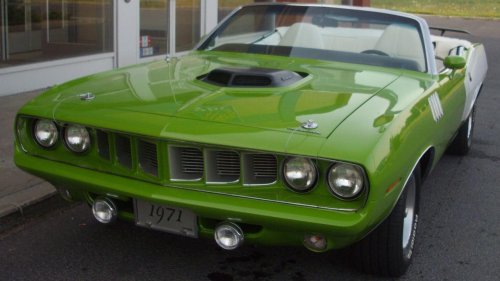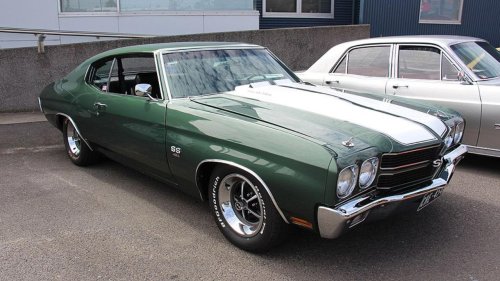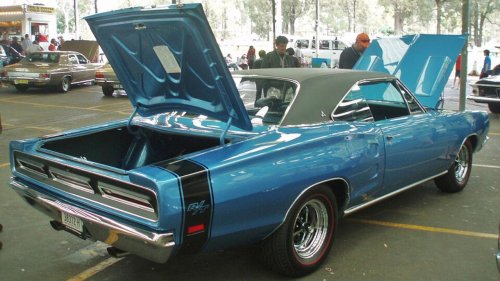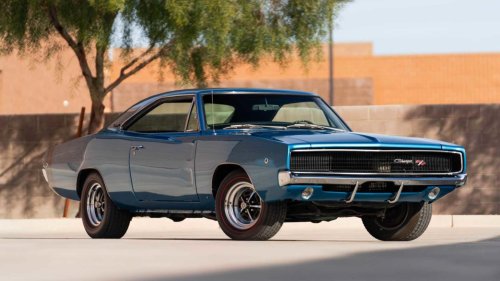



















The Mandela Effect is basically a large group of people remembering something that isn't true. The term was coined because many people falsely believe that South African anti-apartheid leader Nelson Mandela died in prison when, in fact, he was released in 1990, became the country's first black president, and passed away in 2013. The coolest example of this is how everyone knows that Darth Vader said, "Luke, I am your father," in The Empire Strikes Back, but his actual line was, "No, I am your father," which is a major Star Wars nerd sticking point.Psychologists explain the phenomenon as a memory reconstruction as our brains try to fill in gaps, but they are just as far off base, because it's simply a comedian or some other media figure telling something the wrong way and it sticks. It is also a politician repeating a debunked lie about his or her opposition and a lazy media failing to fact-check, making it the "truth" for the uninformed. In a much less scummy example, there is a Golden Age muscle car titan that is multi-Mandela Affected, as so much of what folks know about it simply isn't so. Second-Gen Dodge Charger Fact Sheet Mecum Before we get into what isn't true about the second-generation Dodge Charger, it's important to lay down the facts. The Charger was introduced in 1966 and wasn't a big hit, mostly because it wasn't a very cool-looking ride. The second-gen, unleashed in 1968 and running through 1970, on the other hand, is considered one of the most brilliant automotive designs with a gorgeous Coke bottle body and aggressive stance. This was Dodge's first purpose-built muscle car, with no four-door sedans, wagons, or convertibles, just badass two-door coupes. The R/T was the performance trim and started at $3,480, which is $33,021 in today's dollars, so this was an extremely affordable and kickass ride. Big-Block V-8 Distribution Mecum As amazing as it sounds, a second-gen Charger could be ordered with either a 225ci I-6 or a 318ci V-8, which must have been like driving a school bus towing an excavator. For the R/T, however, it was all about the big-blocks, and the 375-horsepower 440 Magnum came standard with a 425-horsepower 426 Street Hemi upgrade. Most R/Ts rolled off the lot with a 440 with a total of 38,339 cars from 1968-1970. The Hemi R/T's are actually extremely rare with 468 in '68, 232 in '69, and only 112 in '70 for a grand total of 875 units. Almost as rare were the 116 R/T 490-horsepower 440 Six-Pack cars that were only available in 1970, which offered Hemi-like performance at a more affordable price. Charger R/T By The Numbers Mecum While the second-gen Charger was successful, it didn't do the kind of numbers as the Chevy Chevelle, which moved over 1.5 million units from 1968-1970, versus 231,875 for the Dodge muscle car. When it came to high-performance cars, the Chevelle SS was still tops with Chevy cranking out 219,700 units, while Dodge only made 38,339 R/Ts in the second generation. The Charger R/T is quite a rare beast with 17,665 units in '68, 20,100 in '69, and 10,337 units in '70. We have already mentioned how elusive a second-gen Hemi R/T is with 875 cars, which compared to the 4,475 units of the 1970 Chevelle SS 454 LS6, makes it a genuine unicorn car. Charger Magic Bullitt Theory Warner Bros. Pictures 1968 Steve McQueen action/thriller Bullitt features the all-time greatest chase scenes between a '68 Ford Mustang GT and a bad guy '68 Dodge Charger R/T. This movie put the second-gen Charger on the map, but it also planted some erroneous thoughts into people's heads that they just can't shake. The first is that this black Charger R/T was a Hemi car, when in reality it had a 440ci V-8. The biggest issue, however, is that people actually believe that a 325-horsepower GT with a 390 cubic-inch V8 could outrun an R/T 440 with 375 ponies, which is absolutely preposterous. Granted, McQueen in the GT was the hero of the film, so he wasn't going to lose, but maybe they should have cast the villain car as something less awesome than a Charger R/T. General Lee General Misconceptions Mecum Everyone knows that the General Lee from the Dukes of Hazzard TV show was a Hemi Orange '69 Charger R/T, except that none of those facts are true. Many of the show cars were '69s, but they destroyed so many that they had to reverse engineer '68s and '70s. Also, almost none of them were R/Ts and the production absolutely never trashed a Hemi car. While the General Lee appears to be Hemi Orange, the original Mopar paint code appeared too brown on film, so the cars were painted TNT Orange, which is actually almost red. The show also gave people the impression that it was possible to jump a 3,000-pound vehicle 200 feet in the air and survive the landing, which is ridiculous. Fast & Furious is Fast & Loose With the Truth via Universal Pictures While Bullitt introduced the world to the awesomeness of the second-gen Charger, it's casting as Dominic Toretto's ride of choice in the Fast & Furious films made it the most famous classic muscle car ever. Unfortunately, that level of fame comes with a tremendous amount of disinformation. A lot of people think that Dom's 1970 blown, supercharged 900-horsepower Hemi R/T was a factory ride, when Dodge made no such car, peaking with 425 naturally aspirated ponies. On the matter of the year of this cinematic supercar, the production also had to modify '68s and '69s but failed to include the fake fender scoops of the '70, so fans are also wrong about what this Charger actually is. Mysterious Drop-Top Daytona Sightings Mecum This editor has encountered at least two people who swear up and down they remember seeing 1969 Dodge Charger Daytona convertibles roaming the streets back in the day. In fact, there is a sub-sect of enthusiasts who believe in the existence of the Daytona drop-top, who are kind of the Flat-Earthers of classic muscle cars. To be clear, all 503 '69 Daytonas were built with hard-tops, but there is something to this seemingly irrational belief. In 1970, Dodge created a roofless two-seat concept car called the Super Charger that was based on the Daytona, which had the nose cone but lacked the wild flying rear wing. It was a show car for many years and perhaps people saw it and thought that it must have been in production at some point, which it never was. Fastest Mopar Muscle Car Revealed Mecum Because the second-gen Charger was the defining ride of the Golden Age and the most celebrated classic muscle car, people assume it was also the fastest, but it wasn't. A '68 R/T Hemi could hit 0-60 in 5.3 seconds and devour a quarter-mile in 13.5 seconds, which was badass for the time. Also in 1970, the Chrysler E-Body cars came out with the Dodge Challenger R/T and Plymouth Hemi 'Cuda which were Charger killers. The Challenger Hemi R/T was a 13.3-second car, but the Hemi 'Cuda turned in devastating 13.1-second ETs, making it not only the fastest Mopar, but also the King of the Streets for all classic muscle cars. ’69 Six-Pack Scenario Mecum Most people think second-gen Charger Hemi R/Ts were abundant, when they were incredibly rare, but there are some other cockamamie engine beliefs out there. The 440ci Six-Pack V-8 was introduced in 1969 to make the budget Super Bee the ultimate speed machine, balancing cost and performance, and far too many people think that the awesome engine was a Charger R/T option that year. There have been actual listings for a '69 R/T Six-Packs with no indication that it was a replacement engine, and so people believe that was a real factory offering, when it wasn't. In 1970, the Charger R/T got access to the Six-Pack, but in '69 it was unavailable. Charger Collectibility Conspiracy Mecum Again, the second-gen Dodge Charger is the most famous classic muscle car, so people figure it's also the most collectible and expensive ride from the Golden Age. A '69 Charger Daytona sold for $3.3 million, but that wasn't good enough to top the $3.5 million that a Plymouth Hemi 'Cuda convertible took at auction. Even weirder, the second-gen isn't even the most valuable Charger, as a third-gen sold for over a half-million, which beats a '68-'70 by a lot. The most a non-Daytona second-gen Charger has sold for is $352,000 for a 1970 Hemi R/T at Mecum Indy 2021. While that's not exactly nothing, it's a far cry from the 1971 Hemi R/T top-seller, and really drives home the counter-intuitive nature of the second-generation Charger's value.Sources: Dodge, IMDb, Mecum