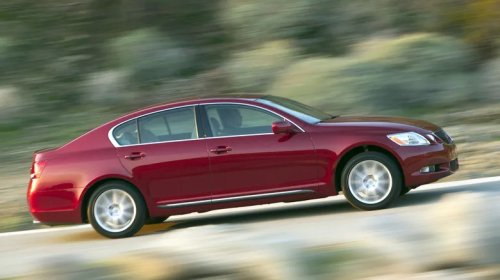
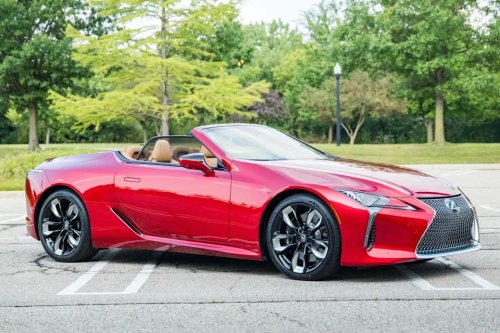
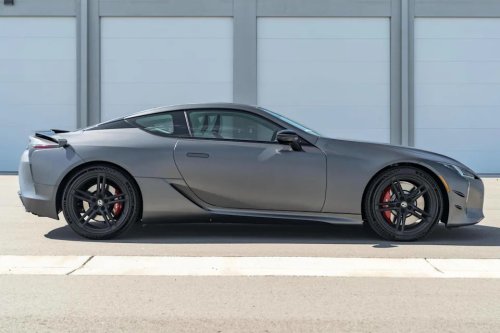
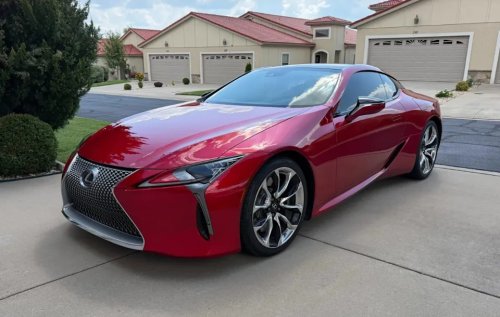
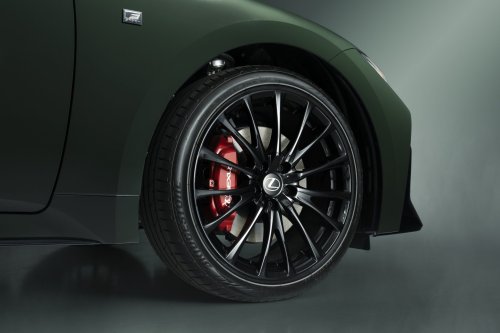
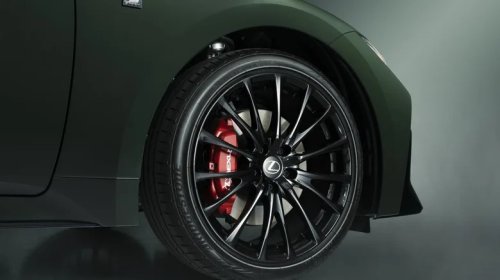
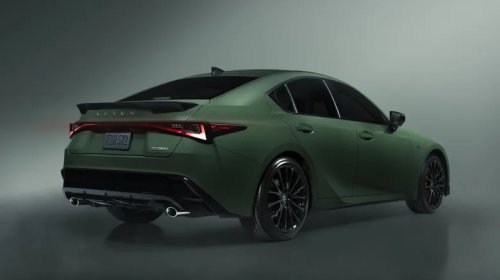
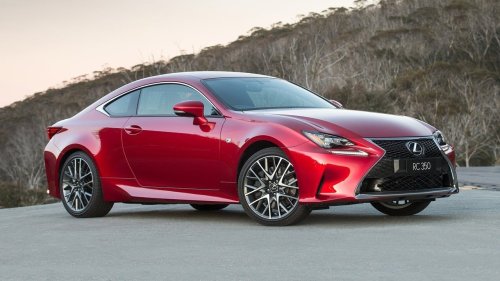
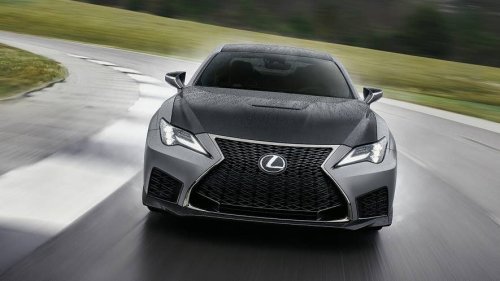
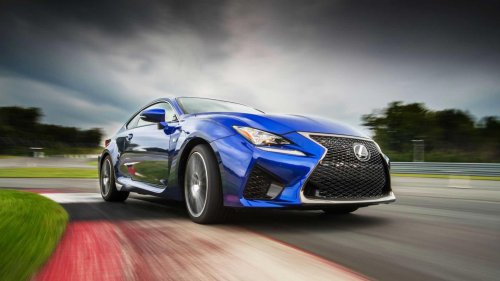
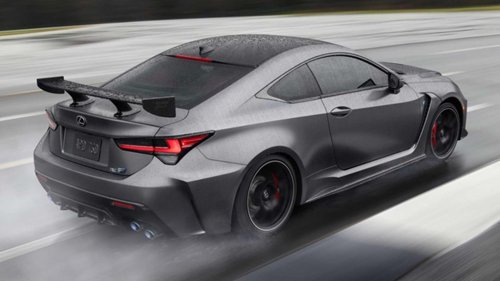
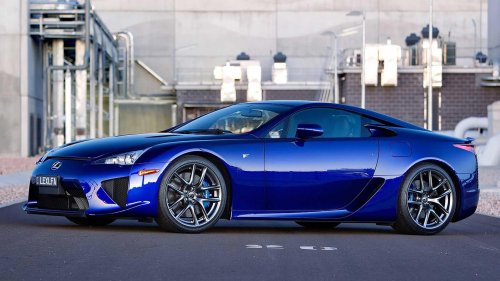
When you think about buying a Lexus, the general picture that comes to mind is a dependable and luxurious machine that is pretty healthy on the straights, but perhaps a bit wallowy in the corners. The vast majority of Lexus' creations do follow this pattern in reality, except for some exceptions, like the screaming Lexus LFA. Even some sportier-looking creations, like the LC and the GS F, are generally more lovers than fighters. Don't let their shouty naturally aspirated V8s fool you — they're more cruisers than back road bruisers.Lexus did try to step away from the norm with a special version of the latter, though, and the ultra-rare machine stands out these days as a potential profit-turner in years to come. The RC F Track Edition Sharpened The Car's Fangs LexusThe RC F was positioned as Lexus' mid-range personal coupe, geared more towards making long trips as comfortable as possible while also ensuring you look stylish. To sweeten the deal a little, the 5.0-liter V8 it possessed could get your pulse racing once you found a straighter bit of road, partly thanks to making 472 horsepower, but mainly due to its intoxicating soundtrack. In 2019, Lexus felt the engine was being underutilized in a luxury-focused coupe and wanted to offer a more hardcore version for those looking to push it to its limits.Called the Track Edition, the more hardcore model features a range of modifications designed to create a sharper, faster tool. It debuted at the 2019 North American International Auto Show in Detroit. The engine remained pretty much untouched, though revised titanium exhaust tips were fitted to reduce weight. Speaking of which, the car was also graced with a new carbon-fiber hood and roof, as well as lightweight wheels.The standard RC F was a pretty beefy beast, and the Track Edition's weight-saving program resulted in a total saving of 121 pounds, as well as a lower center of gravity. On the topic of carbon fiber, the vehicle also received a new front splitter and rear spoiler constructed from the material, which worked together to boost downforce at higher speeds.Beyond that, the RC F Track Edition was equipped with carbon-ceramic brakes to help it stop more effectively, as well as a torque-vectoring differential to reduce understeer when jumping on the throttle. Having initially only been made available for the 2020 model year, Lexus brought the machine back for the 2023 model year. It was pretty much identical to the ones that had come before, though revised Hitachi shocks were incorporated to provide superior body control. An additional body color was also inserted onto the menu, with a further three brought along for the machine's 2024 swansong.For 2021 and 2022, the Track Edition's place within the RC F lineup was taken by the Fuji Edition, which was identical mechanically but received bespoke exterior and cabin color options. With just 60 and 50 of these produced across the two years, respectively, every buyer also received a unique watch commemorating the vehicle. The Changes Weren't Particularly Well Received Despite all of Lexus's efforts, reactions to the RC F Track Edition were rather lukewarm. While the car was sharper than the standard model, its suspension was still a little too soft and unresponsive compared to other track-ready machines on the market, while the steering was a little too vague. Plus, while a lot of weight was shed, the finished article was still a pretty heavy proposition."The RC F Track Edition is a bit of a misnomer. Yes, it has lightweight carbon fiber reinforced plastic pieces, lighter wheels, and stronger brakes, but it's not really a track weapon. If you drive it back-to-back with the standard RC F, you notice that it leans less in the corners, brakes harder, is more eager to turn in, but the steering still lacks any sort of feel. It's still a Lexus at heart, and that's why I'd much rather have a standard RC F. The standard RC F is unapologetically a grand tourer, and all the better for it. And you still get the same V8 soundtrack, which is what you're really paying for here if we're being totally honest.- Gerhard Horn, CarBuzz Senior EditorEarly adopters of the vehicle shared similar feelings, with some feeling the car didn't differ enough from the standard RC F. Considering the standard one cost a good $30,000 less, the alterations weren't worth the price of admission. That said, a driver from the Club Lexus forum revealed that they had achieved great results by simply upgrading the tires on their example, with the improvements going far beyond what they had initially expected. The Used Value Of The Track Edition Is As You'd Expect Should you want to sample an RC F Track Edition for yourself, you'd still need to spend a fair chunk of cash to secure one. As a ballpark figure, the average used selling price for the model currently stands at just over $80,000, which means it has retained a similar gap to the standard RC F. Used versions of the normal variant can be picked up for around $50,000 in 2026, meaning you'd still have to really want a Track Edition to justify spending the extra cash.Some examples can fetch even more than that, however. Various specialist dealerships across the US are asking for more than $100,000 for sub-1,000-mile specimens, which have clearly been kept under lock and key with the plan to shift them for profit. The RC F Track Edition Is Still Pretty Close To Its MSRP LexusIts used-car value supports the prospects of the RC F Track Edition being a collector's darling, as even cheaper examples are selling for around $10,000 below its original $96,650 base MSRP. Newer cars always suffer depreciation early in their life, and a seven-year-old car is nowhere near achieving classic status. With lower-mileage cars already hitting the market at well north of the RC F TE's original MSRP, the building blocks are in place for cheaper examples to become nice profit makers.!!!TRIM TAG!!! Price Chart 2024 Lexus RC F Track Edition RWD Lexus' Uprated RC F's Rarity Is An Important Attribute LexusWhile the RC F Track Edition's performance standing works against it as a future classic, it does have other advantages in its favor. Firstly, the car is ultra-rare. While production numbers for later model years are harder to pin down, just 400 examples were produced worldwide in its first year on sale, with just 50 of these reaching US shores. Judging by that, it's thought that fewer than 1,500 specimens were ever built, with a small fraction of these nestling Stateside.As the car ages, and some are lost to overexuberant driving and other reasons, there's every reason to anticipate the car could become sought after. Additionally, the RC F was one of the last naturally aspirated V8 performance cars on the market, and history could look back kindly on this fact as the world moves further toward drama-quashing turbocharged and hybrid-infused powerplants. The RC F Track Edition also sets itself apart from its standard sibling with its wilder styling, striking thanks to the copious amounts of carbon used throughout. Give it another 15 years or so, and this special model could well start looking immensely valuable.While the base RC F has the same sort of advantage in terms of its engine, the fact that it was built in much greater numbers works against it as a future collectible. While exact numbers aren't known, it's thought that between 10,000 and 12,000 units were produced during its decade-long production run. One Of Lexus' Other Limited-Run Creations Has Already Gone Sky-High LexusShould the RC F Track Edition's used value eventually begin to skyrocket, it wouldn't be the first time that one of Lexus' special models has far eclipsed its original value. That accolade goes to the LFA, the brand's high-end supercar, built to be the torchbearer for how performance vehicles should be designed. Following a decade of design evolution and testing, the production LFA finally reached customers' hands in 2010.Sporting a Yamaha-developed naturally aspirated 4.8-liter V10, which emits one of the most angelic engine notes of any powerplant ever produced, the car won rave reviews for its engaging, rewarding handling balance, making it a true joy to pilot. Given its special nature, Lexus committed to only producing 500 examples of the car. A total of 450 were standard variants that were offered at $375,000, while a further 50 hardened Nürburgring variants were priced at $445,000. While undoubtedly expensive, spin the clock forward 15 years, and these prices look like the bargain of the century.The standard LFA now attracts around $700,000 in good condition, according to Hagerty's Valuation Tool, while mint examples are worth an eye-watering $928k. These numbers are steadily rising year-on-year, too, so don't be surprised to see the car consistently breach the $1 million barrier before too long. Nürburgring specimens are worth even more, with mid-range examples in good condition going for around $1.5 million, while concours examples will command a cool $2 million. When considering concours-ranked cars, this is a 147% rise over the normal LFA's original MSRP, and an eye-opening 349% for the hardened variant.It seems unlikely the RC F Track Edition would reach the same heights due to its rather average driving performance, but even a fraction of this increase would represent a handsome return.




















 +79 others