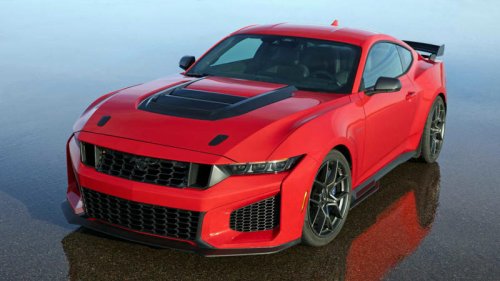
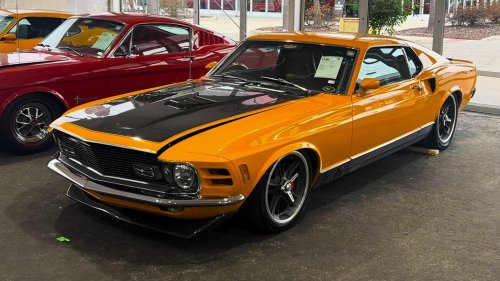
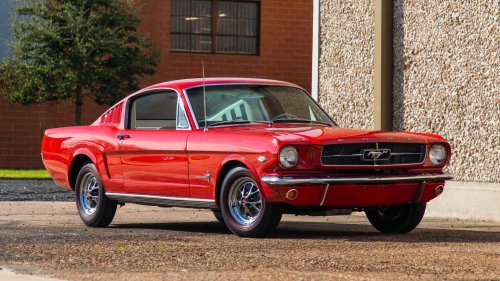
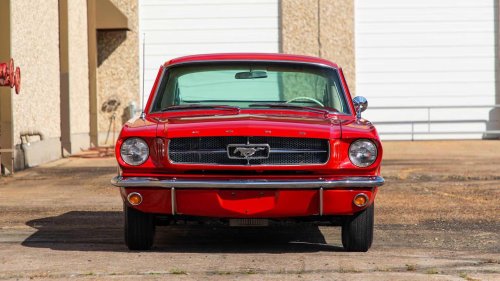
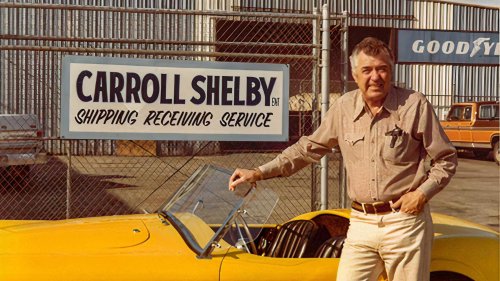
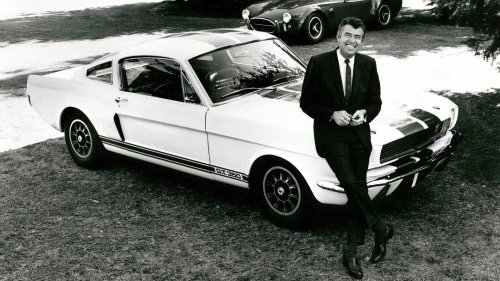
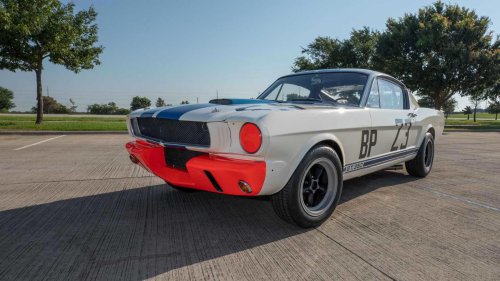
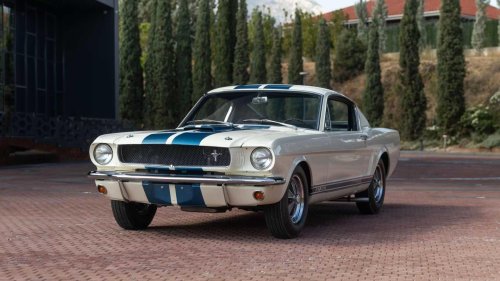
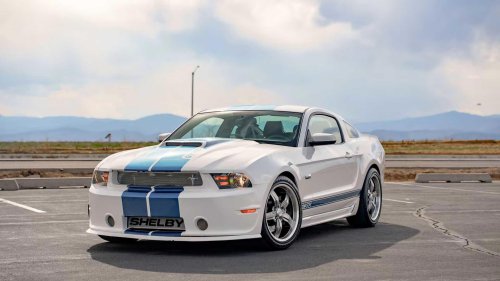
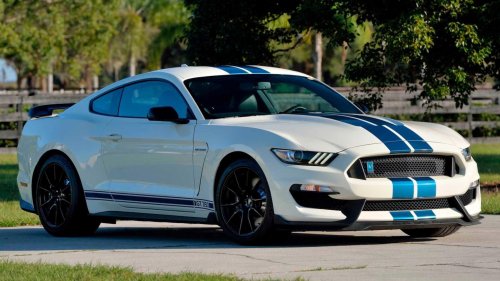
The Ford Mustang is undoubtedly one of the greatest muscle cars ever, if not the greatest. The pioneer of the pony car sub-segment, the Mustang is the only muscle car to survive the brutal Darwinism of the automotive world without ever missing a beat in 62 years of continuous production and remains the last traditional V8 gladiator standing, while rivals like the Chevrolet Camaro and Dodge Challenger have recently bowed out of the arena. Since Ford has pumped out millions of Mustangs across seven generations, snagging a piece of this legacy is as easy as scouring the local classifieds, where decades of mass-produced iterations remain within reach of the average enthusiast.However, the Stang's history books contain a few chapters that were never meant for the masses, including dealer-exclusive specials, special editions, rarely-picked trims and packages, and the highly coveted homologation and competition versions. The Mustang variant we're covering here belongs to the last category. Born from a desperate need to give the early Mustang legitimate track credentials, this lightweight monster transformed the Mustang into a champion, cementing a racing legacy that collectors now pay millions to own. The First-Generation Mustang Was A Sales Hit, But There Was A Problem Via Mecum AuctionsWhen the Ford Mustang debuted in 1964, it didn't just sell; it exploded. It had one of the most successful launches in automotive history, with 22,000 orders on launch day and sales topping 418,000 within 12 months. It was a marketing masterstroke that redefined the American driveway, effectively inventing the pony car segment overnight.The Mustang was a cultural icon from the jump, loved for its sporty styling, customization options, and affordable price point. However, underneath the hype, something was missing. The Performance Gap Ford Couldn't Ignore Via Mecum AuctionsIn its first year, the Mustang's engine lineup was more cruiser than bruiser. Buyers only had small-block V8s and six-cylinder engines to choose from, and even though the flagship 289 cubic-inch "K-Code" V8 offered a decent 271 hp, it was still a far cry from the big-block Chevrolet Corvettes and 426 Wedge-powered Mopars.With horsepower wars heating up and competitors getting faster and more focused, the Mustang lacked the edge enthusiasts were beginning to demand, and the industry's elite viewed it as a soft "secretary's car" with zero competitive DNA. If the Mustang was going to be taken seriously as a performance machine, it needed more than just looks and sales figures; it needed a racing soul, and Ford executives knew exactly who they needed to call. The Moment Ford Turned To A Racing Legend Via Shelby AmericanIn the 1960s, the automotive world lived by a simple mantra: "Win on Sunday, Sell on Monday." Ford executive Lee Iacocca understood that long-term legacy was forged in the heat of competition, and he knew that for the Mustang to transition from a trendy commuter to a performance icon, it had to dominate the racetrack.Lee Iacocca set his sights on the SCCA B-Production class as the perfect arena to achieve his goal, a playground ruled by the Corvette at the time. To dethrone the 'Vette, the Mustang needed a complete mechanical metamorphosis, and Iacocca knew that only one man possessed the grit and racing pedigree to transform the Mustang into a world-beater—the legendary Carroll Shelby. Carroll Shelby Rewrote The Mustang's Identity Via Shelby AmericanLong before the Mustang was conceived, Carroll Shelby had already established himself as a titan in the racing world, having won the prestigious 24 Hours of Le Mans in the late 1950s. Beyond his decorated racing career, Shelby was a savvy entrepreneur and race car builder and his company, Shelby American, had already established itself as Ford's premier high-performance partner. Fresh off the success of the vaunted Cobra, Shelby knew exactly how to build a car that could dominate on track, which is why Iacocca asked him to work his magic on the Mustang.Interestingly, Shelby was initially skeptical of the project, reportedly calling the Mustang a "mule" that couldn't be turned into a racehorse. Despite his initial hesitation, Shelby eventually took on the challenge after Ford promised substantial support, and Ford began shipping "K-Code" 289 Mustangs directly to his facility in Venice, California. What emerged from Shelby's hangars was a visceral, no-compromise racing machine that successfully stripped the Mustang of its "secretary's car" image and replaced it with a champion's soul. Meet the 1965 Shelby GT350R. 1965 Shelby GT350R: The Track-Bred Mustang That Became Collector Gold Via Mecum AuctionsThe 1965 Shelby GT350R wasn't just a faster Mustang. It was a stripped-down factory-sanctioned racing weapon that gave the Mustang the racing pedigree and performance credentials it needed to become an enduring American icon. The GT350R build process began with Ford shipping unfinished Wimbledon White "K-Code" fastbacks to Shelby's production facility, where his team stripped the interiors to bare metal, replaced the steel hoods with lightweight fiberglass, and swapped the windows for Plexiglass.The stock bumper was replaced with a fiberglass front apron that funneled air into the brakes, while wider fender flares housed beefier racing wheels. These brutal modifications transformed the stylish fastback into a lightweight monster that was built for one purpose: total track dominance. The Mechanical Upgrades That Changed Everything While the aggressive weight-saving measures and aerodynamic tweaks lightened the load, they were only one piece of the GT350R's performance puzzle. To truly transform the Mustang into a champion, Shelby focused on the car's heartbeat - the 289 cubic-inch Hi-Po "K-Code" small-block V8. Shelby's team rebuilt the engine for sustained high-rpm racing, swapped the stock iron intake for a high-rise aluminum manifold, and topped it with a massive 715-cfm Holley four-barrel carburetor.Combined with tubular Cyclone Tri-Y headers and a side-exit exhaust system that bypassed mufflers entirely, these tweaks pushed output from a respectable 271 hp to around 350 hp, and since Shelby retained and refined the high-performance solid lifter cam, the engine could scream at high rpms comfortably. To handle its newfound heat, Shelby added an external oil cooler and replaced the standard Mustang radiator with a heavy-duty aluminum unit sourced from the Ford Galaxie. The GT350R's racing mill was then paired with a close-ratio four-speed manual transmission, creating a legitimate supercar-slayer that could reliably redline all day long. In total, Shelby built around 36 GT350Rs in 1965, including just two prototypes.Fun Fact: Carroll Shelby famously named the car after asking an employee to pace off the distance from the office to the workshop. The employee reported it was "about 350 feet," and Shelby decided "GT350" sounded good. The GT350R Had An Immediate Impact On American Motorsport When the GT350R finally entered the SCCA B-Production class in 1965, it staged a hostile takeover. On Valentine's Day 1965, development driver Ken Miles piloted the prototype to a debut victory at Green Valley Raceway, famously launching the car into the air and creating the "Flying Mustang" photo. The GT350R's combination of raw power and nimble handling helped dethrone the Chevy Corvette and ended years of GM dominance.However, the factory-backed effort was short-lived as Carroll Shelby's focus shifted to the high-stakes Ford GT40 program and the quest to conquer Le Mans after the 1965 season. Still, the GT350R remained the weapon of choice for privateers, who piloted these lightweight monsters to national championships and turned a single season of factory development into a multi-year dynasty of Ford-powered podiums. From Track Weapon To Blue-Chip Icon Today, the 1965 GT350R is a holy grail model for Ford collectors because it ticks every box: it's a first-generation Mustang with golden-era styling cues, was the first Mustang to get the Shelby treatment, has a dominant racing pedigree, and, with only 36 units built, it's a unicorn that only a lucky few get to see in the flesh, let alone drive it. As you'd expect, GT350Rs are blue-chip assets that make the headlines every time they go up for auction, with surviving examples trading for around $900,000 on average.However, even those eye-watering figures look like bargains compared to the pinnacle of the market. In 2020, the Ken Miles "Flying Mustang" prototype, chassis 5R002, hammered away for a record-shattering $3.85 million, proving that collectors will pay hypercar prices for the machine that gave the Mustang its soul. Beyond The Track: The Road-Going GT350 Brought Race-Bred Performance To The Road Via Mecum AuctionsTo satisfy SCCA homologation rules, Shelby had to produce at least 100 road-legal versions of the GT350R, giving birth to the GT350. While the "R" was a stripped-out animal, the road car was essentially a street-legal race car that shared the same DNA, featuring a deleted rear seat, a relocated front suspension for surgical handling, the deafening side-exit exhausts, and the high-strung K-Code V8, though it was detuned to 306 hp.The main differences were subtle: the road car kept its glass windows, full interior upholstery, and steel bumpers, but the experience remained unapologetically loud and stiff. However, this raw, unadulterated edge was a one-year-only affair, as the GT350's personality would begin to shift significantly after the 1965 season. Shelby built only about 562 GT350s in 1965. How The GT350 Evolved Over The Years Via Mecum AuctionsAfter the raw intensity of 1965, the GT350's hard edge began to soften. By 1966, Shelby added rear seats and color options to make it more "civilized" to boost sales, and by the late 1960s, the car had morphed into a heavy, luxury-oriented cruiser. Frustrated by this shift away from racing, Carroll Shelby walked away from the project in 1969, and shortly after in 1970, Ford axed the nameplate altogether, with production from 1966 to 1970 amounting to around 6,594 units. The legend lay dormant until 2011, when Shelby American began offering conversions for a limited run of roughly 414 cars through 2013.However, the true revival came in 2015, when Ford moved production to the main line. Over a six-year run, Ford produced roughly 20,564 standard GT350s and just over 3,600 units of the hardcore but road-legal GT350R. At the heart of this revival was the exotic flat-plane crank "Voodoo" V8, an engine architecture typically reserved for European supercars. This allowed for a spine-tingling 8,250-rpm redline, giving the Mustang a distinct, high-pitched scream unlike any American V8 before it. Ford honored the original GT350R's legacy by offering a limited Heritage Package in the model's final year in 2020, finished in the iconic Wimbledon White and Guardsman Blue livery.Via Mecum AuctionsThe 1965 Shelby GT350R is widely regarded as the definitive turning point in the Mustang's history, transforming a stylish commuter into a world-class racing champion that gave it the performance credentials it needed to dominate and silence the critics. Today, this rare thoroughbred is a lot more than just a car; it's the rarest, rawest, and most significant chapter in the Mustang's 62-year story and the ultimate must-have for any serious collector.Sources: Shelby American, Shelby American Collection, Hagerty Valuation Tool, Classic.com, Mecum Auctions



















 +74 others