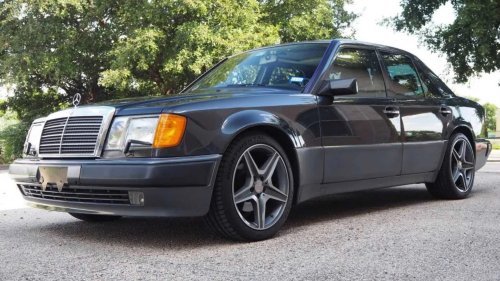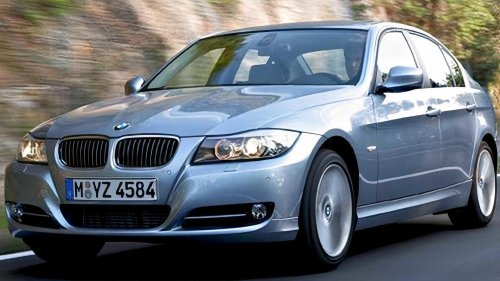
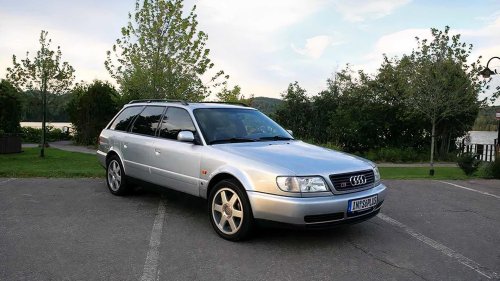
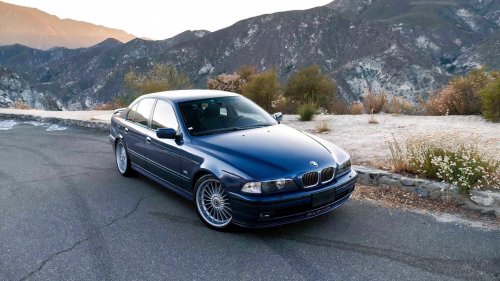
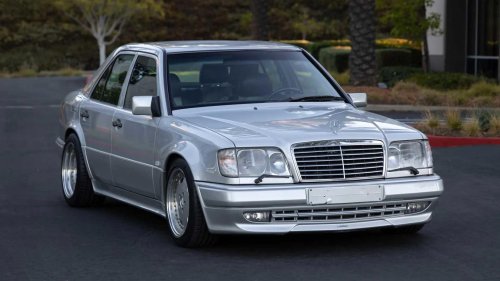
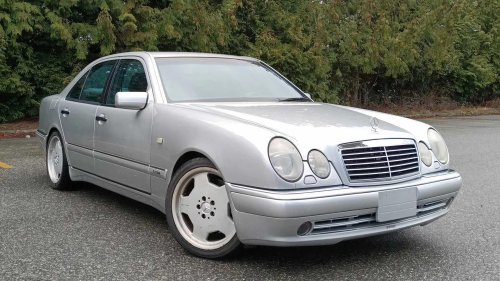
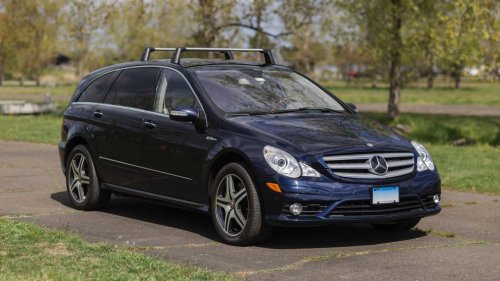
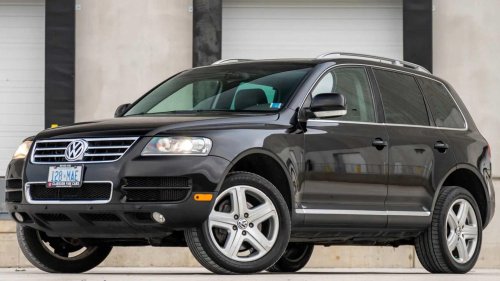
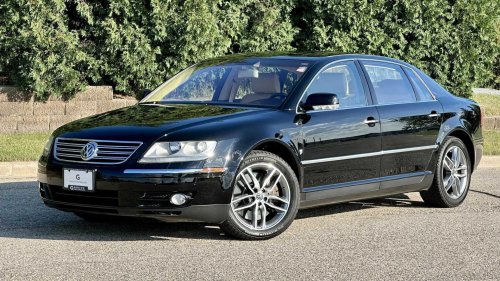


















The late 1990s and early 2000s are often celebrated as the golden age of analog performance, but a specific subclass of cars from this era goes largely unmentioned. Many people look at the top of the range models, but those that are just beneath them are still serious performers. These vehicles were designed for a very specific type of driver, someone who wanted to cruise the Autobahn at 160 mph but preferred to look like a mid-level regional manager while doing it.Long before performance meant massive digital displays, aggressive body kits, and loud, artificial exhaust pops, German engineers were quietly perfecting the act of building sleeper cars. They had boring black, white or silver paint, factory wheels, and looked just like any standard commuter car. Yet beneath that boring body, they had bespoke powertrains, motorsport-bred engineering, and serious performance. For decades, these masterpieces hid in plain sight, blending seamlessly into everyday traffic. Today, however, a new set of enthusiasts and collectors are quietly hunting them down for their discreet performance. BMW 335i (E90) Engine: 3.0-liter Twin-Turbo Inline-Six (N54) - 306 HP Kelley Blue BookWhen the E90-generation BMW 3 Series arrived, the car that grabbed the most attention was the V8-powered M3. But sitting quietly just beneath it in the lineup was the 335i. On the outside, it looked almost the same as the base 3-series but packing a serious engine under the hood. The early E90 335i was powered by the legendary N54 engine, which was BMW’s first mass-production twin-turbocharged gasoline inline-six. It made 306 horsepower and 300 pound-feet of torque; it was also well engineered with an aluminum cylinder head, block, and forged crankshaft.This isn't that much of a sleeper to those who know it, since the N54 is a well-known powerplant. Enthusiasts quickly realized that it was essentially a modern, German equivalent of Toyota’s famous 2JZ engine. With a simple software tune and minor bolt-on modifications, this normal-looking sedan could easily push past 400 horsepower, allowing it to embarrass regular sports cars while looking like a base E90, which is why people love it. Debadge one, and you couldn't tell which car it was. Audi S6 Plus (C4) Engine: 4.2-liter Naturally Aspirated V8 - 326 HP Bring a TrailerThe Audi RS2 Avant gets all the historical glory as the car that put fast Audi wagons on the map. But if you want something rarer, go for the unassuming C4 Audi S6 Plus. This wasn't just a trim package; it was actually the very first car completely developed and built by Quattro GmbH, Audi’s in-house performance division (now Audi Sport). Instead of the famous turbocharged five-cylinder engines common with this era, the engineers managed to squeeze a heavily revised 4.2-liter V8 into the engine bay.It made 326 hp and 295 lb-ft of torque, sending power to all four wheels via a 6-speed manual transmission. Only 952 cars were made in total; 97 sedans and 855 Avants (wagons) were ever built. This car wasn't trying to show off at all, and had only subtle blue and black badges to set it apart. Other than that, the S6 Plus could cruise past the police or blend into traffic and no one would notice. It wasn't slow either, as that V8 allowed it to pull off a 0–60 time of 5.7 seconds and a limited top speed of 155 mph. BMW Alpina B10 V8 (E39) Engine: 4.6-liter Naturally Aspirated V8 - 347 HP Bring A TrailerThe BMW E39 M5 is a certified legend, but this is an obvious choice that now commands massive premiums on the collector market today. For the enthusiast who wants effortless speed wrapped in a more elegant body, the answer is the Alpina B10 V8. Alpina is known for taking standard BMWs and re-engineering them as effortless, high-speed grand tourers. For the B10, they took BMW's 4.4-liter M62 V8 found in the 540i and bored it out to 4.6 liters, added lightweight pistons, a revised camshaft, and a bespoke exhaust system.The most powerful version of the E39 540i made 282 hp and 325 lb-ft of torque, while Alpina's version 4.6-liter V8 made 347 hp and 354 lb-ft of torque. Unlike the high-strung M5, which demanded a manual transmission and constant high-revs, the Alpina B10 was designed to sit at 150 mph on the Autobahn in total serenity. Unless someone recognizes the classic, ultra-thin Alpina pinstripe or the iconic multi-spoke wheels, it looks like an ordinary, well-kept 5 Series. Mercedes-Benz W124 500E / E60 AMG Engine: 5.0-liter/6.0-liter Naturally Aspirated V8 - 326/380 HP Bring a Trailer The Mercedes-Benz 500E is the quintessential sleeper, born from one of the most fascinating collaborations in automotive history. In the early 1990s, Mercedes wanted to fit their massive 5.0-liter M119 V8 into the mid-sized W124 chassis, but their own production lines were too narrow to handle it. They turned to Porsche, who was struggling financially at the time. Porsche completely re-engineered the chassis, widening the track, altering the suspension geometry, and hand-assembling each car at their factory. The end product was a car that had performance but looked almost like a regular E class.The 5.0-liter V8 made 326 hp and 354 lb-ft of torque. For those looking for the ultimate evolution, the incredibly rare E60 AMG version bumped displacement to 6.0 liters, creating a 380-hp monolith that drives like a solid bank vault. To the casual observer, it is just a pristine 1990s taxi. Look closer, and the only visual clues are a slightly lower stance and subtly flared wheel arches to clear the wider track. Mercedes-Benz E55 AMG (W210) Engine: 5.4-liter Naturally Aspirated V8 - 349 HP Bring a TrailerWhen you hear E55 AMG, the most famous is the W211 supercharged E55 AMG, but we mean the W210 version. During the late 1990s and early 2000s, the W210 Mercedes E-Class was everywhere. It was the standard airport taxi across Europe and a common sight in nice neighborhoods. The E55 AMG version took advantage of that and built one of the ultimate sleepers.At the heart of the W210 E55 was the 5.4-liter M113 V8, an engine renowned by Mercedes enthusiasts as one of the most reliable, bulletproof power plants the company ever engineered. It made 349 hp and 391 lb-ft of torque. That massive wave of low-end torque could break the rear tires loose at a moment's notice, yet when driven gently, it was a quiet and compliant luxury cruiser. Because the W210 generation suffered from well-documented rust issues, clean, enthusiast-owned examples have become exceptionally rare. Finding a crisp, rust-free E55 today means owning a devastatingly fast machine that most people will mistake for a cheap, old used car. Mercedes-Benz R63 AMG Engine: 6.2-liter Naturally Aspirated V8 - 503 HP Bring a TrailerEven in the wild world of AMG, the R63 stands out as a beautiful moment of pure engineering madness. In 2007, someone inside Mercedes-Benz greenlit the decision to take their legendary, hand-built 6.2-liter naturally aspirated M156 V8 found in top-tier sports cars and drop it into a three-row, all-wheel-drive family minivan. It made 503 horsepower and 465 pound-feet of torque, sending power to all four wheels via a seven-speed automatic transmission. The result was a family hauler that could rocket six passengers from 0 to 60 mph in just 4.6 seconds and hit a top speed of 171 mph with the AMG Driver's Package.It looked almost like the regular R-class except for slightly bigger wheels, the quad exhaust, and some subtle styling changes, but that exhaust note was a dead giveaway. Mercedes quickly realized the market for a 500-hpr minivan was tiny, and it was discontinued after a single year of production. It is estimated that fewer than 200 examples exist worldwide, making the R63 one of the rarest, most absurdly cool sleepers ever created. Volkswagen Touareg V10 TDI Engine: 5.0-liter Twin-Turbo Diesel V10 - 310 HP Bring a TrailerIn the early 2000s, Volkswagen boss, Ferdinand Piëch, was making some very ambitious decisions. One of those decisions was to stick a V10 in a family SUV which actually made production. VW stuffed a massive 5.0-liter twin-turbo V10 diesel engine into the Touareg, which produced 310 hp and a staggering 553 lb-ft of torque at just 2,000 RPM. To demonstrate its sheer mechanical strength, Volkswagen famously towed a Boeing 747 jumbo jet with a stock Touareg V10 TDI down a runway.From the outside, it had no aggressive body kits or fancy emblems, just a small "V10 TDI" badge on the tailgate. This was a very ambitious project, which also makes this vehicle a complex vehicle to maintain, but for enthusiasts who appreciate engineering feats like this, it is a highway cruiser with the pulling power of a freight train. VW Phaeton W12 Engine: 6.0-liter W12 - 444 HP Bring a TrailerThe Phaeton W12 was another passion project of Ferdinand Piëch, who wanted to build a luxury sedan that would eclipse Mercedes-Benz and BMW. Piëch gave his engineers a shortlist of seemingly impossible parameters—including a requirement that the car must be able to drive at 186 mph all day in 120-degree heat while maintaining a cabin temperature of exactly 71.6 degrees Fahrenheit. He was very specific about what he wanted. The crown jewel of the Phaeton lineup was the W12 model, featuring an incredibly compact 6.0-liter twin turbo 12-cylinder engine (W12) shared directly with the Bentley Continental GT. This engine made 444 hp and 413 lb-ft of torque.The Phaeton W12 was hand-assembled in the famous glass "Transparent Factory" in Dresden, the Phaeton boasted unparalleled torsional rigidity and an over-engineered air suspension system for ultimate comfort. But because it looked like an oversized Passat and had a VW badge and a six-figure price tag when fully equipped, the market just ignored it. Today, real enthusiasts recognize it as one of the most absurdly over-engineered luxury sleepers ever conceived.Sources: Mercedes-Benz, Volkswagen, BMW, Audi, Classic.com, Motor Trend