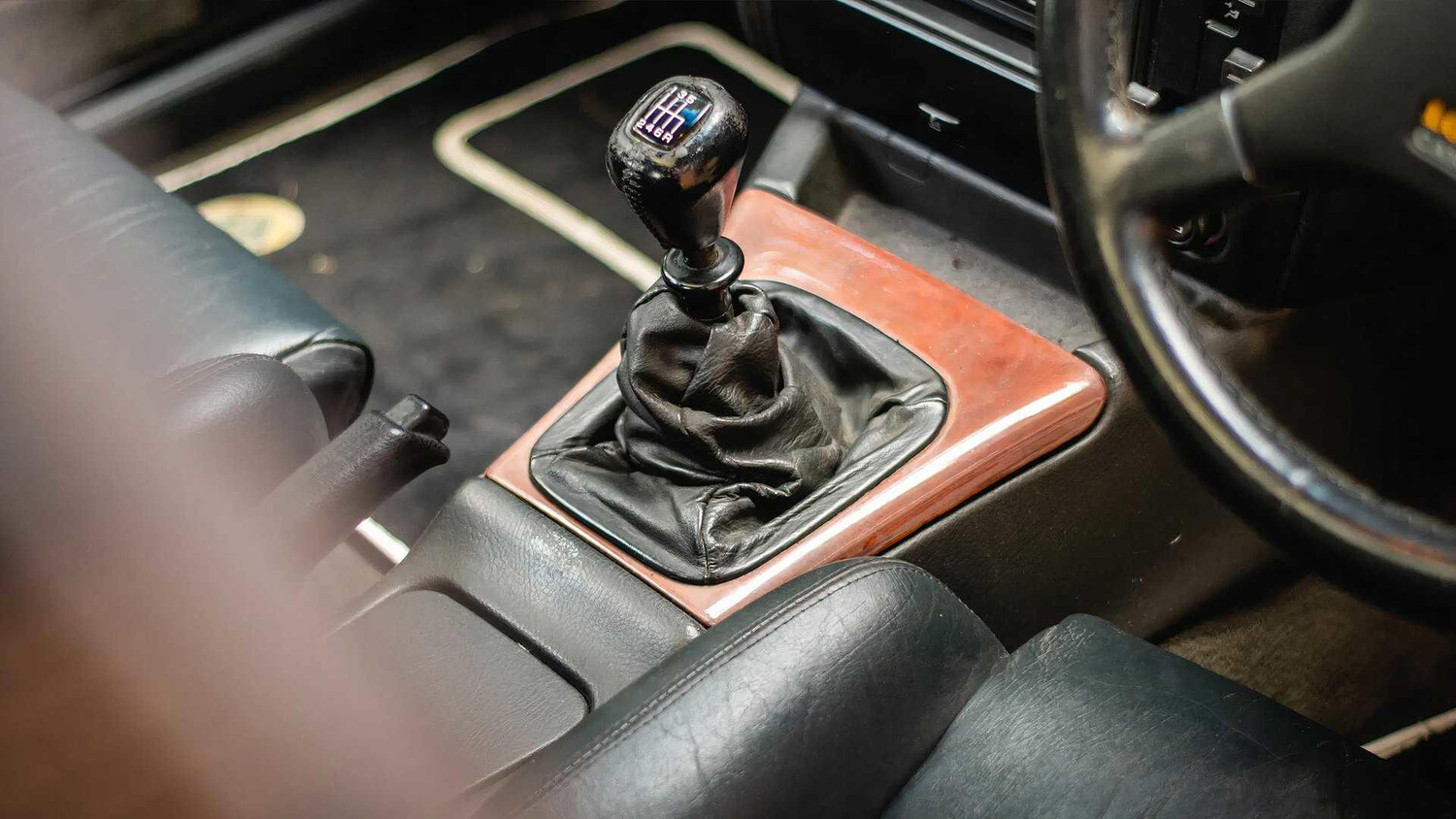
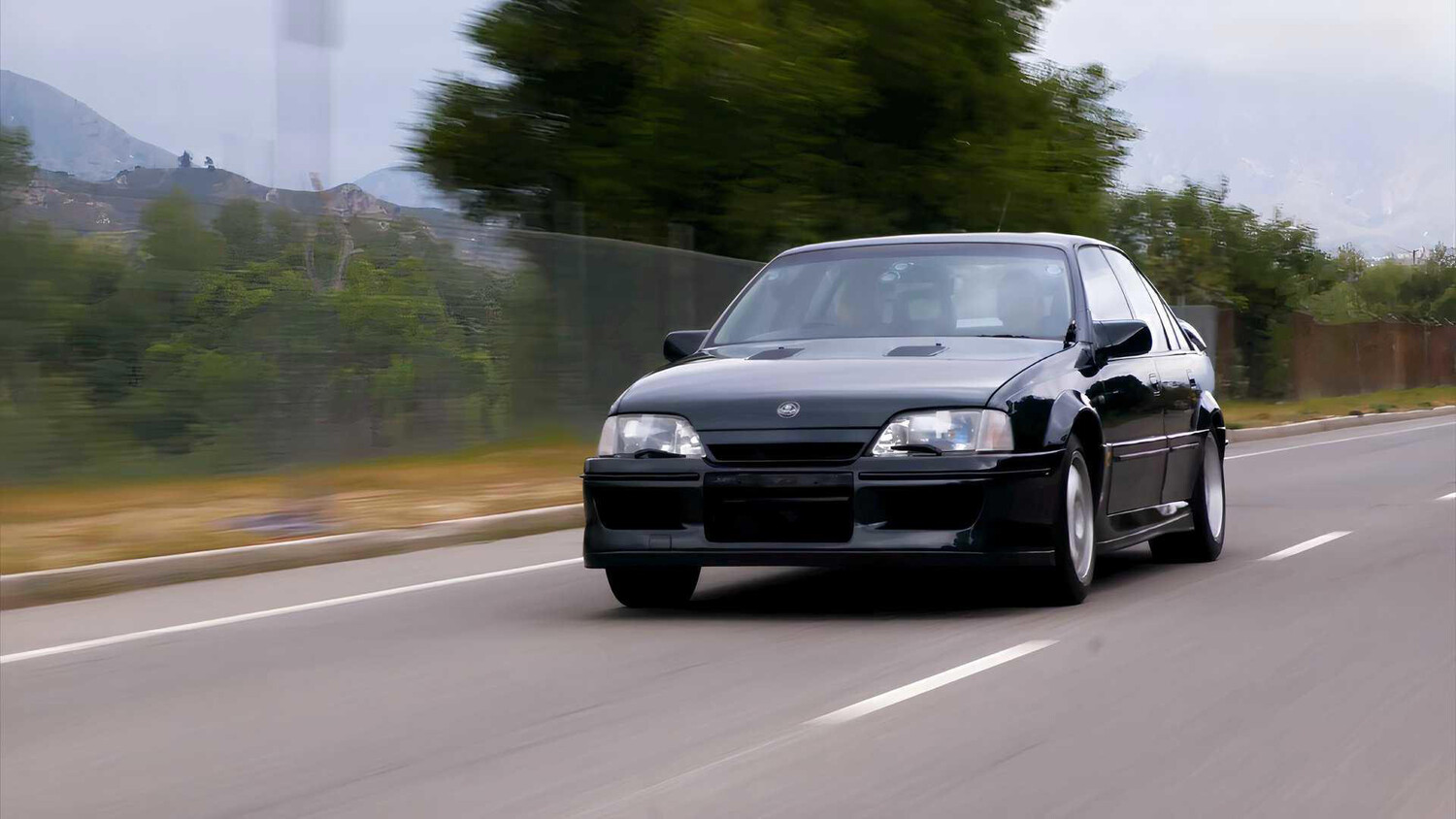
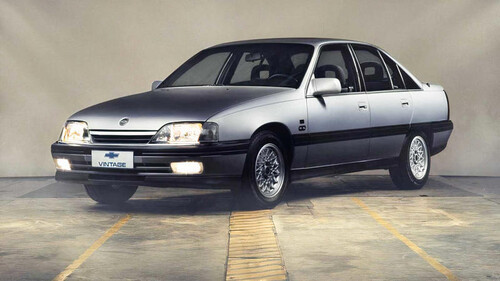
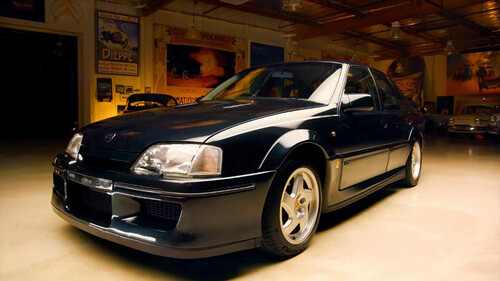
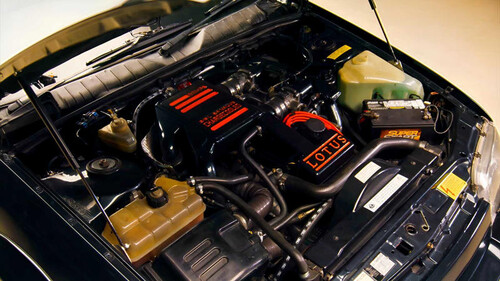
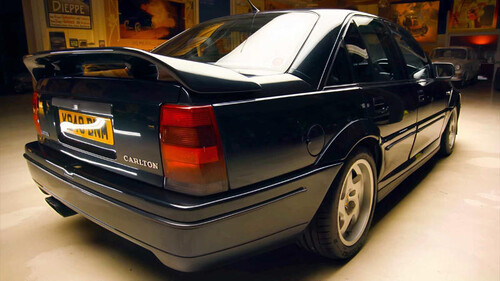
Some cars are built to dominate, to light up timing sheets and look spectacular doing so, but their sky-high price tags and single-minded focus often leave room for a more practical kind of performance machine. By the 1990s, high-powered sedans had already carved out a niche for drivers who wanted speed without sacrificing space or comfort.Still, in this growing segment, one quietly redoubtable example emerged from an unlikely alliance, and it would rewrite the rules of what a four-door could do. It packed enough power to make headlines, stir political debate, and leave even the fastest highway patrol cars in its wake. It didn’t wear an exotic badge or flex on its capabilities, but beneath its understated exterior lurked a force no one saw coming.Unfortunately, it disappeared as quickly as it could evade authorities, but its legacy has cemented it as one of the greatest sleeper cars of the decade, if not of all time. The Infamous Lotus Carlton Was Built To Outrun '90s Supercars BonhamsBefore it became Britain’s most notorious four-door and four-wheeled artefact of mobility, the Lotus Carlton started life as something far more innocent. It was built on the foundations of the Vauxhall Carlton of the time. It bore an unmistakably boxy shape, business-suit styling, and reputation as a fleet vehicle for corporate execs and sales reps. These are traits that would typically make a car as far removed from performance, thrill, and prestige. But the early 1990s were a weird and wonderful time for the automotive world.Super sedans were emerging from Europe, the Japanese were redefining performance bargains, and car companies were willing to try strange things to win performance credibility and, in turn, generate sales. Enter General Motors, the parent company of both Vauxhall and Lotus...BonhamsGM tasked Lotus, which boasted success with race engineering and performance tuning, with the wild mission of transforming the dull Vauxhall Carlton into something that could rival the world’s best. Not just the BMW M5 or the Mercedes 500E, but also contemporary Ferraris and Porsches. This was a tall order, but Lotus accepted the challenge, and, in doing so, created one of the greatest (and most controversial) Q-cars in history!The result was the Lotus Carlton (sold as the Lotus Omega in continental Europe). It looked familiar, but added a dollop of sinister to its formulated concoction of chaos. It was still unmistakably a Carlton, but now with a wider stance, aggressive aero kit, flared arches, and a deep shade of Imperial Green that gave little away. This was a wolf in pinstripe clothing that could seat four and tear up the tarmac it was placed on. Back In The Day When 377 HP Was Enough To Make Headlines Bonhams Lotus Carlton Specs Out with the old and in with a heavily reworked 3.0-liter straight-six. Lotus took Vauxhall’s stock 24-valve unit and bored it out to 3.6 liters, added twin Garrett T25 turbochargers, and forged the internals to handle the power. The result was a whopping 377 hp and 419 lb-ft of torque. Mundane by today's standards, but these figures were simply jaw-dropping for the time.The Carlton wasn't only knocking at the door of its mainland European rivals that boasted electrified amenities and five leather-trimmed seats, but it also barnstormed into the supercar club. For context, around the time of its arrival in 1990, the Ferrari Testarossa was pushing out 385 hp, and the BMW E34 M5 made just 311 hp. Mated to a 6-speed manual gearbox sourced from the Corvette ZR-1 (because it was the only one that could handle the torque), and with a top speed of 176 mph, the Lotus Carlton became the fastest four-door production car in the world, with the mighty Germans left in its wake. Zero to 60 mph took 5.1 seconds, which made it incredibly fast, and accessible for four occupants to quickly ingress and egress, but more of this later...BonhamsAll of those impressive power statistics aside, Formula 1 hall of famer Lotus also put their expertise to reworking the suspension and beefed up the brakes with AP Racing units. Of course, power is nothing without traction, and from the factory, the Carlton came fitted with sticky 17-inch Goodyear Eagle tires on forged Ronal wheels. The result was a well-balanced cruiser that could tear up the twisties and canyons while also clocking over the miles on the Autobahn with the family in the back. The Brits had done it! They had created the all-rounder that, in almost every regard, rivalled the established players in the segment.And yet, despite all its lauded engineering and capabilities, the Lotus Carlton became infamous not for its brilliance on track, but for its sudden popularity among the criminal underworld. As quickly as it could accelerate away from a crime scene, it became a tabloid target and a national headline. The Lotus Carlton Became A Getaway Car Legend Despite the buzz, the Lotus Carlton's time on the market was short-lived. Production ran from 1990 to 1992, with just 950 units built. Its death was a result of a combination of high cost, since it was priced around £48,000 at launch, equivalent to nearly £120,000 today, and low demand, with mounting public pressure seeing it discontinued far earlier than it deserved.Jay Leno's Garage YouTubeThis came as a result of the egregious reputation the British press had festooned onto its name. National tabloids labeled it a “road menace” and a “getaway car.” Even British Parliament weighed in at the time, famously calling for it to be banned, saying no one needed such speed on public roads. Police forces lamented the fact that their patrol cars couldn’t keep up with it. There were reports of Carlton-driving criminals outrunning traffic units with ease, vanishing on motorways where their pursuers were electronically limited.Lotus, of course, couldn’t have predicted this wave of notoriety, but the backlash contributed to its limited success and ultimately, its early demise. Beating BMWs Blitzing Benzes BonhamsWhen it came to what it went up against in its own segment, the yardstick was the BMW M5 E34, which had become revered for its silky straight-six, razor-sharp chassis, and everyday usability. But with only 311 hp and a limited top speed of 155 mph, it simply couldn’t match the Carlton’s numbers on paper or in real-life scenarios. Mercedes-Benz, meanwhile, had just teamed up with Porsche to build the 500E, which was a muscular and luxurious sedan with a 5.0-liter V8 producing 322 hp. It was refined, potent, and in typical Benz fashion, exclusive. But it was also heavier and more comfort-oriented than the Lotus, which felt rawer and more urgent.BonhamsEven the Audi S4 of the era, despite having quattro traction and turbocharged power, couldn’t hold a candle to the Carlton’s impressive performance. Few cars could, even in the supercar segment... And while comparisons to Italian exotics seemed absurd given the Carlton’s four-door layout, the reality was that this British bruiser could match or outpace many Ferraris in a straight line. It was a practical supercar before the term existed.Part of what made the Lotus Carlton so special was its dual personality. At a glance, it looked like any other mid-level executive saloon. Many wouldn't have been able to decipher it with its subtly wider stance and rear wing. This lack of ostentation made it one of the original sleepers, which could move quietly among more obvious contenders. Buying A Lotus Carlton Today BonhamsToday, the Lotus Carlton is a bona fide collector’s item. With its sadly limited numbers, and even fewer surviving in original condition, values have surged! According to recent sales data on Classic.com, highly original and immaculate versions of the infamous Lotus now sell for up to $150,000, but more realistic examples of the sedan can be had around the $70-$90K mark.More importantly, in 2025, it serves as a piece of automotive rebellion and a car that defied expectations, embarrassed rivals, and proved that performance didn’t have to come wrapped in an exotic badge or two-door form.It’s also a time capsule from a different era that is unlikely to ever be repeated. The regulations were looser, carmakers were bolder, and horsepower wars were just heating up. With the right argument, the Carlton can even be credited with catalysing the modern super sedan as we know it today. Both Lotus and Vauxhall are remarkably different from the brands they were in the 90s, but without either of them and the people that guided them forward, the story of the most infamous sedan of the era wouldn't exist. Certainly worthy of a shout of the greatest sleeper ever!Source: Stellantis, Hagerty, CAR Magazine, Classic and Sports Car, Porsche, Classic.com.