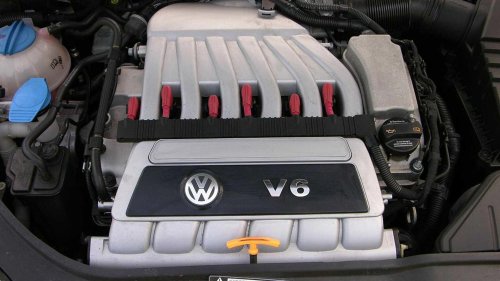
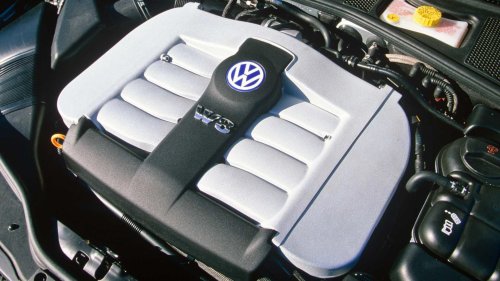
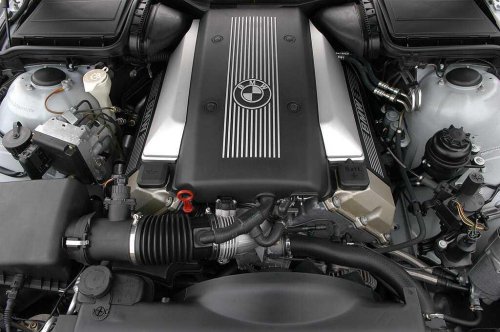
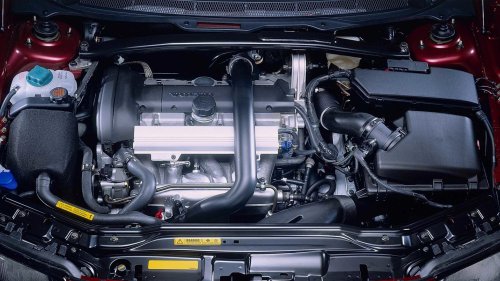
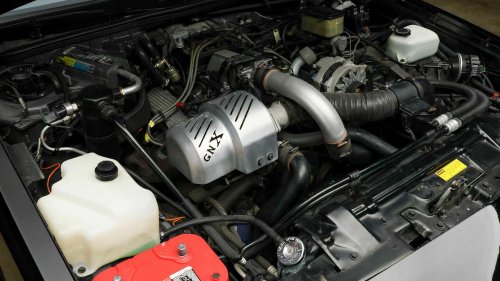
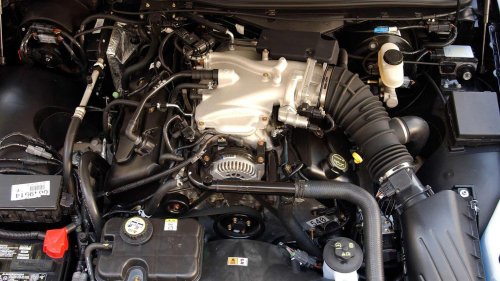
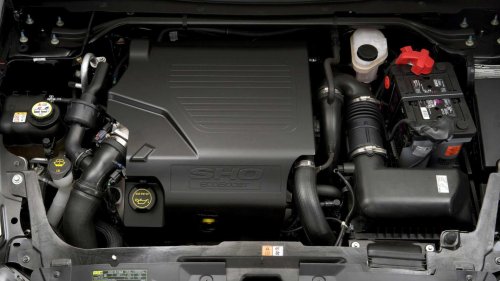
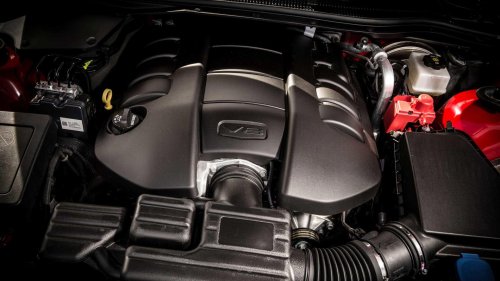
Paraphrasing Sun Tzu’s The Art of War, to find success on the battlefield, you must appear weak when you are strong and strong when you are weak. This is sound advice, though it can be tough to follow when going into combat. The Chinese general and philosopher’s landmark treatise on military strategy has influenced leaders and informed their tactics for literally thousands of years, though Tzu’s recommendations have, oddly enough, also been adopted by the automotive industry.No, Chevrolet has not planned any sneak attacks on Ford, nor is Mercedes-Benz attempting the assault the walled fortress that is BMW’s factory in Munich. Instead, car companies have a rich history of offering what are known as “sleepers,” vehicles that deliver huge performance without calling any attention to themselves. These can be unassuming sedans with thumping V8s, friendly-looking hatchbacks that pack a punch, or even bulky trucks and SUVs with enough power to embarrass exotic sports cars. Here are ten incredible sleepers, and the awesome yet underappreciated engines that power these machines. Volkswagen 3.2-Liter VR6 The Car Spy via WikimediaAnother fantastic engine that is totally underappreciated – and least for the technological innovation it provided – is the 3.2-liter VR6 Volkswagen used in the R32 hot hatch, though the engine also found a home in the Porsche Cayenne SUV and Audi TT sports car, to name a couple of other applications. Smooth-running, potent, and with a unique, warbling exhaust note, these engines were a delight to push, their 240 hp and 236 lb-ft of torque providing good acceleration in smaller vehicles.An ingeniously compact design, VW’s VR6 is roughly as short AND narrow as an inline-four, making it far easier to package in tight engine compartments than a traditional, much more broad-shouldered V6. This is achieved by offsetting the cylinder banks by 15 degrees rather than 60 or even 90, like you’d see in traditional V6s (later VR6s have an even tighter bank angle of just 10.5 degrees).Interestingly, rather than having two cylinder heads, the VR6 only features one, making it both a little like a V6 – since the cylinder banks are offset – and somewhat similar to an inline engine – since there’s only one head – an ingenious design. This powerplant was also offered in a range of other displacements and was the basis for Volkswagen’s W engine designs, including the W8, W12, and W16. Volkswagen 4.0-Liter W8 Volkswagen The Volkswagen Group has never been afraid to go its own way, and this extends to the German automotive conglomerate’s engine designs. Five-cylinder offerings, early turbocharging, clever narrow-angle V6s, designs with five valves per cylinder, and other unusual configurations have all been implemented by VW. But one of the strangest – and, arguably, most underrated – is a W8 – that was installed in the 2001 to 2004 Passat sedan.As its name suggests, this engine resembles a letter W when viewed from the front. In simple terms, this is achieved by attaching two V4 engines with a 15-degree bank angle together to a single crankshaft, splaying them 72 degrees apart. This is a clever, if complex, design that provides good performance and plenty of refinement. Volkswagen’s W8 displaced a healthy 4.0 liters and graced the Passat with 270 smooth horses and 273 lb-ft of twist, respectable numbers for a car like the Passat, plus the exhaust note was lovely. Drivers could also get this family-friendly four-door with a five-speed automatic transmission, or, for real enthusiasts, a six-speed manual. BMW 4.4-Liter V8 via NSmith Wikipedia Commons One of the greatest sleepers of all time is the BMW 540i from around the year 2000. The E39 (the internal designation for this generation of 5 Series) version of this car wears clean and subtle styling, has a gorgeous interior, and comes with a fantastic engine that provides real speed. This sedan is also plenty spacious inside, so it makes a great people-hauler, and the vehicle should be reasonably fuel-efficient for what it is.Ahead of the firewall, these cars feature a smooth-running 4.4-liter V8, specifically the M62TUB44, which makes these vehicles kind of a poor man’s BMW M5. By 2025 standards, the output here is fairly modest, but 282 hp and 324 lb-ft of torque is still nothing to sneeze at, and drivers could get either a six-speed manual or a five-speed automatic in the 540i sedan. Bury the accelerator pedal and rip off some clean shifts, and this big-boned Bimmer could hit 60 mph in around 5.5 seconds thanks to its excellent – and perhaps largely forgotten – engine. Volvo 2.5-Liter Turbo-Five Volvo Moving along, one of the greatest sleepers of all time is the Volvo V70 R from 2004 to 2007. Nothing about this unassuming station wagon’s design draws any attention to itself, yet the car packs a SERIOUS punch, enough under-hood firepower to outrun a wide range of much sportier vehicles.The V70 R is propelled by a 2.5-liter turbocharged five-cylinder engine that defies both established norms and all expectations. Automobile engines almost always have an even number of cylinders, but not this Volvo. The car’s five-pot engine cranks out an impressive 300 hp and 295 lb-ft of torque, enough to get this family wagon to 60 mph in around 5.6 seconds when fitted with the six-speed manual transmission. If you opt for the available automatic gearbox, that time increases to around 6.5 seconds. Either way, the V70 R also features standard all-wheel drive for enhanced traction in all conditions. Buick 3.8-Liter Turbocharged V6 Bring a Trailer It may resemble some low-rent economy car from Detroit’s darkest days, but the 1987 Buick Regal GNX is truly something special. This two-door may be boxier than a stack of apple crates, but an absolute beast of an engine lurks behind the car’s vertical grille slats, a very special version of Buick’s legendary 3.8-liter V6.This powerplant has a sterling reputation for smoothness, efficiency, and supreme reliability, but for high-performance duty, engineers added a turbocharger and other components, providing a walloping 300 hp and 420 lb-ft of torque in the GNX, staggering figures back in 1987. The Buick 3.8-liter V6 is a humble pushrod engine, but as with the Chevy SS V8, which we'll get to here in just a few paragraphs, that doesn’t matter, especially when forced induction is added. With a four-speed automatic transmission and a good launch, this car can hit 60 mph in a Buick-estimated 5.4 seconds, though in reality, the GNX is likely far quicker than that. Ford 4.6-Liter DOHC V8 Ford Ah, the Ford modular engine family. These V8s (and V10s, let’s not forget) have provided smooth and generally reliable power for untold millions of vehicles, everything from pumped-up Mustangs and the GT supercar to pickup trucks, commercial vans, and even Panther Platform sedans like the 2003 to 2004 Mercury Marauder.This large, body-on-frame four-door was motivated by a familiar 4.6-liter V8, but not your run-of-the-mill single-overhead-cam variant that powered lesser models and countless other Fords and Lincolns, oh no. Instead, this Merc featured the exotic and silky-smooth dual overhead-cam variant of the modular engine, one that provided extra top-end pull and an enthralling 302 peak hp along with 318 lb-ft of torque. This graced the Marauder with good performance, though the four-speed automatic could have benefitted from a few more gears or, you know, a clutch pedal and floor shifter. Spreading the love, Ford installed the quad-cam 4.6 in versions of the Mustang as well as the Lincoln Aviator, Continental, and Mark VIII models, to name a few. Acura 3.7-Liter SOHC V6 AcuraAnother car that delivers more performance than you’d expect based on its exterior appearance is the 2012 Acura TL SH-AWD. This all-wheel-drive sports sedan is attractively styled, a bit more adventurous than some of the other vehicles on this list, like the BMW 5 Series, but that helps the TL stand out from the crowd in traffic.Another outstanding feature is this Acura’s engine. “Standard” models feature a 3.5-liter V6 that’s good for a potent 280 hp, but the SH-AWD variant gains a larger 3.7-liter bent-six that cranks out an impressive 305 hp and 275 lb-ft of torque. Honda V6s are famed for their performance, but also reliability, smoothness, and efficiency, important attributes, but that’s not all. Honda V6s are also known for their sound; they often have an engaging, almost reedy intake rumble, which is distinctive and very sporty, though the exhaust noises ain’t bad, either. Making the 2012 TL SH-AWD even more engaging, the car was offered with a wonderful six-speed manual transmission, which was available when the optional Technology Package was ordered. If you didn’t want three pedals, a six-speed automatic was offered, too. Ford 3.5-Liter EcoBoost V6 Ford One of the greatest sleepers of all time is the Ford Taurus SHO. Back in the late 1980s and early ’90s, this car offered incredible performance in a wrapper that was about as unassuming as they got. Eventually, the Taurus was discontinued, but the automaker revived the nameplate, and back around 2010 reintroduced the SHO, this time installing a far more potent engine under the hood than was ever offered before.The reborn SHO was motivated by a 3.5-liter EcoBoost V6 that delivered a stout 365 hp and 350 lb-ft of twin-turbocharged twist in this sizable family sedan. With a six-speed automatic transmission routing torque to the pavement through a standard all-wheel-drive system, that engine could rocket this sizable sedan to 60 mph in just 5.2 seconds. Refined and potent, Ford’s 3.5-liter EcoBoost was also incredibly versatile, powering a staggering range of vehicles, from numerous Lincolns to the F-150 truck, Flex crossover, Explorer utility vehicle, and Expedition full-size SUV, to highlight just a few of these nameplates. Chevrolet 6.2-Liter V8 ChevroletOK, we already highlighted the Marauder earlier on this list, but when it comes to performance, the Chevy SS utterly destroys that Mercury. Another V8-powered large sedan, this sizable four-door delivers far more power and torque than its older rival, and the SS is available with not one, but two transmissions that are far more advanced than the Merc’s antiquated four-speed automatic.The Chevy SS is motivated by a gargantuan 6.2-liter LS3 V8. Now, there’s nothing exotic or particularly special about this engine. It has just one camshaft, unlike the quad-cam Mercury, and there are just two valves per cylinder that are actuated by old-fashioned pushrods. But as “crude” as this configuration may seem on paper, it works damn well in practice, cranking out a healthy 415 hp and an equal measure of torque. The SS is available with either a six-speed automatic transmission or a manual with half a dozen ratios, something almost unheard of in a sedan like this. When equipped with three pedals, this car can rip from 0 to 60 mph in as little as 4.6 seconds, a stellar performance. Cadillac 4.2-Liter Twin-Turbo Blackwing V8 CadillacWhen introduced in 2016, the CT6 was the right product at the worst possible time. Cadillac built a superb flagship-caliber luxury sedan and brought it to market just as drivers were switching to utility vehicles in droves. With a mixed-materials structure that incorporates a range of different steels as well as aluminum, the CT6’s core architecture was extremely rigid and reasonably light in weight. This translated into improved driving dynamics and, indeed, this Cadillac was a pleasure to pilot.But things got even more interesting in 2019 when the automaker introduced the Cadillac's Rarest Super Sedan Produced For Only One Year, a luxury super sedan with a very special engine. These cars featured a 4.2-liter twin-turbo V8 that delivered 550 hp and 640 lb-ft of twist. All those kibbles and bits are routed through a 10-speed automatic transmission that helps this four-door hit 60 mph in as little as 3.8 seconds. A detuned version of this tech-rich, quad-cam V8 was installed in the CT6 Platinum, though in both cases, production was extremely limited. Only GM would engineer and manufacture an ungodly expensive engine in minuscule quantities, which is a real shame.