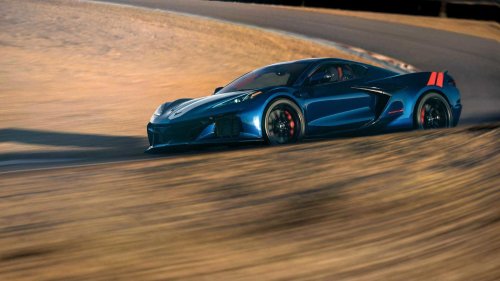
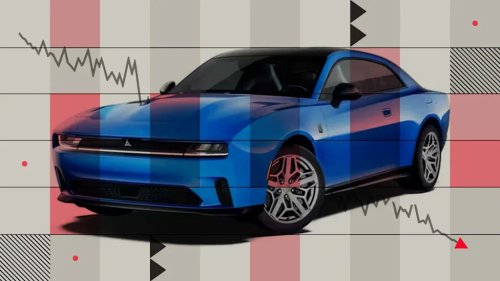
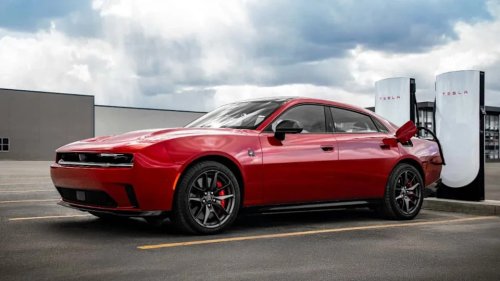
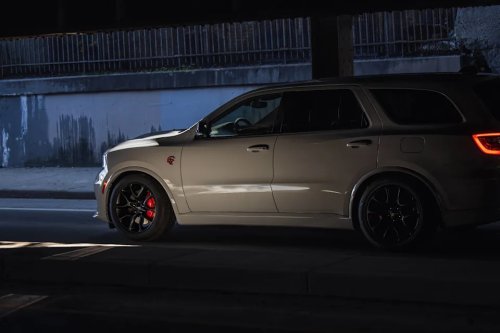
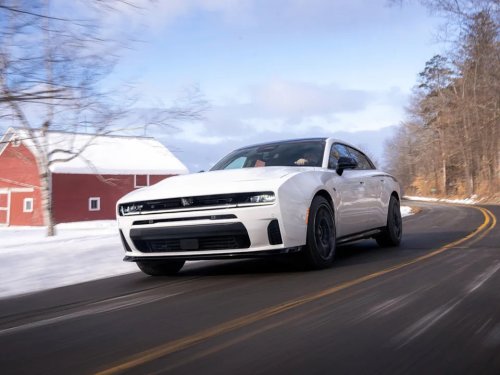
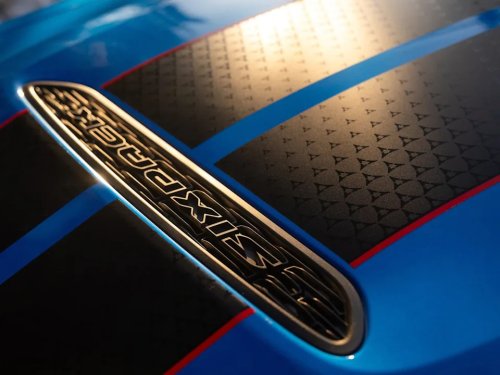
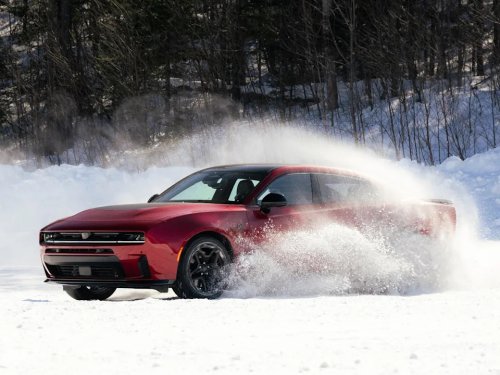
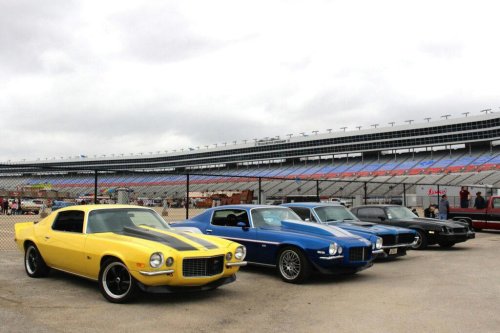
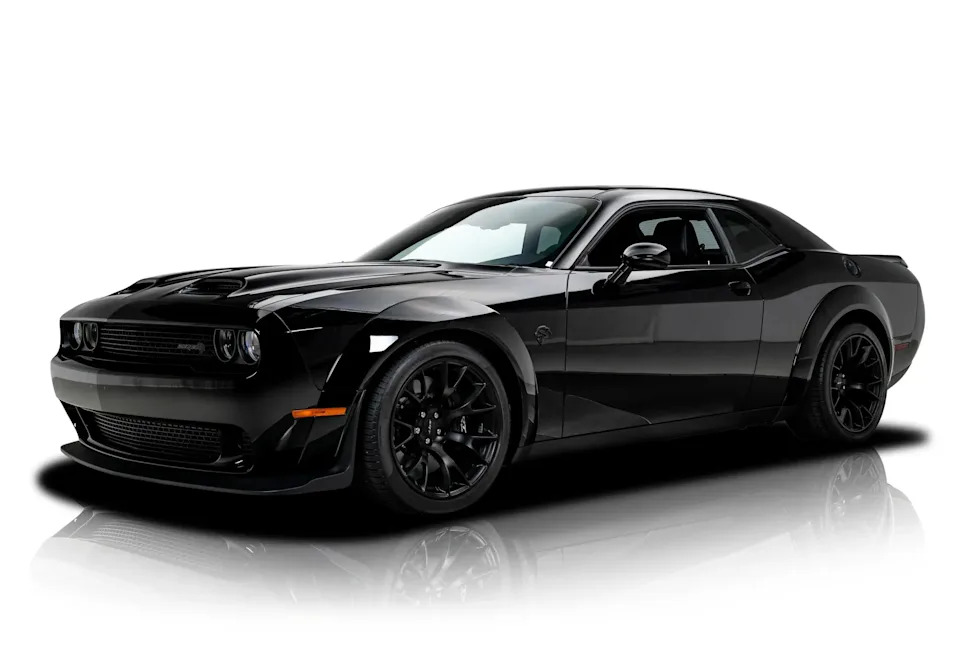
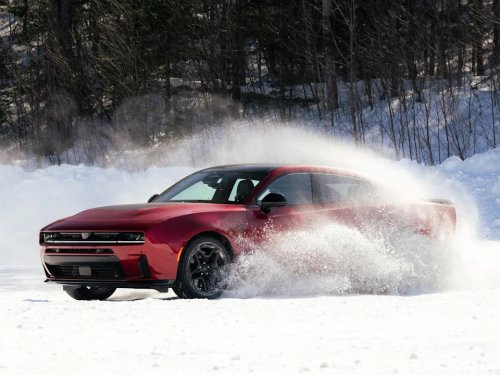
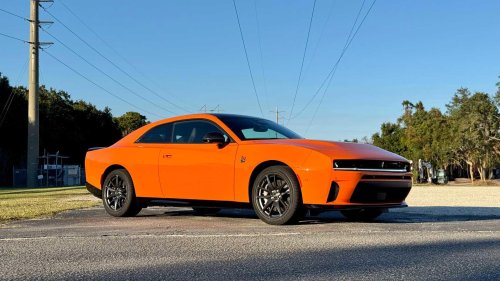
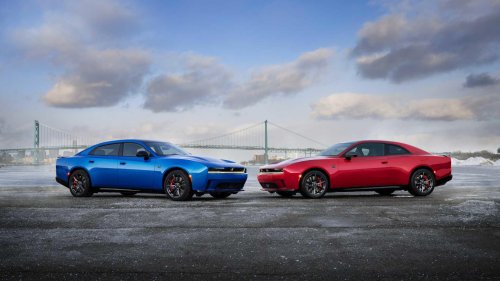
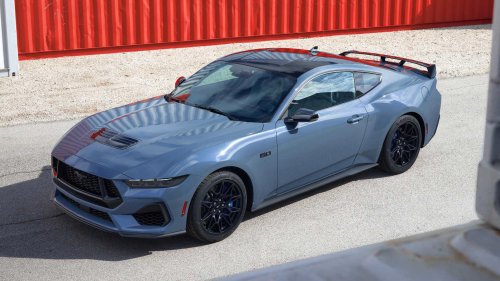
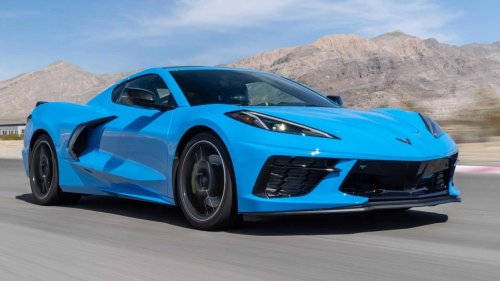
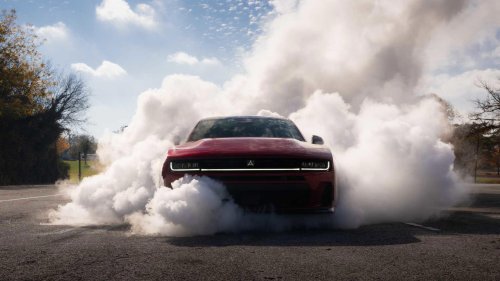
Since the dawn of time, us humans have sought to go farther and faster, all while trying to spend as little money as possible. What better way to do this than with a car, and what better kind of car to do this with than a muscle car? Is it the vehicle of choice for going far on a budget? Not really, but you can go pretty dang fast on a budget, and who better to build something fast and cheap than the Dodge Brothers...but is it cheating if it's electric?To build a muscle car, you need a few things: a large two or four-door sedan, a powerful engine, and some meaty tires to lay rubber with. Sure, there might be a few unwritten rules about what engine a muscle car needs to have, but what’s wrong with following the original guide that says, 'find the most powerful engine and throw it under the hood?' That’s the kind of thinking we’re after.For this feature, we looked at cars from American manufacturers still providing cars that fit the traditional outline of a muscle car...plus the Chevrolet Corvette. All prices mentioned are before destination. Crunching The Numbers Jared Rosenholtz/CarBuzz/Valnet It comes as no surprise to us that the Dodge Charger continues to offer the most bang for your hard-earned buck, even without its trusty Hemi V8 under the hood, in 2026. Packing Stellantis’ new twin-turbocharged 3.0-liter inline-six under the hood, the Hemi sits side stage for now with the Sixpack delivering an ill-received soliloquy. The Hurricane straight-six, also used in Ram Trucks and Wagoneer SUVs, comes in two variants: Standard Output and High Output. In the Charger, the former packs 420 horsepower and 469 lb-ft of torque. The latter cranks out 550 horsepower and 531 lb-ft of torque, beating the old 5.7-liter and 6.4-liter V8 motors as they only hit 370 and 485 horsepower respectively. On paper, the Sixpack is the better engine, but Dodge owners still want that Hemi rumble.A straight-six in a Dodge is nothing new. Back when its engines weren’t just Hemi-in-name-only and actually had hemispherical combustion chambers, the design was used in both V8 and slant-six engines, so don’t think this is the first inline-six in a Charger. The new gasoline Charger R/T two-door starts at $49,995 and the electric Daytona Scat Pack two-door at $59,995. 2026 Dodge Charger Two-Door Specs What is new for the Charger, however, is electricity. The Charger Daytona offers 630 electrified ponies at a slightly better per-dollar ratio than the high-output Sixpack. Say all you want about the world’s first electric muscle car, but at least it still posts strong power per dollar spent. Both gasoline and electric-powered Chargers cost under $100 per horsepower, which makes them the cheapest of the high-horsepower Chargers, besting the 2023 370 horsepower R/T (MSRP: $43,970) at $119 per horsepower and the 485 horsepower Scat Pack’s (MSRP: $50,330) cost of $104. The Kids Aren't Alright Dodge In the realm of American Muscle cars still made today, these are the trims that deliver the best ratios:The muscle car is a dying breed. The Ford Mustang and the Dodge Charger are the last two holdovers from the near two-decade renaissance of Detroit muscle we had from the mid-2000s until the Chevy Camaro and Dodge Challenger died, and the Charger was checked into rehab. The Corvette graduated from college in 2020 only to be drafted to the big leagues against European supercars, leaving the rest of us who want a V8 muscle car with two options: Buy a Mustang, or wait.More than likely, a Hemi will return to the Charger, and we’re excited to see it. It’s already found its way back into the Ram 1500, making it a matter of when and not if it will come home to the Charger. The Sixpack is still a great engine and essentially replaces the 3.6-liter V6 as the base engine option, but the entry-point into the Charger is now at $50,000 when you used to be able to get a V8 in the low-$40k range.General Motors still offers big power in sedans after the Chevy Camaro’s passing by way of the Cadillac CT4-V and CT5-V Blackwing models, which is why they appear in the table. They follow the muscle car recipe with high-output motors in sedans but are designed more to compete with German sports sedans than anything still lining up on Woodward Avenue. Plus, it shows that even if you buy your V8 horsepower in bulk, it won’t return Costco-levels of value like the Charger does. If the Charger can be an American muscle car with its two turbos and straight-six, then the CT4-V Blackwing deserves to be one, too. The Rankings Second Place: Ford Mustang GT FordThe Mustang has been grandfathered into the muscle car category while still holding on to its pony car status (a V8 coupe that’s a bit smaller than a traditional muscle car). It still offers a manual, and it can be had with a 315 horsepower 2.3-liter turbocharged EcoBoost inline-four. The EcoBoost’s cost per horsepower is around $104 whereas the GT delivers the best value at $97. It’s not a bulk discount that’ll have you running into the showroom, but it is the best ratio in the model lineup.Starting at $32,640 for the EcoBoost and $46,560 for the GT, the Mustang is the cheapest entry into the world of muscle cars at both prices and is the second-best overall in terms of dollars per horsepower. As for the rest of the stable, the Dark Horse delivers mid-pack value with 500 horsepower at $64,080. That math works out to be $128 per horsepower, slotting it between the GT and the CT4-V Blackwing. Third Place: Chevy Corvette Stingray ChevroletNot a muscle car in the traditional sense, but the eight-cylinder American at least deserves to be part of the conversation. Chevrolet has its sights set on delivering the best value for the product with the Corvette and hasn’t lost touch with it just yet. The Stingray still works out to be the least money per horsepower across all five models. With 495 horsepower at $141 a pop, it’s the best value when compared to everything else.Second to the Stingray is the E-Ray, just one notch above the base model, and close behind it is the top-dog ZR1X. Compared to the Mustang GTD, the top range ‘Vette is considerably better value at less than half the cost per horsepower and double the horsepower per dollar. Nickels And Dimes Stellantis North America Nobody looks at buying a car this way, but we love to have the mathematically correct answer waiting when someone asks us, “hey, what’s the best bang for my buck?” which we will promptly respond by pushing up our glasses and busting out our notes. Simply looking at how much horsepower costs us today is an interesting way of interpreting the overall cost of fun in a linear manner.The money spent on a car isn’t just for the power you’re getting. However, learning how much you can buy into that power at a per-horsepower price shows us who’s offering the best discount or bulk rates. The best muscle cars through the years were produced with some of this logic at hand. Offering the most powerful car at a discount gets the attention of the gearhead, but sometimes that discount isn’t too great a value if the trade-offs are weak power for the class or lacking other meaningful options.The Mustang and both Cadillacs offer manual transmissions, great power, and loads of other non-horsepower related features which, in return, drive their prices skyward. The Corvette does the same with its mid-engine layout, supercar looks and sounds, and hybrid power as you climb the ranks. But Dodge? Well, it seems it’s still using the same equations as it did in the 1960s to provide brute power at the lowest cost possible. There’s nothing wrong with using a little muscle car logic except, of course, when you’re cheating with an all-electric powertrain. I guess we’ll just have to do the math again when the Hemi returns.Sources: Cadillac, Chevrolet, Dodge, Ford.



















 +64 others