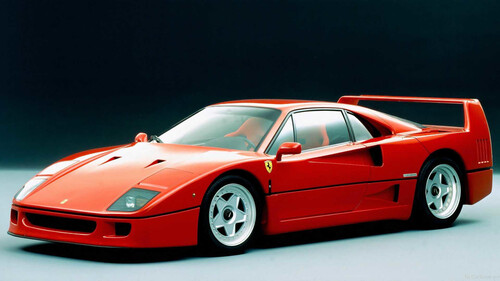
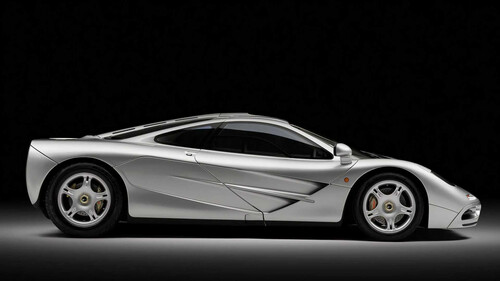
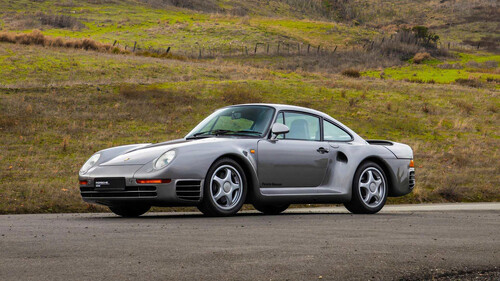
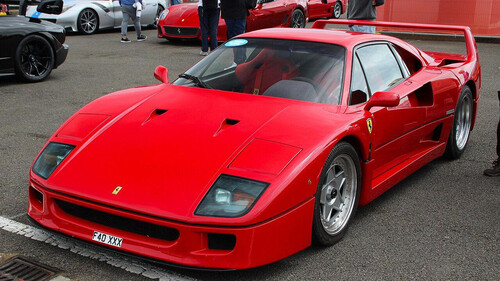
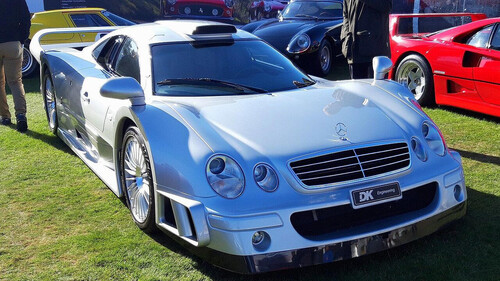
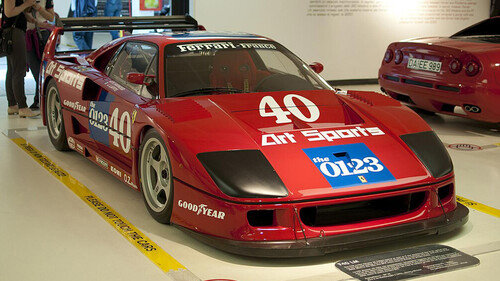
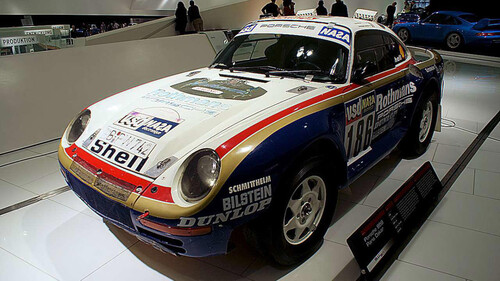
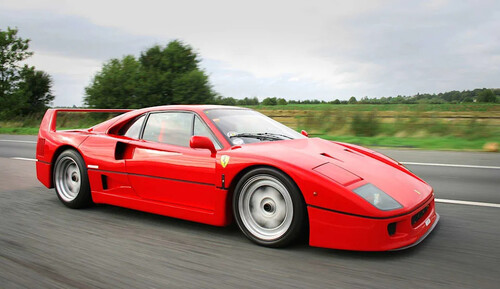
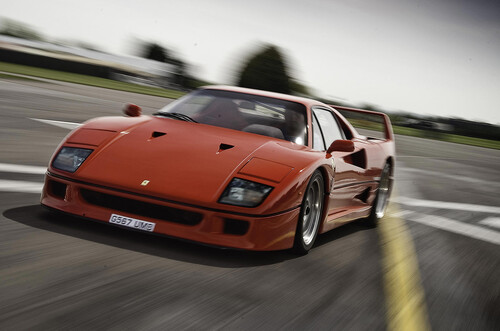
If you are going to beat the best, you need to think outside the box. The '90s was a time when supercars were turning into hypercars, and top speed records for road-going cars were toppling constantly. The quickest cars of the '80s were being left behind by a new breed of machines that could go 40 or 50 mph faster.But with manufacturers racing to outdo each other in a straight line, one wealthy buyer had an idea — he could build his own hypercar that would obliterate everything else. Was it really possible to beat companies that had been making supercars for decades with a chunk of change and a lot of ambition? There was only one way to find out… In The '90s Hypercars Were Hitting New Levels Of Power McLaren By the end of the '80s, two Supercars were blazing a trail for what was possible with four wheels and a license plate. The Ferrari F40 and Porsche 959 couldn't have been more different — one was a barely disguised race car for the road, the other a computer on wheels — but the aim was to get as close to 200 mph as possible. Ferrari claimed the title of reaching this landmark speed, with the Porsche only slightly trailing at 199 mph.All this was impressive stuff, but consider for a second that the F40 had just 471 hp. That's hot hatch territory these days. The Jaguar XJ220, launched in 1991, produces 542 horsepower, but then the McLaren F1 set a new benchmark for a road car with 618 horsepower from its mid-mounted, naturally aspirated 6.1-liter BMW S70/2 V12 engine. With all that power, the F1 would still be accelerating when the F40 ran out of puff, reaching a top speed of 240.1 mph. Real Car Enthusiasts Were Going The Extra Mile Via: Pininfarina But while manufacturers were pushing the boundaries of what was possible with road cars, there were a few buyers who were exploring the limits too. Very wealthy car enthusiasts realized that they could commission cars that didn't really exist, the possibilities only restricted by how much cash was available. The Sultan Of Brunei famously commissioned everyone from Bentley to Ferrari to build bespoke supercars, sometimes ordering more than one. While the McLaren F1 was getting all the headlines, one wealthy collector wondered if it would be possible to create the world's new fastest car — and only build one of them, so no one could go faster. The Lotec C1000 Was Built To Beat The McLaren F1 Lotec C1000 Specs Source: ManufacturerAround the start of the '90s, the story goes that a wealthy oil sheikh in the United Arab Emirates decided that he wanted to settle the speed debate once and for all by commissioning a unique machine capable of embarrassing the next generation's hypercars. Rather than, say, go to a specialist race car company and ask them to bolt some plates onto something designed for the circuit, or go to a small boutique car company to see what they could do, he went straight to Mercedes-Benz.Apparently happy to help, the German giant called up sportscar manufacturer and Mercedes tuner Lotec. In the end, the project took four years and cost $3.5 million, or around $8,307,700 now, to build a single supercar that would outgun anything on the road…theoretically. The Output Is In The Stratosphere Going back to the McLaren F1, it's worth mentioning that this was the first production car that broke through 600 horsepower. The Lotec C1000 that was created for the wealthy businessman didn't just go one higher; it went almost 400 horsepower higher. Yes, the C1000 had a whole Ferrari F40-worth of extra power over the McLaren F1 when it arrived in 1995. The root of the Lotec's 1000 horsepower was the Mercedes-Benz 5.6-liter V8 with two Garrett turbochargers bolted on. The engine was mated to a Hewland six-speed transmission driving the rear wheels. The Car Remained A One-Off The C1000 was a road-going car, but the aim was to keep it a one-off. The doors opened upwards, and inside three-point harnesses kept the occupants in place. At the head of Lotec was Kurt Lotterschmid, who had experience in developing endurance racers, and the vibe is very much Le Mans for the road. A curb weight of just 2,380 lbs was achieved in part thanks to a full carbon fiber bodyshell and chassis. The C1000 was said to hit 60 mph in 3.2 seconds, 124 mph in eight seconds, and had a claimed top speed of 268 mph—faster even than a McLaren F1—although it's hard to say if anyone had the cahones to see how fast it would go flat out. The Lotec C1000 Is The Missing Link RedditIn many ways, the Lotec is the link between the McLaren F1 and the new breed of hypercars that came after it. While 1,000 horsepower might not sound like much today, it would be ten years before the Bugatti Veyron 16.4 to be the first production car to break this figure. The Zonda C12, which arrived in 1999 looking similar to the C1000, also featured a revolutionary carbon fiber chassis. That wasn't the only similarity, as the Zonda also utilized a Mercedes engine, in the form of a naturally aspirated 6.0-liter M120 V12.If the McLaren F1 was a car that showed that supercars could take a giant leap forward, the C1000 proved that hypercars could be on a different planet to anything else on the road. With the sheikh's ambition, the gloves were off when it came to power output and top speed. Could it be that the phone call to Mercedes in the early 1990s accelerated the very process of building fast cars? The Pagani Codalunga and Bugatti Mistral could well owe just a tiny bit of their raison d'être to the one-off C1000. The Lotec C1000 Had A Sirius Successor The C1000 did have a follow-up in the form of the 2001 Sirius. This car was expected to sell for around $500,000, and Lotec had the facility to build five a year, but ultimately it also remained a one-off. The powerplant is an 850 hp twin-turbo 6.0-liter V12 again borrowed from Mercedes. The curb weight of 3,064 was slightly higher, but the Sirius still had a claimed top speed of 242mph. The Sirius has carbon fiber body panels around a tubular steel space frame. Here's How Much The C1000 Costs We are Curated Via: InstagramThe Lotec C1000 may be a one-off that could theoretically beat any car on the planet when it was built, but it is not as expensive as you may think. When Barrett Jackson sold the Lotec C1000 in 2006 at its 35th Anniversary sale, showing just 1600 miles on the clock, it only realized $247,500. The auction specialists at the time reminded hopeful bidders that the design and engineering cost over $1 million and the actual construction cost was over $1.2 million.When the car resurfaced in 2013, it was expected to fetch $1.3million at auction house RKM Collector Car Auctions sale, although details of the final price are hard to find. The last known sighting was at the Peterson Museum in Los Angeles, where it seems to still reside today.