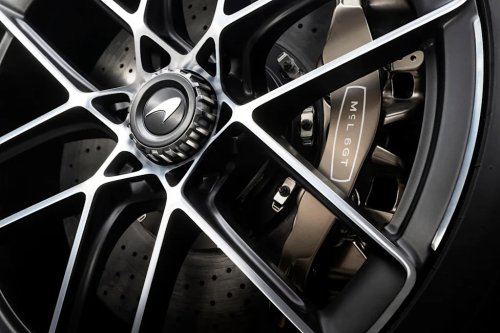
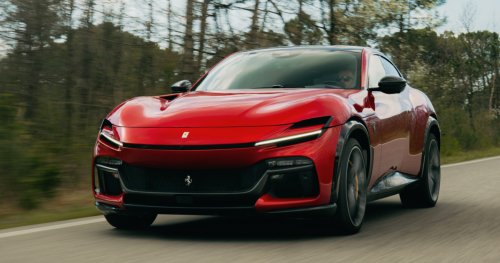
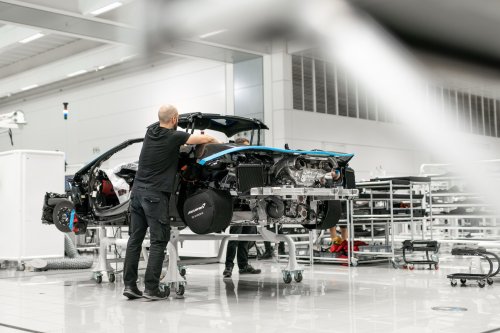
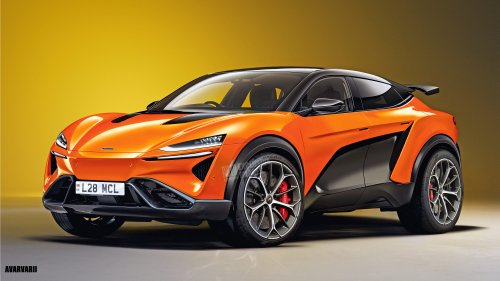
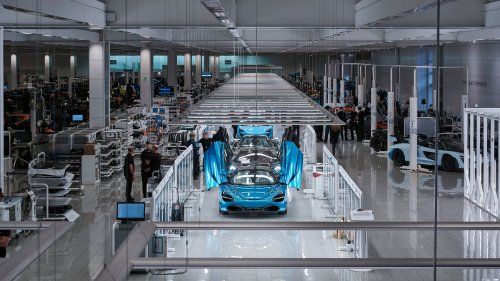
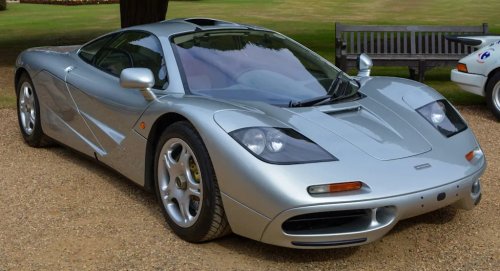
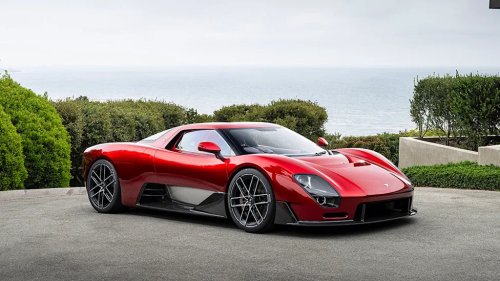
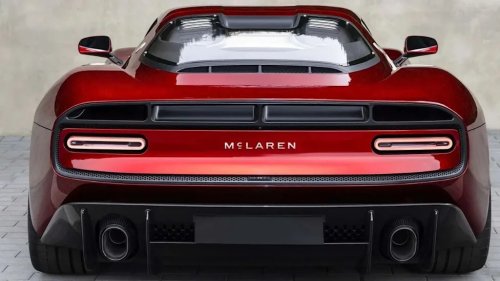
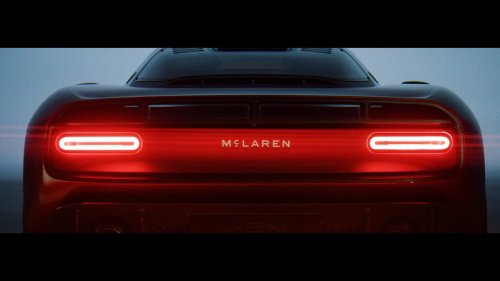
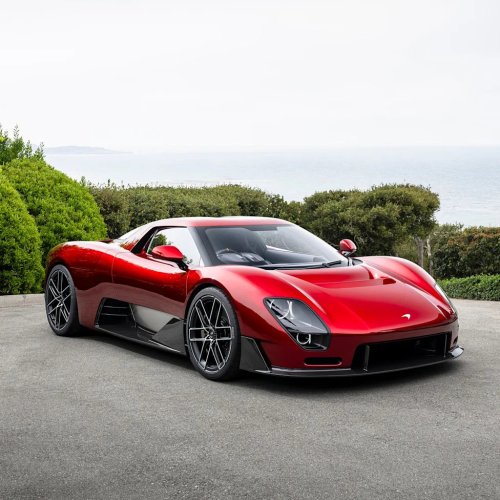
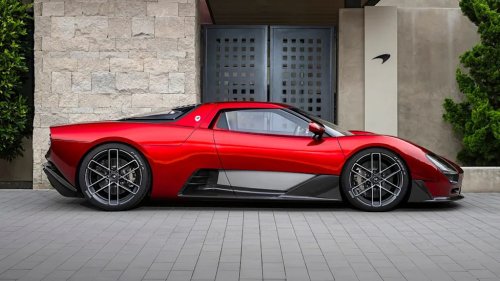
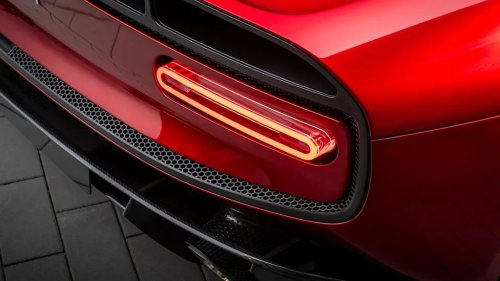
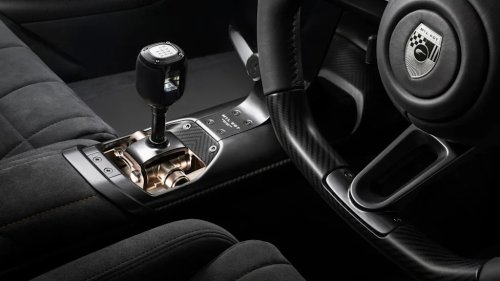
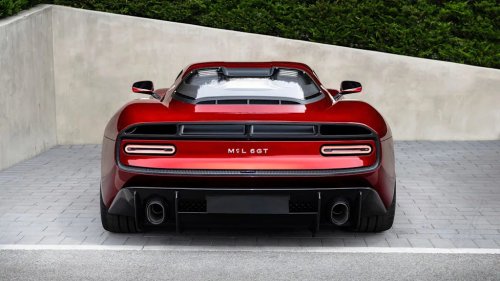
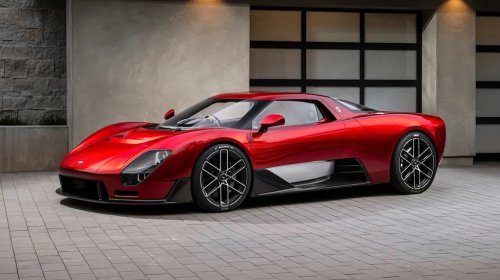
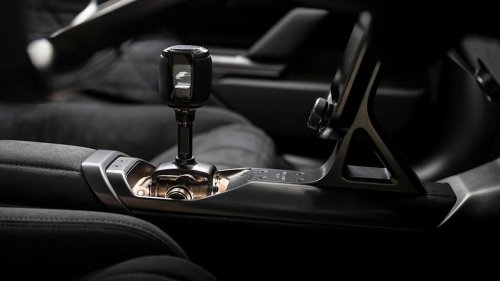
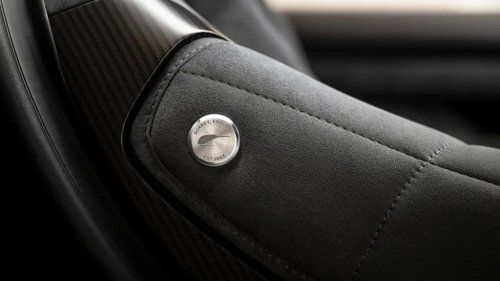
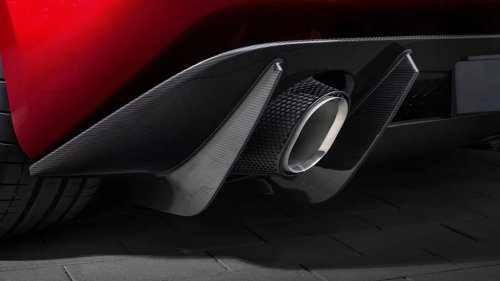
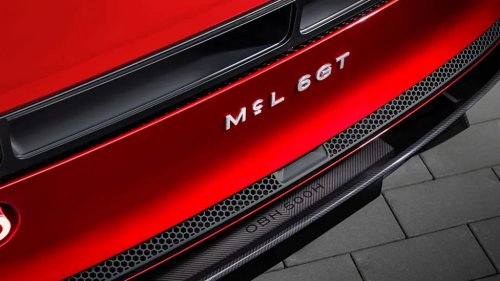
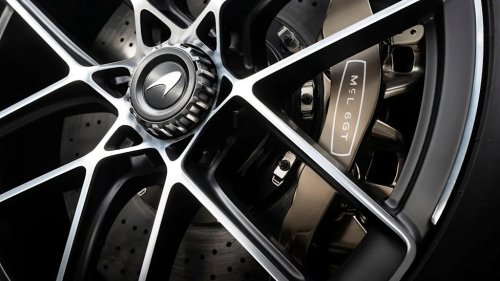
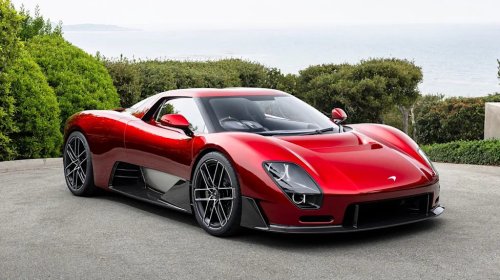
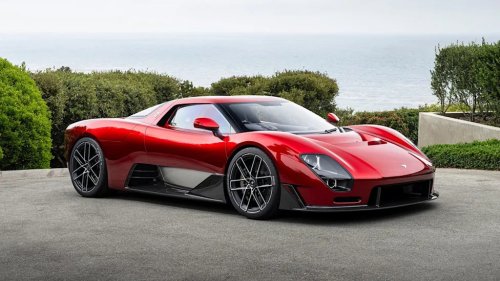
McLaren McL 6GT Concept RevealedMcLarenIt's difficult for automakers to stand out during the annual Car Week in Monterey, California, where you can't throw an Amex black card without hitting yet another new supercar or hypercar.McLaren managed the feat with the unveiling of its new McL 6GT, a clean-lined concept car with an honest-to-goodness manual transmission. But it's not just a concept, as the Car Week version presages a production model scheduled to arrive in 2028. Its buyers will be able to snap through the gears just like in the fabled F1, the hypercar whose 1996 GTR version is expected to fetch roughly $35 million during Saturday's RM Sotheby's Monterey Auction.Shifty BusinessThe cranberry-red McL 6GT concept seems focus-grouped for Car Week itself, and not just for the wealthy enthusiasts and collectors that haunt the peninsula's manicured lawns. The manual come-on—a stick tease?—will have car lovers of all ages and incomes Googling the last modern supercars with a clutch pedal aboard. And the McLaren's six-speed manual transmission seems as good of a way as any for the marque to create separation from a herd of rivals.AdvertisementAdvertisementAccording to the company, the McL 6GT blends "purity of character with lightweight carbon-fiber construction, V-8 internal combustion power, and for the first time in a McLaren since the legendary F1, an authentic manual transmission sending drive to the rear wheels."McLarenAfter years of post-Covid financial and sales struggles, McLaren Automotive was acquired in April 2025 by Abu Dhabi's CYVN Holdings and integrated with the luxury EV startup Forseven. For the past 16 months, executives said, McLaren has mostly stayed quiet, reflecting on its strategies for producing vehicles and better serving its customers. Now that quiet period is ending, with the McL 6GT the first stop on a roadmap of new models.The company seems intent on playing up a history that may not be as familiar as that of, say, Enzo Ferrari's. Nick Collins, chief executive officer, invoked its eponymous, New Zealand-born founder as being a similar guiding light for making decisions."We are literally just getting started, and with the maverick spirit of Bruce [McLaren]," Collins said.Ties That BindThe McL 6GT name may read like a vanity plate. But with two extra letters, it reinterprets another seminal McLaren. Indeed, the M6GT that shared the car's reveal stage was Bruce McLaren's personal car in the late 1960s, and his ambitious vision for turning his M6A Can-Am racer into a roadgoing car. But McLaren was killed in 1970 at age 32 while testing the McLaren M8D Can-Am car at the Goodwood Circuit. The M6GT project died with him, and it would be another 22 years before McLaren made the transition to the street with the F1.McLarenMcLaren executives say the new car realizes its founder's unfulfilled dream, but with six subsequent decades of innovation woven in—including a woven carbon-fiber monocoque that underpins every modern McLaren.AdvertisementAdvertisement"In every case, we asked ourselves, 'What would Bruce have done?'" said Kemal Curic, the brand's new chief design officer.The concept aims to meld the race-inspired styling of 1960s sports prototypes with modern execution and packaging. A low, wide footprint evokes the stance of the M6GT's own progenitor, the M6A Can-Am racer. Clean, uninterrupted body surfaces flow from the low snout to a Kamm back tail.More DetailsThe right-hand-drive concept flashed a carbon-fiber body with smoothly integrated aerodynamic functions. An unadorned lower front inlet sends air rushing through a cavernous hood duct and over a slim greenhouse. Rear glass incorporates vents and exposed fasteners. LED-ringed front inlets and air curtains help with cooling. Low-set, finned side intakes feed a mid-mounted V-8 whose displacement and specs remain a company secret for now. Elongated, subtly swelling rear fenders flow into an appealingly integrated rear spoiler. An upswept carbon-fiber splitter armors the rear below striking convex taillamps in a motif Curic calls a "continuous racetrack." It's a kind of tightly squeezed oval that's repeated on exhaust outlets, front intakes, interior vents, and even seatbelt fasteners.Oversized headlamp lenses pay homage to the Can-Am-based original. Dihedral doors pivot over complex side sills in exposed carbon fiber. The flowing body sits atop star-shaped wheels and Pirelli P Zero R tires, including 325/30/R21s at the rear.AdvertisementAdvertisementInside, "boxed quilting" with seat upholstery in a stitched grid pattern, gets a modern glow-up in Alcantara. The thick synthetic suede blankets a portion of the door sills, a fine padded perch for your butt as you swing your legs inside.McLarenThe McL 6GT is designed as a pure driver's car: Tactile, analog, and deeply mechanical, including the shift lever with an exposed titanium linkage, a squarish shift knob with inset glass, and a six-speed gear pattern etched on top. McLaren said the shifter's throws aim for maximum feel. Extra nostalgic feels come from a "Speedy Kiwi" shield logo on the B-pillars. It's the brand's famous but long-retired race signature, a graphic of that flightless bird. The same logo is etched onto the fuel-filler cap. Furthering the mechanical character is hydraulic steering, tactile switchgear, and machined details inspired by the original M6GT.Knurled analog switches take place of pride over a surfeit of screens. A gauge cluster integrated atop the steering wheel looks positively weapons-grade, a single rectangular screen bookended by a chunky pair of machined-metal rocker switches. Those rockers let drivers control suspension and performance settings without taking their hands off the flat-bottomed steering wheel. Driver instruments are one area where McLaren chose digital over analog, with a claim to retaining "the clarity and emotional appeal of the original."Collins called the car "symbolic of the bold, provocative and hugely exciting future we are preparing to realize."Speaking of ...Company executives weren't ready to say if that future will officially include an SUV of the type that has boosted the bottom line for rivals such as Aston Martin, Lamborghini, and Ferrari.AdvertisementAdvertisementMcLaren's latent rediscovery of its founder's stillborn street car may suggest it has taken a longstanding criticism to heart: That today's McLarens, with their shared components and philosophies—a carbon-fiber tub and function above all—are sometimes difficult to tell apart, even when they're not traveling at blurry speeds.McLarenIn July, the company unveiled a limited-production 788 HS, billed as the "definitive final chapter" for a V-8 platform that began with the 720S and proceeded through the 765LT and 750S.The brand began connecting dots to its history when it showed a reproduction of that original M6GT, created by McLaren Special Operations, at the Goodwood Festival of Speed this summer, with a fiberglass body and Chevy small-block V-8. That painstaking reproduction, via original body molds, archival drawings, and remade parts, was also present at the company's car week "House of McLaren" in Carmel, California.The reborn M6GT was joined by a W1 hypercar and a 788HS Coupe and Spyder. Capping things off was a MCL-HY GTS, the new Le Mans Hypercar racer set to compete in the 2027 FIA World Endurance Championship. But it's the McL 6GT, coming in 2028, that may offer the clearest showroom picture of McLaren's ability to turn things around.Photo credit: McLarenPhoto credit: McLarenPhoto credit: McLarenAdvertisementAdvertisementPhoto credit: McLarenPhoto credit: McLarenPhoto credit: McLarenPhoto credit: McLarenAdvertisementAdvertisementPhoto credit: McLarenPhoto credit: McLarenPhoto credit: McLarenPhoto credit: McLarenAdvertisementAdvertisementPhoto credit: McLarenPhoto credit: McLarenPhoto credit: McLarenPhoto credit: McLarenAdvertisementAdvertisement






















 +57 others