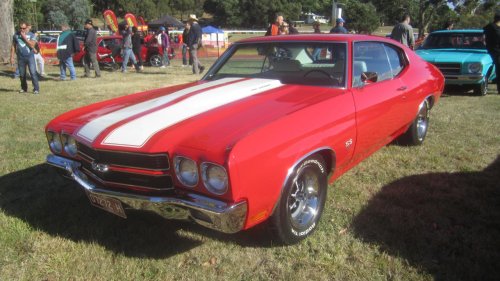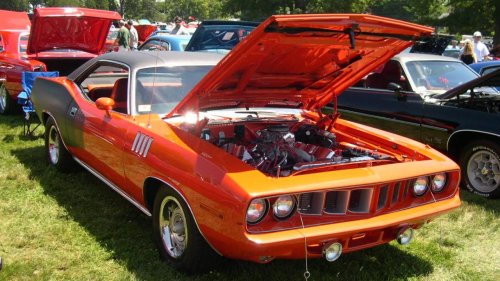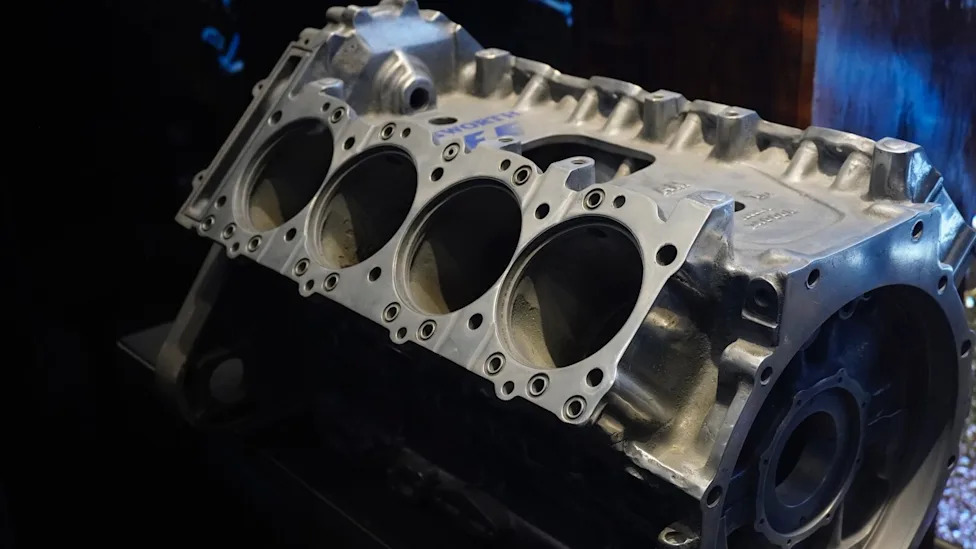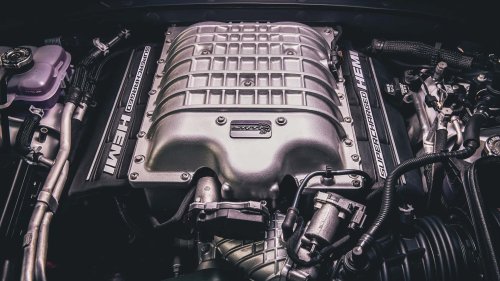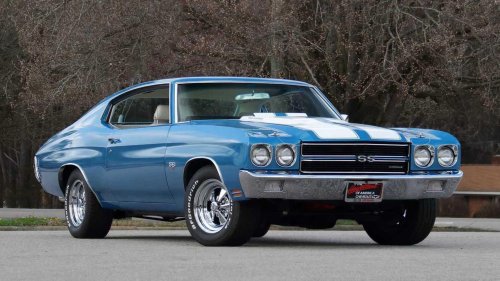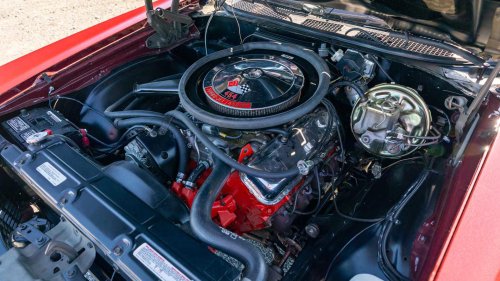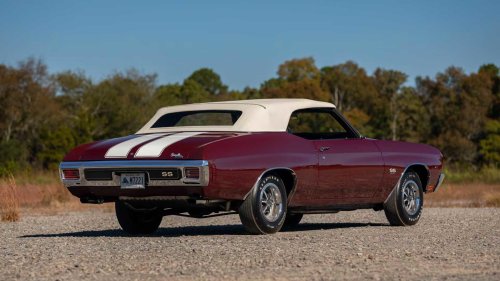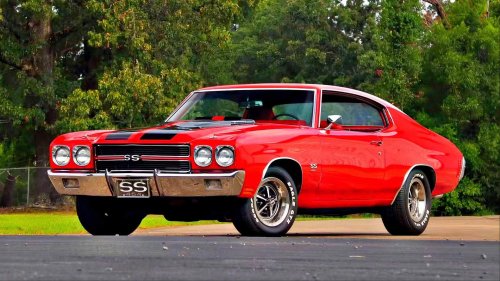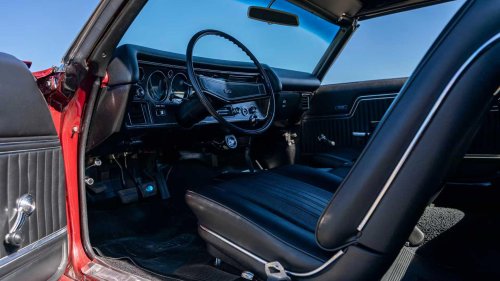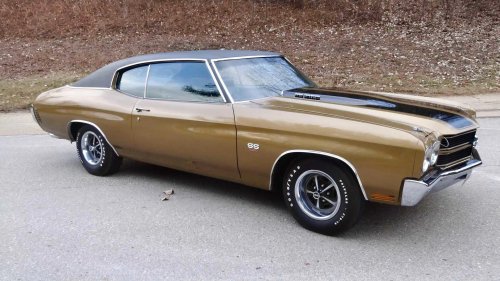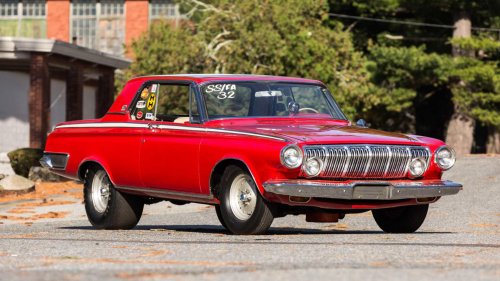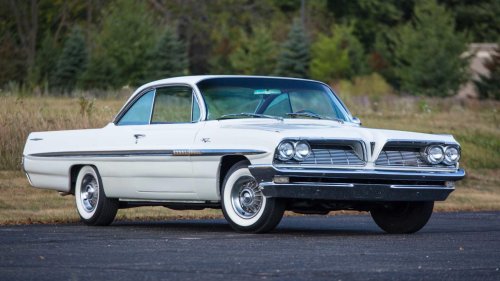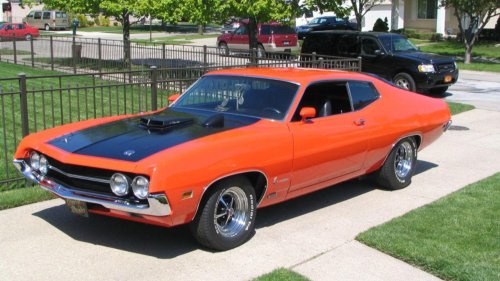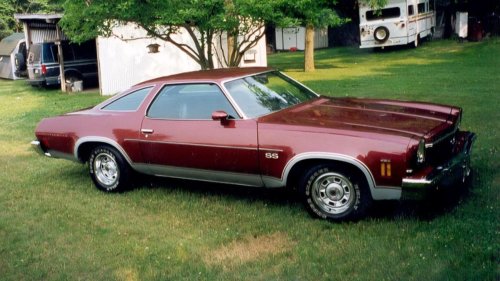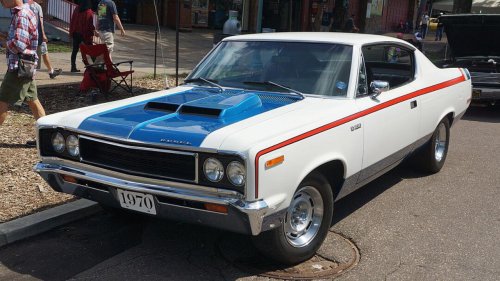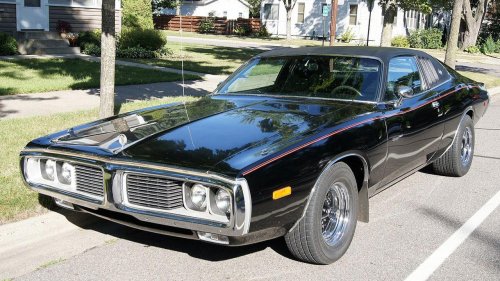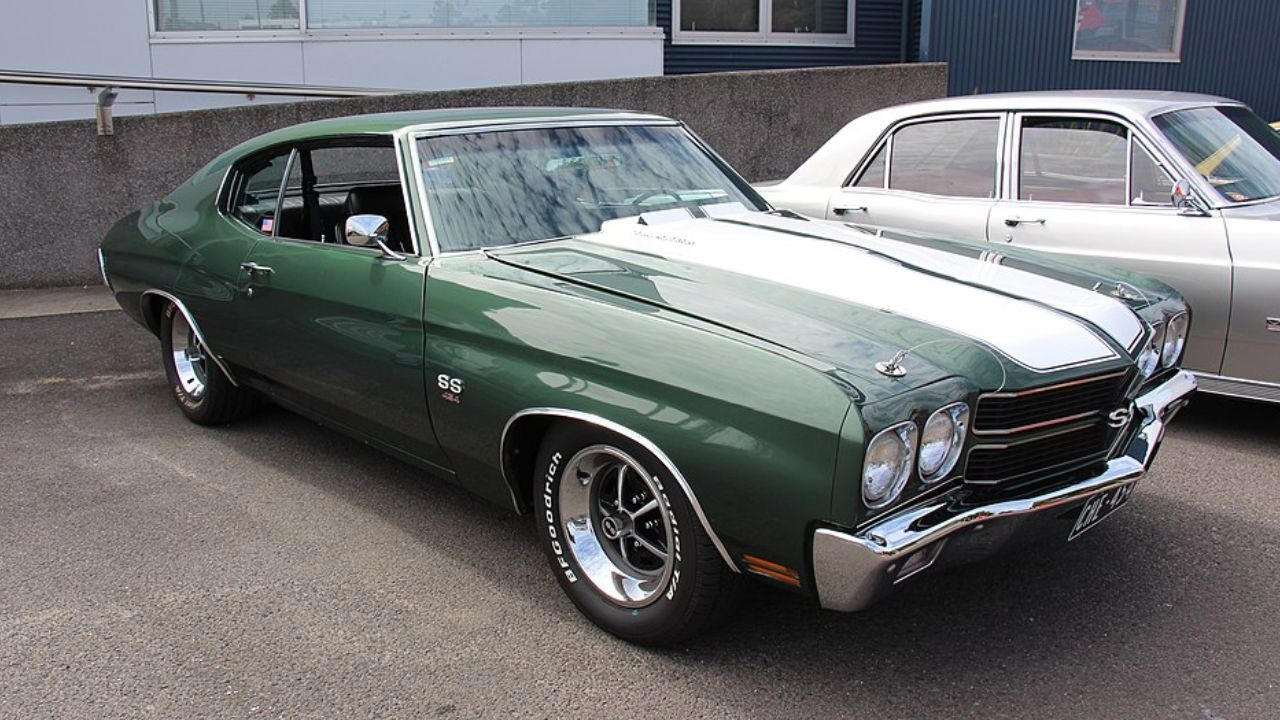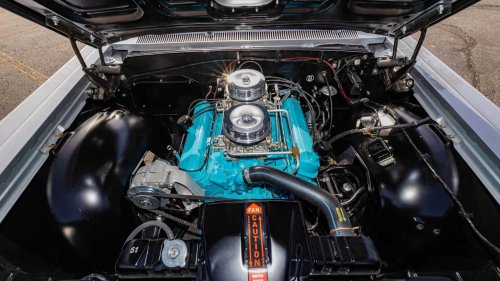
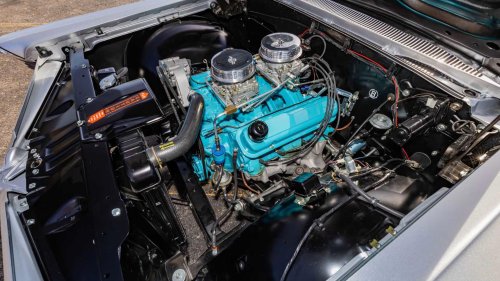
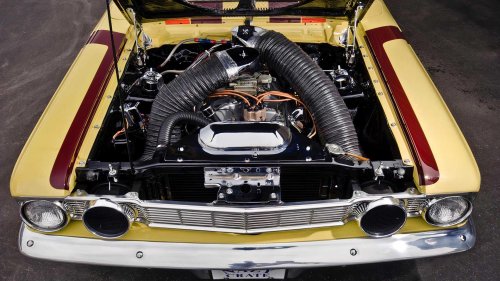
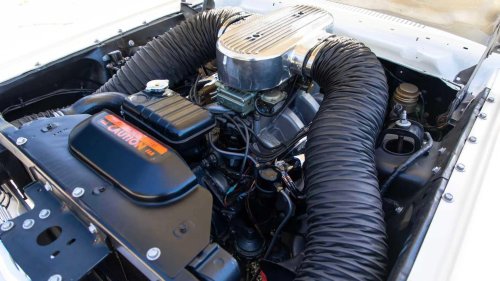
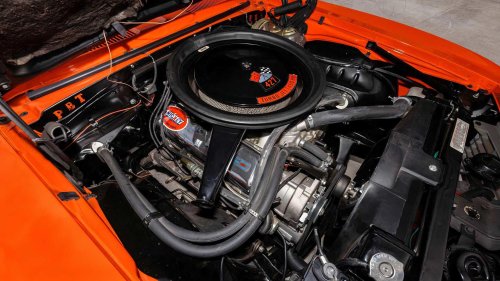
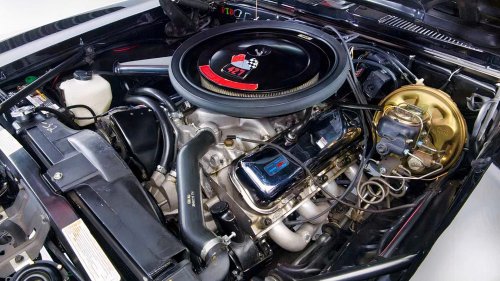
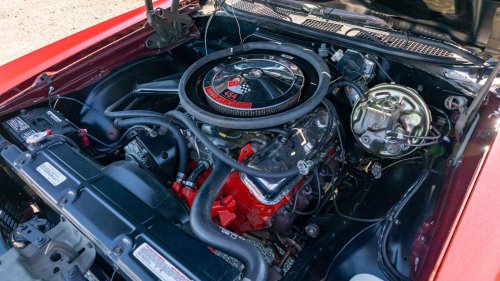
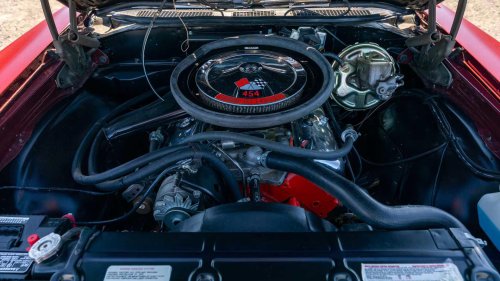
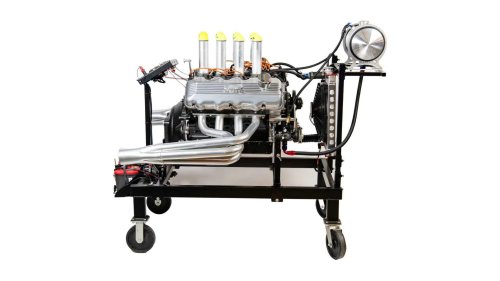
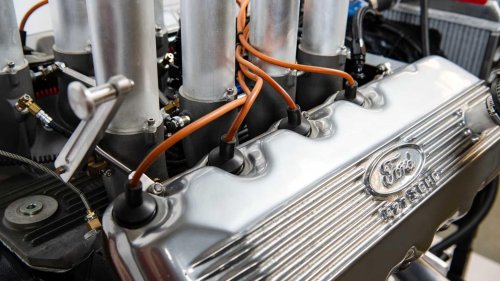



















If there's one thing that triggers a specialized kind of PTSD for Ford and GM enthusiasts, it's the mere mention of the Hemi. Named after its dome-shaped combustion chambers, the 426 Hemi hit Detroit like a nuclear bomb when it debuted in 1964 to replace the legendary Max Wedge as Mopar's NHRA and NASCAR weapon. It dominated so much that it broke the sport of racing and forced the NHRA and NASCAR to change their rules.Like many outrageous racing engines from the era, the 426 Hemi eventually trickled down to street-legal Dodges and Plymouths primarily to meet homologation requirements. Even though it was detuned to make it easier to live with for the average Joe, the street Hemi was still a monster that powered some of the era's fastest Muscle Cars, and everyone agrees that its official rating of 425 horsepower was far lower than the actual output. It wasn't alone that high in the ranks, though. There are some other legendary engines that also topped that rating that classic enthusiasts need to know about. Pontiac Super Duty 421 Horsepower: 405 Hp MecumIt might come as a surprise to some gearheads, but long before Chrysler introduced the 426 Hemi in 1964, Detroit already had powerhouses that foreshadowed the kind of brutality the Hemi came to be known for. The Pontiac Super Duty 421 is one of them. Introduced in 1961 when major American automakers had an agreement preventing them from engaging in factory-backed racing, the Super Duty 421 was essentially a skunkworks project by Pontiac's engineering team, who wanted to build an engine that would help the automaker shed its "grandpa car" image by dominating in NHRA and NASCAR events.MecumIn line with NHRA homologation requirements at the time, Pontiac listed the Super Duty 421 as a regular production option that any buyer could theoretically order, but Pontiac ensured that only professional racers could actually buy it. Essentially a racing engine, the Super Duty featured a reinforced block, steel crankshaft, massive cast-iron heads with high-flow ports, and a compression ratio as high as 12.0:1 or 13.0:1 for race-prepped units.While factory-rated at 405 hp, period dyno tests and an internal Chevrolet memo revealed that actual output was around 468 hp at 5,800 RPM, which explains why Super Duty-equipped Catalinas dominated the drag racing scene before GM enforced an internal ban on factory-supported racing in 1963, effectively killing the Super Duty program with roughly 267 cars produced. Ford 427 "High-Riser" V8 Horsepower: 425 Hp MecumAt the start of 1964, Ford's primary big-block engine was the 427 Low-Riser. It was a solid engine, but Ford knew Chrysler was developing something radical for NASCAR, which would become the 426 Hemi. Anticipating this, Ford engineers pushed the FE block to its absolute limit by developing the High-Riser heads to ensure they had maximum airflow before the season even started.MecumThe 427 High-Riser got its name from its massive intake ports that were so tall they required a modified "bubble" hood to accommodate the manifold. It used a high-nickel iron block with cross-bolted main caps for structural integrity and beefed-up internals such as a forged steel crankshaft, forged aluminum pistons, and a high-lift solid-lifter camshaft. Ford rated it conservatively at 425 hp at 6,000 RPM, but period calculations and dyno tests place real output at 500 to 550 hp. Chevrolet aluminum ZL1 Horsepower: 430 Hp MecumThe 1963 internal GM ban on factory-supported racing did more than just end the Super Duty program. GM also placed an engine displacement limit of 400 cubic inches on intermediate and compact cars, putting its muscle cars and pony cars at a great disadvantage compared to cross-town rivals. However, towards the end of the 1960s, some Chevrolet dealers discovered that they could use the Central Office Production Order (COPO) system to bypass the ban, and they used it to equip the Camaro with one of the most exotic engines ever installed in an American production car, the ZL1.Bring a TrailerDeveloped for SCCA Can-Am racing, the ZL1 was an all-aluminum version of Chevy's L88 V8, which in itself was a racing engine. It had an aluminum block, aluminum closed chamber heads with massive ports and a solid-lifter camshaft, four-bolt mains, and a forged steel crankshaft. The ZL1's official rating of 430 hp was higher than the Hemi's, but the bigger reason why it was so much better was that it was far lighter. Because the ZL1 removed about 200 lbs from the nose of the car, it could out-brake and out-turn the Hemi while still beating it in a straight line. Only 71 cars were ever equipped with the ZL1 engine in 1969, including 69 Camaros and 2 Corvettes. Chevrolet 454 LS6 Horsepower: 450 Hp MecumIn 1970, GM lifted its self-imposed ban on engines larger than 400 cubic inches in midsize cars, and Chevy immediately took advantage by launching the 454 LS6. The 454 had the same basic architecture as Chevy's famous 396 and 427 engines, but was bored out to 454 cubic inches for more power and given the LS6 treatment to turn it into a factory-tuned monster.MecumThe parts that made the 454 LS6 special were borrowed from the legendary L88 427 race engine and included high-flow rectangular-port iron heads, a solid lifter camshaft that allowed it to rev higher and more reliably, and a massive 800-cfm Holley carb. An official rating of 450 hp and 500 lb-ft of torque not only put the 454 LS6 ahead of the Hemi, but it also meant that it had the highest factory rating of any production car in 1970, which explains why the 1970 Chevelle it powered was nicknamed the "King of the Streets." Ford 427 SOHC "Cammer" Horsepower: 657 Hp MecumThe aforementioned Ford 427 High-Riser put up a good fight against the Hemi in 1964, but after the 426 Hemi debuted at the 1964 Daytona 500 and absolutely dominated with a 1-2-3 sweep, Ford knew it had to respond. Ford began modifying the High-Riser setup almost weekly, eventually leading to the 90-day miracle development of the 427 SOHC "Cammer" later that same year.MecumThe Cammer was essentially a modern racing engine 20 years ahead of its time. It was a masterpiece of engineering that moved the camshafts from the block to the cylinder heads, eliminating the heavy pushrods that limited the RPM of its rivals. Interestingly, Ford used a combustion chamber design very similar to the 426 Hemi, but the superior airflow control of overhead cams meant the Cammer could safely scream to 7,000+ RPM.Ford conservatively claimed 616 hp with a single 4-barrel and 657 hp with dual 4-barrels, making it a suitable contender for Race Hemis, which were far more powerful than street-versions. Unfortunately, the Cammer was banned before ever competing in a NASCAR race due to a combination of aggressive homologation rules introduced in 1965 and pressure to maintain the "stock" in stock car racing. Even though the Cammer was never installed in a factory production vehicle, it is estimated that Ford built roughly 500 complete engines between 1964 and 1967.Sources: NHRA, MotorTrend, Hot Rod