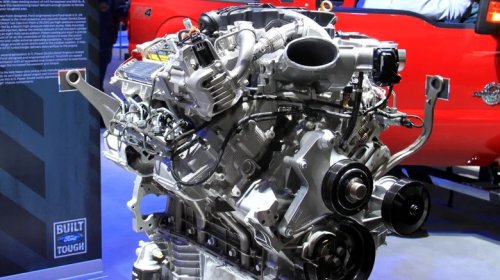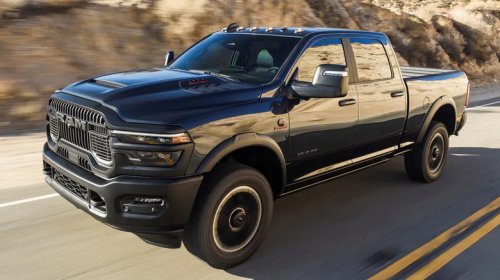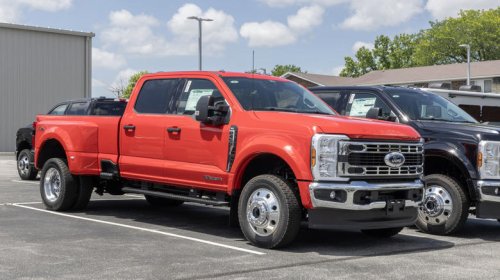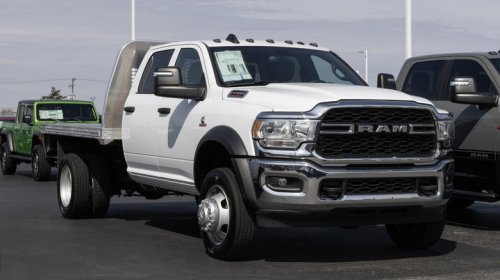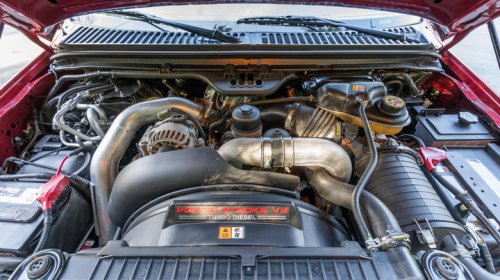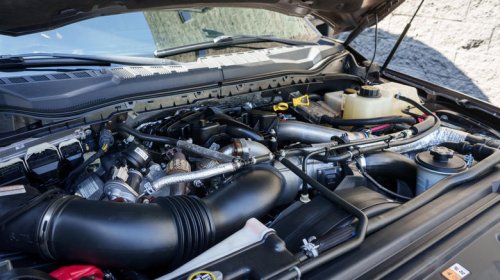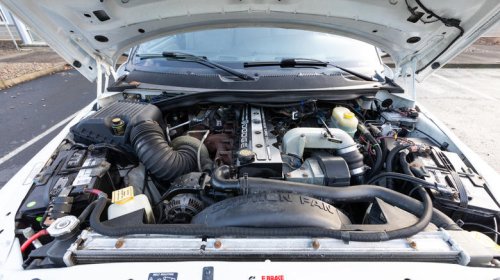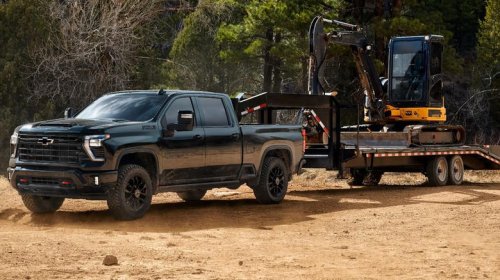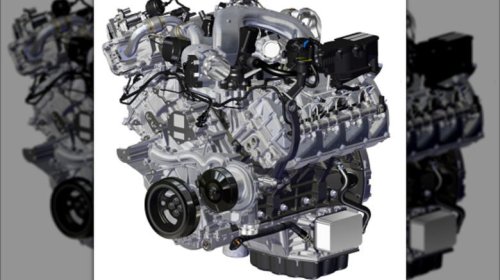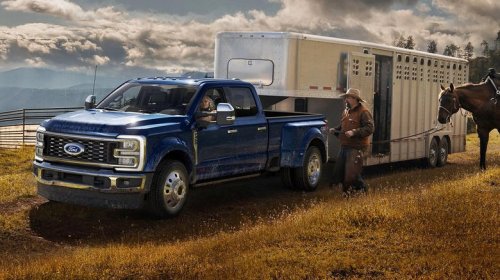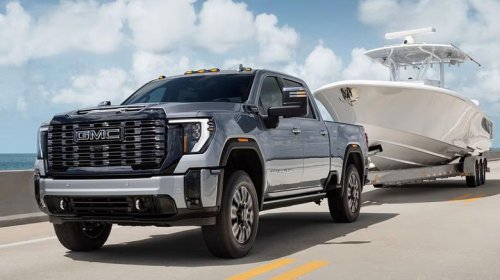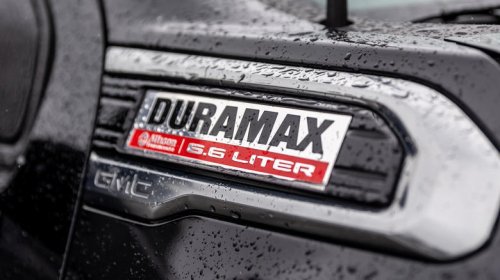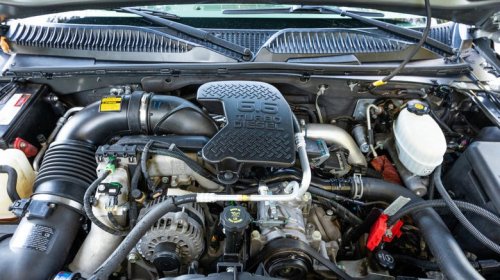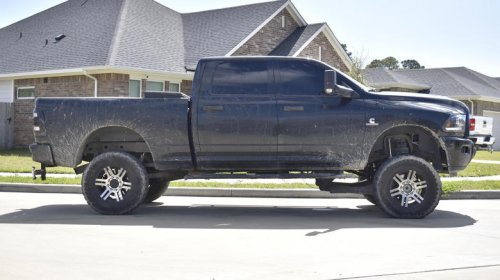
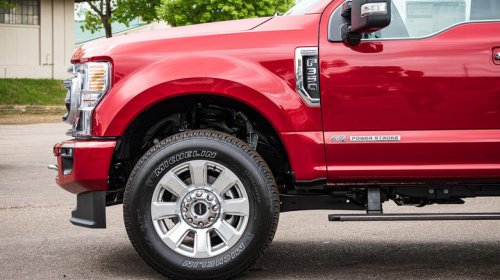
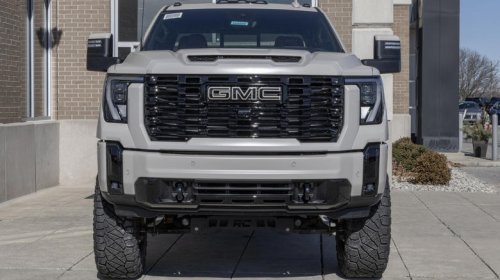
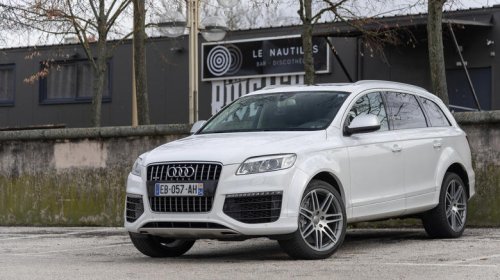




















A side-profile view of a dirty black Cummins RAM truck parked in front of a house.Diesel engines have always occupied a special place in the car world, and for good reason. When comparing them to gasoline engines, diesel engines clearly have the edge in torque output, making them the go-to choice for heavy-duty work. That combination of low-end grunt, fuel efficiency under load, and long-term durability has built the diesel engine a cult following that shows absolutely no sign of fading, at least in the U.S.Not many diesel engines embody that ethos more thoroughly than the Cummins 6.7L Turbo Diesel, the inline-six workhorse that has powered Ram 2500 and 3500 heavy-duty pickups since 2007. Starting life at 350 horsepower and 650 lb-ft of torque, it has been progressively developed over nearly two decades. The latest High Output version now produces 430 horsepower and 1,075 lb-ft of torque. Add rock-solid long-term reliability and a big enthusiast following, and it is easy to see why the 6.7 Cummins became the benchmark every other truck diesel is measured against.Be that as it may, benchmarks exist to be challenged and beaten. From Ford's own answer to the Cummins throne, to a race-inspired twin-turbo diesel V12 that Audi's engineers somehow snuck past the accounting department, there are diesel engines that leave the famous inline-six firmly in their rearview mirror. These are four diesel engines more powerful than the 6.7 Cummins. 1. Ford 6.7 Power StrokeA front side-profile view of a red Ford F350 with a 6.7L Powerstroke badge.Ford's answer to the Cummins question came in 2011, when the Blue Oval cut ties with longtime supplier International Navistar and introduced its first fully in-house diesel engine — the 6.7L Power Stroke, internally codenamed "Scorpion" during development. The name was fitting. Where previous Ford diesels were outsourced designs Ford had limited control over, the Scorpion was entirely Ford's own, built from a clean sheet around a V8 architecture with a centrally mounted turbocharger tucked into the valley of the engine for a more compact layout.It debuted at a modest 390 horsepower and 735 lb-ft of torque, figures that gave little indication of what the platform would eventually evolve into. Over the following decade, Ford progressively turned up the tap, and for the 2023 model year, the company introduced a High Output variant that redefined what a pickup truck diesel could do. The 6.7L Power Stroke HO now produces 500 horsepower and 1,200 lb-ft of torque, figures that clear the Cummins benchmark by a substantial margin on both counts.The 6.7 Power Stroke is used by Ford's heavy-duty trucks, namely the F-250, F-350, and F-450 Super Duty, giving buyers across the heavy-duty range access to what Edmunds describes as the "best-in-class" diesel for both horsepower and torque. The 1,200 lb-ft torque figure in particular is in a league of its own — nearly 125 lb-ft more than the Cummins HO manages at its best. The 6.7 is also widely regarded for its reliability, with some owners reportedly logging more than a million miles on a single engine. 2. 6.6 Duramax L5PA front-end view of a gray tuned GMC Sierra.General Motors has been building the Duramax diesel since 2001, but the L5P generation that was introduced in the 2017 model year represented the most comprehensive ground-up redesign the platform had ever seen. A new engine block, revised rotating assembly, electronically controlled BorgWarner variable-vane turbocharger, and a Denso high-pressure common rail fuel system put clear daylight between the L5P and everything that came before it.For 2024, GM turned up the 6.6's output from the factory. A revised turbocharger, upgraded injectors, and recalibrated engine management pushed the L5P to 470 horsepower and 975 lb-ft of torque — gains of 25 horsepower and 65 lb-ft over the previous generation. When we compared the 6.7 Cummins against the 6.6 Duramax, the L5P came out ahead in horsepower, all while being more affordable. The L5P's internals proved so robust that enthusiasts famously pushed a stock-block L5P past 1,000 horsepower in testing without it giving up.It powers both the Chevrolet Silverado 2500HD and 3500HD, as well as their mechanical twins, the GMC Sierra 2500HD and 3500HD, giving GM's entire heavy-duty lineup access to the same engine. While the L5P trails the Power Stroke HO on peak horsepower, its torque delivery is exceptionally well-suited to towing — GM's own powertrain division confirms 90 percent of peak torque is available from just 1,550 rpm, making real-world towing stronger than the raw numbers alone suggest. 3. Audi 6.0 V12 TDIA white V12 Audi TDI Q7 parked on the street.All three of the other engines on this list exist because they made commercial sense — built for heavy-duty trucks that need the extra power and torque to get the job done. For Audi's 6.0 V12 TDI, it's none of that. As CarThrottle said when driving one, "it's bonkers, distasteful and ruinously expensive to keep running. And it's thoroughly brilliant." The 6.0-liter V12 TDI was born out of Audi's dominance in endurance racing with the diesel-powered R10 TDI.The very same engine that won Le Mans outright and the road-going engine — though technically unrelated to the racer — shared the same ambition. It is the only diesel V12 engine ever fitted to a production passenger car, a distinction it holds to this day and almost certainly forever. Dropped exclusively into the first-generation Audi Q7 between 2008 and 2012, the twin-turbocharged V12 produced 500 horsepower and 737 lb-ft of torque, with that torque available from just 1,750 rpm.This V12 is so ridiculous that we included it in our own list of the best V12 engines ever made. If you take a look at the McLaren F1's BMW-derived V12, an engine powering a multi-million-dollar supercar, you'll find that only 106 were ever built. For this V12 TDI, AudiWorld believes only around 50 were ever made, making this engine quite possibly one of the rarest and most insane engines ever put in a production car, period. 4. Volkswagen 4.0 V8 TDIA gray Bentley Bentayga parked in front of a corporate office building in Japan.Where the V12 TDI was Audi's moon shot, the 4.0 V8 TDI represents something much more calculated and marketable. A high-output diesel developed for the modern era, one that traded twelve cylinders for engineering ingenuity, and that made it sell a whole lot better. The headline trick is its induction system. The engine pairs two conventional exhaust-driven turbos with an electrically driven compressor, said to be the first ever fitted to a production car, spinning at up to 70,000 rpm and powered by a 48-volt electrical subsystem.The result is that peak torque of 664 lb-ft arrives at just 1,000 rpm — eliminating the lag that has historically been diesel's one weakness. Although its torque is far lower than the 6.7L Cummins, its 435-horsepower output narrowly beats the heavy-duty benchmark. This engine found its way into a remarkable spread of vehicles across the VW Group. In the Audi SQ7 and SQ8, it serves as the performance flagship of Audi's SUV lineup.Bentley used the same unit in the Bentayga Diesel — the first diesel-powered Bentley ever built — where it almost matched the torque output of the W12 petrol version. Porsche also drew on the same engine family for the Panamera 4S Diesel, one of the world's fastest diesel production cars. The Volkswagen 4.0 V8 TDI was Volkswagen's attempt to make diesel great again in the performance market, but Audi replaced the 4.0 V8 TDI with a gasoline V8 in both the SQ7 and SQ8 — what EVO described as "the death of the Volkswagen Group's V8 diesel engine." Want the latest in tech and auto trends? Subscribe to our free newsletter for the latest headlines, expert guides, and how-to tips, one email at a time. You can also add us as a preferred search source on Google.