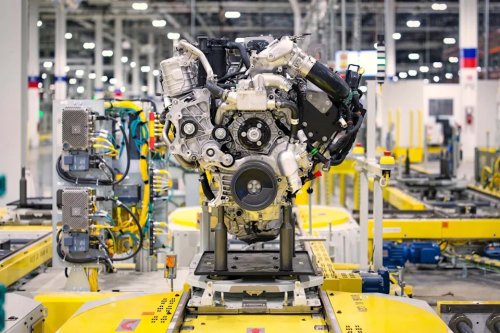
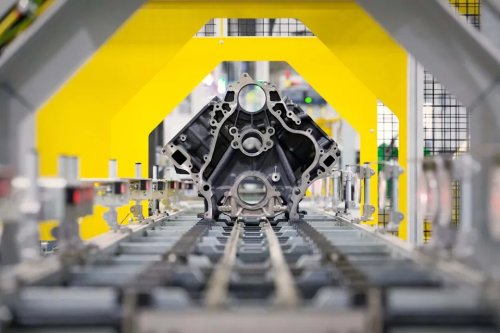
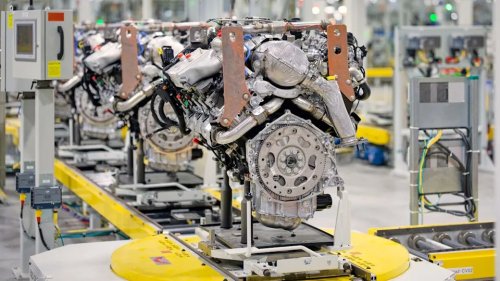
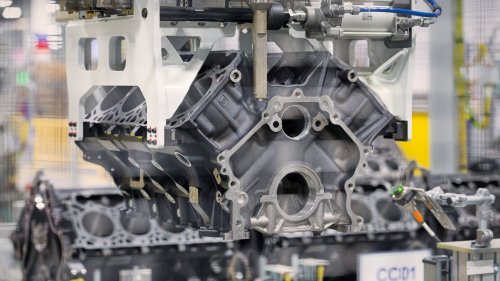
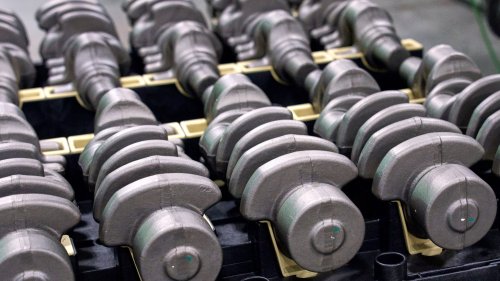
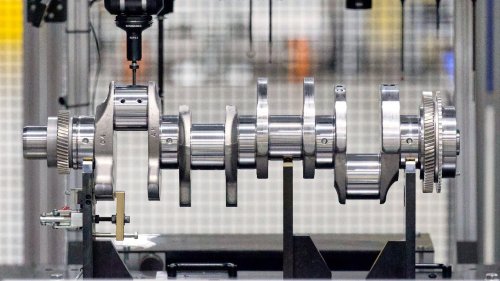
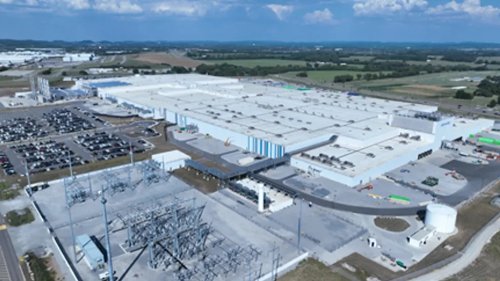
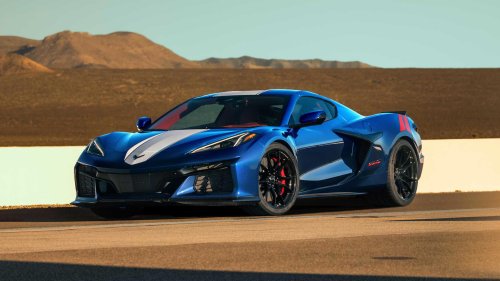
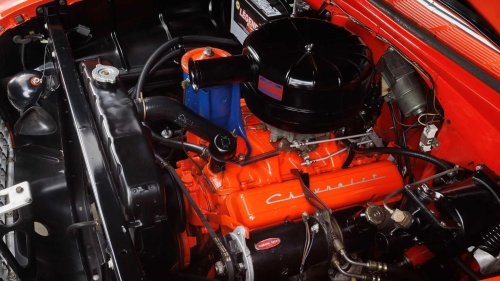
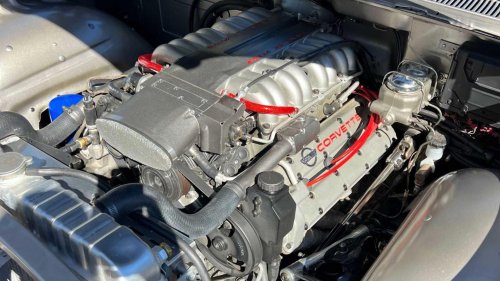
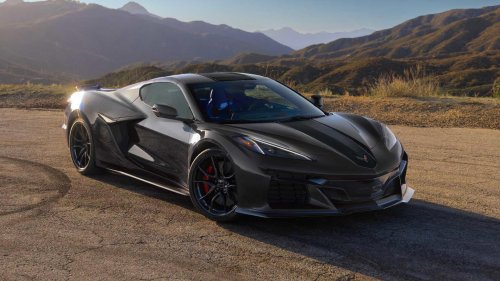
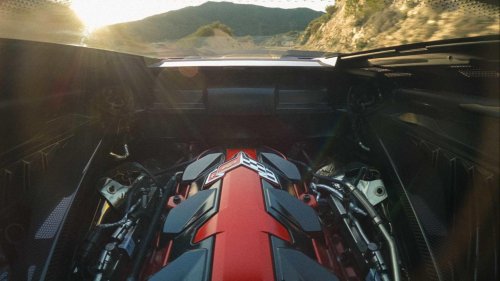
Every major automaker seems busy trimming cylinders, stuffing in turbos, or adding batteries. Then, GM walked in with a bigger naturally aspirated Corvette V8. Chevrolet has brought back the Grand Sport for 2027 with an all-new 6.7-liter small-block. It is a loud answer to a trend for once.That contradiction gives the car its weight. GM did much more than simply freshen an old motor or bolt-on nostalgia stripes. It launched an all-new generation motor. The automaker also sent production back to Flint, and backed the engine with engineering that makes the move look well-calculated. In An Era Of Downsizing, GM Went The Other Way Chevrolet The LS6 lands in a market that has spent years treating big-displacement engines like old furniture. Performance cars still chase speed, sure, but they often chase it with boost, battery help, or both. Even the Corvette range already proved GM knows how to use electrification as a performance tool. This makes the LS6 more striking. GM made the LS6 the primary Corvette engine, which means this act of rebellion now sits at the center of the lineup.That choice also looks expensive, because it is. GM announced $854 million in 2023 to prepare four U.S. plants for its sixth-generation Small Block program, including $579 million for Flint Engine Operations. In 2025, it added an $888 million investment in Tonawanda to support sixth-generation V8 production, and in 2026, it added more than $150 million at Saginaw Metal Casting to support engine blocks and heads. The company has also said the LS6 launches a new V8 architecture that will soon benefit other V8-powered Chevrolets.What makes the LS6 more interesting is that GM says the bigger engine did not force the usual tradeoff. According to Chevrolet’s own engineers, the team found a way to raise displacement, power, and torque while also improving emissions and maintaining fuel economy. That sounds backward in the best way. It also explains why the LS6 feels less like a nostalgic tantrum and more like a carefully engineered refusal to read the room.There’s also a small but telling detail inside that story. Engineers first aimed for about 6.6 liters, then found that stretching the stroke by another two millimeters unlocked more performance without the expected penalty. More on the engineering solutions in a minute. The Small Block Was Never Just An Engine Bring a Trailer To understand why this engine hits harder than a normal product reveal, it helps to remember what the Small Block always was. The original 265-cubic-inch Chevy small-block arrived for 1955, and Chevrolet fitted it to the Corvette with the compact packaging the car needed. That formula mattered as much as the output. The Small Block promised V8 power that could fit, scale, and sell. It turned performance into something more attainable than exotic.The legend grew because Chevrolet kept developing the same core idea instead of tossing it out every time fashion changed. The 283 arrived in 1957 and became famous for making one horsepower per cubic inch. The 327 followed in 1962. The first 350 showed up in 1967 and later became the familiar heartbeat of everything from Corvettes to pickups. Chevrolet then carried the concept through the LT1 era, the Gen II redesign in 1992, the LS1 in 1997, and the first small-block LS6 in 2001. The names changed, the heads changed, the fuel systems changed, and the electronics got smarter. But the mission stayed plain enough for a kid to understand. Make good power, fit in a lot of things, and leave enough room for tuners to get into trouble.Bring a Trailer Chevrolet says the first Small Block was built in Flint on July 9, 1954, and production there continued until 1999. Now the LS6 returns Corvette V8 assembly to the same city. That is more than heritage-window-dressing. It ties the new engine to one of the few remaining lines of industrial continuity left in American performance. It also gives the LS6 something rare in modern car launches, a physical sense of place. In car culture terms, the Small Block parked in its old spot and found the garage door opener still worked. The 2027 Corvette Grand Sport Got The New LS6 V8 ChevroletNow for the part you are probably here for. The 2027 Corvette Grand Sport debuts with the new LS6, a naturally aspirated 6.7-liter V8 that makes 535 horsepower at 6,100 rpm and 520 lb-ft of torque at 4,600 rpm. Chevrolet also makes a bigger statement with where it places that engine. The LS6 is not limited to one special trim and becomes the main engine for the Stingray, Grand Sport, and Grand Sport X, all backed by the Corvette’s eight-speed dual-clutch transmission.In plain English, GM made the “base” Corvette heart stronger than ever. Chevrolet even expects the Stingray and Grand Sport lineup together to account for the vast majority of Corvette sales, which means this engine will define most owners’ experience of the car, not just a lucky few. Chevy’s Engineers kept the 103.25-mm bore from the outgoing LT2 but stretched the stroke from 92 mm to 100 mm, taking displacement to 6.7 liters, or 409 cubic inches. Then they paired it with a 13.0:1 compression ratio, the highest ever for a Corvette V8. The engineering team specifically wanted to top the old L88 big-block’s 12.5:1 figure, which sounds like a small detail, but it’s not.Chevrolet A lazy engine would have stopped there and hoped the extra cubes did all the work. But the LS6 does not read lazy. Chevrolet gave it forged pistons and forged connecting rods, port and direct fuel injection, a new oiling system meant to handle track use, a larger 95-mm throttle body, and high-velocity intake ports to keep airflow up. It also says the Grand Sport and Grand Sport X get a new center-exit exhaust as standard equipment. All of this is because Corvette buyers care about numbers, but they also care about noise, throttle response, and the way the whole thing feels at seven-tenths on a back road. They want the full package, and the LS6 delivers.Big-displacement V8s often get framed as the simple answer, the blunt instrument, the “just add cubic inches” move. But the engineering story says the opposite. Chevrolet says the engine’s advanced controls, new fueling strategy, and high compression help it extract more useful work from the same fuel while still serving up more torque and power. The company also says high compression improves thermal efficiency, which is a dry phrase for a very lively result. The engine squeezes more real work out of every combustion event. GM Isn’t Ignoring The Future, It’s Layering It On Chevrolet The obvious rebuttal arrives right on schedule. If GM really understands where performance is going, why not skip all this V8 theater and go straight to batteries, motors, and spreadsheets? Chevrolet’s answer sits one trim level over. The Grand Sport X pairs the LS6 at the rear axle with a front-mounted electric drive unit and a compact battery borrowed from the Corvette ZR1X, creating an electrified all-wheel-drive setup with 721 combined horsepower. With the new Grand Sport, the company is not asking buyers to choose between heritage and technology. It is showing how the two can work in sequence.Chevrolet says the battery sits low and near the center of the car to protect the mid-engine platform’s balance, while the front motor adds near-instant 145 lb-ft of torque to the front axle for stronger launches and better drive off a corner. The company also claims its controls preserve the agile feel of a rear-drive car while adding the traction benefits of all-wheel drive. This may sound like a cliche, but the system sounds less like an electric crutch and more like a very smart accomplice.Chevrolet Chevrolet even gives the Grand Sport X a split personality in the best way. It offers electric-only Stealth mode up to 50 mph and a low-speed Shuttle mode for non-street use up to 23 mph. On track, drivers can choose among Endurance, Qualifying, and Push-to-Pass power strategies, which is about as far from a compliance-minded hybrid as this side of a race pit lane. The system helps the car launch harder, exit cleaner, and adapt faster without turning the V8 into a side character.The best news from all of this is that GM is not pretending that electrification does not exist. The company has spent years investing in EVs while also funding a new generation of V8 hardware, and the Corvette now shows both ideas in one family. The V8 remains the emotional core, the soundtrack, and the thing that gives the car its pulse. The electric layer adds speed, traction, and flexibility, but it does not write over the main character. In an era when the industry keeps counting cylinders like calories, that decision feels almost rude. Brilliantly rude.Source: Chevrolet


















 +33 others