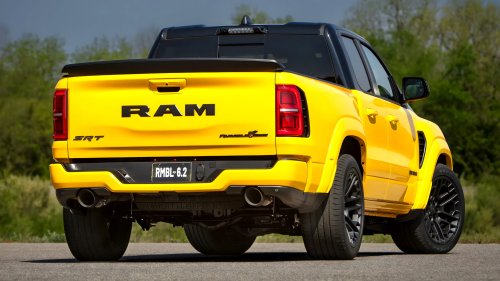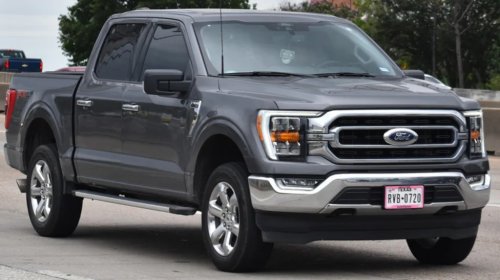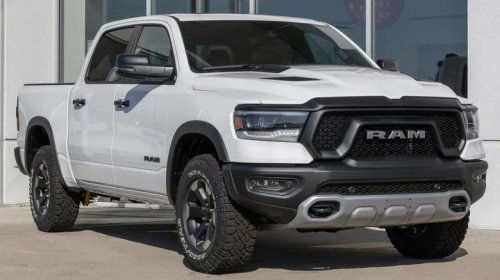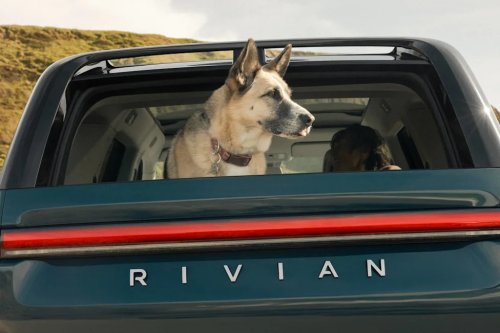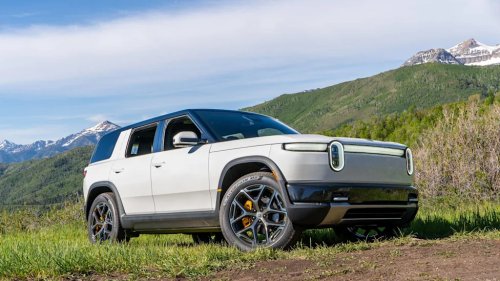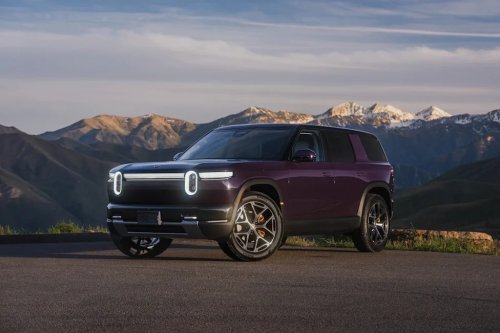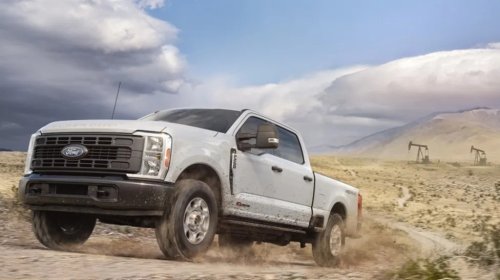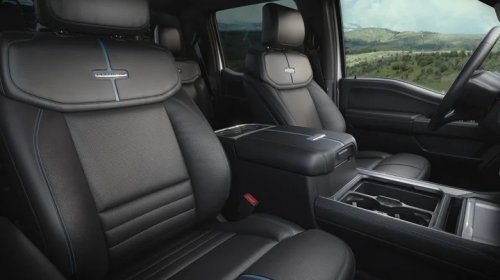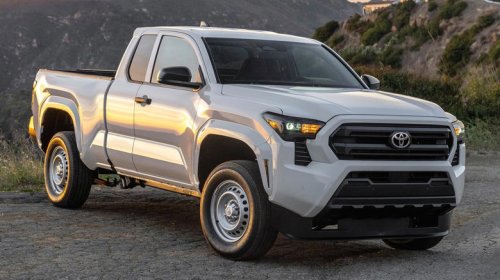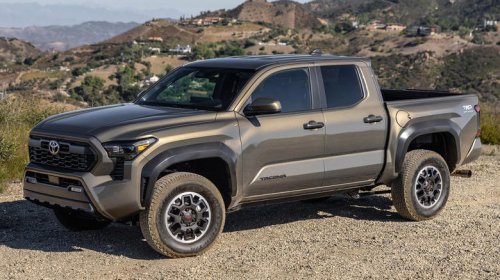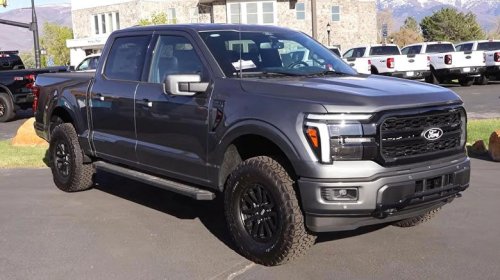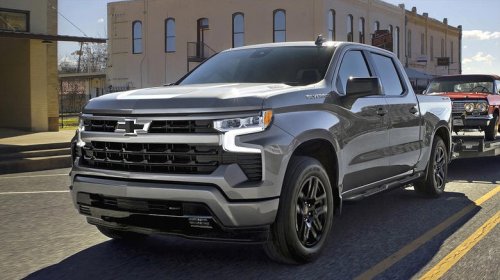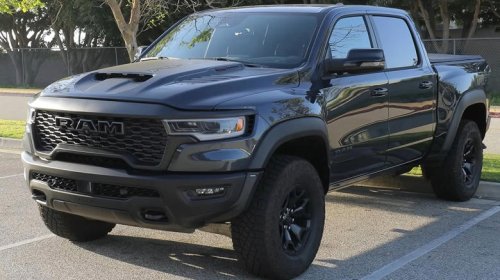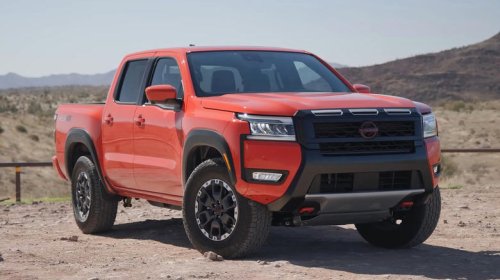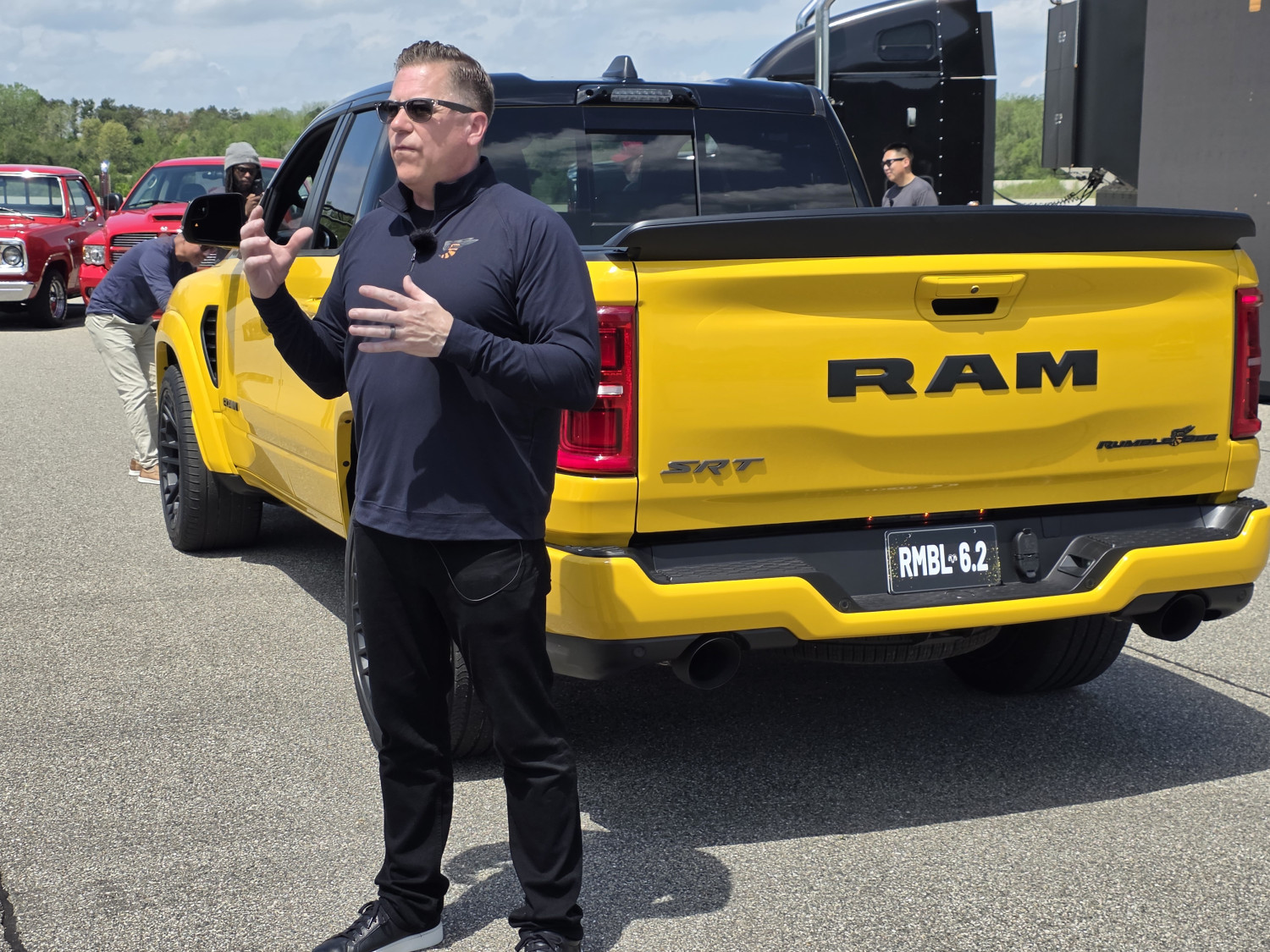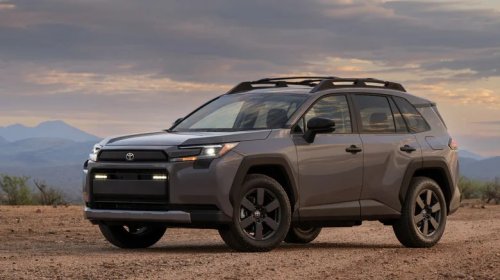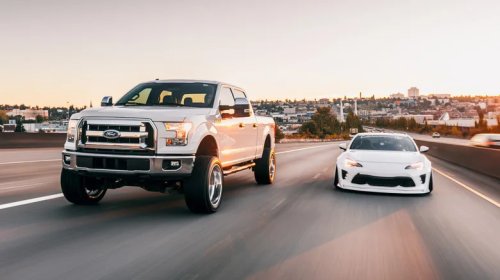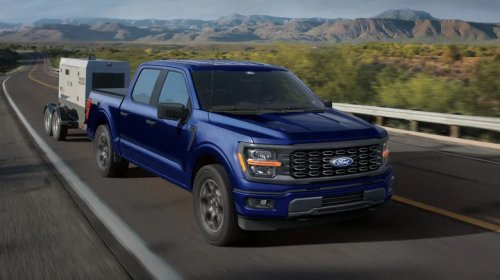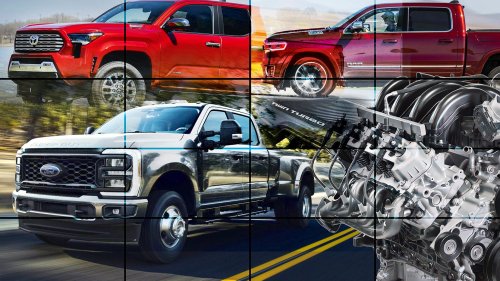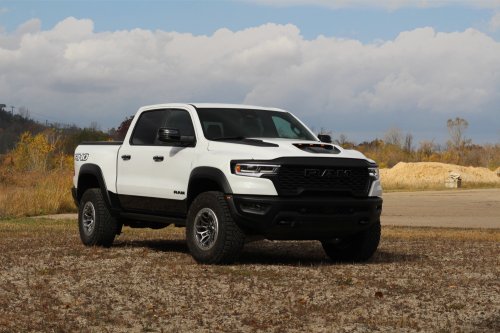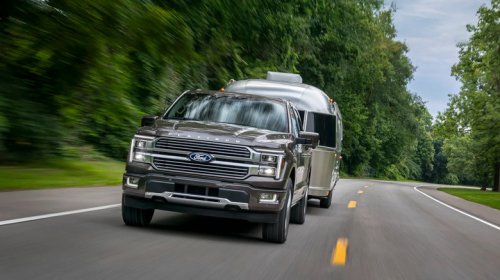
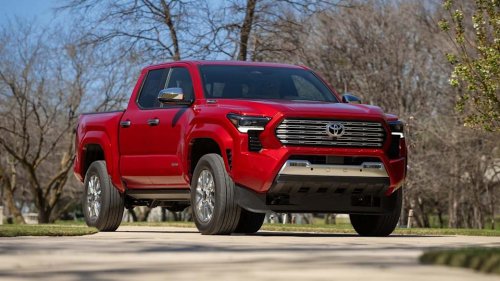
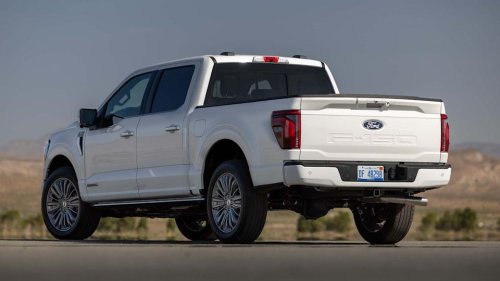
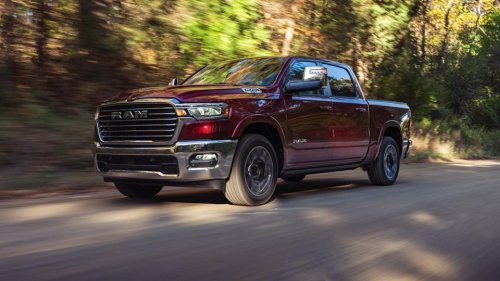
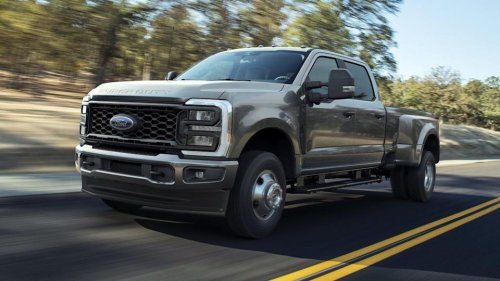
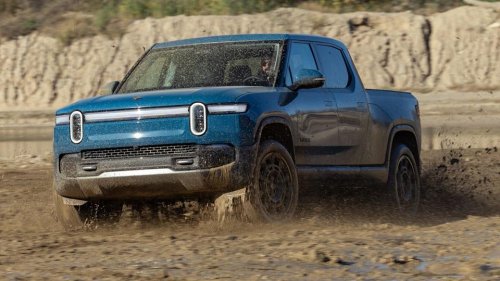



















5 Pickup Trucks With Great Gas EnginesAlan Muir - MotorTrendWe all know why diesel engines are great for pickup trucks: They pull hard and use less fuel than a gasoline engine doing the same work. Greater fuel efficiency will often offset the greater cost of a diesel—or at least it did until diesel fuel prices went crazy. Here are five solid gasoline-powered trucks that will do the work of a diesel without working so hard on your wallet.1) Toyota Tacoma i-Force Max HybridMidsize diesel trucks used to be a thing. In fact, the 2016 Chevrolet Colorado won its second (of three) MotorTrend Truck of the Year award on the strength of its diesel engine alone. Times have changed; there are no longer any midsize diesels sold in the U.S. But the Toyota Tacoma hybrid is arguably their spiritual successor, offering the same mix of low-end muscle and great-for-a-truck fuel economy. Based on Toyota’s 2.4-liter turbo-four,the Taco’s hybrid powertrain delivers 326 horsepower and a healthy 465 lb-ft of torque. Fuel economy is 24 mpg in the combined EPA cycle, 1 mpg better than the old Colorado Duramax 4x4.Downsides? The system isn’t as refined as it could be, and Toyota only offers it in higher trims, to which it adds a price premium of $3,000 to $7,000. In that way, it’s not much different than paying extra for a diesel—but you will see significant savings at the pump over a straight gas-powered truck and less pain when fuel prices spike.AdvertisementAdvertisementRead Our Experts’ Full Review of the Toyota Tacoma2) Ford F-150 PowerBoost HybridTwo elements make Rudolph Diesel’s invention such a standout compared to the standard gasoline engine: low-end torque and fuel economy. Hybrids fill in those gaps; electric motors deliver strong torque right from rest and assist the engine at the most fuel-hungry moments with “free” energy recovered during braking. Ford’s PowerBoost hybrid is a great example of how it all comes together, with 570 lb-ft of torque and an impressive 23-mpg EPA rating. Hook on a trailer, and you get the same off-the-line muscle as you would with a diesel.Ford only offers the PowerBoost in the F-150 and not its Super Duty trucks, but have you seen what a modern half-ton can pull? The PowerBoost is rated to tow up to 11,600 pounds with the right equipment. (Configuration matters—not all F-150s can tow that much weight safely.) Payload (1,740-pound max) is lower than some other powertrains owing to the weight of the hybrid system, and it doesn’t come cheap. Depending on the configuration, you’ll pay in the neighborhood of $3,000 to $7,000 or more for the hybrid system. But like a diesel, you’ll save money on fuel while reaping the advantages of more towing muscle.Read Our Experts’ Full Review of the Ford F-1503) Ram 1500 HurricaneIn years past, Ram offered the 3.0-liter EcoDiesel V-6 in its 1500 pickups. It was a refined engine that delivered solid fuel economy and strong towing grunt when needed. The EcoDiesel is gone—nowadays, only Chevrolet offers a diesel in a 1500-class pickup—but we say the Hurricane does a good job making up for its loss. This 3.0-liter twin-turbo inline-six makes 420 hp and 469 lb-ft in standard-output (SO) guise and 540 hp and 521 lb-ft for the high-output (HO) version. The engine’s dual-turbo setup minimizes lag and offers the low-end torque that diesels do so well (and, in our testing, way better than the Hemi V-8).AdvertisementAdvertisementGranted, fuel economy trails the old EcoDiesel by about 30 percent for the HO engine, but only 17 percent for the SO engine. (The differences are narrower compared to the Chevy diesel.) And the Hurricane wins on price. The SO costs between $0 and $2,695 depending on trim, whereas the old EcoDiesel was a $4,000 to $5,000 option. What about reliability? Aren’t these smaller engines super stressed in truck applications? Yes, they run at higher temperatures and pressures, but give some credit to advances in engineering, chemistry, and materials science. Still, these are relatively young engines, and when it comes to longevity, the diesel’s track record is hard to beat.Read Our Experts’ Full Review of the Ram 15004) Ford Super Duty “Godzilla” 7.3AdvertisementAdvertisementFord’s 7.3-liter “Godzilla” V-8 makes its power the old-fashioned way. No turbos, no four-valve heads, just a whole lotta displacement—444 cubic inches in case you were wondering. Designed for dump trucks, motor homes, and commercial fleets that bet on the lower purchase price of gas engines instead of the fuel economy of diesels, the 7.3 is a hard-working mill that puts out a respectable 475 lb-ft of torque. It doesn’t shrug off loads like a diesel—hook on a heavy trailer, and you’ll hear that big gasser working—but it’ll do the job, towing up to 22,500 pounds in a properly-equipped F-350.The Godzilla option costs $1,500 in a base-model Ford F-250, one-tenth the price of the Power Stroke diesel, and it’s standard in higher trims (though it does require four-wheel drive, which the diesel does not). Ford isn’t required to publish EPA fuel economy ratings for its heavy-duty pickups, but Godzilla will likely use around 35 percent more fuel than the diesel. At today’s prices, that makes fuel costs largely a wash, but the big savings come from the cheaper purchase price. Keep in mind that if you tow seriously heavy trailers over very long distances, the diesel can still save money in the hundred-thousand-mile-plus long run. If you mostly run with light loads, Ford’s 6.8-liter “mini-zilla” gas V-8 will save a little more money.Read Our Experts’ Full Review of the Ford F-350 Super Duty5) Rivian R1TOkay, it doesn’t have a gas engine. You got us. And we know this suggestion will ruffle some truck-owner feathers, but if you want to maximize pulling power and minimize fueling costs, you can do no better than electricity. The Rivian R1T is our favorite electric truck, owing to its good looks and sports car handling (not high on a truck buyer’s list but a nice bonus). What truck buyers care about is torque, and the R1T delivers—610 lb-ft, and that’s just for starters in the dual-motor model. The three-motor R1T goes to 1,103 lb-ft, and the quad-motor hits 1,198 lb-ft, nearly matching the 1,200 lb-ft of Ford’s high-output 6.7-liter turbodiesel. But can a smallish truck like the Rivian tow? Indeed, it can, between 7,700 and 11,000 pounds depending on configuration, and we’ve been amazed by the R1T’s towing stability—a surprise given its relatively small size.AdvertisementAdvertisementRange, of course, is the issue with any EV. The Rivian ranges from 258 to 420 miles, and you can cut that roughly in half while towing. (The Rivian’s infotainment system will update range with the trailer and help you navigate to chargers.) The R1T’s Tesla-compatible NACS port also opens up more fast-charging possibilities. For day-to-day driving, scheduled home charging lets you take advantage of off-peak rates, and if you have solar at home, your power is basically free. The R1T’s biggest drawback is its small bed, but the Tesla Cybertruck, Chevrolet Silverado EV, and GMC Sierra EV share many of the Rivian’s advantages.Read Our Experts’ Full Review of the Rivian R1T