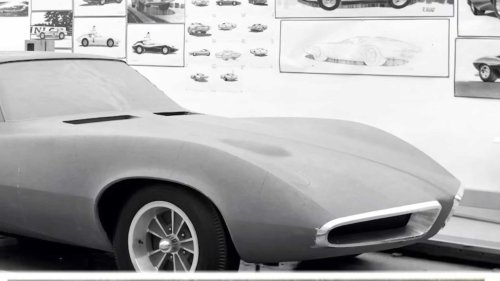
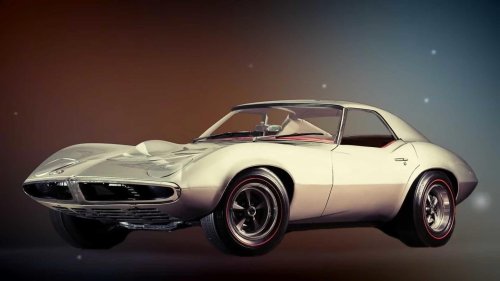
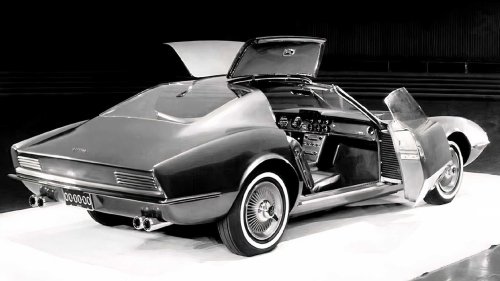
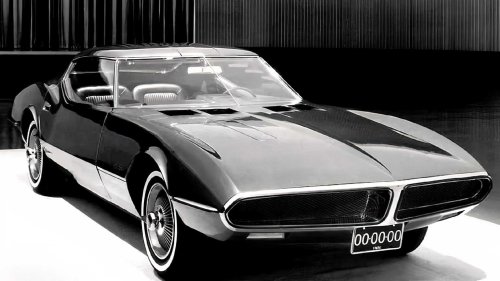
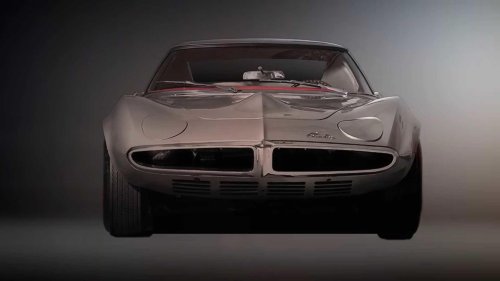
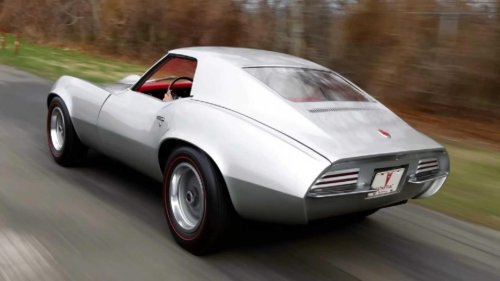
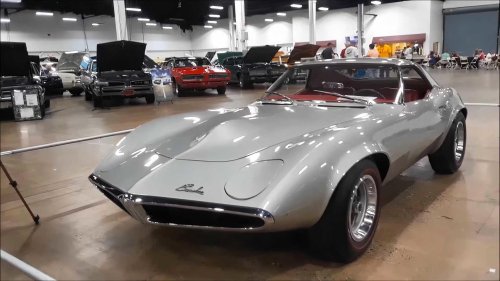
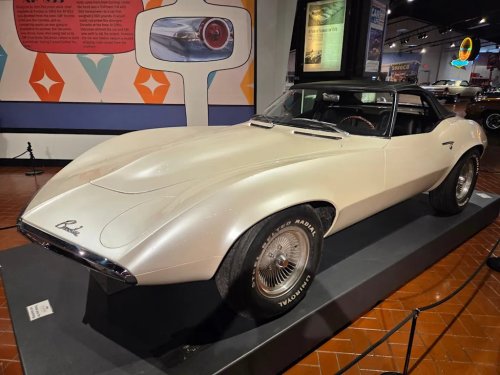
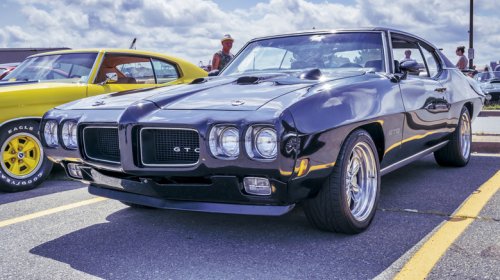
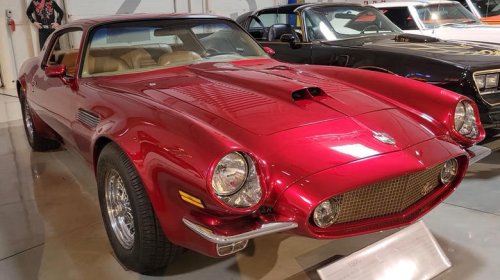
There was a moment inside General Motors when everything was already in place with this wild vehicle. The car was built, the numbers worked, the timing made sense, and then it was gone. It wasn't a concept in the usual sense, meant to dazzle people for a moment and then disappear. It was a fully engineered, running prototype program led by John DeLorean, built with a clear goal and a real path to production. GM had a price target, a performance plan, and a defined place in the market before GM Chairman James Roche stepped in and shut it down. Not because it didn’t work, but because it worked a little too well for a company that already had the Corvette. GM Killed It Right Before Production Review MecumBy the time leadership got involved, the hard work was already done. Development began in August 1963 and progressed quickly. This project had internal momentum and a very specific target: Pontiac wanted a lightweight, affordable sports car that could bring new buyers into the brand without asking them to stretch to something like a Corvette. Which is what they built.Two fully functional prototypes were completed. These included a coupe and a roadster. Both were built with production intent in mind, not just design exploration. The program was lined up for a 1965 design review, a milestone that typically determines whether a car moves forward into production, but that meeting never happened.General MotorsRoche saw the overlap immediately. A lower-priced two-seat sports car coming out of Pontiac didn’t just sit next to the Corvette. It sat too close to it. It had the same basic layout, similar appeal, and a price point that could pull buyers away before they ever reached Chevrolet's halo car. At that point, the decision wasn’t complicated from GM’s perspective. They needed to protect the Corvette, even if it meant killing something promising. And with that, the program ended before it could be seen outside the company.Fun Fact: The Banshee name didn’t die with the car. Pontiac reused “Banshee” multiple times on later concept cars throughout the late ’60s and ’70s, as if the idea never fully went away within the brand. Pontiac Built The Car GM Didn’t Want The Banshee wasn’t trying to win a horsepower war, and it didn’t need to. The focus was on weight, balance, and making something that felt quick in the real world. The base engine was an inline-six producing 155 horsepower, with a higher-performance version expected to deliver 215 horsepower.That might not sound like much now, but in the mid-1960s, in a lightweight fiberglass-bodied car, it was exactly the right approach. This wasn’t about straight-line dominance; it was about building something that felt responsive, usable, and fun without needing a big V8 to carry it.Barchetta/YouTube Banshee XP-833 vs Corvette (Projected) One of the biggest differences was that the Banshee would undercut the Corvette's price by $1,000. In the 1960s, that’s the gap between someone walking away and someone signing paperwork. It opens the door to buyers who want a sports car but can’t quite justify a Corvette, which is precisely where the problem starts.The Banshee wasn’t just another car in the lineup. It was aimed directly at the same kind of buyer, just at a lower price point. Instead of feeding the Corvette pipeline, it risked cutting into it. From a corporate standpoint, that’s not a risk GM was willing to take.Fun Fact: One of the prototypes still exists today. At least one of the original XP-833 cars survived and ended up in private hands, which is rare for a canceled internal program like this. It Was Designed To Change Pontiac’s Direction General MotorsPontiac in the 1960s was already building a performance identity, but it was heading in a very specific direction. This meant bigger engines, heavier cars, and the kind of muscle that defined the era, but the Banshee pointed somewhere else. It was lighter, simpler, and more focused on how the car actually felt to drive. The fiberglass body kept weight down, the smaller engines kept it approachable, and the overall package made sense for someone who cared more about the experience than the headline numbers.General MotorsInstead of building performance around size and power, Pontiac had a chance to build it around balance and accessibility. A car like this could have introduced a completely different kind of buyer to the brand. This included younger drivers, first-time sports car owners, and people who wanted something engaging without jumping straight into a higher price bracket, and over time, that kind of entry point changes a brand. It gives buyers somewhere to start and somewhere to go next. Without it, Pontiac leaned harder into muscle cars, which worked for a while but also narrowed what the brand could be. The Banshee could have widened that path early. Pontiac Kept Trying To Push Past Muscle Cars Even after the Banshee was canceled, Pontiac didn’t stop trying to explore new directions. It just never got the same kind of opportunity again. The 1971 Pegasus concept is one of the clearest examples. It paired a Pontiac platform with a Ferrari-sourced V12, producing 352 horsepower. That wasn’t just a technical exercise. It was a statement about what Pontiac could be if it were allowed to push further into performance territory.Then there was the 1985 Trans Am Kammback. A performance-focused station wagon that sounds strange at first, but actually made sense as a way to expand the idea of what a performance car could look like. And in 1997, the Rageous concept took things in a more modern direction. A compact, aggressive hatchback that hinted at a future where Pontiac could compete in a completely different segment.Barchetta/YouTube Pontiac Concepts That Never Made Production Each of these concepts pushed the brand in a slightly different direction. Not all of them would have worked, but that was not really the point. Pontiac kept reaching for something broader, something more flexible than just muscle cars. And each time, those ideas stopped short of becoming real production cars in the form they were originally imagined.Fun Fact: It wasn’t originally meant to replace anything. The whole idea was to sit below the Corvette, not compete with it. The problem is that once GM saw how close it landed in purpose, that distinction stopped mattering. What Killing It Meant For Pontiac Long-Term Barchetta/YoutubeLooking back, the Banshee feels less like a one-off cancellation and more like a turning point. If it had made it to production, Pontiac would have entered the lightweight sports car space early, with a car that made sense for the market at the time. It would have created a different kind of performance identity, one that wasn’t tied as closely to size and horsepower. That could have changed everything that came after.Pamela Hirschhorn/YouTubeInstead, Pontiac doubled down on muscle. Cars like the GTO and Firebird defined the brand for years, and they were successful in their own way, but they also locked Pontiac into a narrower lane. When the market shifted, that lack of flexibility became harder to work around.The decision to protect the Corvette made sense in the moment. It avoided internal competition and kept GM’s performance hierarchy intact. But in the end, it also removed an opportunity. And once that opportunity was gone, Pontiac never really got another version this close to becoming real.