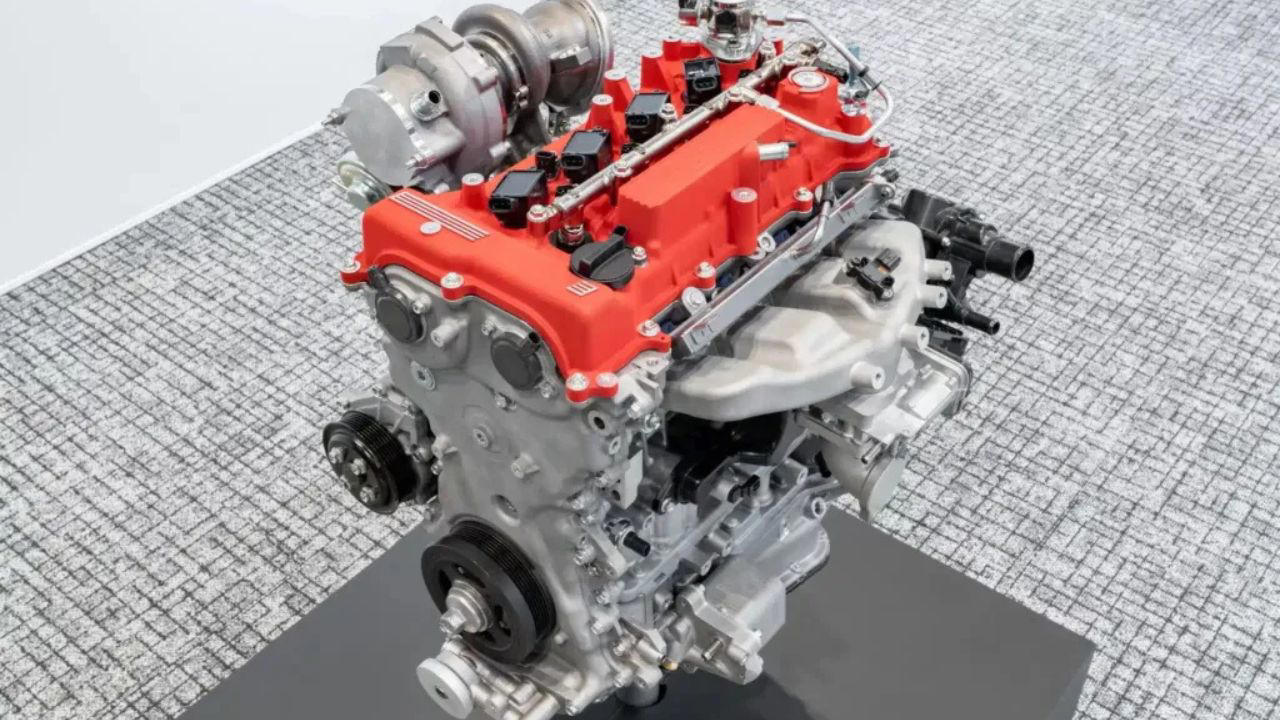



















This Limited-Production Engine Redefined Performance OvernightEvery so often, an engine comes along that doesn’t just raise the bar but resets what enthusiasts expect from performance hardware. Limited in production and wrapped in myth, it becomes the benchmark everyone else quietly measures against. This story follows one of those powerplants, a short-run Japanese masterpiece that turned a niche homologation project into a legend the rest of the industry still studies. Conceived to win on Sunday and sell a handful of road cars on Monday, this engine fused race-bred engineering with just enough civility for license plates. Its output figures no longer dominate spec sheets, yet its influence can be traced in everything from modern turbo four-cylinders to high-strung hybrid systems. What happened During the 1990s, Japanese manufacturers were locked in a quiet arms race. Group A and touring car regulations rewarded clever engineering more than raw displacement, so engineers turned to small, high-revving engines that could survive abuse at the track while remaining saleable in road cars. One of the rarest outcomes of that era was a compact inline-four that combined a lightweight block, aggressive cylinder head design, and motorsport-grade internals, built in numbers that barely cleared the homologation threshold. According to a detailed breakdown of one of JDM’s, this unit was produced in very limited quantities for a single halo model. Engineers specified forged pistons, a reinforced crankshaft, and an advanced multi-valve head, then paired the package with a turbocharger sized for fast response rather than headline-grabbing peak boost. The result was an engine that delivered strong midrange torque and a frantic surge to redline, traits that made it ideal for tight circuits and mountain roads. What truly separated this engine from more common performance mills of its day was how uncompromising it felt. Idle quality was lumpy, power arrived high in the rev range, and the car wrapped around it was often stripped of comfort features to save weight. Yet the engine itself was not a fragile race special. Cooling passages were reworked, oiling capacity was increased, and the bottom end was overbuilt so that tuners could safely push far beyond the factory output. The manufacturer built just enough units to satisfy racing requirements, then stopped. There was no mass-market derivative, no detuned version for family sedans, and no second generation to smooth the rough edges. That scarcity is why collectors now chase engine codes as obsessively as model names. The block casting, cylinder head markings, and even the unique intake manifold have become authentication points for buyers trying to confirm they are looking at a genuine example rather than a swapped or rebadged car. At the track, the impact was immediate. Teams that secured early allocations found that the engine could run full race distances with minimal internal changes, which cut costs and improved reliability. The combination of compact packaging and high specific output allowed engineers to optimize weight distribution, since the engine sat low and close to the firewall. That helped the chassis rotate more eagerly into corners and improved traction on exit, giving the homologation car a reputation for agility that often outshone rivals with more power on paper. Out on the street, the engine rewrote expectations for what a four-cylinder could feel like. Drivers who were used to naturally aspirated units that needed to be thrashed to make progress suddenly had access to a turbocharged four that pulled hard from the midrange while still rewarding a run to redline. The soundtrack was mechanical rather than theatrical, with induction noise and wastegate chatter taking precedence over exhaust volume. For many enthusiasts, that mix of civility and motorsport flavor defined the appeal. Why it matters Limited-production engines often become legends simply because they are rare. This one became a legend because it changed the template for performance drivetrains. Its core ideas can be seen in later turbocharged fours that prioritize response, durability, and tuning headroom over sheer displacement. Automakers learned that a compact, overbuilt engine offered more flexibility than a larger, lazier powerplant, especially as emissions rules tightened and packaging constraints grew stricter. The engineering philosophy behind this unit foreshadowed the direction modern powertrains would take. High specific output, efficient combustion chambers, and robust internals are now standard expectations in performance cars. What began as a homologation experiment has become the default approach for everything from hot hatches to premium sports sedans. Even hybrid systems borrow from the same logic, pairing downsized, efficient engines with electric assistance to achieve power levels that previously required large displacement. In that sense, the rare Japanese engine sits on the same conceptual branch as contemporary high-output hybrids. Performance hybrids combine compact combustion engines with electric motors to deliver both speed and efficiency. Early examples, such as the systems profiled among high-performance hybrids, showed how electric torque could fill in gaps in the powerband and allow smaller engines to punch above their weight. The homologation four-cylinder had already demonstrated that careful engineering could extract remarkable power from limited displacement, and hybrids extended that thinking into a new era. For enthusiasts, the engine also marked a cultural shift. Before its arrival, many buyers associated serious performance with six or eight cylinders. The idea that a small turbocharged four could not only keep up but sometimes outrun larger engines challenged long-held assumptions in showrooms and on the street. Owners discovered that a lighter front end improved steering feel and turn-in, while the compact engine left more room for cooling hardware and intake routing. These practical benefits, combined with tuning potential, helped cement the four-cylinder performance ethos. From a collector perspective, the engine has become a case study in how scarcity and engineering depth interact. The limited production run means that surviving examples command significant premiums, especially if they retain their original internals and factory turbo hardware. Auction listings now highlight compression test results, leak-down numbers, and detailed photographs of casting codes to prove authenticity. The value is not just in the car but in the specific engine configuration that made it special. The aftermarket story is equally important. Because the engine was overbuilt from the factory, tuners quickly discovered that modest upgrades to fueling, intercooling, and engine management could yield substantial power gains without opening the block. That created a feedback loop in which the engine’s reputation for strength attracted more owners who wanted a reliable platform for modification, which in turn encouraged parts suppliers to invest in bespoke components. Over time, a rich ecosystem of turbo kits, camshafts, and standalone ECUs grew around a powerplant that had started life as a low-volume homologation tool. That tuning culture also shaped how manufacturers think about enthusiast engagement. Carmakers saw that a carefully engineered, limited-run engine could generate long-lasting brand loyalty, as owners bonded over shared technical challenges and successes. Forums and clubs dedicated to this specific engine code became hubs of knowledge, where detailed build threads and troubleshooting guides circulated for years. The depth of that community support helped keep cars on the road long after their official production ended, reinforcing the engine’s legendary status. There is a broader industry lesson as well. The success of the homologation engine showed that focused engineering projects can have outsized influence, even if the initial business case is narrow. By investing in a small run of highly specialized powerplants, the manufacturer gained real-world data and racing experience that informed later mass-market engines. Combustion chamber designs, cooling strategies, and material choices tested in competition eventually filtered down to more ordinary models, improving reliability and efficiency across the lineup. At the same time, the engine highlighted the trade-offs inherent in chasing performance within strict regulatory and budget constraints. Meeting emissions standards while retaining a high specific output required careful calibration and, in some markets, conservative tuning. Enthusiasts often unlocked more power through aftermarket modifications, but that came with increased wear and, in some cases, reduced longevity if supporting systems were not upgraded. The balance between factory durability and enthusiast expectations became a recurring theme for later performance engines. What to watch next Looking ahead, the spirit of this limited-production engine is likely to live on in different forms. Pure internal combustion homologation specials are becoming rarer as motorsport rules evolve and electrification takes hold. In their place, manufacturers are experimenting with small, highly stressed engines paired with electric motors, seeking to capture the same sense of immediacy and engagement while meeting stricter emissions and efficiency targets. One area to watch is how carmakers adapt the overbuilt, tuner-friendly philosophy to hybrid and plug-in hybrid platforms. If the original homologation engine taught engineers anything, it was that enthusiasts value durability and modification potential as much as factory performance numbers. Future performance hybrids that feature generously engineered combustion engines, robust battery cooling, and modular software architectures could become the new darlings of the tuning world, much as the rare Japanese four-cylinder did in its era. Another trend is the growing interest in synthetic fuels and alternative combustion strategies. The same attention to combustion efficiency and heat management that defined the homologation engine will be essential if synthetic fuels are to deliver meaningful performance without excessive emissions. Engineers are already experimenting with higher compression ratios, advanced ignition systems, and variable valve strategies that echo the ingenuity of that earlier project, albeit applied to a more complex regulatory environment. On the collector side, the market for surviving examples of this engine is unlikely to cool. As more cars are modified, crashed, or exported, the pool of original, numbers-matching engines shrinks. That scarcity typically pushes values higher and encourages meticulous restorations that prioritize period-correct hardware. Documentation will become increasingly important, with buyers seeking factory build sheets, service records, and photographic evidence of engine stamps to verify authenticity. The knowledge ecosystem around the engine will also continue to evolve. As early tuners retire and original forums age, there is a risk that some hands-on expertise could be lost. At the same time, younger enthusiasts are archiving information in new formats, from detailed video tear-downs to digital manuals and 3D scans of rare components. That shift mirrors the broader transition in car culture, where oral traditions and shop folklore are gradually being replaced by searchable, shareable technical archives. Manufacturers are paying attention. The sustained fascination with this limited-production engine has shown that enthusiasts respond strongly to authentic engineering stories. Future special editions may emphasize transparent technical narratives, with engineers explaining design decisions and trade-offs in more detail. That kind of openness can build the same sort of loyalty that once grew around a mysterious engine code and a handful of homologation specials. There is also the question of how regulations will shape the next generation of performance engines. Noise limits, particulate standards, and fleet emissions targets all push carmakers toward quieter, cleaner, and often more electrically assisted powertrains. Yet the emotional appeal of a high-strung combustion engine remains powerful. The challenge will be to capture that intensity within a framework that satisfies regulators and customers who expect modern levels of refinement and connectivity. More from Fast Lane Only Unboxing the WWII Jeep in a Crate 15 rare Chevys collectors are quietly buying 10 underrated V8s still worth hunting down Police notice this before you even roll window down