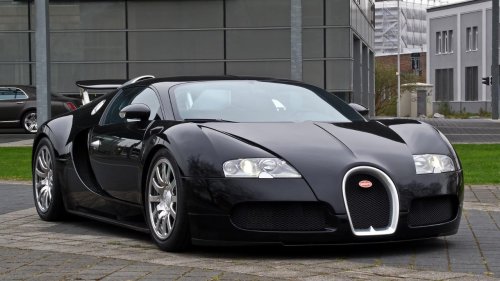
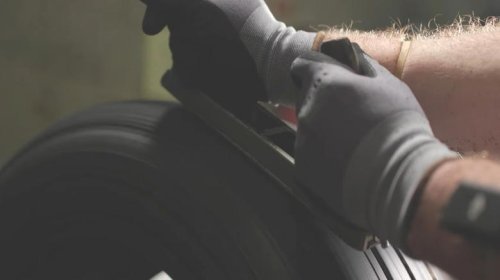
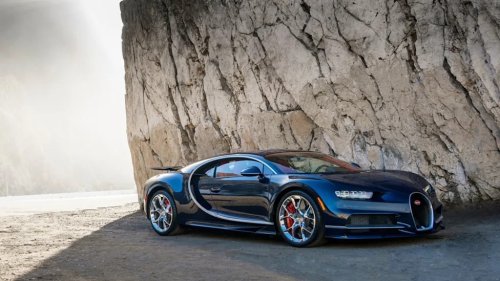
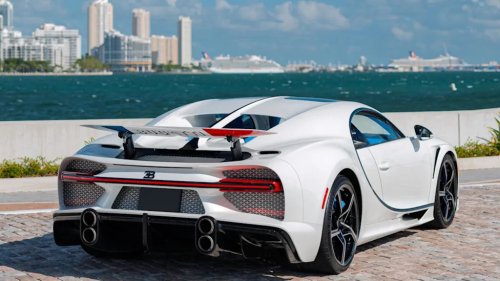
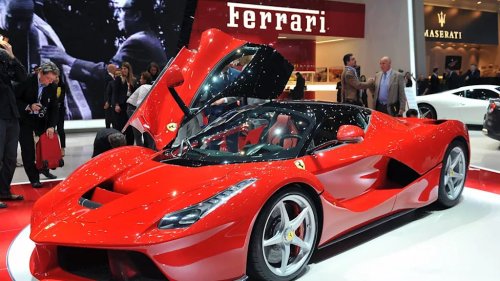
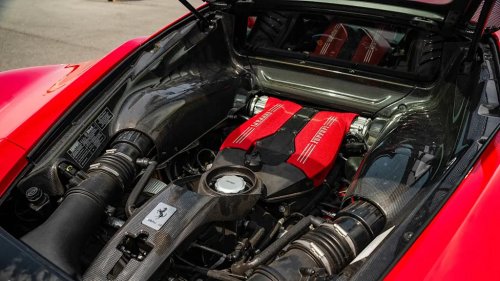
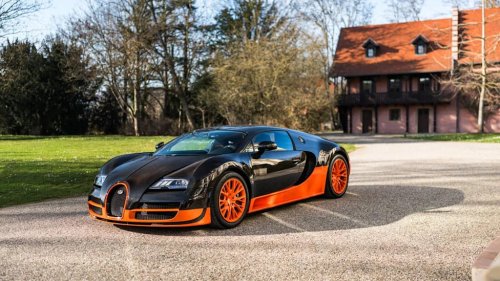
Autoblog and Yahoo may earn commission from links in this article.Hypercars are the definition of performance in most avenues, but there’s more to these limited-production models than their raw power and top-notch engineering. A high price tag is a given, but, as it turns out, even seven-figure pricing may not make a hypercar profitable. Rather, there’s a whole sect of economics driving the production of hypercars in limited numbers. When a consumer buys a hypercar, they’re going well beyond the basics of transportation in more ways than one.BugattiExclusivity is a major factorLimited-production hypercars are exclusive by design, effectively driving the economic engine that is artificial scarcity. If a vehicle’s production run is limited to single, double, or even triple digits, the automaker is selling access rather than transportation. The nameplate essentially acts as an advertisement for the brand. While hypercars feature bespoke engines designed for extreme performance, they also act as social capital for consumers and the brand alike. Not only that, but they can become a financial asset for buyers, as exclusive models often appreciate in value relatively quickly.Bonhams CarsSome manufacturers will go to extremes to maintain exclusivity. If a limited-production Bugatti is deemed a total loss by an insurance company or salvaged by its owner, the manufacturer will blacklist that specific VIN to prevent rebuilds. Bugatti maintains that blacklisted vehicles are often subject to major safety concerns and require repairs to be performed at their factory in France. Still, independent builders have managed to modify and rebuild hypercars by fabricating their own custom parts, effectively circumventing the VIN blacklist.Loyalty matters to manufacturersEven if you have millions upon millions of dollars at your disposal, you may not be able to purchase a limited-production hypercar. Manufacturers curate their buyers carefully in order to maximize their benefit and reward loyal customers. A buyer’s reputation value and participation in brand events could be worth more to the hypercar manufacturer than the money itself.In some cases, a long-standing relationship with a dealer or prior purchase history can move you to the front of the line, but there’s no guarantee you’ll have the right to pay an automaker millions of dollars. Per Wired, in order to purchase a Ferrari LaFerrari back in 2014, a potential buyer would have needed to own five Ferraris and have their name submitted by a certified dealer. Even that wasn’t enough to get you behind the wheel of one of the world’s most exclusive hypercars, though. Ferrari executives ultimately made the final decision.AdvertisementAdvertisementIt might strike some as odd that hypercar manufacturers pay close attention to resale values, but it all boils down to loyalty and scarcity. Some automakers dislike people flipping their most exclusive vehicles, so much so that some require buyers to sign contracts that prohibit selling the hypercar for a specific period of time after purchase. Some brands have even gone as far as blacklisting customers who either violate their contract or immediately resell limited-production vehicles for profit.Exotic Car TraderFerrari might be the most notorious in its unofficial blacklist, effectively banning customers from buying limited-edition models directly from the factory. A string of popular celebrities have reportedly made Ferrari’s list. Floyd Mayweather landed on the list after flipping cars every few months for profit. 50 Cent was banned for knocking his Ferrari 488 on social media, while Justin Bieber managed to get banned for auctioning off his vehicle without the automaker's permission.An impractical work of artAt the end of the day, hypercars are hilariously impractical, but that’s not necessarily a flaw in and of itself. They’re difficult to maintain, often requiring parts to be removed in order to do something as routine as an oil change. For example, in order to change the oil in a Bugatti Veyron, you’ll need to remove the underbody sections and part of the rear end in order to access all 16 drain plugs. An oil change can take as long as 27 hours and cost upwards of $20,000.Hypercars are often better suited for the track, and many aren’t even street legal, whether due to their high performance or lack of safety features. Most exotic automakers require owners to stick to a strict maintenance schedule, too, and the list doesn’t come cheap. Changing a Bugatti Veyron’s tires costs around $38,000, and that’s not even the expensive part. Bugatti also recommends wheel changes every 10,000 miles in the name of safety, and that will run you another $50,000 or so.AdvertisementAdvertisementFor reference, the Bugatti Veyron rang in its final year with a $1.3 million price tag for the base model, but even more affordable exotic cars are expensive to repair and maintain. An oil change for a McLaren supercar can cost upwards of $800. If you need to replace the front bumper on a McLaren 720S, expect to pay somewhere in the low-to-mid five figures. A specialized bodyshop may be able to repair it, but it’ll still cost thousands.BugattiIn a sense, the inconvenience and expense of maintaining hypercars is part of their charm. They’re difficult to obtain and insure, and some drivers may have trouble controlling them while behind the wheel. On the flipside, they’ll draw plenty of eyes and are a symbol of exclusivity. In many cases, hypercars are more like a rare work of art or an investment in that they’re often stored in climate-controlled facilities and rarely driven. While the cost of a hypercar may be prohibitive to all but a select few, there may be more value in the secret economics behind the veil than in the vehicle itself.This story was originally published by Autoblog on May 27, 2026, where it first appeared in the Features section. Add Autoblog as a Preferred Source by clicking here.



















 +20 others