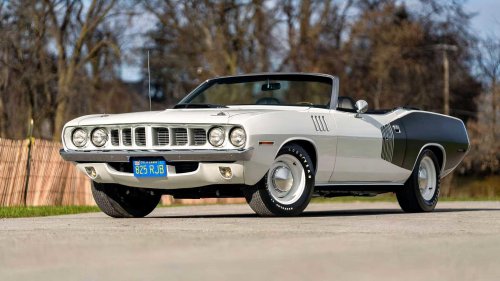
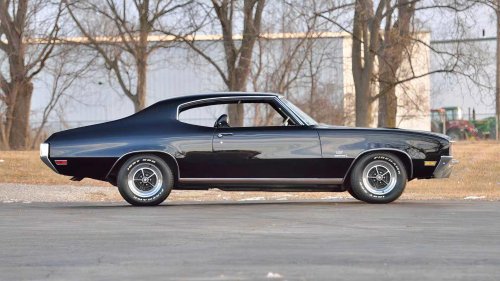
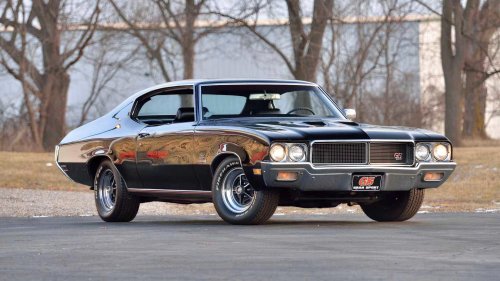
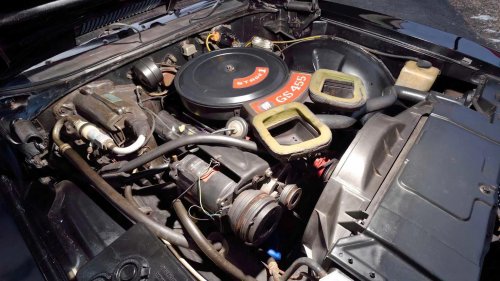
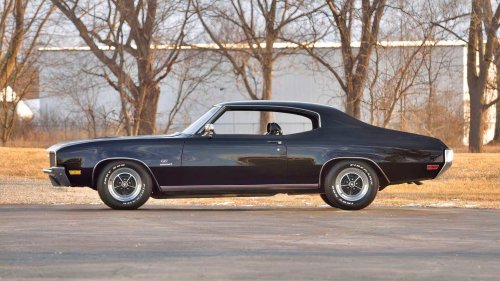
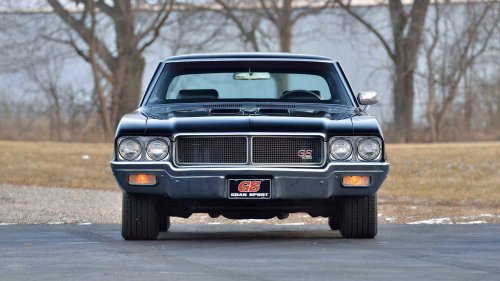
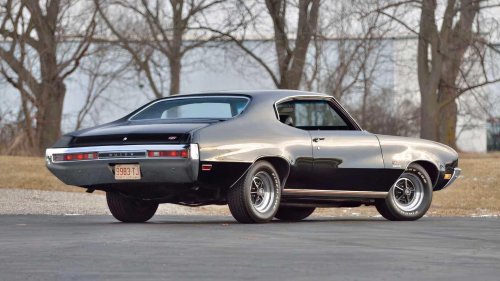
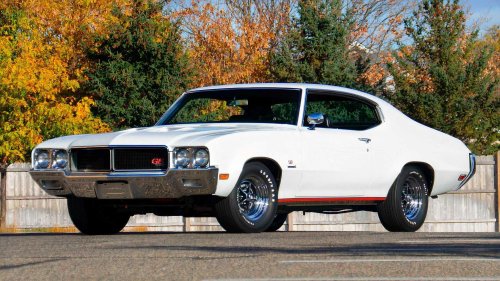
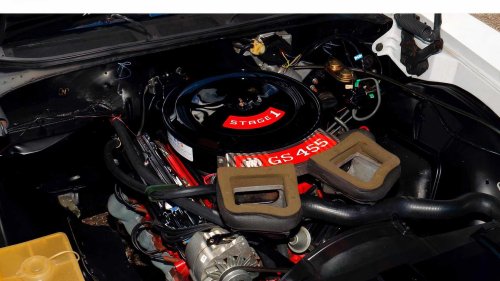
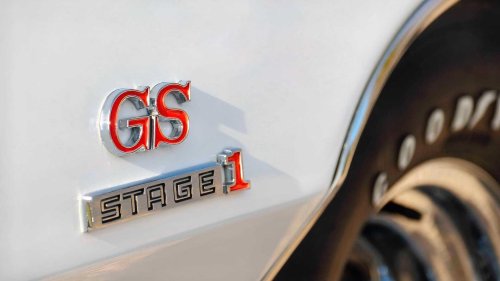
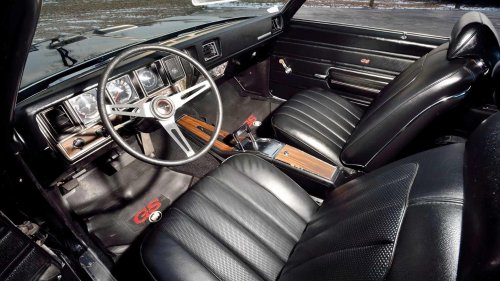
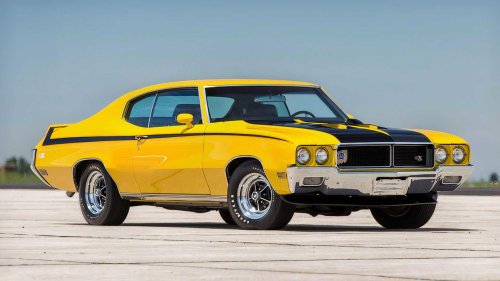



















$30,000 can seem like a lot of money for a person looking for a point A-to-B car or someone interested in a project car. For aspiring collectors, though, particularly those who are interested in powerful American muscle cars from the golden era, $30,000 doesn't seem like much at first glance, especially if you take a look at recent auctions involving GTOs, Chevelles, and other flashy options from the era.However, we're here to dispel that myth. While the spotlight stays fixed on big-name badges and more extroverted muscle cars from the era, there are several under-the-radar machines proving that big-block power and genuine rarity don't always come with sky-high price tags. The muscle car we're discussing today fits that description to a tee. It doesn't dominate auction headlines or get many mentions in enthusiast folklore, but it still has an unmistakable golden era muscle car style, enough torque to obliterate more famous rivals, and a price tag that proves you don't need deep pockets to start a serious muscle car collection. Collectors Still Can't Get Enough Of Golden Age Muscle Cars Via Mecum AuctionsThey don't call it the "Golden Age" for nothing. For a brief period from the early '60s to early '70s, when American car designers and engineers were allowed to go wild without worrying too much about safety and emissions, Detroit produced multiple icons that turned the auto industry on its head and proved that Hollywood-worthy looks, brutal V8 power, and serious attitude didn't need to cost a fortune. It's a recipe that has never been replicated anywhere else, which is why collectors are paying crazy figures when originality, condition, power, rarity, and historical significance line up.Via Mecum AuctionsMany golden age muscle cars have become blue-chip cars that fetch multiple times what they once cost when new, and in some cases, it's all because the original buyer ticked a rarely picked option on an order sheet for a few hundred dollars. Last month at Mecum Kissimmee 2026, a 1971 Plymouth Hemi 'Cuda Convertible sold for a jaw-dropping $3.3 million, joining a long list of six- and seven-figure muscle car auctions in recent years.Aspiring collectors might feel discouraged or forced to settle for a less powerful option that doesn't quite deliver on the emotion, but fret not, dear reader. What we've got for you is a proper golden age muscle car that delivers on looks, performance, and scarcity, but for some strange reason, it remains criminally underrated with prices still hovering in 2026 Toyota Camry territory. Meet the 1970 Buick GS 455. Meet The Most Underpriced Collector Muscle Car In 2026: 1970 Buick GS 455 Via Mecum AuctionsAs an entry-level luxury brand slotting in just below Cadillac in the GM family, Buick wasn't known for offering performance-oriented models before the '60s. However, when Pontiac built the GTO and kick-started the muscle car craze, even Buick couldn't resist the urge to prove that it could also compete in the horsepower wars. So, in 1965, Buick introduced the GS, a high-performance version of the A-body Skylark with a 401 cubic-inch "Nailhead" V8 (officially listed as 400 cubic inches to escape the GM edict). The GS was an instant hit, and in the 1968 model year, Buick made it a separate model based on the two-door A-body chassis and body and gave it a redesign that gave it a muscular profile.Under the hood, a new 400 cubic-inch V8 replaced the aging Nailhead, but even though it made a decent 340 hp and 440 lb-ft of torque, cross-town rivals were dominating with their Hemis, Cobra Jets, and other powerhouses as Buick and its sister brands remained shackled. Thankfully, the top brass at GM came to their senses and lifted the ill-advised ban in 1970, allowing GM divisions to run wild. Buick engineers quickly dropped a gargantuan 455 cubic-inch V8 into the GS to create our pick today, the 1970 GS 455.Via Mecum Auctions Even though Pontiac and Oldsmobile also had 455 cubic-inch V8s in their 1970 A-body models, Buick's execution blew everyone out of the water because its engine was lighter, and it made 350 hp and 510 lb-ft at a crazy 2,800 rpm. This massive torque figure and the early delivery earned the 1970 GS 455 the nickname "The Torque King," but for some reason, the GS 455 continues to be overlooked while less powerful rivals from the era thrive.The GS 455 looked set to dominate the 1970s, but rising pressure from safety and emission regulatory organizations forced Buick to reduce its power output in the 1971 model year, which means only the 9,470 GS 455 units built in 1970 had the most powerful iteration on the largest Buick engine ever put in a production car. The 1970 Buick GS 455 Is A Big-Block Bargain Via Mecum AuctionsThe 1970 Buick GS 455 is a two-door muscle car from the golden era with a Coke bottle design, more torque than the fabled 1970 Chevelle SS 454 LS6, and relatively low production numbers, being a one-year model. This car checks all the boxes muscle car collectors typically have, but it remains a criminally underrated and attainable golden age muscle car today.The Hagerty Valuation Tool estimates one in good condition to be worth just $29,800, and this figure tracks when you check auction results. Last year, a blue 1970 GS 455 sold for just under $30,000 at Mecum Kissimmee 2025, proving that rare big-block power from the golden era can be affordable. However, shrewd collectors are starting to notice, and prices are steadily on the rise, especially for the "Stage 1" variant, which is a package that slightly increased power and added performance-focused equipment, but more on that later. It's also important to note that convertibles fetch higher prices since they're rarer, especially the Stage 1 variants, which are currently in six-figure territory. Why It's Still Cheap Via Mecum AuctionsWhile 1970 muscle car icons like the Hemi 'Cuda, GTO Judge, and Mustang Boss 429 bask in endless acclaim and continue to shatter auction records, the 1970 GS 455 is still within reach, but why? Well, there are a couple of reasons, and the first one has to do with the brand. Buick was always viewed as a fuddy-duddy brand, building the kinds of cars that your retired grandpa wanted. It lacks the "cool factor" that Chevys, Fords, and Pontiacs from the era possess.Another key reason is the GS 455's introverted nature. It lacks the flashy colors, stripes, spoilers, and other features that instantly communicate its performance credentials. Calling it a sleeper might be a stretch, but apart from its body style, hood vents, and a few badges, there wasn't really much about the 1970 GS 455 that indicated that it was "The Torque King." The Buick also lacks the pop culture significance that has kept many of its rivals in enthusiasts' minds and stories, which is why some don't even remember it once reigned supreme. Why The 1970 GS 455 May Be A Smart Investment Via Mecum AuctionsThe most obvious reason is the price. $30,000 is on the lower side for a powerful golden era muscle car, and even if you upgrade to the Stage 1 variant, you'll still be within a far lower price range than more popular 1970 muscle cars, including some that are far less powerful. Also, with muscle cars seemingly approaching extinction, prices will likely rise in the coming years. From an investment perspective, it's an A-plus.The other reason to get this car is its historical significance and the unique emotion it delivers once you get behind the wheel. Not only is it one of the most powerful GM muscle cars ever, but it was also built right at the end and served as the swan song of the golden era. We call that a no-brainer in the world of all things automotive. The 1970 GS455 Was Buick's Contribution To The Muscle Car Golden Era MecumThe muscle car golden era was characterized by extremely high levels of competition, with everyone in Detroit offering muscle cars and pony cars to cater to performance-hungry enthusiasts who wanted more affordable power. Ford had the Mustang and Galaxie 500 flying the Blue Oval flag to great effect, Mopar had the Hemi-powered speed demons painting quarter-mile strips with rubber, and even though GM had an engine displacement limit, Chevy, Pontiac and Oldsmobile still built legendary models like the GTO and Camaro. Even independent brands like AMC had proper muscle cars that could run with the big boys.Buick also wanted a piece of the pie, which is why it built the GS and gave it such insane amounts of power in 1970. While the 1970 GS 455 doesn't get the respect it deserves, it proved that Buick could build a proper muscle car. The Torque King MecumWhen GM lifted the engine ban in 1970, Buick, Pontiac, and Oldsmobile already had 455 V8s ready to drop into their A-body cars. However, since GM divisions relied on their own engine families in this era, each brand had its own take on a 455 cubic-inch V8, and Buick's execution was arguably the best. Buick's engine made 350 hp at 4,600 rpm, which was mostly similar to Pontiac's and Oldsmobile's power figures, but Buick's engine weighed far less thanks to thin-wall casting block, boosting its power-to-weight ratio. To put things in perspective, Buick's 455 was said to be about 150 lbs lighter than the Chevy 454.Even more impressive was its torque delivery. The Buick V8 not only made 10 lb-ft more than its internal rivals, but its torque also arrived 400 rpm earlier at 2,800 rpm, giving it superior off-the-line grunt and making it the undisputed Torque King of the era. The Stage 1 Package Took Things A Notch Higher MecumFor buyers who wanted a bit more oomph, the 1970 GS 455 could be optioned with the "Stage 1" package. This $199 package spiced things up a bit with a slight power boost to 360 hp, which was achieved by using a hotter cam, high-flow cylinder heads, and a specially tuned four-barrel Quadrajet carb.The Stage 1 package also included upgrades for the suspension and cooling system, resulting in a car that could clear the quarter-mile in the low 13s, according to period tests by MotorTrend magazine. It's no surprise that collectors have to pay a premium for a Stage 1 car, but it's still a bargain. The Gentleman's Muscle Car Via Mecum AuctionsThe GS 455 is often categorized as a gentleman's muscle car, and it's easy to see why. Despite having an incredibly powerful 455 under the hood, it had a largely understated look without sporty stripes, spoilers, crazy graphics, and other styling features typically found in the more popular options. It didn't quite look the part, but it let the doom-bringer of an engine do all the talking.The GS 455 also retained many of the upscale features that Buick's traditional luxury-oriented buyers loved, ensuring they could enjoy its power for longer. Plush bucket seats, a center console, a relatively quiet cabin, woodgrain trim, and other luxury features made the GS 455 stand out in a crowd of "brute force" muscle cars. The GSX Is A Lot More Expensive MecumAs awesome as the standard GS 455 was, some gearheads wanted something more attention-grabbing. Something that looked fast, even when parked. At the same time, GM unveiled the redesigned A-body in 1970 and wanted a car that could help increase showroom traffic. As such, Buick developed a special package that took the GS 455 up a notch — the GSX. The GSX package was a hardtop-only option that cost $1,195 on top of the $3,283 buyers had to pay for the standard 1970 GS 455.With the Stage 1 package, the GSX was not only more powerful but also sharper in handling, producing 360 hp and 510 lb-ft of torque from its 455 ci V8, with 0–60 mph in around 5.5–5.8 seconds and quarter-mile times in the low 13-second range, giving it a real edge over the standard GS 455.The GSX was only available in either Apollo White or Saturn Yellow paint and featured distinctive black stripes and spoilers. The package also included performance upgrades like stiffer shocks and springs, power front disc brakes, and an optional quick-ratio power steering. Buick built just 678 GSX units according to most sources, with about 400 equipped with the Stage 1 package. Unlike the standard 1970 GS 455, the GSX gets the plaudits it deserves and regularly fetches six-figure prices at auctions, even though it has largely similar performance credentials.Sources: Mecum Auctions, Hagerty Valuation Tool, Motor Trend