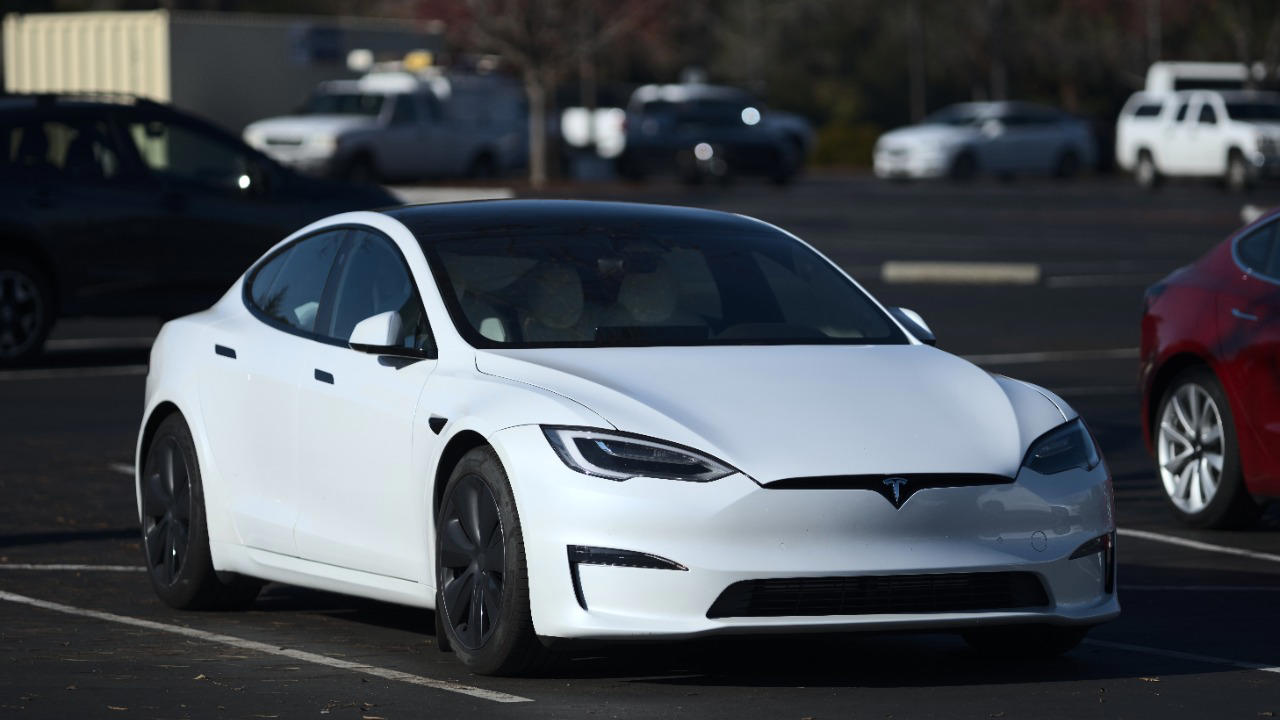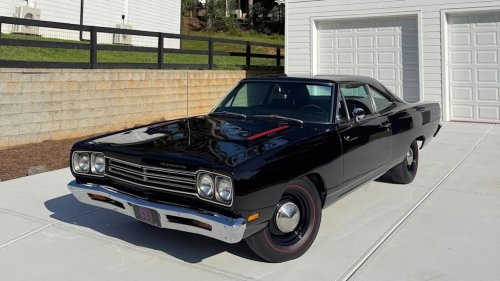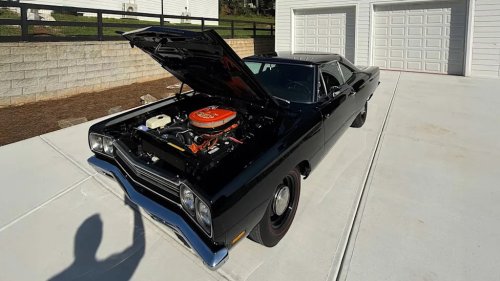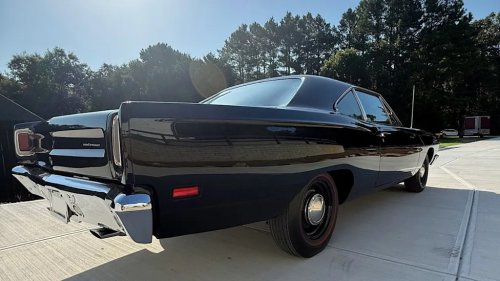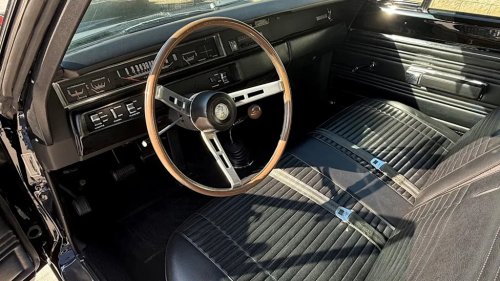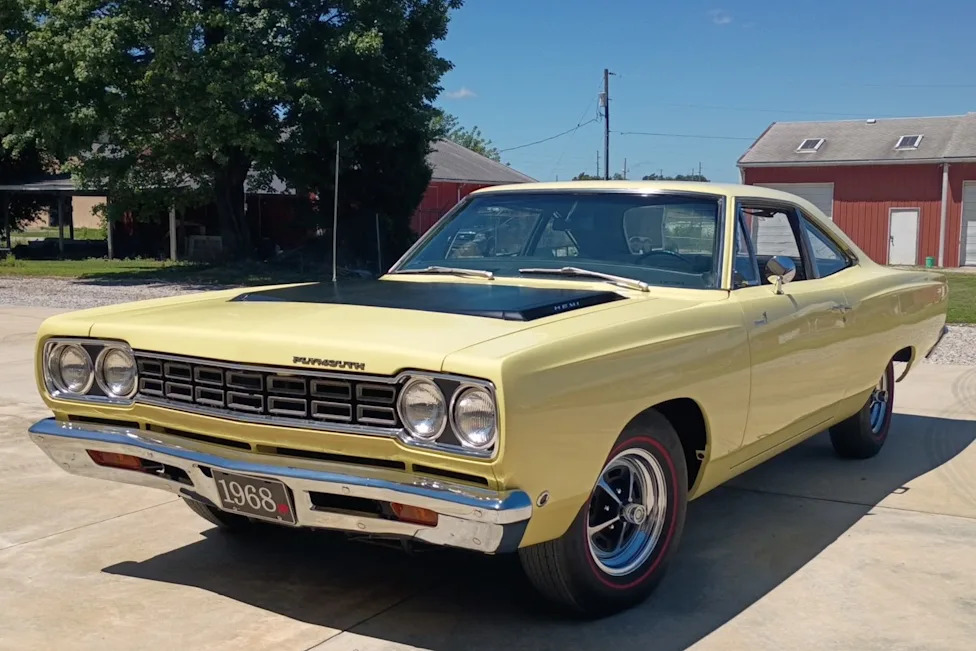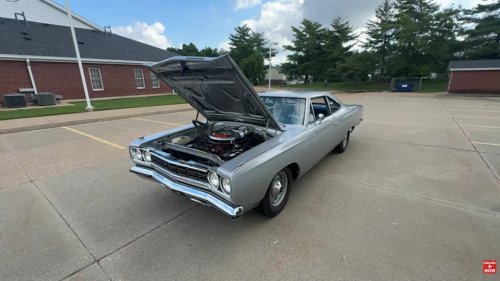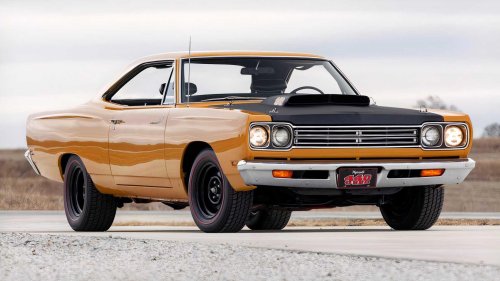
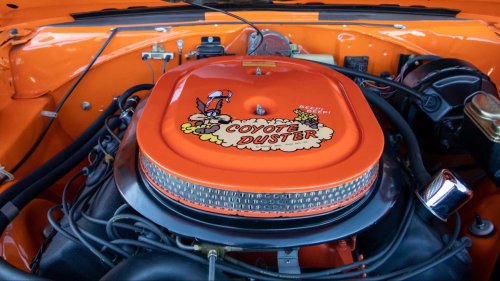
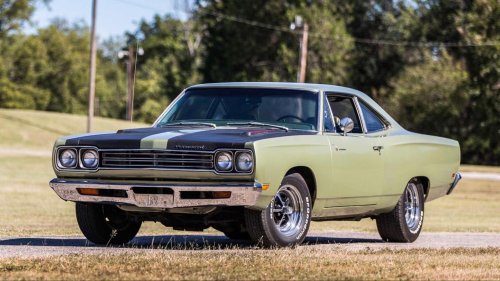
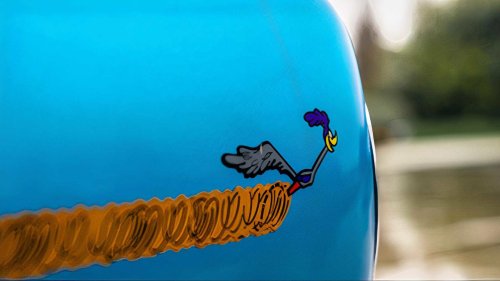
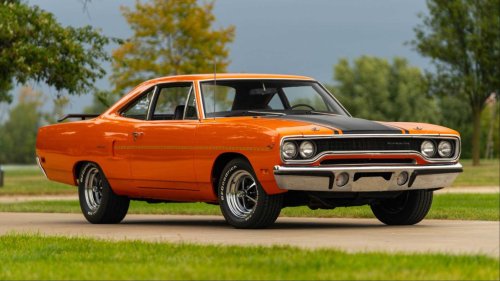
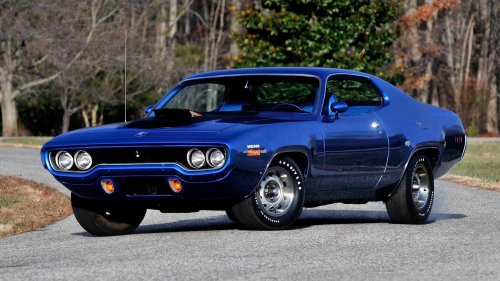
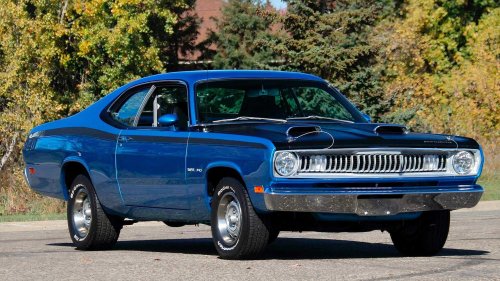
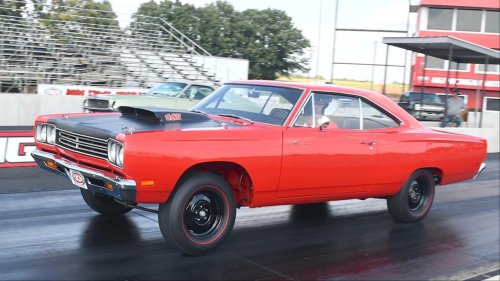



















For the most part, a car's horn is an afterthought, or not even a thought at all, but there have been some fairly interesting ones over the years. The old Ford Model Ts had the distinctive "awooga" Klaxon blast that almost everyone will recognize, and it's hard to forget the cute beep of the OG VW Beetle. Some '80s GM luxury rides were sporting a three-tone air horn that made them seem just a little classier, while the W126 Mercedes-Benz S-Class featured a dash toggle between a quieter "city" tone and a louder "country" toot.Then, of course, there were (are) aftermarket novelty horns that could play little tunes like “La Cucaracha” or "Dixie" like the Dukes of Hazard's General Lee. With the Tesla "Boombox" feature, the horn can be anything from a song to flatulence or bleating goats, but thankfully, this is only available when the car is parked. All of these car bugles have varying levels of coolness and memorability, but there was an epic Plymouth horn that literally blew them all away, and it actually comes with an origin story, like a mythological hero. The No-Frills ’69 Plymouth Road Runner Speed Machine Mecum High-performance used to be something found only in expensive luxury rides, but the 1964 Pontiac GTO changed that, offering a powerful V8 car for the masses. The original muscle car mission was to deliver track-worthy power to the streets at an affordable price, but as the years went on, they got increasingly luxe and became out of reach for the average speed junkie. Plymouth was partially responsible for the up-scaling of the muscle car with the 1967 GTX, which came loaded with every option, feature, and doohickey that they offered.In 1968, Plymouth sought to rectify this by getting back to basics with the Road Runner, which was a no-frills speed machine at a super-nice price. Coming standard with a 335-horsepower 383 V8 that could run in the low-14s, which is what all non-Hemi muscle cars were doing in '68. The Road Runner was virtually featureless and there were hardly any options, as it was just an aggressive set of wheels with a powerful V8. Additional money could be saved by deleting the back seats and carpets, leaving a vinyl front bench, floor-mounted four-speed shifter, and a gas pedal that was ready to rock. Low Price Put Expensive 426 Street Hemi in Play Mecum With a sticker price of only $2,830 for the early pillared coupe, the '68 Road Runner left plenty in the bank to upgrade the engine. The mighty 425-hp, 490 lb-ft of torque 426 Hemi V8 was a $700-$750 option, which was steep for the day, but the low price of the Road Runner made it attractive to even the most frugal of buyers. In fact, 1,019 people chose that option in '68, making it the most Hemi-equipped Mopar model year. For $3,580, ($33,970 adjusted for inflation), or the price of an entry-level 2026 crossover SUV, the ultimate street machine could be had. This was a car that could rip quarter-mile ETs in the low 13s, smoking rides that cost a thousand bucks more, including the Dodge Charger Hemi R/T. Budget Road Runner Gets Luxury Horn Mecum The stripped-down Road Runner didn't come with A/C, a radio, power steering or brakes, and was fitted with plain steel wheels, so it really was the polar opposite of its fancy cousin, the GTX. It did, however, have one curious luxury feature in the form of its novelty horn. The car was dubbed the Road Runner and so, Plymouth made sure the horn mimicked the cartoon character of the same name's iconic "beep beep." Actually, this editor tends to think the Road Runner's call was more of a "meep meep" kind of thing, but whatever the case, when a driver hit that horn, two very familiar blasts rang out. That might have been a little too cutesy for a lesser car, but in the hyper-aggressive Road Runner, it was badass. Plymouth Strikes A Deal For Road Runner Antics Mecum The whole point of the Road Runner was to be an inexpensive car, devoid of any features unnecessary to kicking ass on the streets, but then they spent a tremendous amount of money on a horn of all things. While this doesn't make a ton of sense, we're all glad they did, because there's nothing not awesome about it. Really, it was more than just the horn, as Plymouth got the rights to use the Road Runner name as well as the likenesses of both the Road Runner and Wile E. Coyote, on top of the "beep beep."Plymouth paid approximately $50,000 to, at the time, Warner Bros.-Seven Arts for the right to turn their muscle car into a cantankerous speedy cartoon character. That equals $474,443 in today's bucks, which doesn't sound like a huge fee for a major licensing deal, but things were different back then, and it really was a lot of money. In addition to the big sack of cash, Plymouth paid Warner Bros. $10 or $15 (sources vary) for every Road Runner sold. That turned out to be fairly lucrative also, as the 1968 Road Runner was a smash hit, moving over 44,000 units. The Beep Beep Was Off-Key Mecum As it turns out, the Road Runner really did say "meep meep" but the Plymouth engineers developing the horn, which, by the way, was a $10,000 endeavor on its own, sounded pretty lame. They tweaked it to "beep beep," but that caused a minor issue with Warner Bros. You see, not only is the Road Runner character's likeness protected property, so is its voice, or whatever you want to call it. There was some worry that by not hitting the exact "meep meep" with the horn, that the licensing deal would be in jeopardy. This never ended up in court, like the upcoming film Coyote vs. Acme, in which Wile E. Coyote sues the makers of the Acme Rocket Sled for selling dangerous products, but there was a little back and forth to get the horn as close as possible. Road Runner Horn Wasn’t Neccessarily Street Legal Mecum One of the weirder aspects of the Road Runner Horn Saga is that the "beep beep" wasn't entirely street legal in all places. People tend to think that insane power is what disqualifies a car from street use, but it's actually the absence of basic safety features, of which the horn is one. It's actually kind of a grey area, as things like continuous melody or fart horns cannot be used while the car is rolling. The two blasts of the Road Runner horn could be interpreted by a hot rod-hating cop as violating the law, and used as a pretext to harass some speed enthusiasts. Someone driving a Road Runner, especially a Hemi or 440 6BBL, was far more likely to get a speeding ticket, but you never want to give the man an excuse to pull you over. Tasmanian Devil Negotiations Spin Out Of Control Mecum Based on the success of pairing Mopar with Looney Tunes in the Road Runner, Plymouth went back to the well with the new-for-1970 Duster. Plymouth was hoping to license the Tasmanian Devil's likeness as a logo for their compact muscle car. Negotiations with Warner Bros. apparently fell through because the licensing amount was too high, which sounds like greed on the part of the movie studio.Plymouth ended up developing a logo for the Duster in-house that was a cartoonish tornado and the closest thing to the Tasmaninan Devil they could use without getting sued. Presumably, the twister logo cost nothing, and meanwhile, Warner Bors. received no licensing money, when they could have made bank, as the Duster moved 217,192 units in 1970 alone. Why The Road Runner Couldn’t Be Caught Dodge The concept of giving the people a bare-bones street brawler and a dirt-cheap price was even more genius than the '64 GTO, which launched the Golden Age of American Muscle. This was such a brilliant idea, that Dodge demanded their own version which we know as the Super Bee. The Road Runner was, however, unique and arguably the best classic-era muscle, that put everything from Ford and GM to shame, and even topped its Mopar brothers. Maybe because it wasn't loaded down with fancy features, it was faster than the Super Bee and a Charger R/T.It was also the most successful budget bruiser, with the 1968-1970 first-gen selling 169,863 cars versus 51,148 for the Super Bee. Would it have been such a smash hit without the Road Runner licensing deal and "beep beep" horn? We'll never know the answer to that, but it sure is a cool accent on a killer ride, and we're thankful that things worked out that way. On top of being as un-catchable as the Road Runner cartoon character, bearing its persona, made the Plymouth Muscle car the absoluvte funnest ride of the Golden Age.Sources: Chrsyler, Plymouth