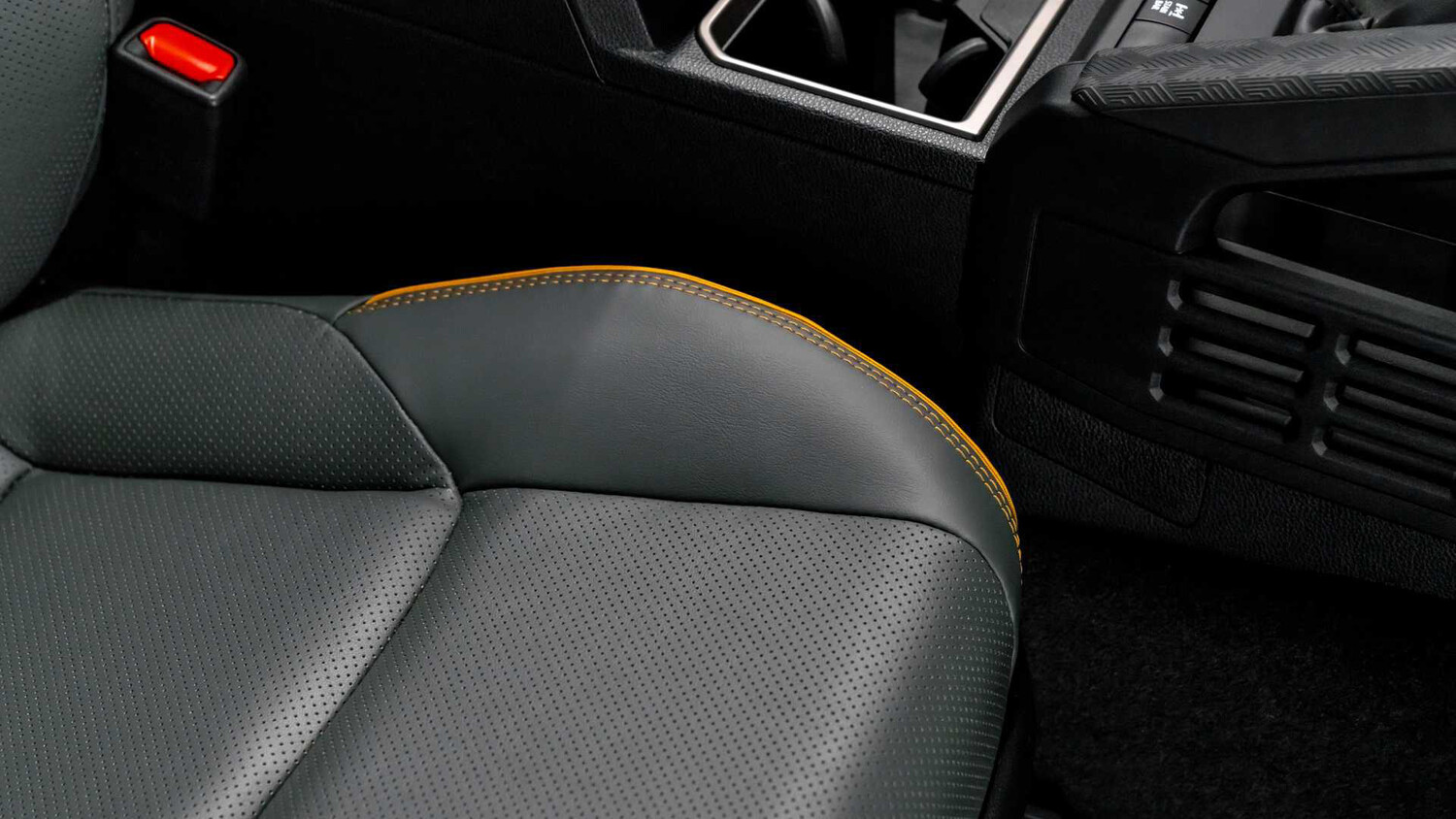
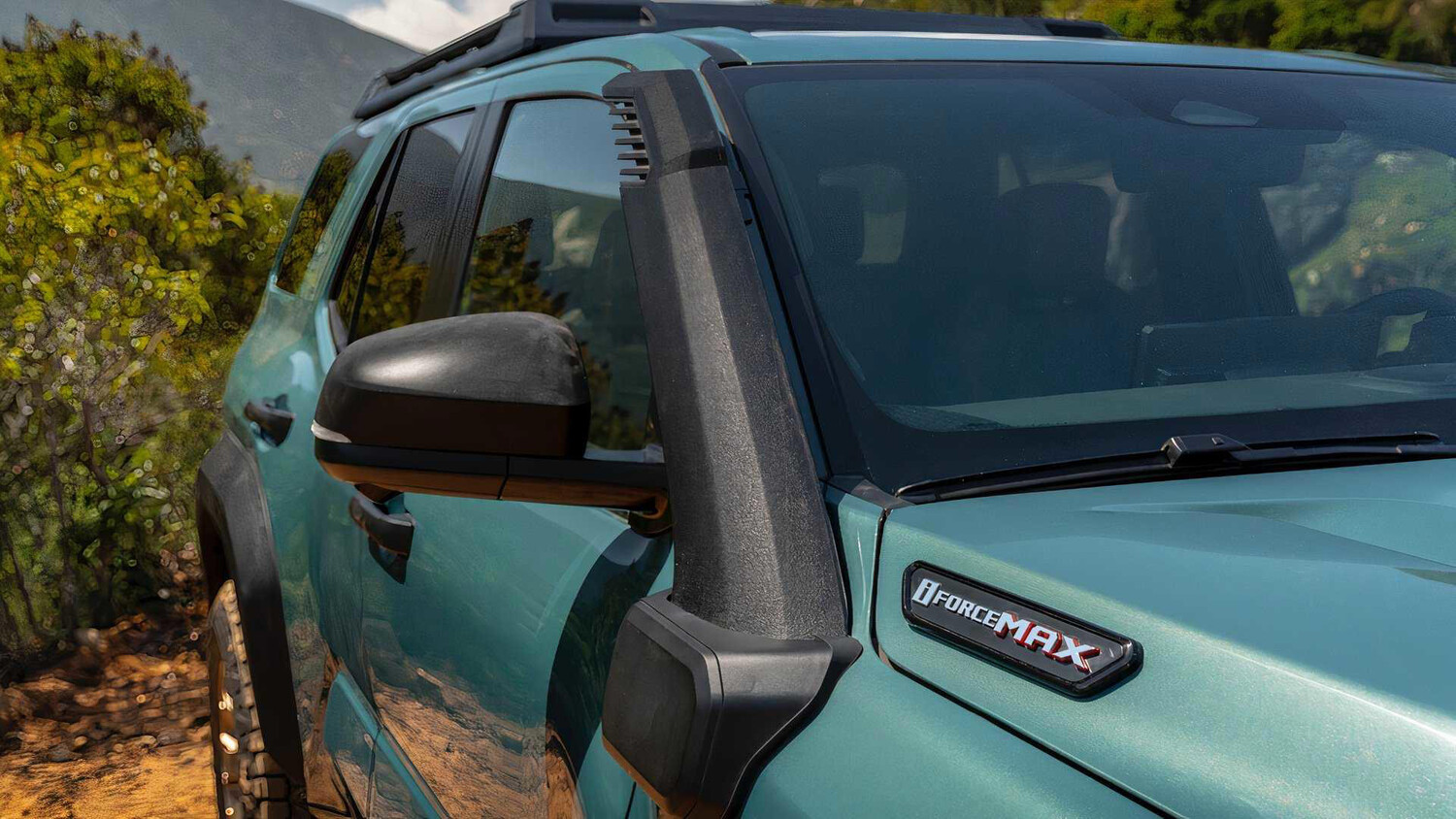
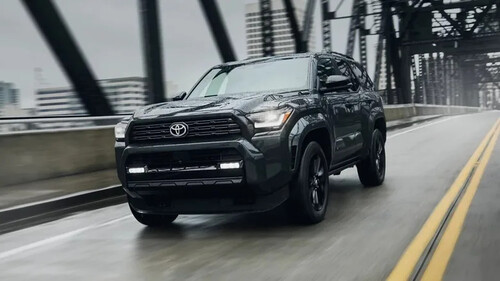
The midsize SUV segment is experiencing high demand levels in the new vehicle market as of 2026. These models are performing considerably better than their predecessors because new car buyers have more demanding requirements for their daily drivers. These owners typically lead more active lifestyles that require taller ride heights, more expansive interior space, and versatile off-road capability.Most brands build their off-road SUVs on existing monocoque-based city-focused models. Toyota is one of the few brands that adopt a dedicated ladder-frame off-roading platform, resulting in their SUVs being true overlanders. Leading this strategy is the 2026 Toyota 4Runner, which has been enjoying considerable sales success during the first quarter of this year. If this is an SUV that you've been interested in, these are all the things you need to know before signing. The 2026 4Runner's Comprehensive Range Ty Duffy | TopSpeed The 2026 Toyota 4Runner price starts at $41,870 for the SR5, and comes standard with an 8.0-inch infotainment touchscreen featuring wireless Apple CarPlay and Android Auto, a 7.0-inch multi-information display, and a smart key system with push-button start.Moving into the TRD Sport will cost you $48,350, while the TRD Off-Road will set you back by $50,290. These trims feature a 12.3-inch digital gauge cluster and standard heated front seats. The $53,710 TRD Sport Premium and $56,070 TRD Off-Road Premium trims replace cloth upholstery with SofTex-trimmed heated and ventilated front seats and introduce a 14-inch multimedia touchscreen and a hands-free power tailgate.Toyota The $56,500 Limited trim includes genuine perforated leather upholstery, dual-zone climate control, and a 14-speaker JBL premium audio system, including the portable JBL Flex dash-mounted Bluetooth speaker. The $63,960 Platinum, $68,000 Trailhunter, and $68,200 TRD Pro flagship trims come standard with the i-Force Max hybrid powertrain and include a head-up display, heated second-row seats, and a power sunroof. Notable options include the hybrid engine upgrade on Limited and TRD Off-Road trims for $2,800. Four-wheel drive is available for $2,000 on models that are standard with rear-wheel drive. A third-row seating package for seven-passenger capacity on select ICE trims. Every 2026 4Runner purchase is subject to a $1,495 destination fee. Visuals That Fit The Bill Toyota The 2026 Toyota 4Runner SR5 and TRD Sport feature 17-inch and 20-inch alloy wheels, respectively, alongside the signature power-down rear window and LED lighting as standard. The TRD Off-Road and TRD Pro trims add 33-inch Toyo all-terrain tires, underbody skid plates, and a stabilizer disconnect mechanism, with the TRD Pro specifically sporting matte-black flow-form wheels and a stamped front skid plate.For dedicated overlanding, the Trailhunter grade introduces functional factory hardware, including an ARB roof rack, frame-mounted rock rails, a high-output onboard air compressor, and a distinctive 20-inch LED light bar integrated into the grille. The Limited and Platinum trims take on a more refined approach, adopting polished 20-inch wheels and satin chrome or gloss black roof rails. Across the lineup, optional enhancements include a hands-free power tailgate, but this is standard on higher grades. There are also various cast aluminum running boards and a selection of specialized Heritage grille overlays and bronze-finished accents. Impressive Power Outputs Toyota The 2026 Toyota 4Runner features two high-output configurations of the brand's turbocharged 2.4-liter four-cylinder engine, both paired with an eight-speed automatic transmission. The standard i-Force produces 278 horsepower and 317 pound-feet of torque. The advanced i-Force Max hybrid integrates a 48-horsepower electric motor, increasing the combined output to 326 horsepower and 465 pound-feet of torque at 1,700 RPM. The Japanese brand's T24A-FTS 2.4-liter four-cylinder features a single twin-scroll turbocharger that optimizes airflow to reduce lag and improve power delivery.Drivetrain configurations include rear-wheel drive with an automatic limited-slip differential, part-time four-wheel drive with a two-speed electronic transfer case, or a full-time four-wheel drive system available on higher trims. Toyota electronically limits the 4Runner’s top speed to 112 MPH. Additionally, the structural move to the TNGA-F boxed-steel frame has increased the maximum towing capacity to 6,000 pounds across the majority of the lineup. Appropriate Fuel Consumption Estimates Toyota The 2026 Toyota 4Runner significantly improves its efficiency over the previous generation, though it remains a robust, body-on-frame SUV. Models equipped with the standard engine achieve an EPA-estimated 20/26/22 MPG consumption on the city/highway/combined cycle in rear-wheel-drive configuration, while four-wheel-drive variants see a slight dip to 19/25/21 MPG.The hybrid further optimizes urban driving with estimates of 23/24/23 MPG. All models across the lineup feature a 19-gallon fuel tank, providing a maximum estimated driving range of 418 to 437 miles per fill-up, depending on the powertrain. The estimated annual fuel cost for a 2026 4Runner ranges from $2,280 to $2,500. Sizing Up The 4Runner ToyotaThe 2026 Toyota 4Runner's exterior boasts an overall length of 194.9 inches and a width of 77.9 inches, which stretches to 79.9 inches on wider TRD trims. Height ranges from 72.6 to 75.5 inches, depending on the configuration. The SUV sits on a 112.2-inch wheelbase and offers a standard ground clearance of 8.1 inches, which increases to 8.8 inches on Limited models, 9.1 inches on TRD Off-Road, and a maximum of 10.1 inches on the TRD Pro and Trailhunter trims.TopSpeed Inside, the first row accommodates 39.7 inches of headroom and 41.8 inches of legroom, while the second row provides 37.8 inches of headroom and 34.8 inches of legroom; the available third row is more compact with 35.3 inches of headroom and 31.8 inches of legroom.Ty Duffy | TopSpeed Cargo capacity varies depending on your powertrain choice and seating layout. Gas-only two-row models offer 48.4 cubic feet behind the second row and a maximum of 90.2 cubic feet with all seats folded, whereas the i-Force Max hybrid models see a slight reduction due to battery placement, providing 42.6 cubic feet behind the second row and 82.6 cubic feet maximum. In three-row configurations, space is most limited with just 12.1 cubic feet available behind the third row, expanding to 44.8 cubic feet behind the second row and 84.4 cubic feet total. The 4Runner's Immense Popularity Ty Duffy | TopSpeed The 2026 Toyota 4Runner earns high praise from both critics and owners. iSeeCars awards the model with an 8/10 overall score, including 8.1/10 for reliability, 8.9/10 for retained value, and 7/10 for safety. On the reliability front, the publication indicates that you can expect it to enjoy an average lifespan of 14.2 years or 195,788 miles, together with a 47.8 percent probability of reaching 200,000 miles.When looking at value retention, you can expect the SUV to lose $10,543 or 25.4 percent of its value over five years, which is about half of what most of its competitors lose in the same period.The 4Runner currently holds a 4/5 average score on Edmunds, consisting of 25 user-submitted reviews. Key strengths that owners are currently enjoying include its visual presence, engine range, and interior, but it does draw some criticism for suffering from poor ride quality, being somewhat more expensive, and being heavy on fuel. How To Keep Your 4Runner In Check Toyota The 2026 Toyota 4Runner features a comprehensive warranty suite led by a three-year or 36,000-mile limited warranty and a five-year or 60,000-mile powertrain warranty, while i-Force Max hybrid models receive additional coverage, including an eight-year or 100,000-mile hybrid system warranty and a 10-year or 150,000-mile battery warranty. For long-term protection, you can purchase Toyota Extra Care extended service agreements with terms reaching up to 10 years or 125,000 miles, typically priced between $1,500 and $3,500, depending on the selected deductible.Routine maintenance is initially covered by ToyotaCare, which provides no-cost factory-scheduled servicing for the first two years or 25,000 miles. Following this period, the SUV adheres to a strict servicing schedule beginning with tire rotations and fluid checks every 5,000 miles, while synthetic oil and filter changes are required every 10,000 miles.More intensive maintenance occurs at 15,000-mile intervals, involving propeller shaft lubrication for four-wheel drive models and steering component inspections, with major items like engine air filters replaced every 30,000 miles and spark plugs serviced between 60,000 and 100,000 miles.Regarding its reliability record, the current sixth-generation platform has faced early-production recalls, including an instrument panel software error that caused blank digital displays, a rearview camera glitch that could freeze the backup image, and a minor labeling correction for vehicle load carrying capacity.