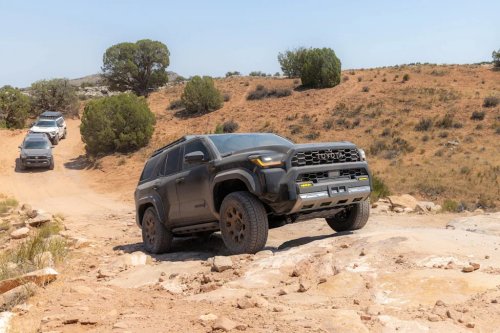
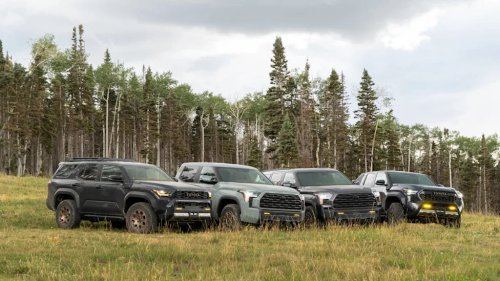
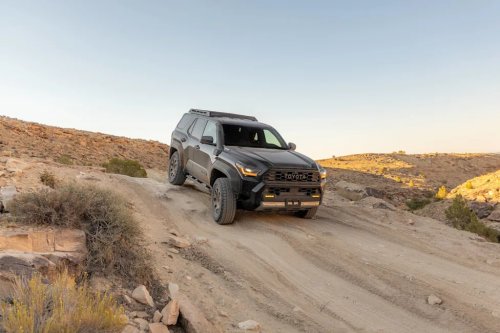
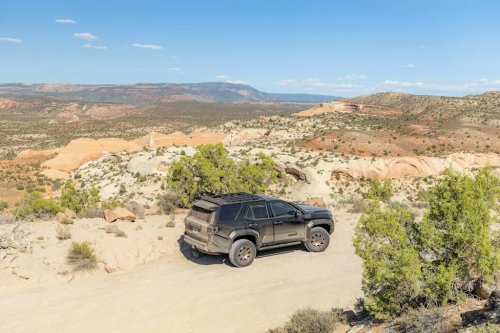
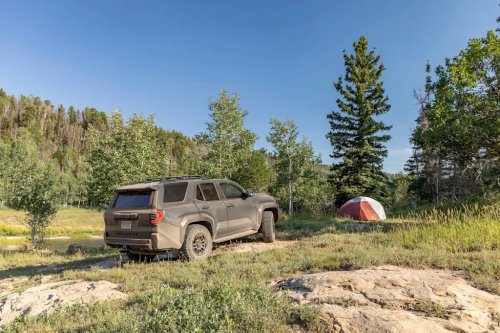
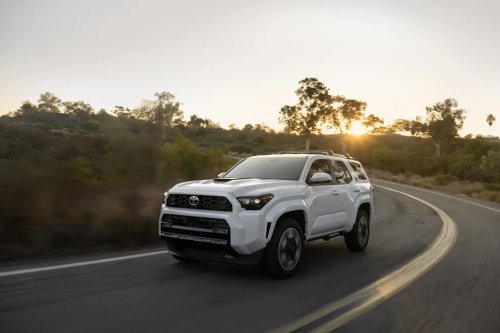
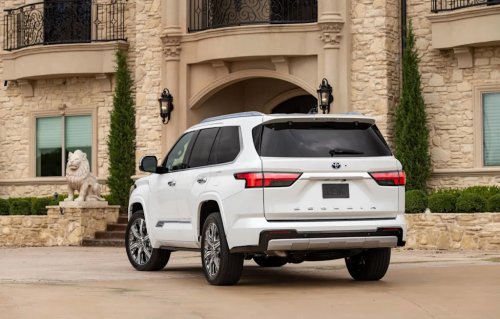
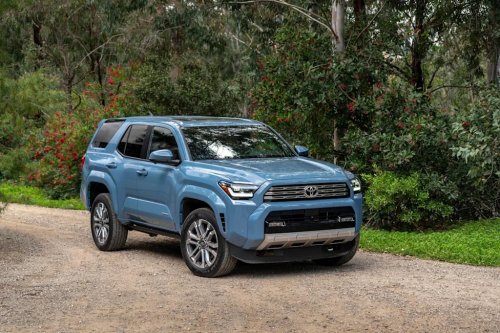
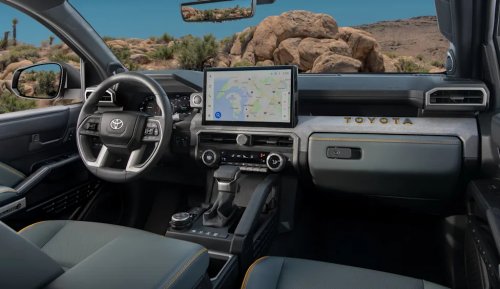
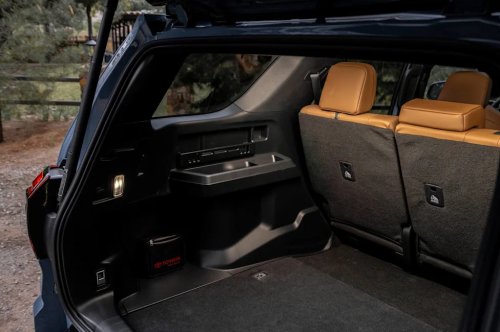
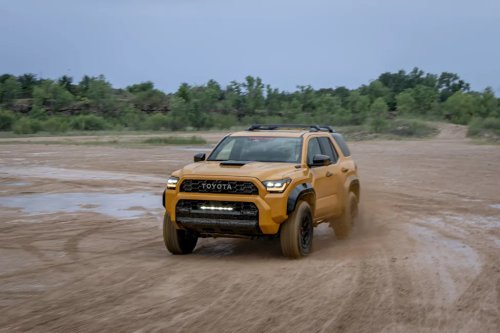
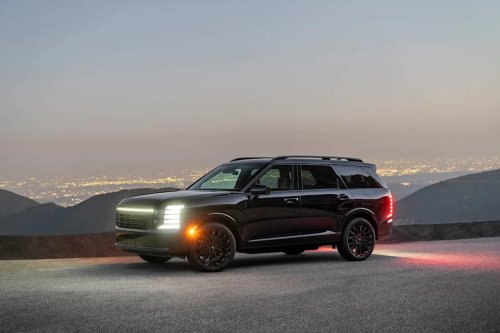
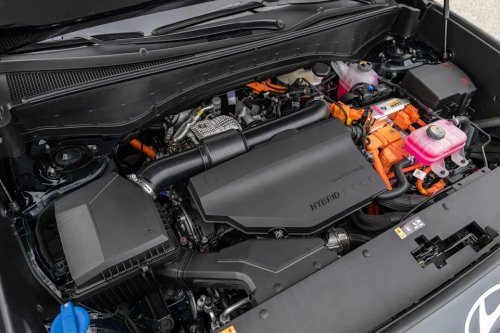
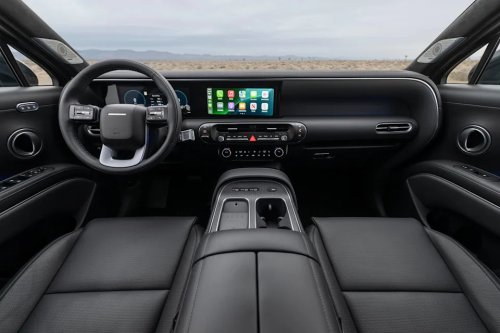
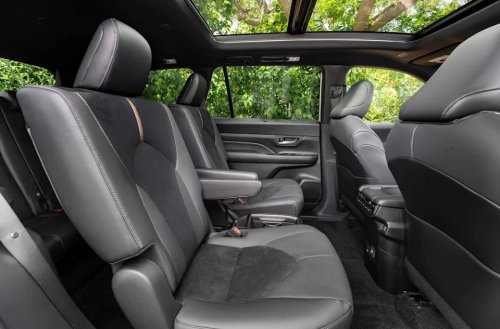
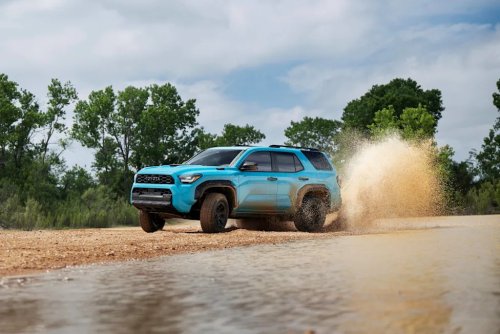
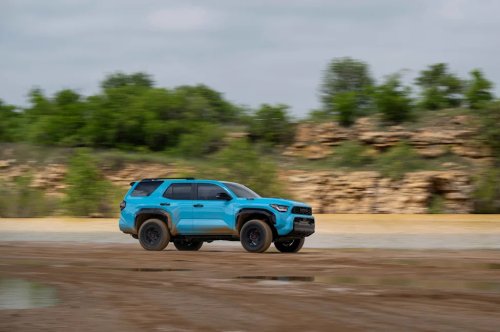
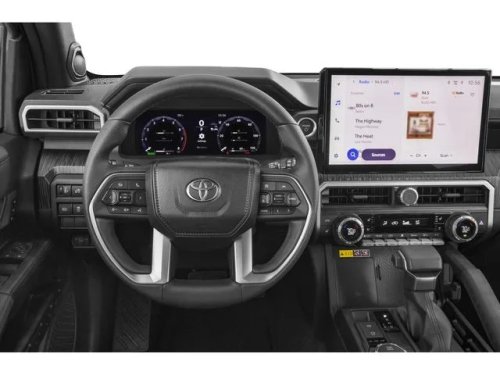
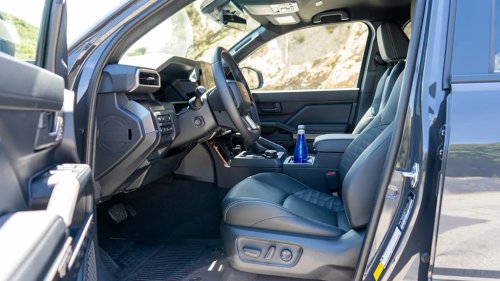
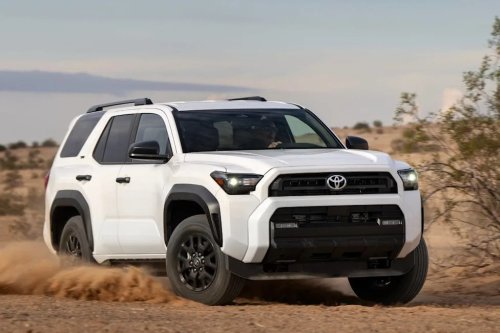
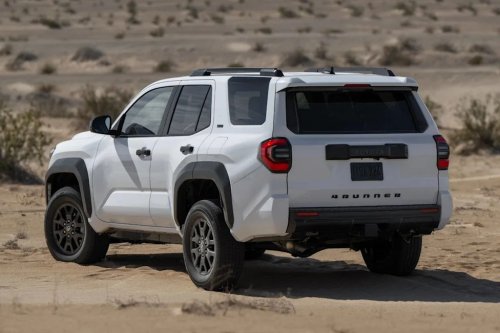
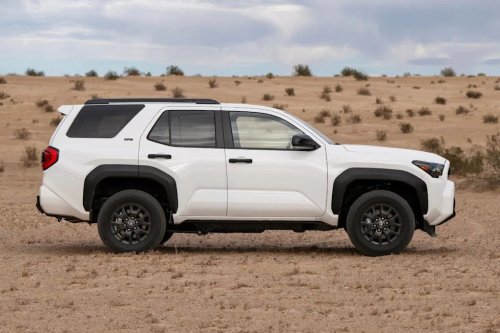
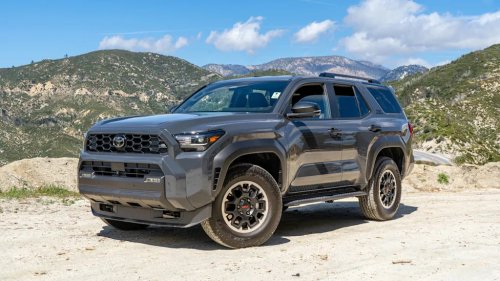
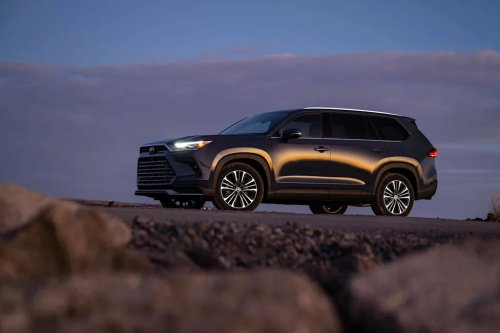
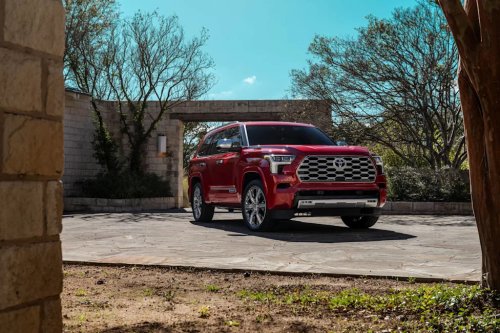
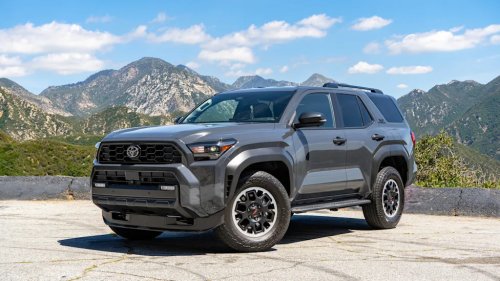
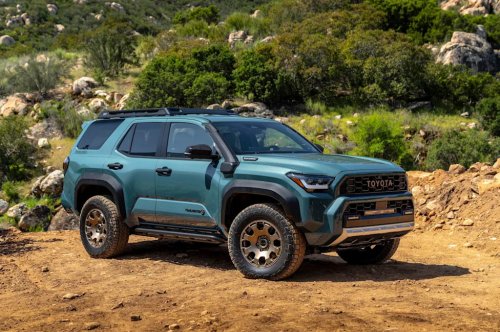
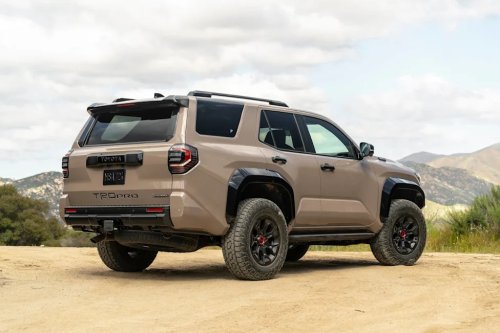
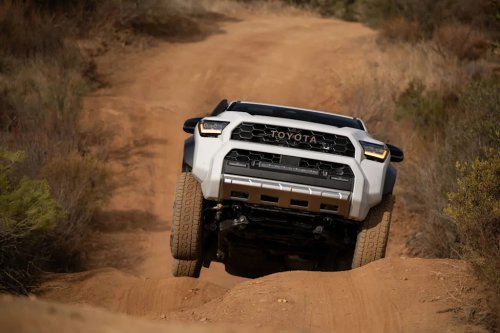
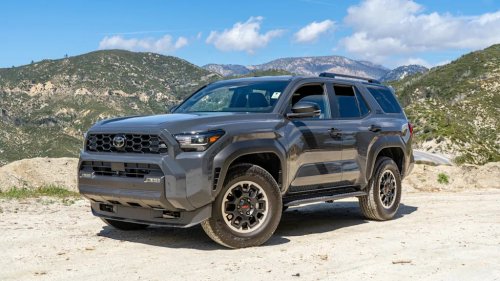
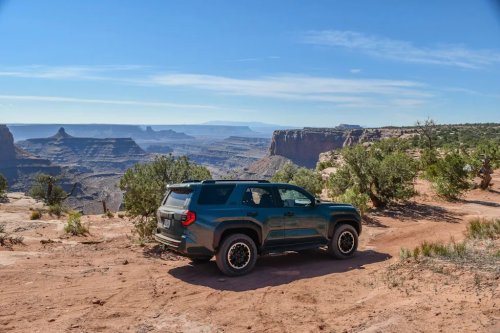
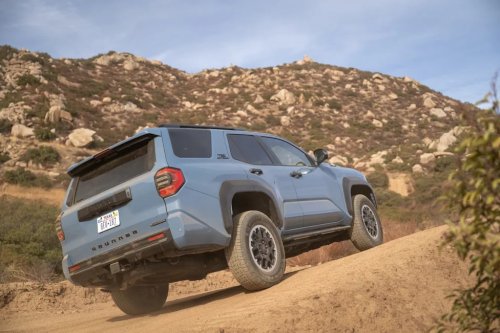
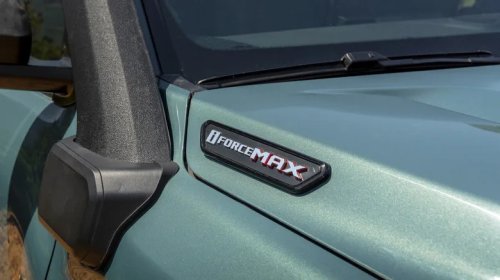
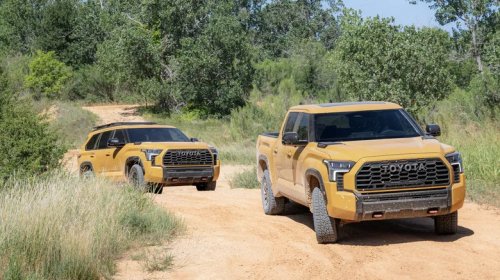
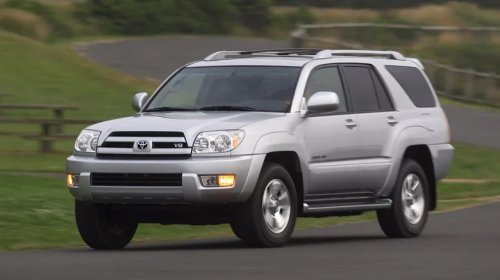
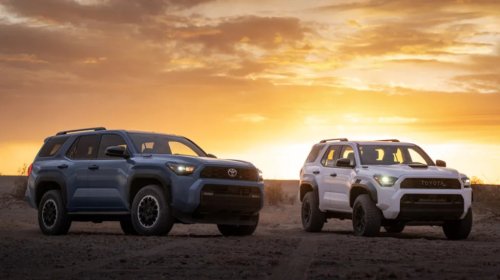
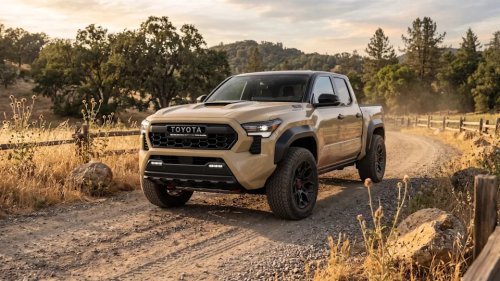
Autoblog and Yahoo may earn commission from links in this article.It wasn't just one rock ledge in particular, or one river crossing, one massive mud splash, or one gloriously dusty photo that made the 2026 Toyota 4Runner Trailhunter click for me. Through the desert heat, thunderstorms, high-elevation campsites, heavy rain, mucky puddles, technical rock sections around Moab, and long stretches of trail where Utah's landscape seemed to run all the way to the edge of the Earth, Toyota's midsized all-terrain heartthrob more than earned its keep.By the end of Toyota's "Fast Lines and Trail Signs" expedition, which took us on a cinematic journey from Grand Junction, Colorado, out into the desert towards Moab and back to see some of the most spectacular landscapes I've ever laid eyes upon, I had driven all four Trailhunter models—Tacoma, Tundra, Sequoia, and 4Runner—but I spent the most time in the 4Runner, as we had two of them with us on our expedition. More importantly, though, every time we swapped vehicles, and I'd eventually climb back into one of those 4Runners, it felt the most like home. Home like throwing on an old hoodie, like cruising down a favorite trail, or like SiriusXM Lithium on full blast, playing grunge classics while the desert rolls past and the turbo whooshes from the raised air intake, making everyone in the cabin laugh like children.2026 Toyota 4Runner TrailhunterToyotaSpecs And Pricing2026 Toyota 4Runner TrailhunterSpecsBase MSRP$68,400Powertrain2.4L i-FORCE MAX turbo hybrid inline-fourOutput326 hp / 465 lb-ftDrivetrain4WDFuel economy23 / 24 mpg city/highwayWheels/tires18-inch bronze wheels / 33-inch Toyo all-terrain tiresSuspensionOld Man Emu 2.5-inch forged shocks with rear piggyback-style remote reservoirsKey equipmentARB roof rack, high-mount air intake, trail cameras, Crawl Control, Multi-Terrain Select, locking rear differential, stabilizer disconnect mechanismGround clearanceUp to 10.1 inchesThinking about selling your car? Get an instant cash offer online now. Click here to get started.Moab Made For The Ultimate BackdropA 4Runner Trailhunter makes very little sense if the toughest thing it ever climbs is a curb outside Whole Foods—don't be a LARPer; that's what the Limited trim is for. The Trailhunter is more authentic than that, and this one got a far better audition than most off-roaders get the chance to have. Our route included river crossings, rock crawling, ledges, ruts, climbs, descents, washboard sections, warm, sunny stretches, storm-dark skies, and big puddles from heavy rain. Naturally, we drove through many of those puddles at near-full throttle, because driving a 4Runner through the desert has a way of bringing out the inner child in everyone.2026 Toyota 4Runner TrailhunterCole Attisha2026 Toyota 4Runner TrailhunterCole AttishaThe constant flash-flood warnings never amounted to much more than a few deep puddles along the way, but at times it made everything feel a bit more alive. Dry dust turned to mud, calm views turned cinematic with angry clouds rolling by, and our 4Runner Trailhunter went from looking polished and expensive to appearing as if it had just survived a pottery kiln explosion. Like a playful puppy, the Trailhunter always looked far happier when it was drenched with mud and hadn't seen pavement in days.Toyota Trailhunter ModelsCole AttishaAdvertisementAdvertisementThe 4Runner Felt Like The Trailhunter Sweet SpotThe Tacoma and 4Runner made the more technical obstacles seem far easier than the Tundra and Sequoia did. That is no insult to the big trucks—they still conquered the same route gracefully, but the added mass and length were always apparent under the surface, like trying to hike in boots two sizes too large. The 4Runner, though, had clearly consulted Goldilocks for its form factor.Its shorter wheelbase, tighter body, and higher clearance made technical sections less intimidating and even more effortless, while its SUV body gave it a sense of comfort and homeliness that the Tacoma couldn't quite match. It never felt too big, it never felt fragile, and it never felt like a kitschy lifestyle accessory merely pretending to be useful. It felt controlled, capable, and incredibly charming from the moment we reached the trailhead. Of course, the 4Runner's TNGA-F body-on-frame chassis is designed with toughness and rigidity at the forefront of its mission, and that foundation is precisely the kind of thing Moab's terrain expects of an SUV. This is still a real truck-based SUV, but with enough modern polish and tech to avoid feeling prehistoric.Shopping for a new car? Click here to get a great deal on your next vehicle. Powered by Carvana, no haggle pricing, 100% online.2026 Toyota 4Runner TrailhunterToyotaThe Trail Tech Actually HelpsThe best modern off-road tech doesn't replace skill or precision—it lowers your heart rate. That's precisely what the 4Runner Trailhunter's systems did, and they did it quite successfully. We used Multi-Terrain Select, Crawl Control, the locking rear differential, the remotely detachable sway bar linkages, and the trail cameras, and it all worked brilliantly. Crawl Control made certain sections feel way less sketchy, especially when the terrain got slow, steep, and rocky.2026 Toyota 4Runner TrailhunterCole AttishaThe trail-camera layout was a personal highlight. On the dashboard, the left-side camera appears on the left, the central front/underbody view sits in the middle, the right-side camera appears on the right, and inclinometer gauges sit in the lower center. It sounds obvious, but that clarity made a huge difference when rocks, bushes, and expensive paint all converge simultaneously. You'd be surprised how convoluted these camera systems can be in other trucks and SUVs. When engaged, these trail cams automatically turn off at speeds above 10 miles per hour and turn back on below that speed. Those cameras made tight sections far less daunting and likely prevented plenty of pinstriping along the way.2026 Toyota 4Runner TrailhunterToyotaSuspension, Tires, And Turbo WhooshToyota's Stabilizer Disconnect Mechanism made bumpy and rocky sections noticeably smoother and more manageable, both in terms of capability and occupant comfort. The system adds extra suspension articulation for wild trails, and the Trailhunter's Old Man Emu shocks helped give the SUV a composed, controlled feel over harsh terrain. The 33-inch Toyo Open Country III all-terrain tires performed brilliantly on rock, dirt, mud, and pavement. We aired down on the trails and aired back up for highway driving, and the 4Runner handled both sides of that routine with great composure.2026 Toyota 4Runner TrailhunterToyotaAdvertisementAdvertisementThe raised air intake was another highlight, though not only for practical reasons. On the highway, with the passenger window down, the turbo whoosh was loud enough to make us laugh hysterically, and the joke never got old. Thankfully, however, it mostly disappears when the window is up, so you can still enjoy it without feeling like you're stuck with it.The immediacy of the i-FORCE MAX's hybrid torque was also a major asset. On steep terrain, the immediate low-end response helped the 4Runner feel calm and deliberate. Just because a four-cylinder replaces the old V6 doesn't mean the 4Runner has to feel strained, and pairing a turbocharger with electrification means the new powertrain never feels like it's coughing up a lung, or as if it needs to be revved out to access peak torque.2026 Toyota 4Runner TrailhunterToyotaThe Cabin Matters More Than ExpectedThe 4Runner and Tacoma Trailhunter cabins were noticeably better-equipped than the SR5-based Tundra and Sequoia Trailhunter interiors, and that made a real difference after a long day on the trail. The 4Runner's synthetic leather seats, ventilation, contrast stitching, and nicer trim made it feel more special, more relaxing, and more adventure-ready inside. Perhaps most importantly on our trip, those ventilated seats made all the difference in the desert heat and remained constantly engaged.The tradeoff, however, and perhaps rather obviously, is space. The Sequoia has far more room, as does the Tundra, and the 4Runner's rear headroom felt cramped by comparison, though legroom still felt reasonably good, even if the Sequoia offered substantially more of it. Cargo space was useful too, though most of our Aluboxes were transported in the beds of the Tundra and Tacoma. The roof rack platform and overlanding hardware all felt genuinely useful rather than purely decorative, and the Trailhunter look drew attention everywhere it went, especially with its raised air intake and dark copper wheels.2026 Toyota 4Runner TrailhunterToyotaFinal TakeawayThe 2026 Toyota 4Runner Trailhunter is, by a significant margin, the Trailhunter I fell for most of all. It's not because it was perfect—the interior space is still somewhat of a compromise, and the raised air intake can be pretty noisy, especially with the windows rolled down. But its imperfections felt more like forgivable character traits than dealbreakers.AdvertisementAdvertisementIts biggest strengths are its unwavering capability and its unending charm. What surprised me most was how easy it was to fall in love with it. This is a modern SUV with modern tech, but it absolutely never felt like a mere automotive appliance. By the end of the trip, after the dust had settled and we had safely returned to the civilized world thanks to the professional guidance of the OLT 4×4 expedition crew that organized and operated our incredible expedition, the 4Runner already felt like an old friend—and that's a difficult feeling to engineer. Toyota has built plenty of capable SUVs, but the 4Runner Trailhunter does something even more special: it makes capability feel personal—something you can attach yourself to not just physically, but emotionally.Autoblog aims to feature only the best products and services. If you buy something via one of our links, we may earn a commission.This story was originally published by Autoblog on Aug 19, 2026, where it first appeared in the Reviews section. Add Autoblog as a Preferred Source by clicking here.