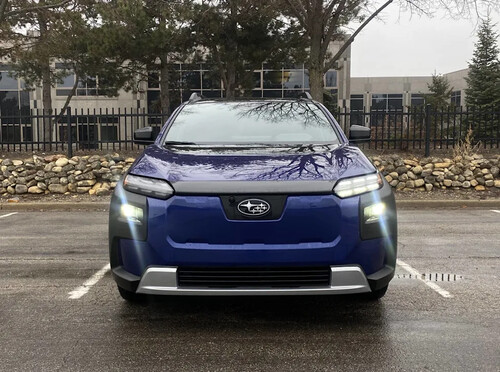
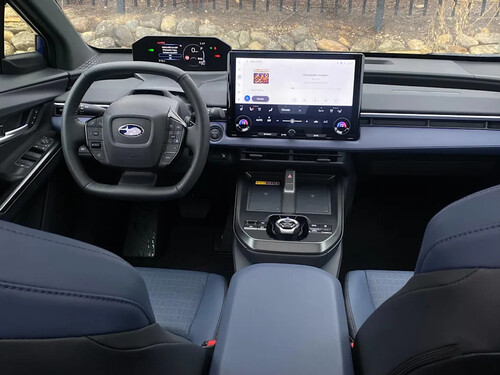
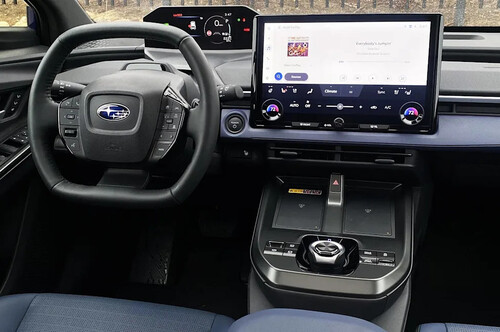
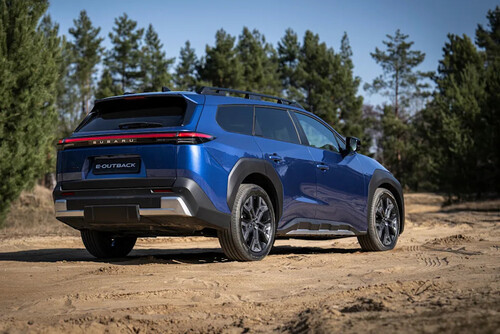
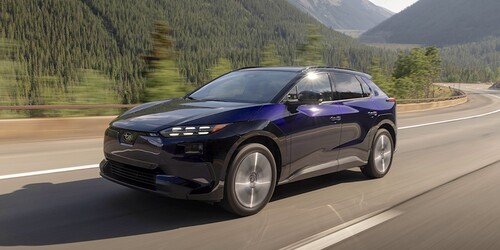
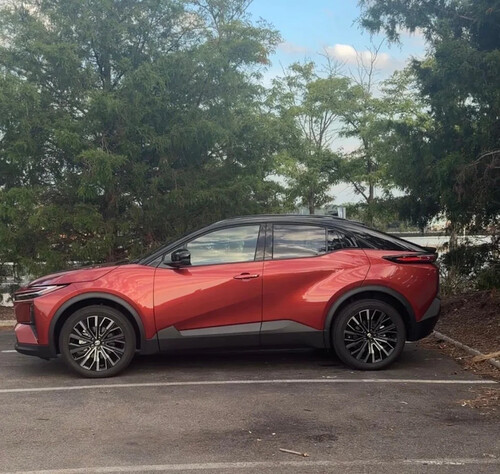
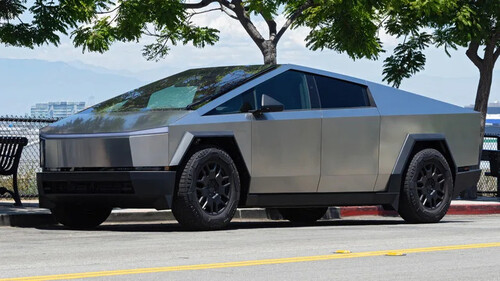
Be The CowboyIf you've been paying attention to the auto industry lately or read and watch a lot of automotive media, you've probably heard the term "soft-roader" tossed around before. It's a term used by industry voices and pundits like myself for the kind of top-of-the-line, off-road-inspired trims that have added a little spice to many popular family crossovers out on the road over the past few years. Toyota's latest RAV4 is offered in what it calls the Woodland Edition. Honda has expanded its popular TrailSport sub-brand branding beyond the Pilot and Passport to the latest CR-V. Subaru, on the other hand, has been offering many of its best-selling crossovers like the Forester and Crosstrek in its top-line Wilderness trims.Automakers have this down to a formula. Give an unassuming, grocer-getter crossover some personality by snapping on some bare plastic cladding on its fenders and bumpers. Replace the fuel-efficient rubber with some knobbier all-terrain tires, and add an inch or two of lift to the suspension, and you get vehicles that weren't exactly built for boulders, but sure look the part. Though these SUVs get an attitude adjustment for the jungle, data showed that customers were willing to bite for a crossover that'll make them look more equipped for the trials and tribulations of the urban jungle.James OchoaThis formula works. According to WardsAuto, Subaru's Wilderness trims across the Forester, Outback and Crosstrek now account for roughly one in seven sales of those models, nearly 250,000 units through 2025. As part of a full rebrand for its bZ (short for "beyond Zero") line of electric vehicles for 2026, Toyota has introduced the bZ Woodland, a soft-roader model that perfectly accompanies the space next to the newly rebranded bZ (formerly known as bZ4X) crossover SUV.While the bZ Woodland is seemingly devoid of the many quirks and stand-out features that many associate with the mythos of today's technologically-advanced electric vehicles from the likes of Tesla, Rivian or Lucid, I found comfort and bliss in something that felt like the complete antithesis of a modern EV: no-nonsense simplicity. However, one glaring flaw stops me completely from instantly recommending this vehicle to those transitioning from gas to electric for the first time; one that can only be remedied with a lifestyle change that can possibly be very expensive.James OchoaThe Almost-OverlanderWhere the bZ Woodland actually separates itself from the sea of EVs clogging up parking lots around the New York Metro Area is in how it looks. From the jump, the bZ Woodland elongated shape is reminiscent of a station wagon — a shape so rare among new cars these days, that seeing one feels like an even than an occurrence. Its bare-plastic cladding, raised ride height and the all-terrain tires associated with the "soft-roader" aesthetic of contemporary crossovers further adds to its distinction. It gives the bZ Woodland a "tough guy" look that makes it stand out on the street, especially parked next to the Tesla Model Ys and Fisker Oceans out on the streets of Jersey and the City.But if you look at it dead-on, straight in the face, you'll come to an entirely different comparison. The Woodland's front end wears the same angular LED "hammerhead" daytime running lights as the smaller bZ (and the outgoing bZ4x), and at a glance, that blocky, slatted face is close enough to Tesla's Cybertruck to make some onlookers do a double take. The comparisons stop there, though. Walk around to the side and the resemblance evaporates — the Woodland's sculpted, sportier and more aggressive lines read nothing like the Cybertruck's slab-sided geometry.Its platform-mate is the Subaru Trailseeker, and it shows. The bZ Woodland's distinct silhouette gives off the same aura that made rugged wagons like the Subaru Outback part of the uniform for a certain kind of outdoorsy, alternative lifestyle. To be frank, there were times I looked at the Woodland from a distance and thought "it's a Yakima bike rack away from looking like a proper 'adventure vehicle'" — the kind of thing the REI and L.L.Bean set likes to imagine itself driving in out in the sticks.James OchoaSmooth As Butter, Sharp When You Need ItOn the road, the bZ Woodland drives like no different from the rest of Toyota's crossover SUV lineup — and that's a fair compliment. The suspension is soft enough to soak up the bumps and potholes that line the area's roadways without breaking your spine or your soul. Its steering is fairly light for getting around parking lots and sharp mountain roads, the ride height sits at a comfortable medium between most small cars and tall full-size SUVs, and the glass around you gives you enough visibility to feel at ease threading through town.The bZ Woodland is powered by a dual-motor setup powered by two permanent-magnet synchronous AC motors that make 224 horsepower and 198 lb-ft of torque on their own. In this combined setup, they make a total of 375 horsepower. While it doesn't sound like a lot of horsepower on paper, it does the job fairly well for a machine that isn't touted as the next best performance car. To be real and frank, if it did, it'd be wearing a freaking Gazoo Racing badge for pete's sake — for all intents and purposes, it fares very well as a well-balanced everyday machine. You can feather it around town for maximum quietness and smoothness, and if you take it on the highway, you don't have to mash the pedal to get it to merging speed.James OchoaOnce you're already there, cruising at highway speeds feels like absolute butter, with none of the shakes, rattles or general rawness that usually comes bundled with SUV driving. My only complaint is that the bZ Woodland Premium comes with standard roof rails and the one we tested came with optional cross bars, which made a very noticeable buffeting noise that added to the already-annoying road noise from the free-option all-terrain tires at speeds well over 70 miles per hour. No amount of bass or treble from the JBLs can defeat this noise; save some room in your budget for some noise-cancelling AirPods or Beats for your passengers.But, if you are a spirited driver whose love language is mashing your foot down on the accelerator, you'll realize the two-face nature of this otherwise-unassuming "family car." To put it short and sweet: holy sh– is it quick. Push it to overtake a car, or a tractor trailer, and you're not just clearing that truck — you're clearing the tractor trailer in front of it, too. We previously reported that instrumented 0-60 times beat Toyota's own estimates by half a second, going from 0-60 mph in just 3.9 seconds. It feels supercar-quick, no question.While it is fast in a straight line, it has some sporting characteristics through the bends. While this is not a car you're taking to a track day, it stays surprisingly level and composed through tight switchbacks without much body roll. All in all, this tall, station wagon-shaped EV can give you a properly spirited drive in the same way your own family car can, and much, much more.James OchoaExtremely Tactile With No FrillsIf you are familiar with Toyota's bZ lineup, the inside of the bZ Woodland will feel very familiar. The cabin is headed by a large 14-inch touchscreen, as well as a digital gauge cluster displaying vital driving information in front of the steering wheel — a commonplace standard feature in traditional gas-powered cars that seems like a novel feature among electric vehicles penned by designers chasing the Tesla-led "minimalist" design trend. This feeling is emblematic of what I see as the interior design horseshoe theory: at the extreme ends of minimalism and maximalism, you land in the same place, which is pure, tactile comfort.From the moment you plop yourself inside, the Woodland feels like a genuinely luxurious space for the Toyota badge, with soft, supple leather-style SofTex trim throughout. While it comes in just two trims, the Woodland comes well equipped for a "standard" model, with dual wireless charging pads, heated front and rear outboard seats, a heated steering wheel, heated and powered sideview mirrors, dual-zone automatic climate control, and eight-way power-adjustable front seats. Upgrading to the Premium trim adds more toys including ventilated front seats, a digital rearview mirror, a panoramic glass roof, and the aforementioned nine-speaker JBL sound system.James OchoaThe tech follows the same philosophy. The infotainment system and related equipment are feel as if they're lifted from other Toyota products, and I mean that as praise. Wireless CarPlay connects instantly and integrates cleanly into the main system, with none of the lag or clunkiness you sometimes get from newer EV-specific interfaces. I have zero complaints about the JBL sound system, either; it's punchy on the bass while staying crisp across genres, which is more than I need given that I mostly have it tuned to podcasts. While I can praise it for keeping physical controls for the temperature and volume, other climate controls like adjusting temperature and vent modes require tapping the screen, which will trigger the car's un-disable-able hyper-sensitive driver-attention monitor.However, practicality is where the bZ Woodland really earns its stripes. Toyota says that it has 33.8 cubic feet of cargo space behind the second row, which is deep and usable enough for a family determined to get every dollar out of their Costco membership. Fold the second row down and you've got enough room to haul a stack of flat-pack IKEA boxes home in one trip. In addition to heated seats, rear-seat passengers get their own USB-C charging, dedicated air vents, and enough legroom to dribble a soccer ball. Even sitting behind someone like me, who at 5'7″ still likes to push the driver's seat back further than I probably need to, I'd bet an adult pushing six feet could comfortably sit back there without complaint.James OchoaThe Elephant In The GarageBut for as much as I feel the bZ Woodland gets right, it stumbles hard on the one number that actually matters for EV adoption: range. On a summer day especially, the rate at which this thing consumes electricity can only be described as excessive. In my view, if you are not careful with the electronic gizmos and goodies around the car, including and especially, the air conditioning, the bZ can feel like the EV equivalent of a gas guzzler; which feels antithetical to the idea of switching to electric in the first place.The Woodland is powered by a 74.7 kWh battery, and the EPA estimates an effective range of 281 miles from 0-100% on the standard all-season tires, or 260 miles with the all-terrain rubber on my Premium AWD test example — numbers low enough to induce genuine range anxiety. Put those numbers next to the competition and the gap gets harder to ignore. The similarly-priced Tesla Model Y Premium AWD is EPA-estimated at 327 miles, while the top-line Chevrolet Equinox EV RS manages 307 miles in its all-wheel-drive form. For a vehicle intended to be someone's one and only car, 260 miles simply isn't enough of a cushion.For this reason, I'd strongly recommend having a charger at home if you're going to live with a bZ Woodland, because otherwise you'll become a regular at your local Tesla Supercharger or Electrify America station. And that's the real problem: plenty of households considering the jump from gas to electric don't have a home charger, and don't have an easy or affordable path to installing one, especially if it means significant electrical upgrades to an older house, let alone a condo, or a rental. For a vehicle so clearly built to be someone's comfortable, everyday, do-it-all wagon-shaped crossover, that's a major setback.James OchoaFinal ThoughtsAs equipped, the 2026 Toyota bZ Woodland Premium AWD I tested came out to $50,993, which included the $1,595 delivery, processing and handling fee, $350 cross bars, $105 wheel locks, $275 rear hatch cargo lights and a $1,268 adventure tow package. In nearly every way that matters day to day, the Woodland is a great vehicle. It's extremely user-friendly, spacious, comfortable and a car that is genuinely quick enough to make you feel like you're driving something more exotic and expensive.To make it much better, it's wrapped in an exterior that stands out against the Model Ys and Fisker Oceans that crowd the streets of New York and New Jersey. It's the kind of EV that can amke you consider switching from gas feel easy; though the range number can be a real problem for anyone who can't simply plug in at home overnight. I want to fall in love with the dang thing, but I just couldn't fathom something so needy.Still, given all its strengths, failures, quirks and lemmings of personality, I keep landing on the same thought. Vehicles like the bZ Woodland feel like an "aha moment" for electric cars, the kind I haven't felt since the Tesla Model S arrived: a step toward a "normal electric car." It's a giant feat, though it shouldn't feel like it. Apart from price, what pushes a lot of people away from EVs is the idea that an electric car has to be an all-digital machine that assaults your senses with technology.The Woodland doesn't ask for that. It offers a no-frills EV experience in a familiar form, and it never once feels like operating a rocket ship. It doesn't need to conquer an actual woodland to be worth considering, since it already handles the daily grind with ease and looks good doing it too.Disclosure: Toyota loaned James Ochoa a 2026 Toyota bZ Woodland Premium AWD for one week for this review.