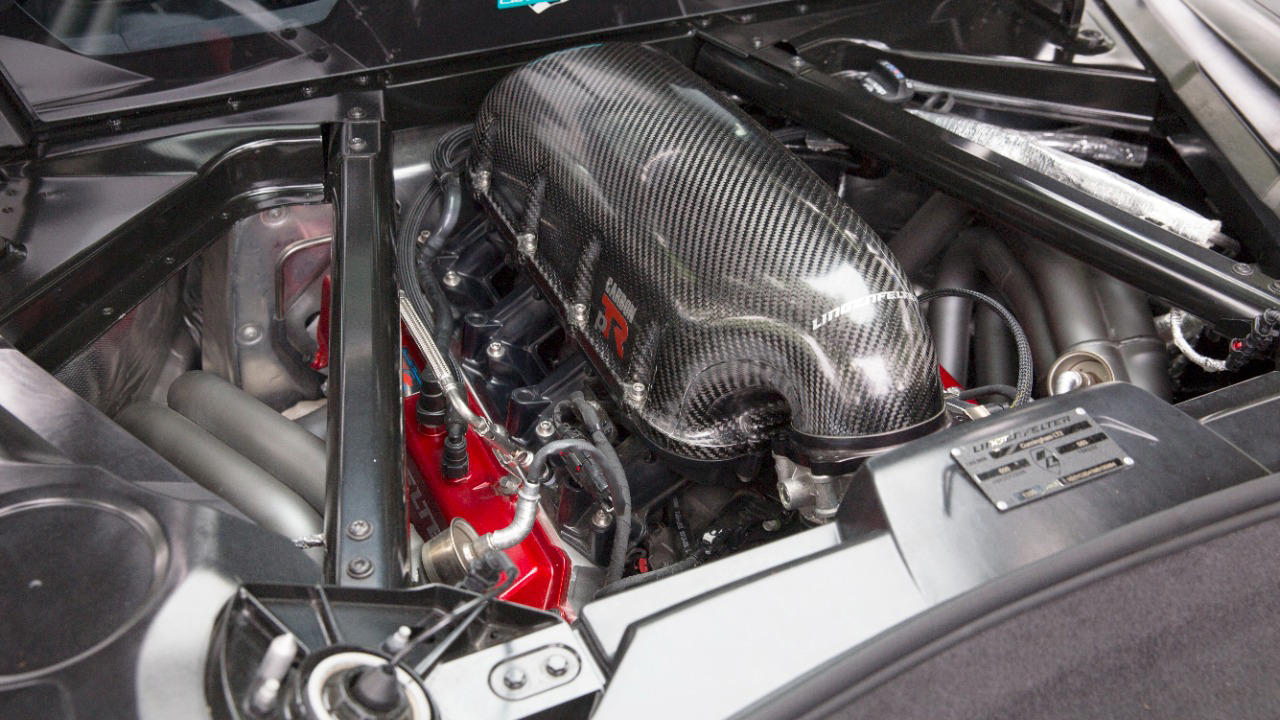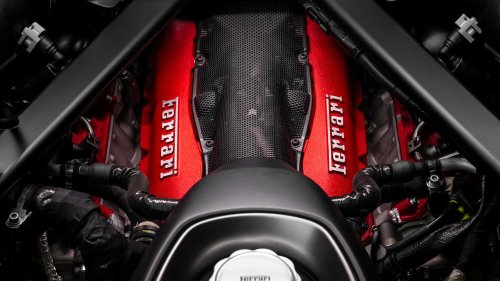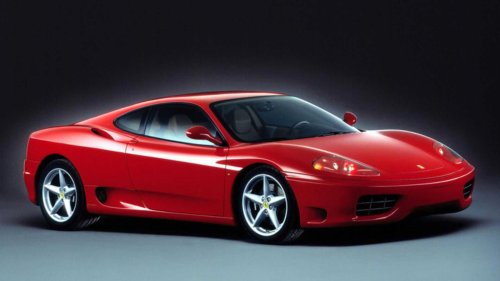
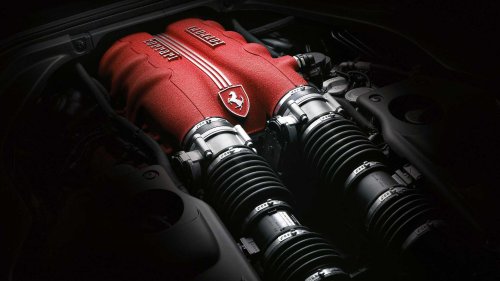
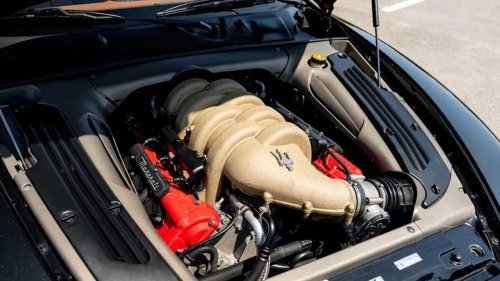
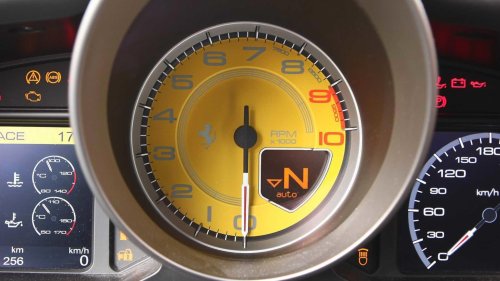
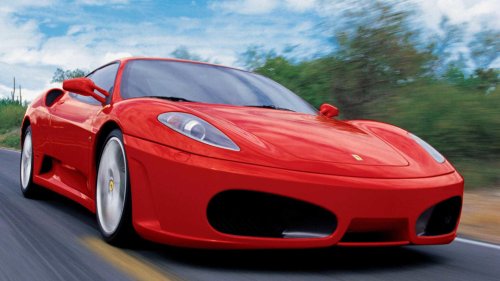
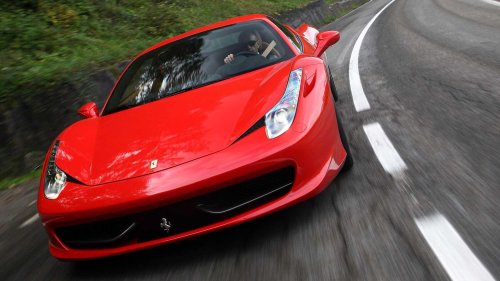
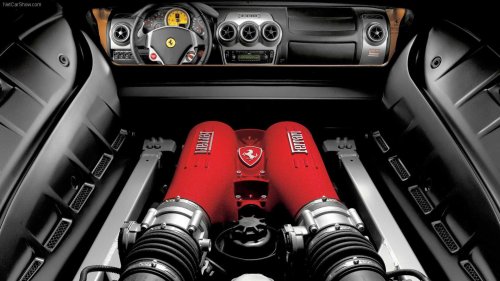
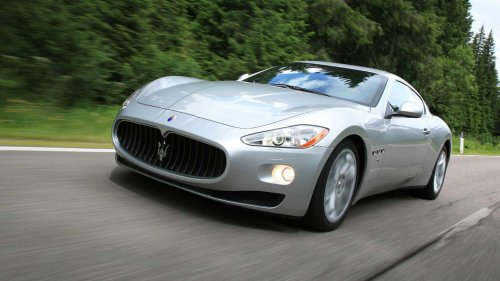
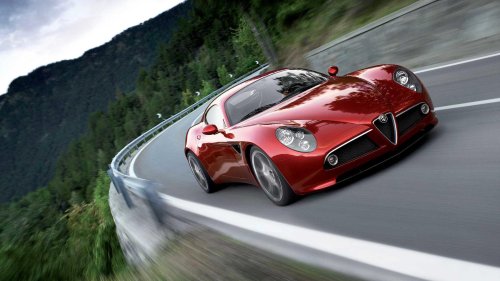
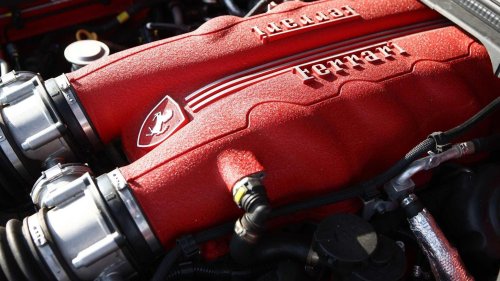
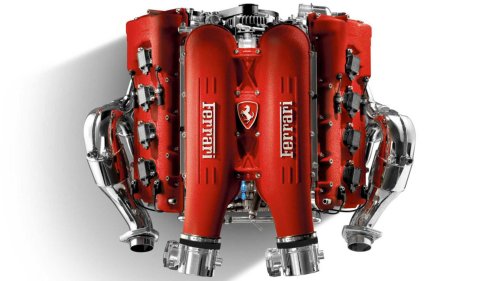



















There's a sound that stays with you. The shriek of a flat-plane crank V8 that rises past 8,000 rpm, changes up a gear and the drama begins again. Raw, mechanical, and completely unbothered by the idea of a speed limit. It doesn't naturally belong in a road car, yet, there it was.Through the mid-2000s to the mid-2010s, the rest of the industry was quietly surrendering. Emissions regulations tightened, turbos promised more power from less displacement, and the naturally aspirated performance engine began to look like a relic. One supercar manufacturer decided to go the other direction: higher in revs, higher in specific output, higher in every metric that matters to a driver.This is the story of the engine behind some of the most celebrated Italian supercars of the modern era, and why enthusiasts still talk about it in the present tense. When Others Strapped On Turbos, One V8 Was Still Breathing Free Ferrari By the early 2000s, turbocharged engines were making a compelling case across the industry. Tightening emissions standards pushed manufacturers toward forced induction, which offered more power from smaller, more efficient displacement. For many engineers, the naturally aspirated performance engine was starting to look like an expensive habit that regulators would eventually make impossible to justify.Ferrari's V8 road car lineage stretched back through the F355 and 360 Modena, a long line of naturally aspirated engines rooted in the Dino racing program of the 1950s. That history wasn't just heritage. It was a philosophy: that the relationship between driver and engine should be direct, unfiltered, and honest. A turbocharger, however effective, puts something between the throttle pedal and the engine's response.The flat-plane crankshaft at the center of Ferrari's V8 thinking is a direct inheritance from Formula 1. It allows the engine to build revs faster, respond to throttle inputs more sharply, and produce a high-pitched exhaust note that sounds nothing like a conventional V8. While the rest of the industry was chasing efficiency, Ferrari was still chasing something harder to quantify. The feeling of an engine that rewards you for using every rpm it has. One Engine That Powered Cars From Three Italian Legends FerrariThe F136 is a family of 90-degree V8 petrol engines jointly developed by Ferrari and Maserati and produced by Ferrari, with displacements ranging from 4.2 liters to 4.7 liters and power outputs spanning 385 horsepower to 597 hp. All versions are naturally aspirated, with dual overhead camshafts, variable valve timing, and four valves per cylinder. The architecture was shared, but the application was not. Each brand tuned the engine to suit a completely different kind of car.The F136's first appearance in a road car wasn't actually in a Ferrari. That honor went to the Maserati Coupé and Spyder in 2001, where it debuted as a 4.2-liter unit. From there it moved into the Maserati GranTurismo and Quattroporte GTS, running as a 4.7-liter unit producing 454 hp in the GranTurismo, a configuration that stayed in production for over a decade.Bring a Trailer The same block that would eventually scream to 9,000 rpm in a Ferrari spent years doing quiet, confident work in some of Maserati's most enduring grand tourers.Ferrari versions used a flat-plane crankshaft for that high-revving, high-pitched character, while Maserati and Alfa Romeo versions used a cross-plane crankshaft, suited to smoother low-end torque delivery and a more relaxed driving experience. The F136 was also built using the same factory, machinery, and processes used for Ferrari's Formula 1 engines, which explains a lot about why it behaved the way it did. It also found its way into the Alfa Romeo 8C Competizione, making it one of the few engines ever to power three Italian marques at the same time. Why 9,000 RPM Was Just The Tip Of The Iceberg FerrariThe F430's F136 E variant achieved a specific output of 114 hp per liter. And despite a 20% increase in displacement over its predecessor, engine weight grew by only 9 pounds. That combination of more power and almost no added mass is the kind of engineering result of Ferrari applying its Formula 1 experience to a road car engine.Ferrari The F430's engine delivered 483 hp at 8,500 rpm, with 80% of its torque available below 3,500 rpm. That torque availability at low rpm is what made the engine livable in everyday driving, while the top-end power delivery is what made it unforgettable on a back road. For the 458 Italia in 2009, Ferrari pushed displacement to 4.5 liters and added direct injection, lifting output to 562 hp. The flat-plane crankshaft, drawn directly from Ferrari's Formula 1 experience, produced the distinctive exhaust note that became the 458's defining characteristic.Ferrari The 458 Speciale took everything further. Its F136 FL variant ran a 14:1 compression ratio—the highest of any naturally aspirated production car at the time—producing 605 hp at 9,000 rpm and 398 pound-feet of torque at 6,000 rpm. At that point, the Speciale's specific output of nearly 100 kW (134 hp) per liter made it the most powerful naturally aspirated engine ever put into series production. That record didn't come from adding turbos or displacement. It came from refining a naturally aspirated engine until there was almost nothing left to find. The F136 Became The Most Decorated V8 Of Its Generation Ferrari To be precise about what the F136 achieved at the International Engine of the Year awards: the F136 FB variant—fitted to the 458 Italia and 458 Spider—won both "Best Performance Engine" and "Above 4.0 Litre" in 2011 and 2012. The F136 FL variant, powering the 458 Speciale, repeated that same double in 2014 and 2015. That's four award cycles, two category wins each time. Eight individual category victories in total, not eight separate overall Engine of the Year titles. The distinction matters, but the achievement doesn't shrink because of it.The F136 has been called the greatest mass-produced V8 of the modern supercar era, and the award record gives that claim a foundation. But the numbers only tell part of the story. The engine produced a sound that enthusiasts described as an intoxicating cathedral, amplified by the placement of the exhaust tips, and completely unfiltered by the muffling effect of a turbocharger.What the F136 built, across nearly fifteen years of production, was a reputation for emotional honesty. It wasn't just powerful, it communicated. Every throttle input, every shift, every climb toward the redline told the driver exactly what was happening. That quality is harder to engineer than horsepower, and it's what turbocharged successors have found most difficult to replicate. Every Car That Carried The F136 — And What It Did For Them Via: Maserati The F136 ran through an entire generation of Italian performance, powering models that people still stop to look at today. It started with the Maserati Coupé and Spyder in 2001, a 4.2-liter, cross-plane debut that produced 390 hp and introduced the architecture to the world. An unlikely birthplace for what would become one of the most celebrated engine families in modern automotive history.The Maserati GranTurismo and Quattroporte GTS followed, running a 4.7-liter version of the same block for over a decade and giving the F136 a grand touring pedigree alongside its supercar credentials.The Ferrari F430 arrived in 2004 as the engine's first Ferrari application, producing 483 hp from 4.3 liters at 8,500 rpm. A car that crossed into films, video games, and music videos and built a cultural footprint well beyond the supercar world. The track-focused 430 Scuderia pushed the same engine to 503 hp. Ferrari's mid-engine V8 lineage had run from the 308 GTB through the 348, F355, 360 Modena, and F430 before the 458 Italia raised the bar again in 2009, now with direct injection, a 4.5-liter displacement, and 562 hp.Alfa Romeo The 458 Speciale arrived in 2013 with 605 hp, a curb weight of 2,846 lbs, and a power-to-weight ratio of around 4.7 lbs per horsepower. The Alfa Romeo 8C Competizione also carried the flat-plane Ferrari variant, becoming one of the most visually striking, and collectible, cars of its era. Why Ferrari's Last Naturally Aspirated V8 Still Feels Irreplaceable Ferrari In 2015, the F136 took its last breath in a Ferrari, before being replaced by the turbocharged V8 in the 488 GTB. A capable engine by any measure, but one that couldn't spin to 9,000 rpm. The 488 made more torque, responded faster at low revs, and was more efficient on paper. What it couldn't do was replace the feeling of a naturally aspirated engine climbing through its rev range with nothing helping it along.The 458 Speciale was the last naturally aspirated mid-engine V8 Ferrari. Every Ferrari V8 since has paired a smaller displacement with turbocharging, gaining torque and efficiency in the process. That's a reasonable trade for most buyers. For the people who spent years chasing the F136's top end, it has never quite felt like an even exchange.Ferrari Interest in the F136 has grown steadily in recent years, driven by its status as Ferrari's last naturally aspirated V8 and by the fact that used examples have become increasingly accessible. Enthusiasts are paying attention, and values are following. The F136 represented a specific belief that revs, engine sound, and mechanical driving experience were worth engineering for their own sake. The turbocharged and electrified era that followed has brought genuine progress. But it hasn't answered the question the F136 leaves open: whether anything built today can make a driver feel quite the same way.Sources: DuPont Registry, Hagerty