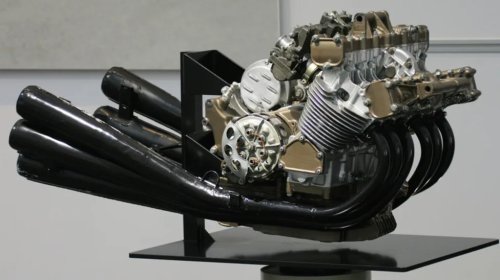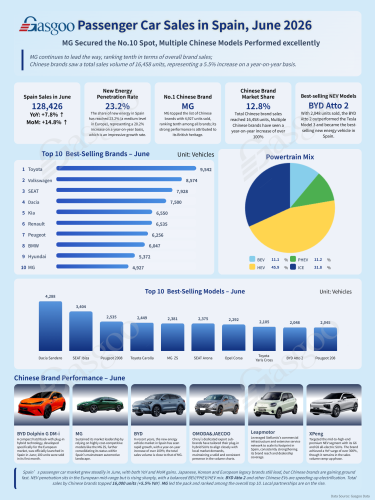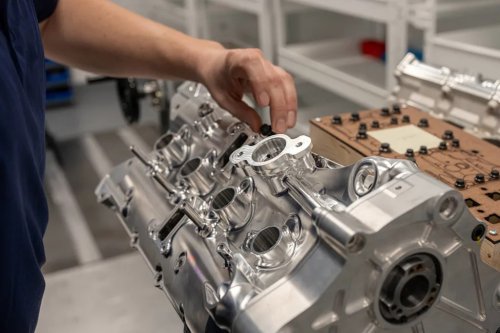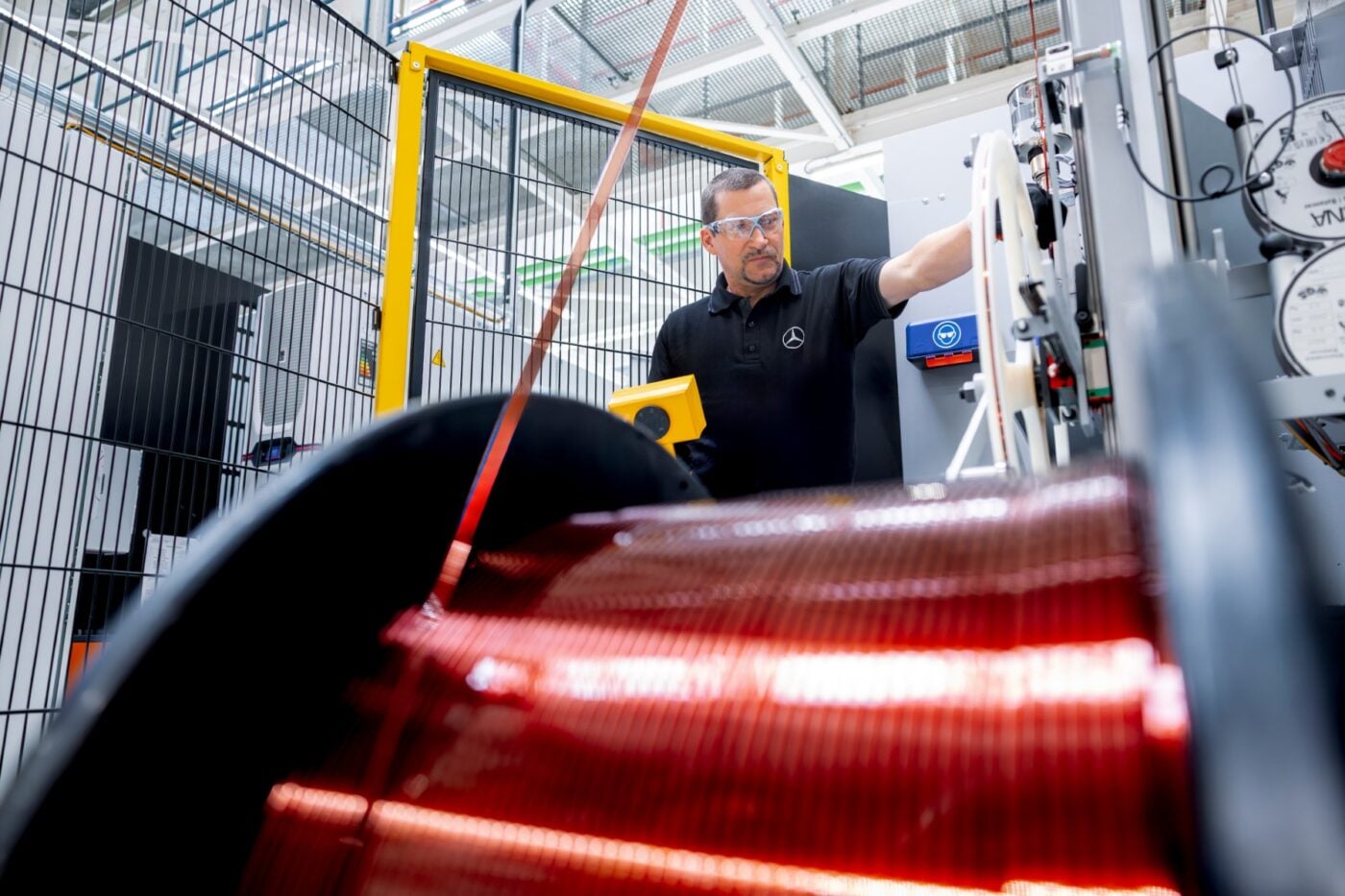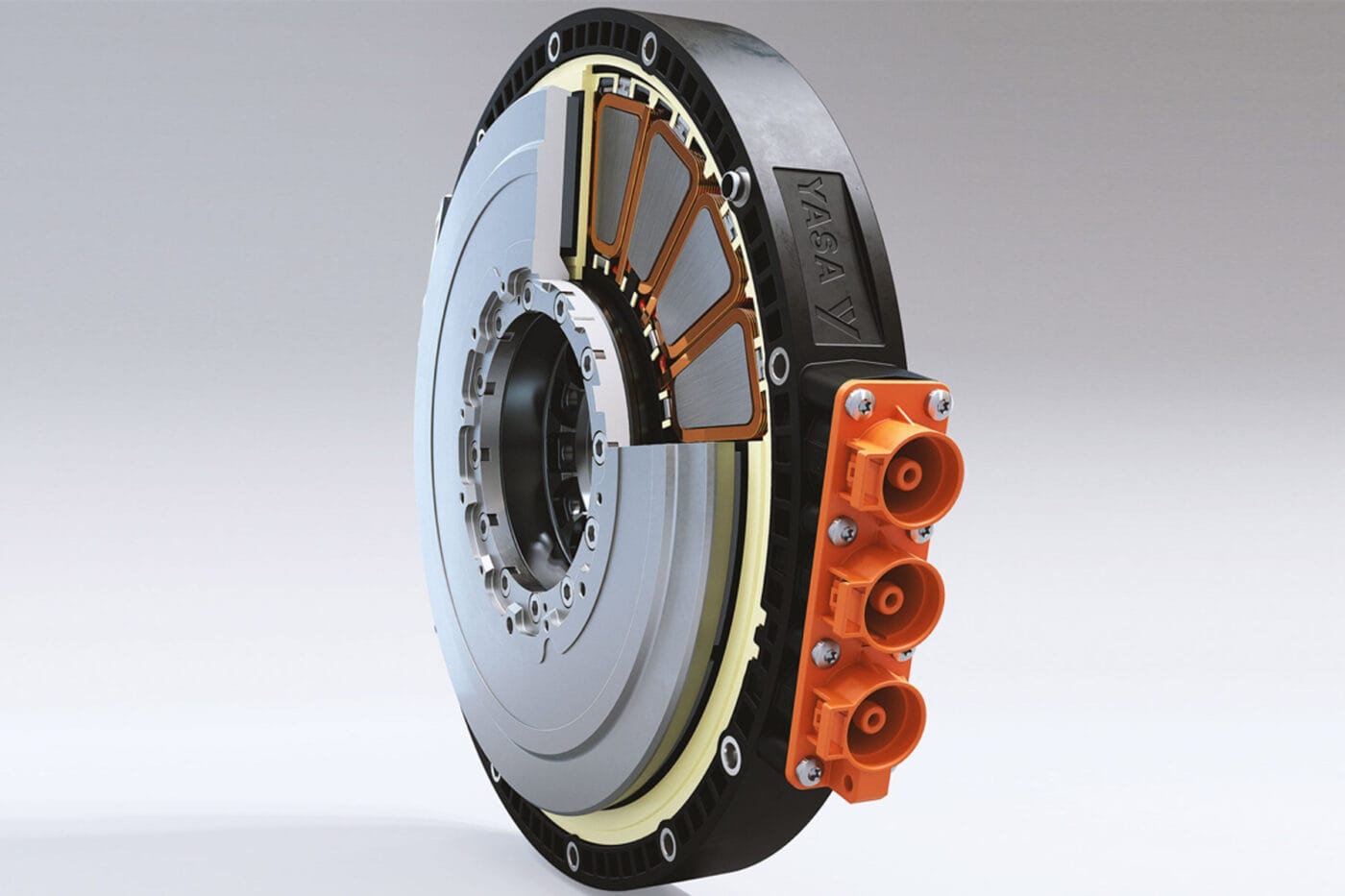
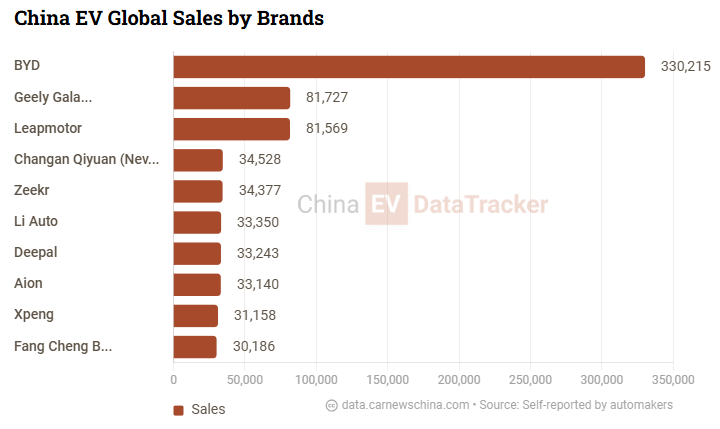



















Researchers say the new motor can operate at over 18,000 rpm. Credit: CCTV Understand China EV’s Market Real-time notifications when critical EV data is released All important data in one place 2,000,000+ data points Become a member High-performance axial flux motor technology developed by Chinese researchers was unveiled on June 5, featuring a new permanent-magnet material designed for electric vehicles, humanoid robots, and low-altitude aircraft, according to CCTV. The project was jointly developed by Pangoo Power and the Ningbo Institute of Materials Technology and Engineering, Chinese Academy of Sciences. The partners introduced a dedicated permanent magnet material designed specifically for axial flux motors, improving magnetic energy product, high-temperature stability, and mechanical strength while maintaining compatibility with mass production. Why axial flux motors are attracting attention Axial flux motors differ from conventional radial-flux motors by directing magnetic flux parallel to the motor shaft rather than outward from the centre. This disc-shaped architecture shortens the motor’s axial length and allows torque generation closer to the outer diameter, increasing torque and power density while reducing weight. The design dates back to the earliest electric motors developed by physicist Michael Faraday in the 19th century. However, limitations in magnetic materials and manufacturing techniques prevented widespread commercialisation. Advances in permanent magnets, power electronics, and precision manufacturing have renewed interest in the technology. Chinese researchers said axial flux motors can reduce weight and axial size by approximately 50% compared with traditional motors delivering similar performance. These characteristics are particularly relevant for EVs, where compact drivetrains can free chassis space and improve packaging efficiency. New magnet material targets industrial bottlenecks The achievement of 25.73 kW/kg and 18,000 rpm addresses one of the longstanding challenges of axial flux motors. Historically, the disc-shaped architecture has been more difficult to stabilise at high rotational speeds because of structural deformation and magnetic-force imbalances. Improvements in magnetic materials and thermal stability help reduce these limitations, enabling operation under sustained high-load conditions required by modern EV drivetrains. The newly developed magnet material addresses several long-standing challenges in the deployment of axial flux motors. Engineers optimised magnetic formulations, refined microstructures, and improved high-temperature resistance to reduce demagnetisation under high-speed and high-load operating conditions. The resulting production-ready motor reportedly achieves an effective power density of 25.73 kW/kg and exceeds 18,000 rpm. Researchers said the combination of high rotational speed and high power density could support demanding EV operating conditions, including sustained highway driving and repeated acceleration events. The performance figures arrive as Chinese automakers continue to push electric-motor technology in different directions. Xiaomi Auto recently announced that the Xiaomi YU7 GT uses the new HyperEngine V8S EVO powertrain, a major upgrade over the V8S unit. The motor reaches a maximum speed of 28,000 rpm and uses a self-developed silicon carbide (SiC) power module that improves output by 5.9%. Xiaomi said the design also adopts 0.15 mm ultra-thin silicon steel laminations and achieves 98.38% efficiency. Chinese automakers have recently introduced higher-output traction motors, including BYD’s 240 kW electric motor, which has expanded into lower-priced EV segments. Dongfeng has meanwhile commercialised a different approach with the eπ 007 Flash Edition, China’s first volume-produced passenger EV equipped with four factory-fitted in-wheel motors and the world’s only mainstream mass-production four-hub-motor passenger sedan. China EV Global Sales by Brands in May. Credit: China EV DataTracker Beyond passenger vehicles The developers also highlighted applications of humanoid robotics. The axial flux motor system achieves a torque density of 293 N·m/kg, which researchers said is 22% higher than comparable benchmark products. Higher torque density allows robot joints to deliver greater force while maintaining compact dimensions and low weight. Low-altitude aircraft represent another target market where every kilogram saved can improve payload capacity and energy efficiency. In May, BYD ranked as the world’s largest EV maker with sales of 330,215 vehicles. Geely Galaxy, Leapmotor, Zeekr, and Xpeng also ranked among the top-selling EV brands globally from China.