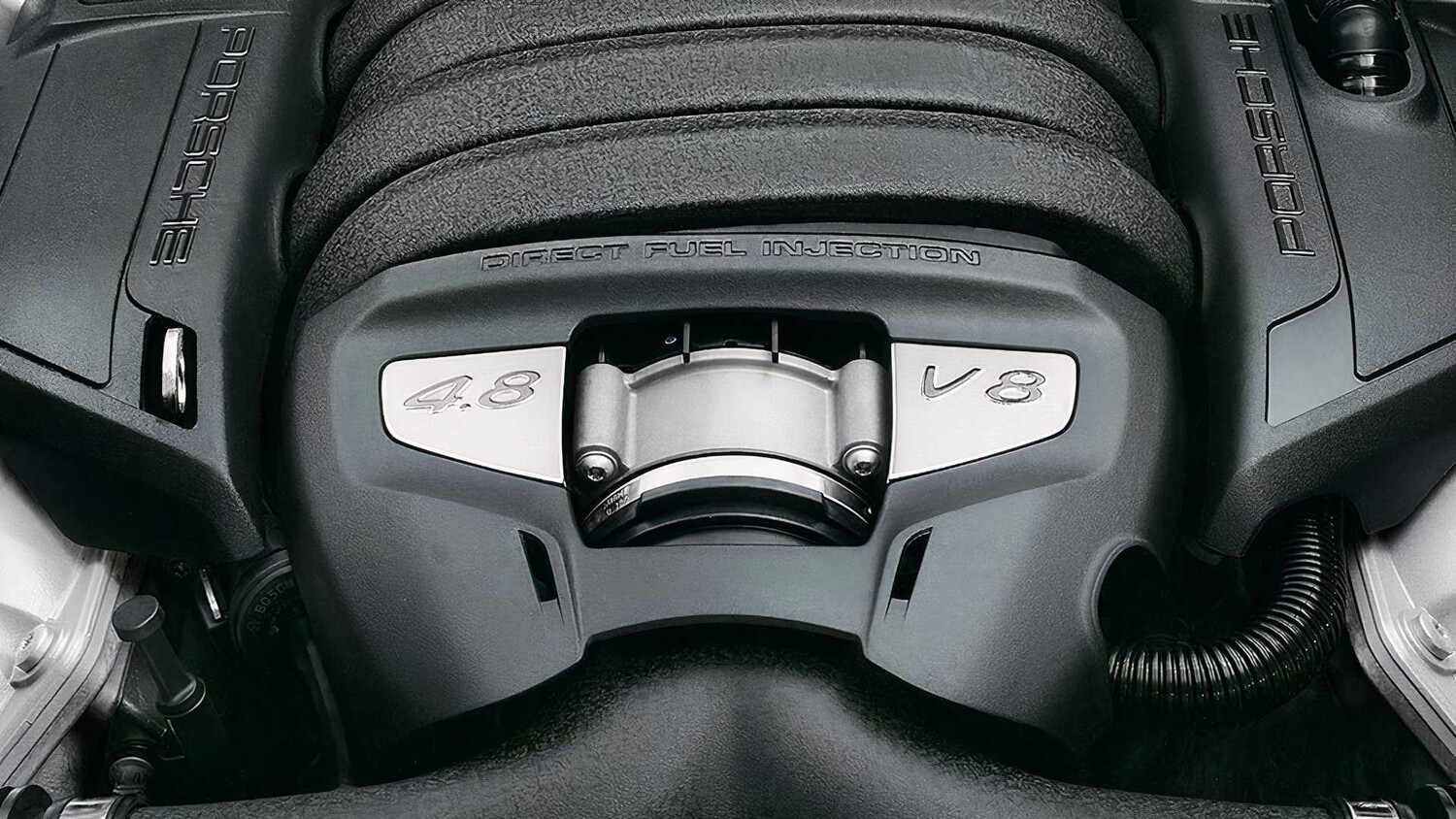
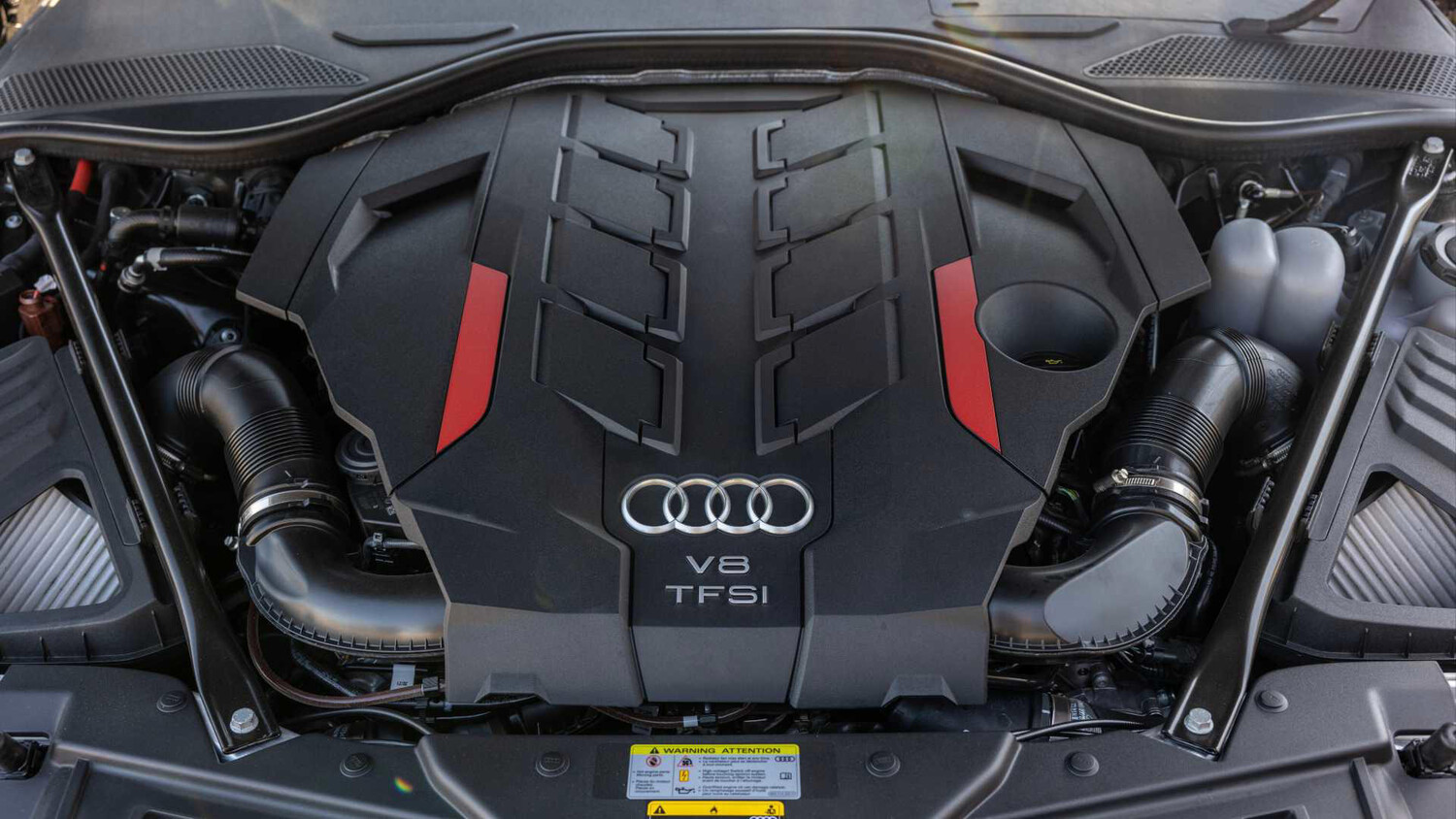
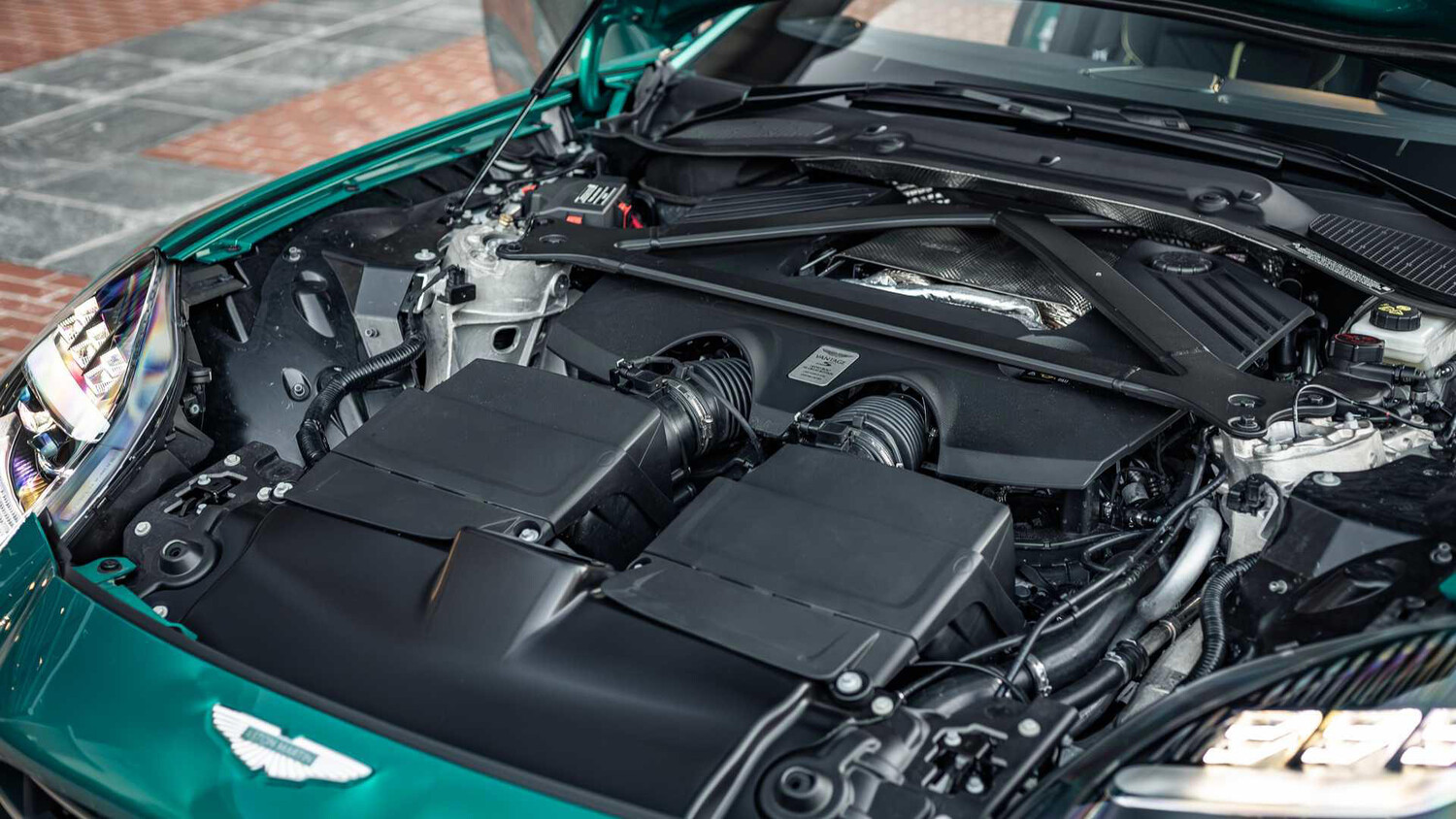
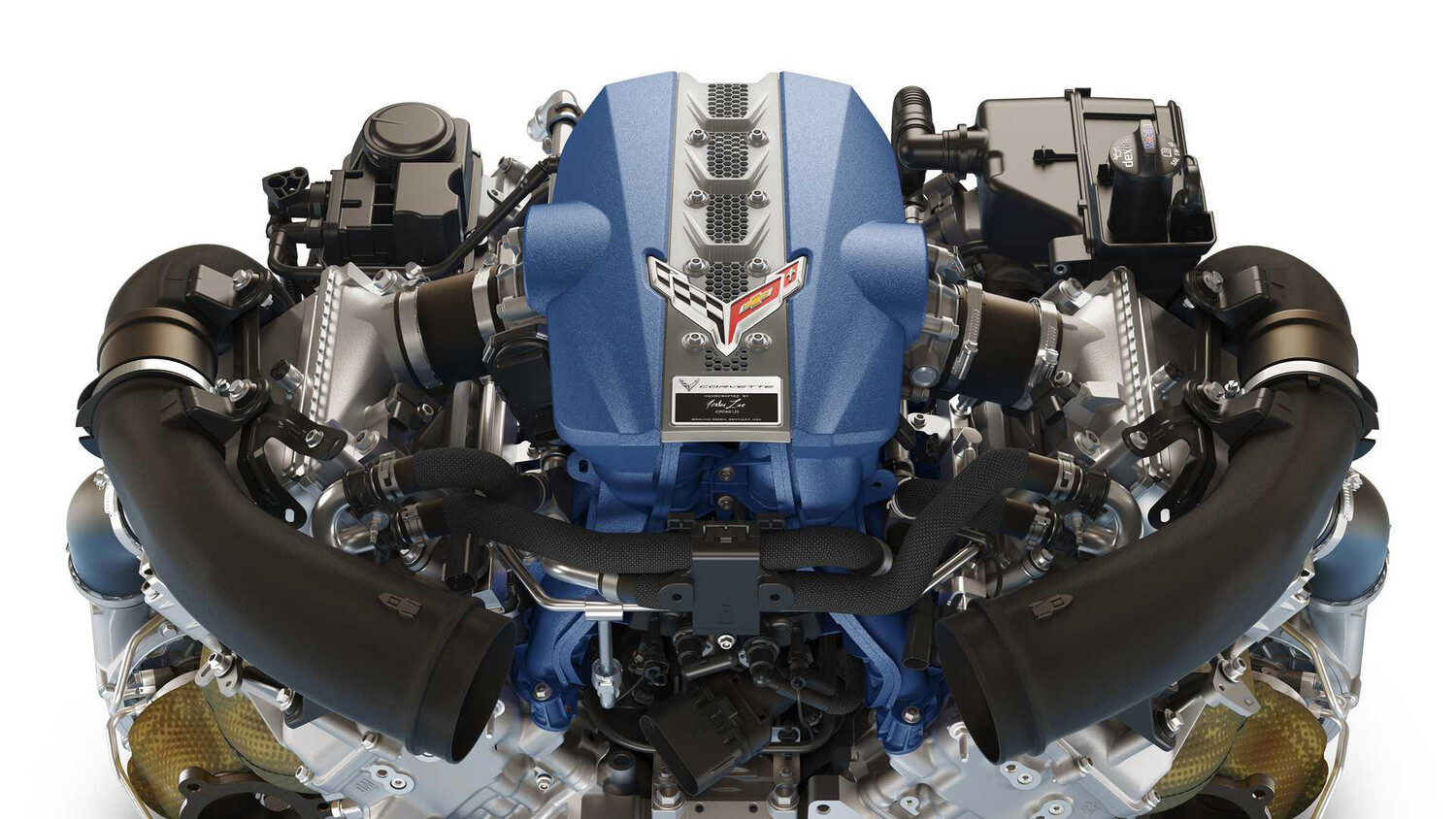
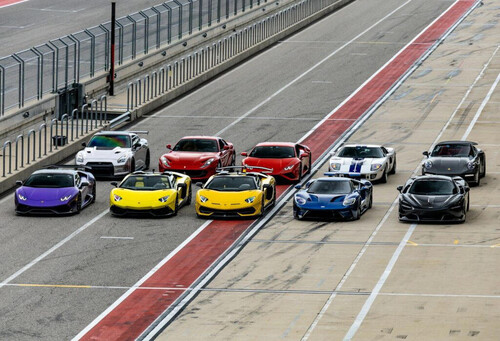
Despite the doomsayers of five to 10 years ago, combustion engines are not dead. On top of that, there's still a diverse selection available, ranging from three-cylinder turbos built for economy or performance to Bugatti's W16 quad-turbo beast for anyone who has that kind of insane money.In terms of performance cars, you can find all sorts of configurations that are naturally aspirated or use turbos and superchargers. But, if you step into the highest-performance cars, you're most likely to end up with a twin-turbo V8.BMW, Mercedes, and Audi are all in on the twin-turbo V8 for their most powerful performance cars, and even Chevrolet dropped the supercharger for two turbos on the new Corvette ZR1. Then brands like Porsche, Lamborghini, McLaren, and Aston Martin all lean heavily on the twin-turbo V8, and all are brands that have the ability and history of doing interesting thing when it comes to powerplants. The Adaptability Of The V8 Porsche The V8 has been a go-to for a balance between power and packaging for decades. A V10 starts getting big and heavy, while a V6 isn't as smooth and doesn't have the grunt. But it goes further than performance, as luxury vehicles need a deficit of smooth power and V8 engines can be tuned for purpose relatively easily. That's why you can see the same V8 in American automakers' sports cars, premium cars, SUVs, and trucks – and spread across brands, which is something we'll get into later.Packaging is part of the V8's adaptability, and when it comes to turbocharging a V8, the hot-V configuration changed the game. Quite simply, a hot-V (or hot vee) set-up is when the turbocharger(s) are mounted in the V of the engine. With the turbos mounted there rather than extending the engine, a huge amount of extra power can be generated with close to the same packaging size as a naturally aspirated V8.The hot-vee is brilliant if an automaker wants an extreme-performance version of a car that starts out with a naturally aspirated V8. Among other things, it likely explains why Mercedes-AMG, famous for its bonkers supercharging of Mercedes-Benz models, switched to twin-turbos. The Realities Of Budget Bugatti We need to acknowledge here that the performance divisions at automakers – as well as automakers that specialize in high-performance cars – want to do creative things and work with different engines. But, they have to deal with the realities of the accounting and marketing departments. A car has to profit, and part of creating profit is limiting costs so as to increase margins. Developing a new V10 or V12 and building it is expensive, and it's a niche product, meaning not many units will be sold.A V8 engine that can be built as a non-turbo unit for mass-market cars as well as a twin-turbo for high-performance versions is simply the less expensive strategy, certainly cheaper than building a whole new engine with more cylinders. As it's a hot-V, it will also take less design and engineering work to fit it in the engine bay. The real trick is then keeping it cool, but the air intakes look cool. The Cross-Brand Strategy Audi The biggest reason cars in the 21st century feel so homogenized is because of platform and engine sharing. The best examples here in terms of performance vehicles are Audi, Bentley, Lamborghini, and Porsche. All are owned by Volkswagen, and share platforms, most notably for their performance SUVs. Essentially, the same Audi twin-turbo engine that powers Audi's high-performance vehicles, including the RS6 wagon and RS Q8 SUV, powers the Lamborghini Urus, Porsche Panamera Turbo S, Porsche Cayenne Coupe GT, and the Bentley Continental GT and Flying Spur. The Long, Slow Death Of The V10 And V12 Audi The V10 is just about dead, killed by cost and emissions, but mainly emissions. It was the cross-brand strategy that kept it alive for so long, with Audi and Lamborghini sharing the V10 that powered Audi's supercar, the R8, and most prominently for Lamborghini in the Gallardo and Hurucan.The advantage of the V10 over the V8 is more easily achieved power and a smoother running engine, and it has an advantage over the V12 in its ability to produce torque. But, the V12 is still out there in notable numbers, but only in the most expensive cars. Essentially, if you want a V12 in a car, it's going to be made by Aston Martin, Ferrari, Lamborghini, or BMW via Rolls-Royce. The Twin Turbo V8 Takeover Ian Wright/CarBuzz/Valnet To get to a great point about the standardization of the twin-turbo V8 in high-performance cars, we should consider Aston Martin's use of twin-turbo V8s where it often used to use V12s. The Aston Martin 5.2-liter twin-turbo and 5.9-liter naturally aspirated V12s were a staple of Aston's lineup until quite recently. But, now, the twin-turbo V8 is the mainstay in the current generation of models as Aston moves into a new phase, with the V12 (currently) limited to the Vanquish and the even more spectacularly expensive Valkyrie supercar."V8s have a number of key advantages compared to other combinations for this sort of segment. One, from a commercial point of view, they are very flexible powertrains that people can put in different segment cars, so there's economies of scale."They are good in terms of physical dimensions as they're quite short compared to a larger-capacity naturally aspirated V12, especially with hot vees, and turbos help address, perhaps, low down torque."And there are emissions reasons why you can get more efficiency out of a turbocharged V8 like pumping losses, friction, etc compared with more cylinders." – Simon Newton, Aston Martin vehicle performance and attributes directorCosts and emissions standards are entwined factors, but the twin-turbo V8's dimensions work to its advantage for Aston Martin as well in its search for chassis performance. If you look under the hood of a current Aston Martin Vantage or DB12, you'll see that the engine is pushed to the back of the engine bay.It's pushed so far back over the vertical line joining the front wheels that the engine is considered to be mid-front mounted. The lesser weight of the V8 is an advantage, but so is having the necessary weight pushed closer to the middle of the car. If you look at a V12 Vantage, you can see that the engine is squeezed into the engine bay with little room to spare. A Matter Of Power And Control Mercedes-Benz There is a replacement for displacement, and that's forced induction. The twin-turbo V8 uses is supplied by Mercedes-AMG, removing the development cost of the base engine. Then Aston makes its engineering and tuning changes to what's already a brilliant high-performance engine.The Twin-Turbo V8 in the current Vantage has close enough to the same power output (656 hp with 590 lb-ft of torque) as the V12 version did in 2022. But it's not just about figures, it's how the power is delivered. And the secret weapon of the modern high-performance twin-turbo V8 is a pair of twin-scroll turbos.The old problem with turbocharging was lag – the engine had to build up to a certain amount of exhaust flow for the turbo to create boost. Twin turbos – one small and one large – went a long way to smoothing out the issue. But, a twin-scroll turbo uses a single turbine blade, but with two channels for exhaust gas to travel through, effectively combining the benefit of two turbos into one by using one smaller turbine blade and one larger one.Use two turbos and there's a lot of tuning to be explored just through the forced induction alone, and turbo lag can be virtually eradicated. The Future Of The Twin Turbo V8 Chevrolet Due to its size-to-power output ratio, adaptability for tuning, and the sound it can make, the twin-turbo V8 is clearly here to stay. It is one thing for Volkswagen group brands to share an engine to maximize performance versus cost, but another when Mercedes-AMG turns to turbos rather than a supercharger, Aston Martin leans into the solution for its ultra-luxury high-powered sports cars, and at the same time, GM drops its signature supercharged V8 for twin turbos in its fastest car."They [V8s] have a distinctive sound which, depending on how they're tuned, and indeed what kind of crank they've got – flat- or cross-plane – can offer powertrain sound advantages. For example, the cross-plane in the Vantage is distinctive and suits that sort of car, and the flat-plane offers another dimension as we use it in the supercar category as a more intense, angry engine note." – Simon Newton, Aston Martin vehicle performance and attributes directorNow we're adding hybrids to the arsenal when it comes to high-performance cars, the twin-turbo V8's packaging and power ratio just hits harder and pays off again with a reassuring soundtrack to a cutting-edge, high-tech drivetrain. The V12 – turbocharged or not and hybrid or not – will be used for halo cars, but the twin-turbo can already deliver more than enough horsepower.As we've discussed, horsepower is plentiful now to the point of being meaningless in road-going high-performance cars. The competition between brands is now how that bounty of power is delivered, and how it feels and sounds. At least, it should be.