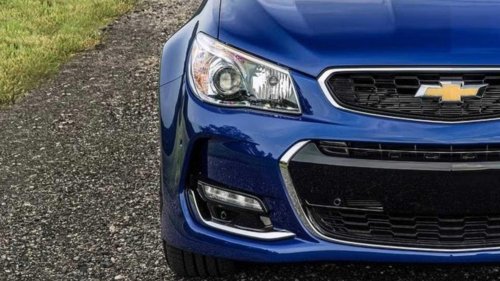
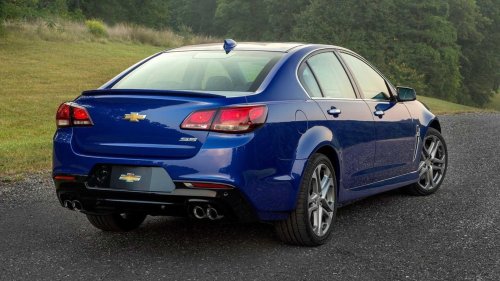
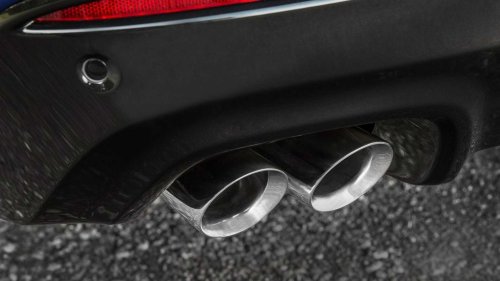
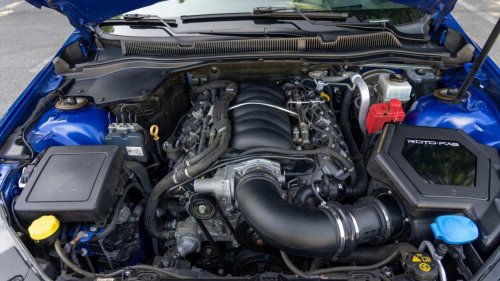
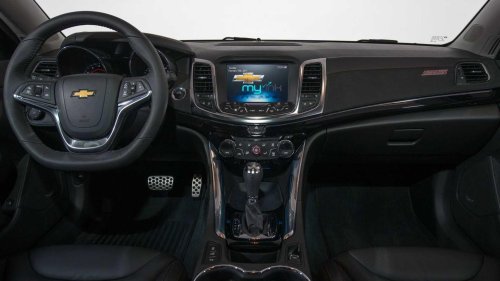
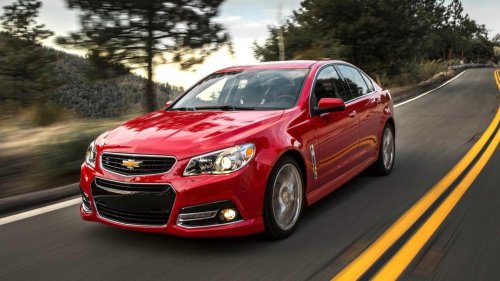
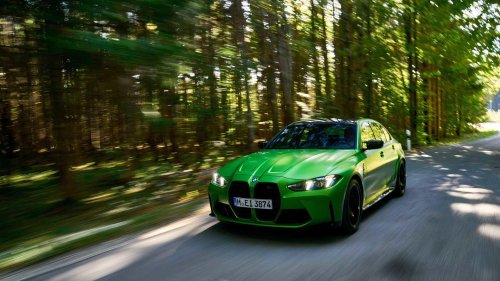
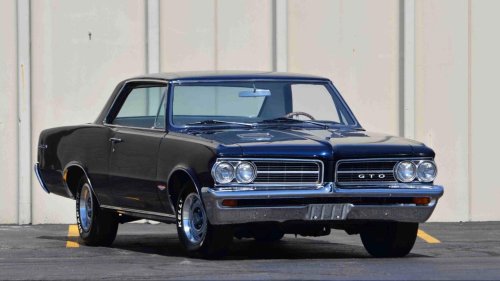
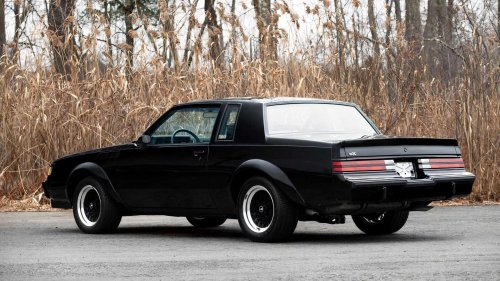
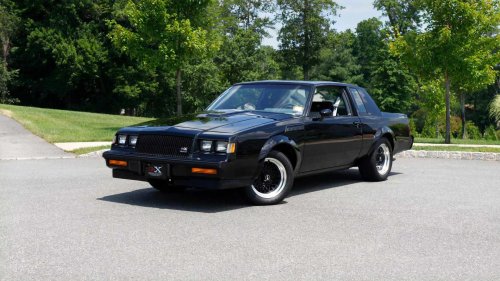
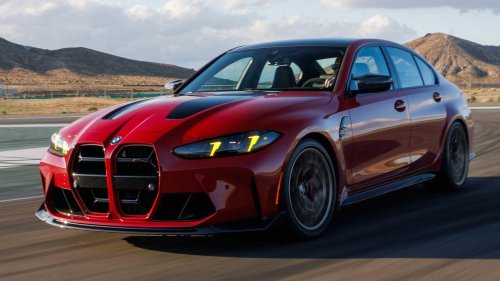
The modern performance sedan has a branding problem. Every manufacturer building a fast four-door wants you to know about it. Flared fenders, aggressive front splitters, and enough badging to read from across a parking lot have become the standard uniform. That approach has delivered some excellent machines, but it has also killed one of the most satisfying subgenres in the automotive world. The factory sleeper.Chevrolet, a brand not typically associated with subtlety, managed to build what might be the last great example of the form. For four model years, the American automaker sold a full-size sedan that could embarrass sports cars costing twice as much, and it did so wearing a face that most people mistook for a rental fleet Malibu. The Lost Art of Hiding Power in Plain Sight ChevroletThe factory sleeper has a long and storied history. The idea is older than the muscle car era. Take a car that looks like nothing special, drop in the most powerful engine the platform can handle, and let the contrast between appearance and ability do the talking. The 1960s gave us the Pontiac Tempest with the GTO package, a car that looked like a modest coupe but ran with the most aggressive machines Detroit offered. The 1980s produced the Buick Grand National, a blacked-out V6 sedan that humiliated Corvettes at the drag strip. Each generation has had at least one car that proved the concept could work, that performance and anonymity were not mutually exclusive.By the 2010s, the formula was nearly extinct. BMW had turned the M Division into a visual brand as much as a performance one, with widebody fenders and carbon fiber roof panels that announced themselves from a distance. Mercedes-AMG plastered its logo across every surface and fitted its cars with exhaust systems tuned to crackle and pop at every downshift. Even Dodge, which had the closest thing to a modern American muscle sedan in the Charger, gave its SRT variants hood scoops, massive Brembo calipers painted in bright colors, and a front end angry enough to scare pedestrians. The market had decided that a fast sedan should look fast, and nobody was arguing, except Chevrolet. The Chevrolet SS Packed a Corvette V8 Into a Family Sedan ChevroletThe Chevrolet SS debuted at the 2013 Daytona 500 and went on sale for the 2014 model year. It was the first rear-wheel-drive performance sedan Chevrolet had offered since the original Impala SS was discontinued in 1996. Under the hood sat the LS3, a 6.2-liter naturally aspirated V8 producing 415 horsepower and 415 lb-ft of torque, borrowed directly from the C6 Corvette. Period instrumented testing recorded the SS at 4.5 seconds to 60 mph and 12.9 seconds through the quarter mile at 111 mph, numbers within striking distance of the C7 Corvette Stingray.The performance hardware extended well beyond the engine. Standard Brembo front brakes used 14-inch two-piece rotors and four-piston calipers. Staggered forged aluminum wheels carried Bridgestone Potenza RE050A tires. Weight distribution was near perfect at 50/50. From 2015 onward, Magnetic Ride Control became standard, and Chevrolet added a six-speed manual transmission option, making the SS the only car in America that offered a naturally aspirated V8, a manual gearbox, rear-wheel drive, and seating for five. Some GM executives referred to it internally as a four-door Corvette, and the description was not far off.What made the Chevrolet SS a genuine sleeper was its refusal to announce any of this visually. A subtle power bulge on the hood and dual exhaust tips were the only external cues. Pick one in silver or gray, and it vanished into traffic entirely. That was the entire point. Built in Australia, Designed for the American Highway Chevrolet The Chevrolet SS did not originate in Detroit. It was designed and built in Elizabeth, South Australia, as the Holden VF Commodore, then shipped to the United States and rebadged with Chevrolet styling and a larger engine. That Australian lineage is central to understanding what the car was and why it drove the way it did. Holden had been building rear-wheel-drive V8 sedans for decades, and the Commodore had evolved through generations of motorsport development in the Australian V8 Supercars championship. The platform that underpinned the SS carried that accumulated knowledge in its bones. A stiff chassis, well-sorted suspension geometry, and a balance between comfort and aggression that most American sedans could not match.The SS was a spiritual successor to the Pontiac G8, which had been built on the previous-generation Holden VE Commodore platform. When Pontiac was shuttered in 2009, the G8 died with it after just two model years, despite strong critical reception and a devoted following. Chevrolet picked up where Pontiac left off, but with a significantly improved car. The VF Commodore platform offered greater use of medium and high-strength steels for improved rigidity, upgraded electronics, and a more refined interior with a level of standard equipment that surprised reviewers. The SS came in a single, fully loaded specification with heated and ventilated front seats, a head-up display, a Bose sound system, navigation, and automatic parking assist. The only options were a sunroof and a full-size spare tire. The LS3 Engine Chevrolet Borrowed From the Corvette Bring a Trailer The LS3 is one of the most celebrated engines in General Motors history. The 6.2-liter small-block V8 traces its lineage to the LS1 that debuted in the C5 Corvette in 1997, and it represents the refined end point of that architecture. In the SS, the LS3 delivered the same 415 hp and 415 lb-ft of torque as it did in the C6 Corvette, with no detuning for sedan duty. That shared engine means the SS benefits from one of the deepest aftermarket ecosystems in the performance car world.The LS platform's modular design makes bolt-on upgrades straightforward, and the engine's cast aluminum block and forged steel crankshaft give it a reputation for handling significant power increases without major internal work. For owners who want more than the factory 415 hp, the path is well documented and well-supported.Reliability is the other side of the LS3's appeal. The engine uses a traditional pushrod valvetrain with two valves per cylinder, which means fewer moving parts than the dual-overhead-cam designs used by most European competitors. GM's small-block V8 architecture has been in production for over six decades, and the LS family that succeeded it has accumulated decades of real-world durability data. The SS's LS3 is not a temperamental, high-strung unit that demands specialized care. It is a robust, well-understood engine that will run for hundreds of thousands of miles with routine maintenance, a trait that makes the car genuinely viable as the daily driver the headline promises. Why Only 12,924 Chevrolet SS Sedans Were Ever Built Chevrolet The Chevrolet SS was doomed by a combination of corporate indifference and structural limitations that had nothing to do with the quality of the car. Chevrolet projected sales of between 2,000 and 3,000 units per year, a fraction of the volume that the Dodge Charger moved in the same period. Dodge sold 374,285 Chargers during the SS's four-year production run. The SS managed 12,924 total.The gap was not a reflection of demand but of access. Chevrolet allocated SS sedans to dealers based on their sales volume of the Corvette and Camaro, which meant that most Chevrolet dealerships never received a single SS to put on their showroom floor. You could not buy what you could not find, and Chevrolet spent almost nothing on marketing the car to help people find it.The final blow came from half a world away. In 2013, General Motors announced that it would end all vehicle manufacturing in Australia by 2017. The Holden plant in Elizabeth that built every Chevrolet SS was slated for closure, and there was no alternative production facility. The SS died not because it failed but because the factory that made it ceased to exist. The last Chevrolet SS rolled off the line in 2017, ending a lineage of Australian rear-wheel-drive V8 sedans that stretched back decades. Canada was never offered the car at all, despite Chevrolet previewing it at the 2013 Canadian International Auto Show. What the Chevrolet SS Costs Today ChevroletThe Chevrolet SS occupies a fascinating position in the collector market. It is too new to be a classic, too rare to be a commodity, and too good to stay at current prices forever. Market analysis suggests that good-condition SS examples hover around $33,600, but the SS is a car whose owners tend to know exactly what they have. Pristine low-mileage cars rarely surface, and when they do, they command premiums that reflect the car's limited production. A manual-transmission 2017 model with delivery miles would be a genuine unicorn. Recent auction data shows the most expensive SS sold to date reached $55,000, and well-kept manual examples from late 2025 consistently landed in the $40,000 to $50,000 range.The value proposition becomes clearer when you consider what the SS actually is, a Corvette-engined, rear-wheel-drive, manual-transmission sedan with Brembo brakes, Magnetic Ride Control, and a near-perfect weight balance, for roughly the price of a well-optioned new Camaro.Generation X and Millennial buyers account for 72% of insurance quote interest in the SS, which suggests the car is finding its audience among enthusiasts who understand what they are looking at. It sits alongside a small handful of underappreciated performance sedans that are quietly building collector followings. With only 12,924 ever built and no possibility of the number growing, the math is straightforward. The people who know, know. Everyone else will continue to mistake it for a Malibu, which, for the owners, is part of the appeal.Sources: Hagerty, Classic.com, Bring a Trailer, General Motors.