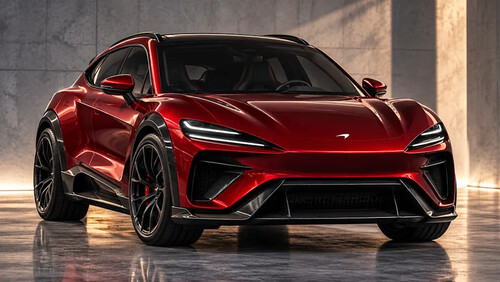
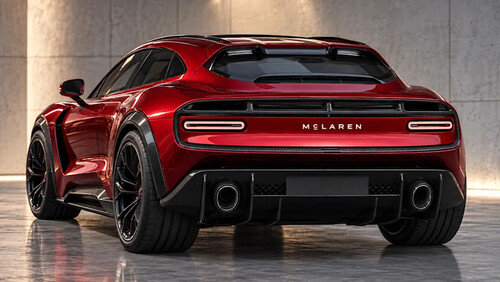
Abigail Smith · 3 months ago@abigailsmith41Someone Built a Functioning Jet Boat That Looks Exactly Like an Su-35 Fighter Liked by+25 othersPost commentRelated PostsI really want Jaguar’s new Type 01 to succeed — but the $130,000 EV looks worryingly like a Miami Pink elephantAmelia Pelletier · 17 days agoJaguar's Controversial Type 01 EV Looks Like A '40s Gangster Car Built For The Modern Electric EraHenry Carter · 17 days agoJaguar's controversial Type 01 EV looks like a comic book villain would drive itLily Fortin · 17 days agoJaguar Type 01 finally gets its full reveal – and it still looks like it's from another planetVictoria Young · 17 days agoThe Jaguar Type 01 Won't Be The Only Model To Look Like ThisBenjamin Anderson · 17 days agoThe Toyota Previa May Return to Our Shores. This is What It Could Look LikeDaniel Anderson · 17 days agoThis Skoda Sedan Looks Like A Baby Octavia But Starts From $10kEthan Mitchell · 17 days agoNext-Gen Kia Sportage Is Looking More Like a Smaller TellurideSophie Carter · 19 days agoWith This Ferrari GTO Re-Creation on BaT, You Don’t Need a Million to Look Like a MillionJacob Côté · 19 days agoIt Looks Like A Toyota Minivan But It’s Actually An EV With 5 HPGrace Wilson · 20 days agoAlfa Romeo Unveiled One-Off 33 Stradale Perla Nera — Looks Like An Italian BatmobileSarah Moreau · 21 days agoReach Stackers Look Like A Hydrogen Use Case. Ports Are Buying Batteries.Jenna Brown · 22 days agoThe Next Lotus Won’t Look Like This, But It Should 12 · Parker Bouchard · 23 days agoIt Looks Like A Normal Mazda MX-5, But It Actually Has A Ford V6 90 · Matthew Walker · 23 days agoI Drove the 2027 Chevrolet Bolt RS. It Doesn't Look or Drive Like America's Cheapest EV 93 · Henry Leblanc · 23 days agoWhat Do the People AI Cannot Replace Look Like? 70 · Nicole Tremblay · 24 days agoTruck Carrying 387-Foot Long Wind Turbine Blade Up A Mountain Looks Like The Most Stressful Work Day Ever 33 · Charlotte Tremblay · 24 days agoMaserati Might Bring Back a Sport-Luxury Sedan. This is What It Could Look Like 11 · Jacob Rogers · 24 days agoMcLaren Is Finally Building an SUV, So We Imagined What It Could Look Like 65 · Claire Campbell · 27 days agoHonda’s New EV Scooter Looks Like A Zippy Urban Runabout, And We Can’t Have It 16 · Amelia Scott · 29 days ago


 +25 others+25 others
 +25 others