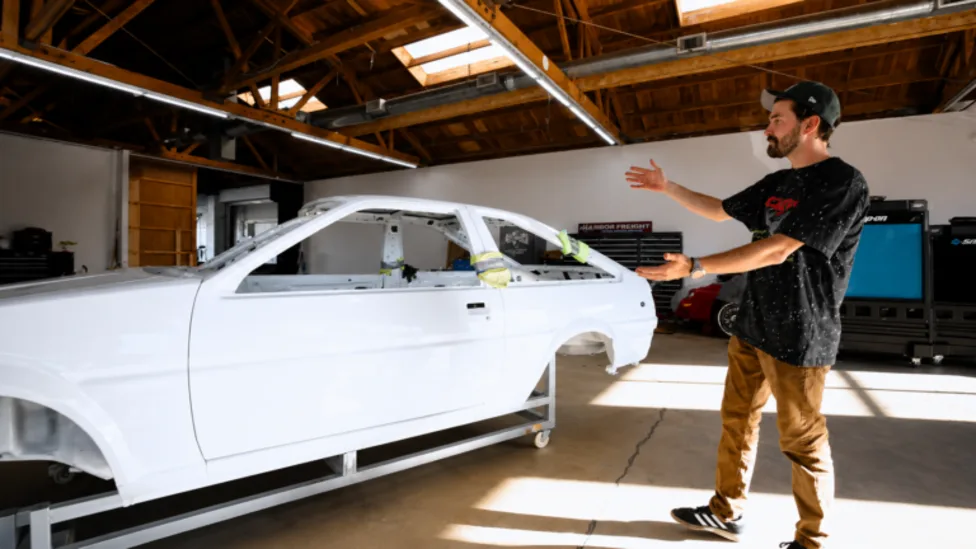
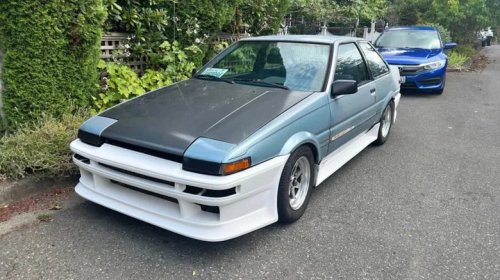
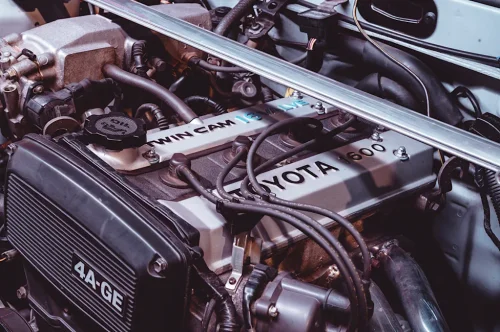
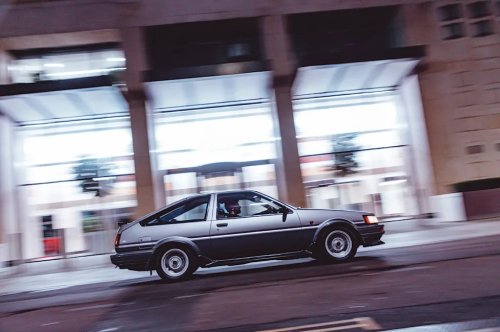
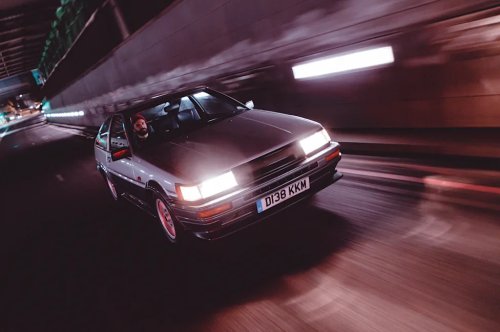
Someone Actually Built a Running Car From a Chinese AE86 Replica Shell — Here’s What Went WrongClean AE86s have become genuinely difficult to find. Made famous in no small part by the Japanese show Initial D, the rear-drive two-door has since become a fixture of drift culture, and finding a decent example in the US today is a serious exercise in patience and money.Prices on anything presentable have crept well past what most enthusiasts would consider sane – the kind of numbers that turn a fun project into a financial commitment. So when a Chinese manufacturer started listing brand-new AE86 body shells on Alibaba, the car world paid attention.The shells are produced by JiangSu Aodun Industries and listed on Alibaba. The company has no official connection to Toyota. Per Japanese Nostalgic Car, JiangSu Aodun supplies panels to FAW-GM, China's General Motors joint venture, and already stamps body panels for Chinese-market Audis, Volkswagens, Toyotas, and Mazdas.AdvertisementAdvertisementThat OEM pedigree was enough to get people genuinely curious.The minimum order is five units, priced at $9,500 apiece, with shipping negotiated separately. YouTube channel Big Time found a way around that barrier when the guys at Battle Garage – who had acquired the shell through a SEMA connection – offered to sell it along with a $4,000 donor Japanese AE86 to strip for parts.The plan was straightforward enough: transfer the engine, transmission, suspension, steering, wiring, fuel tank, and interior from the donor into the Chinese shell, then drive it. Science, essentially.The shell's quality isn't super great, though it's possible the quality of later shells has improved, as we're a year on from when the shells first became available.AdvertisementAdvertisementBig Time's build confirmed what plenty of skeptics already suspected.The Fitment Problems Were EverywhereFrom the first hour of the build, holes were missing, misaligned, or threaded incorrectly. Suspension mounting points existed in roughly the right locations but required enlarging before bolts would pass through. Thread pitch on several fasteners didn't match Toyota's hardware – a mix of coarse and fine threads where everything should have been consistent. The dash bar had to be forced into place with a pry bar because the chassis was running slightly narrow. Weld quality in several areas was incomplete, with cracking visible around the strut towers. One A-pillar was sitting noticeably lower than the other.The fuel tank mounts were missing entirely, which the crew solved with ratchet straps.Misalignment appeared throughout as metal layers didn't line up cleanly, and differing construction standards meant hardware wasn't matching Toyota's spec.AdvertisementAdvertisementThe window crank mechanisms in the doors couldn't be installed without significant fabrication because most of the required holes simply weren't there. Door gaps needed shimming. The hatch wouldn't close properly. And the build's first subframe fitment attempt required the holes to be opened up considerably before anything would bolt home.None of this stopped the car from eventually driving. With everything installed and the 4A-GE running, Big Time got the replica moving under its own power. The engine felt strong, the chassis soaked up bumps without drama, and the experience was, by their own account, genuinely fun. But the path to that outcome was longer and more tool-intensive than a $10,000 shell implies it should be.Who This Actually Makes Sense ForThe channel's honest assessment at the end of the drive was: with import fees factored in, the real-world cost lands somewhere around $13,000–$14,000 for the shell alone, before a single donor part goes in. At that number, the value proposition gets a little complicated.Battle Garage's verdict was essentially that if you're planning to build an all-out track-only car, it might not be a bad option and would probably end up cheaper than getting an actual AE86 up to that spec – but for everyone else, just buy a real Corolla.AdvertisementAdvertisementThe shell was likely conceived with the Chinese market in mind, where the AE86 was never sold by Toyota but enjoys a strong following thanks to Initial D, and where enthusiasts have no domestic supply of original cars to draw from.For that market, a brand-new steel unibody makes a certain kind of sense regardless of fitment shortcomings. For an American builder already living down the street from a running AE86, the math is harder to justify.The car drove. That part's worth acknowledging – getting any shell from a shipping container to a functioning vehicle is a real achievement, and Big Time pulled it off without major fabrication. But the amount of problem-solving required along the way tells you what this shell actually is: a promising raw material that demands significant experience to use well, not a bolt-together solution for someone who wants a fresh AE86 without the rust.That's probably what these shells are best for: turning into track cars – specifically ones where nobody is counting fastener thread pitch or measuring A-pillar height. If that's the build, the Chinese replica might be the only available path. If it isn't, the donor car they bought for $4,000 is looking pretty good right about now.