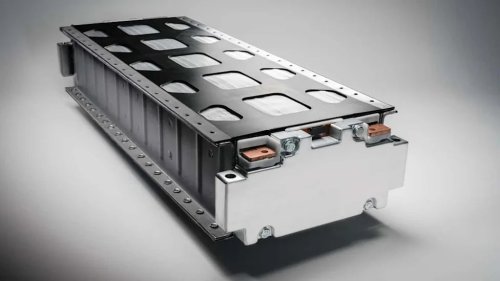
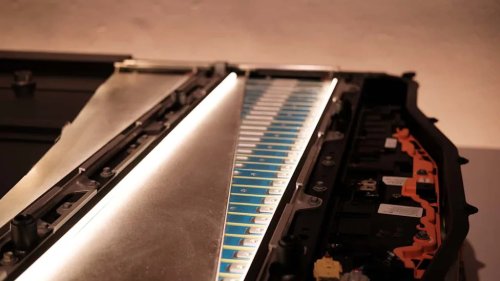
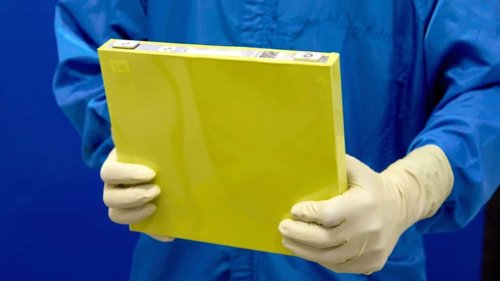
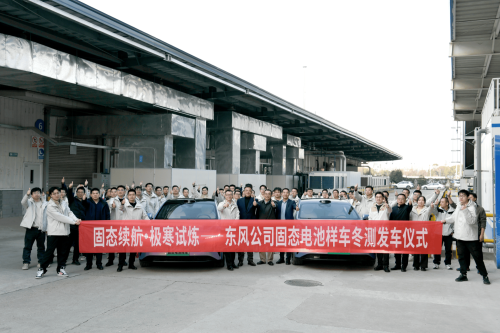
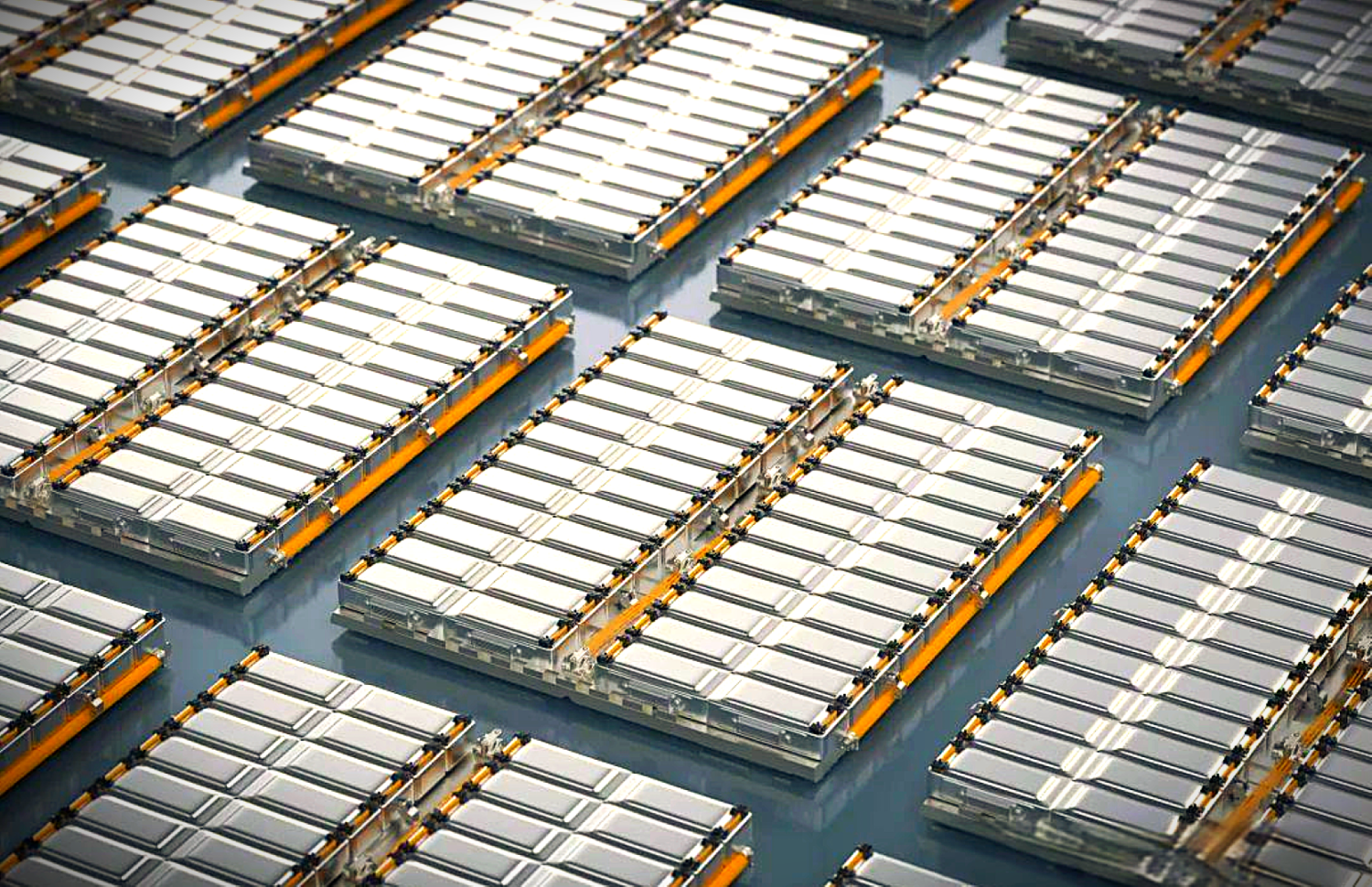
Beijing validates solid-state battery durability as EV challenges remain. Credit: Baidu Understand China EV’s Market Real-time notifications when critical EV data is released All important data in one place 2,000,000+ data points Become a member China has validated a solid-state battery system after a year of underground operation within a Beijing Energy Group heating network, where it completed a winter cycle at temperatures up to 85°C and humidity levels of 95%. The milestone demonstrates progress in real-world solid-state battery deployment, but it raises a bigger question for the EV industry: why are solid-state batteries still not powering mass-market cars? The project, titled “Research & Development and Demonstration Verification of Solid-State Battery Technology in Extreme Environments,” passed the Beijing Municipal Science and Technology Commission’s comprehensive performance evaluation on July 15, 2026. The system operated along a 1.1-kilometre section of the Shijingshan West Chang’an Avenue extension heating pipeline network. The result provides a verified field operation case for solid-state battery technology under extreme industrial conditions. However, the deployment also highlights the gap between proving battery stability in stationary environments and meeting the much broader requirements of electric vehicles. From research project to field operation The demonstration was carried out under Beijing’s carbon neutrality technology program, with Beijing Energy Group serving as the deploying organisation. Jingneng Technology and related energy storage partners participated in the engineering work. Unlike laboratory-only testing, the battery system operated inside an active heating infrastructure network throughout an entire winter season. According to Beijing Energy Group, it maintained stable operation under continuous temperatures ranging from 40°C to 85°C and humidity levels between 90% and 95%. The project focused on environmental durability in a demanding industrial setting. However, the company’s disclosure does not provide details on battery chemistry, energy capacity, degradation data, or cycle-life performance. The company behind the battery system is Pure Lithium New Energy, a Beijing-based solid-state battery developer located in the Yizhuang Economic-Technological Development Zone. The company introduced its first-generation solid-state battery system in 2025, targeting e-bike battery-swapping networks as its initial application. According to CEO Yang Fan, its development focused on overcoming three major barriers for solid-state batteries: production costs, manufacturing scalability, and commercial application. The Beijing underground deployment shows the technology moving from early trials toward more demanding industrial environments. Safety gains, different engineering targets The deployed solid-state battery system achieved an IP68 dust- and waterproof rating and passed state-level safety certifications for non-combustion and non-explosion performance under simulated conditions. For stationary energy storage, these characteristics address key concerns around operating batteries near industrial infrastructure, where heat and moisture exposure can affect long-term stability. Passenger EV batteries face a different engineering challenge. Automakers must balance safety with energy density, vehicle weight, charging speed, manufacturing cost, and durability under repeated driving conditions. The Beijing project, therefore, confirms performance in a specific application environment but does not directly prove readiness for automotive mass production. Solid-state enters a tougher commercial phase The validation comes as China’s solid-state battery industry moves toward stricter technical evaluation and early industrial deployment. China’s new solid-state battery standards took effect in July 2026, creating clearer definitions and requirements for the technology as companies move toward commercialisation. At the same time, major battery manufacturers remain cautious about mass-market adoption. CATL Chairman Robin Zeng has said solid-state batteries still face significant manufacturing challenges and are years away from widespread commercial use in vehicles. The Beijing deployment demonstrates that all-solid-state batteries can operate reliably in harsh industrial environments. The next challenge is proving whether those advantages can be transferred into affordable, high-volume automotive products. For the solid-state battery industry, the question is no longer only whether the technology can survive extreme conditions, but whether manufacturers can scale it for everyday vehicles. Source: Beijing Energy, Beijing Daily



















 +58 others