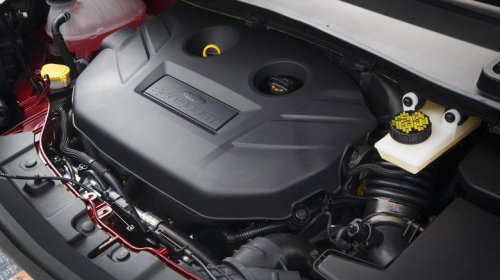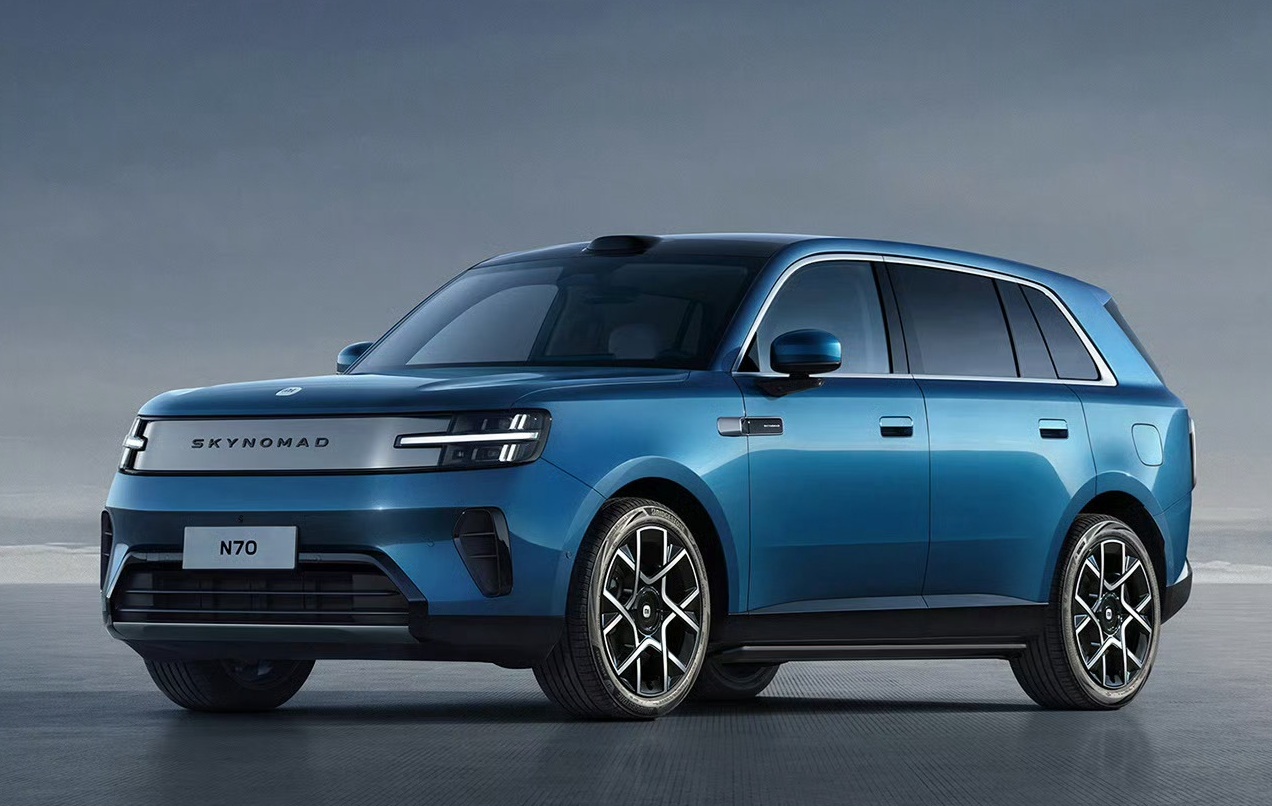
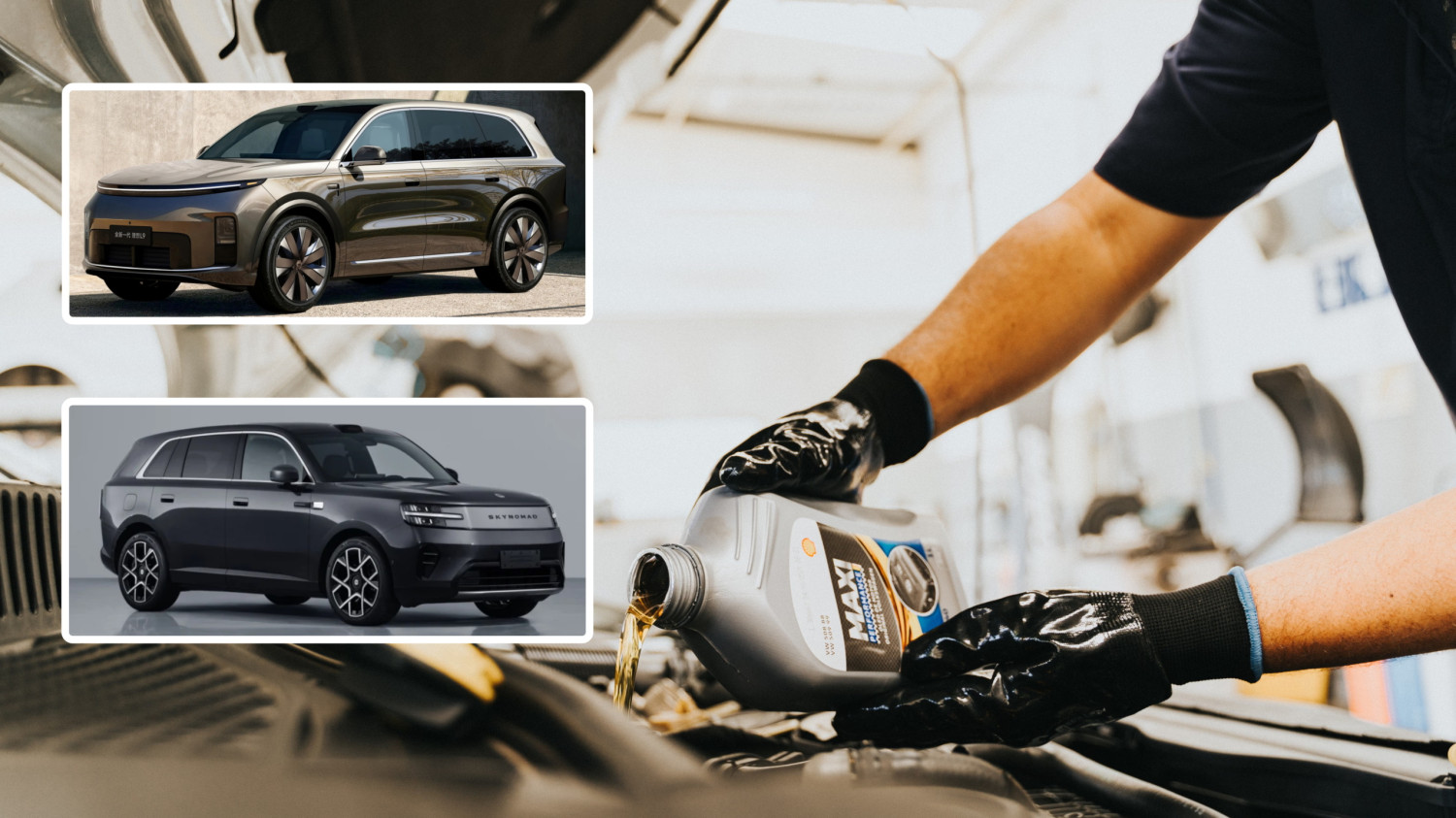



















Xiaomi's Skynomad N70 Max has a 505 km CLTC battery range and 1700 km combined range with full tank. Credit: Xiaomi Understand China EV’s Market Real-time notifications when critical EV data is released All important data in one place 2,000,000+ data points Become a member Walk into any Chinese NEV showroom in 2026, and you will most likely hear a strange new sales pitch: “This car has way over 400 km pure-electric range, but don’t worry, it also has a petrol engine.” The salesperson will continue his explanation that the motor is not connected to the wheels: it is a generator for a battery. And as EREVs are increasingly getting more battery capacity, the controversy is rising. Extended-range electric vehicles (EREVs) are nothing new in China. Chinese EV startup Li Auto popularised them in the early 2020s. The Beijing-based automaker was later joined by models from numerous other manufacturers, including BYD’s Yangwang U8, the Freelander 8, Aito M8, Deepal S07 EREV, Avatr 07 EREV, Voyah Free, and Xpeng Mona L03 EREV. Global automakers are also exploring the technology with models such as the BMW X5 EREV (reportedly not approved), Grand Wagoneer REEV, Mazda EZ-6 EREV, and Nissan NX8 EREV. EREVs, also known as serial PHEVs (plug-in hybrid electric vehicles), have an ICE (internal combustion engine) only to power the battery or assist the e-motor. To avoid confusion, when people talk about PHEVs, they usually mean parallel PHEVs, which are the standard plug-in hybrids you most likely know: the ICE is connected to the drivetrain and can power the wheels. While in 2025, there was a wave of EREVs in China with 60 kWh batteries and 400 km CLTC battery-only range, in 2026, EREVs started to surpass even BEVs in terms of battery size. The new Aito M9 EREV boasts a 75.4 kWh battery, good for 422 km CLTC range, while Leapmotor D19 EREV came with an 80.3 kWh battery, good for a 500 km CLTC range, and recently launched Xiaomi’s Skynomad N70 comes with a 76 kWh battery, good for 505 km CLTC. For the vast majority of EREV owners, the ICE will sit silently under the hood for months on end, burning no fuel. In China, the range-extender gas engine has quietly transformed from a piece of engineering into a piece of psychology: a “marketing decoration” designed to calm customers’ range anxiety, rather than move pistons. According to a survey quoted by Donews, over 90% of EREV owners treat them as all-electric vehicles, with 70% refuelling less than once every 6 months. And of course, this brings a challenge for ICE, which is not designed to be used that rarely. Moreover, those are data from last year, when the battery capacity of EREVs was much lower than it is today. With such a massive battery, analysts started to doubt the need for an ICE on board. Some reports call the range extender a little more than an expensive “psychological comfort” carried around in the trunk. Why then do automakers keep bolting on a “combustion generator” that most customers do not need? DoNews reports it as a “battery capacity arms race” that has become a marketing “numbers game.” In a market where all-electric cars still provoke deep-seated range anxiety, stoked by sometimes unreliable charging networks and harsh winter range losses in northern China, the petrol engine acts as a “safety blanket”. Even customers who rationally know they will never drive 1,000 km in a single day feel a profound unease at the thought of being stranded. An executive at Li Auto once admitted the unvarnished truth: “Customers want the peace of mind, even if it’s irrational.” So the engine stays, but its role has been reframed. Automakers do not sell it as a necessary propulsion unit. They sell it as a “silent guardian,” an insurance policy against the one long holiday trip a year. A TMTpost described how brands have deliberately repositioned the range extender as a “no-compromise” lifestyle feature, even while knowing the car will be charged like a pure EV 90% of the time. The engine has become, in effect, a decorative reassurance feature – present to close the sale, not to turn the crankshaft. But not everyone in the industry is quiet about the absurdity. A senior Volkswagen executive publicly tore into the concept, calling large-battery range extenders “redundant” and suggesting that if a car can drive 400 km on electricity alone, the engine is pointless – consumers should simply buy a BEV. Fari to add that he was talking about the European market. However, that sentiment was echoed even more sharply by Deepal Auto’s CEO Deng Chenghao, who argued in an energy news interview that a range extender with a 400–500 km electric range is meaningless: “At that point, the engine is useless.” Deng Chenghao’s verdict was that customers would be better served by a pure EV with a smaller battery and a lower price tag, rather than hauling around a dead engine. But you can’t fight market sentiment, even if it’s irrational: Volkswagen launched its first EREV in China in March this year, with rumours it can be imported to Europe in the future. The petrol engine has become the automobile equivalent of a life jacket hanging on the wall of a swimming pool that no one ever enters. But seeing it there, neat and ready, makes you feel safe enough to buy a ticket to the aquapark and enjoy all the other attractions. In China, EREVs played a clearly important role, and for some customers, even an essential one, in the transition from ICE vehicles to all-electric. But their role will end there, as in the future, with a charging infrastructure dense enough and technological challenges of having rarely used ICE on board, there is not much reason for them. However, in markets where EVs haven’t reached the breaking point yet, it can be an essential technology for the EV transition. READ ALSO Li Auto, Xiaomi stretch range extender oil change to 3yr, 30K km to narrow EV maintenance gap Most important news in your inbox. Recaps · scheduled All you need, in one email. Instant alerts · real-time Ping me when an article goes live. 0 of 27 topics selected Bundle into one email per day — instead of one email per article No spam · Unsubscribe with one click · Change settings anytime