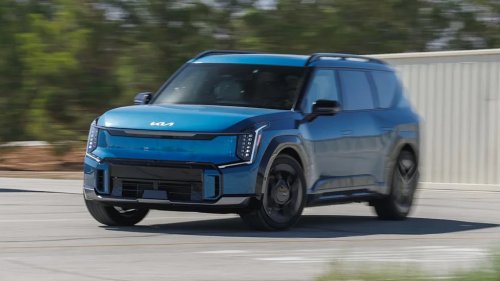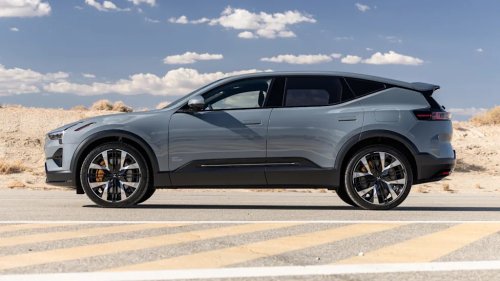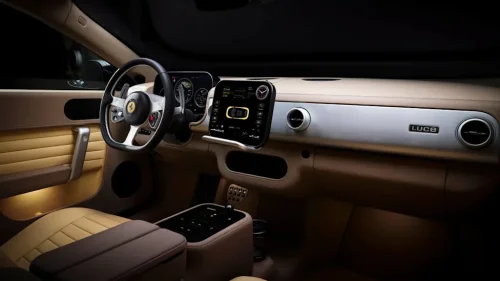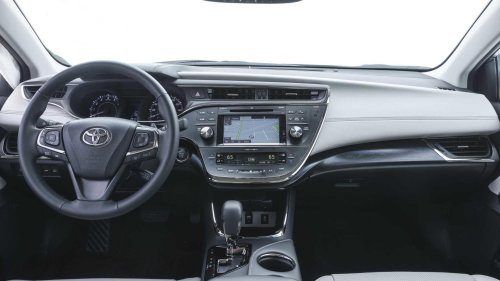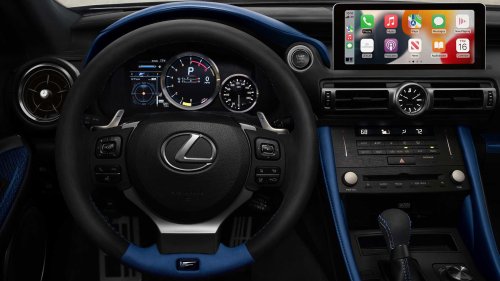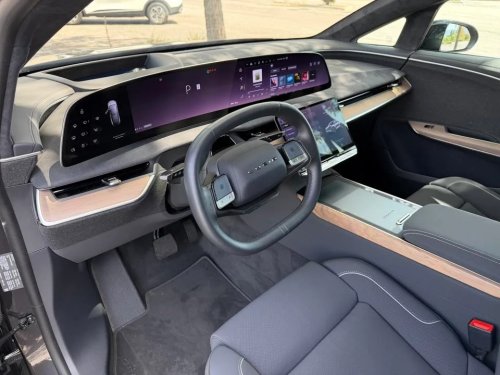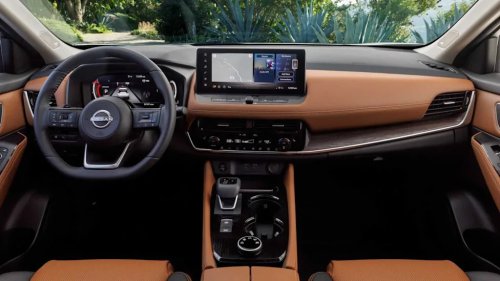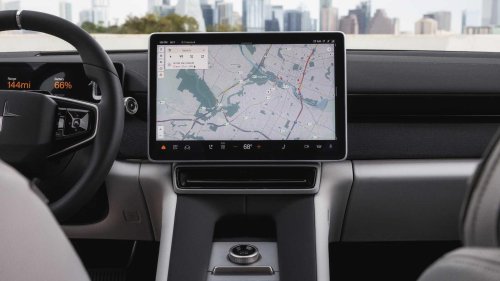
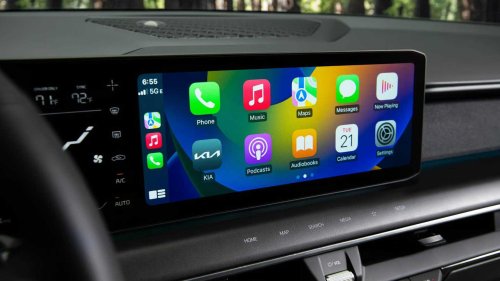
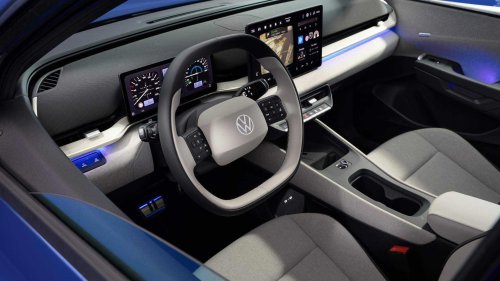
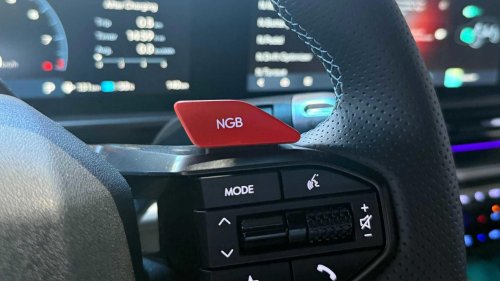
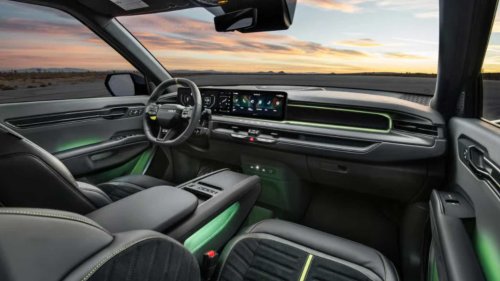
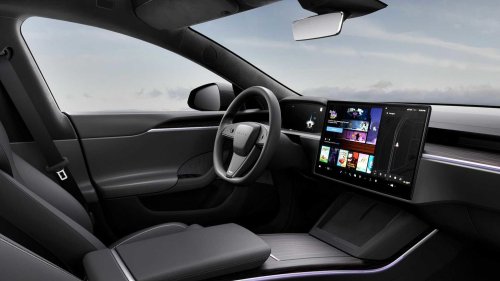



















Touchscreens have become an unavoidable part of our day-to-day lives. From our phones and other personal devices, to screens in restaurants and other public places, most of us will interact with a touchscreen multiple times a day. The ubiquitousness of touchscreens has also reached the automotive world, with most new vehicles using the technology in their infotainment display. However, in some cases touchscreens can do more harm than good.In vehicles where touchscreen tech has completely replaced physical controls – such as buttons, dials, and knobs – many basic functions (such as adjusting the volume on the sound system) can no longer be performed safely while on the move, as they require the driver to take their eyes off the road. Touchscreens can also be less reliable and more glitchy than their physical counterparts.This has resulted in growing backlash from consumers about car tech that is primarily touchscreen-focused, as well as changes in guidelines for bodies such as Euro NCAP (European New Car Assessment Program). Euro NCAP is an automotive safety assessment body that focuses on European vehicles, performing similar functions to the Insurance Institute for Highway Safety (IIHS) or the National Highway Traffic Safety Administration (NHTSA). Its rating system for new vehicles has been updated a few times since its introduction in 2009, but this year it’s receiving its biggest overhaul ever.One of the core areas of the 2026 Euro NCAP protocols is “Safe Driving”: under this header, there are several assessment metrics that evaluate how much a vehicle promotes safe driving practices. One aspect of the Safe Driving protocol assesses the “placement, clarity, and ease of use of essential controls — including the availability of physical buttons for commonly used functions, which consumer feedback suggests can reduce distraction”.Most automakers are moving away from a touchscreen-only approach, instead seeking a balance between physical controls and touchscreens to deliver the smoothest and safest driving experience possible. Here are some of the factors that influenced this phenomenon. What Are The Disadvantages Of Touchscreen-Only Cabins For Drivers? Polestar Touchscreens might, on the surface, seem more simple and intuitive than physical controls. Their visual appearance is less cluttered, giving the cabin a more minimalist look. However, in terms of function, they frequently have the complete opposite effect, adding unnecessary layers of complexity to actions that were previously intuitive (such as adjusting the music volume or turning the temperature up/down).One major disadvantage is the distraction factor, the key driver behind the move back to physical controls. By its very nature, the action of operating a touchscreen-based system requires the driver to move their eyes away from the road and towards the screen. This does not happen with a physical button or dial, which can be operated entirely from muscle memory without being distracted from the road ahead. Consumer feedback to Euro NCAP has suggested touchscreens are one of the culprits for distracted drivers; this feedback has informed the assessment body’s decision to change its guidelines on that front.Kia There’s also the issue of nested menus and increased difficulty in finding basic functions. In vehicles whose controls are entirely touchscreen-based, all elements (from infotainment apps to seat controls) are contained within a menu. This can create a large, convoluted structure of menus and sub-menus, far more difficult to access than a simple physical control.Due to their increased technological complexity, touchscreens are also more prone to malfunctioning than their physical counterparts. A glitching or lagging touchscreen can potentially be an even greater source of distraction while on the road.We can’t mention touchscreens in EVs without talking about haptic controls as well. These high-tech devices are, essentially, a halfway point between a physical button and a touchscreen. They provide little to no physical feedback, unlike a traditional button which can be operated even without looking directly at it. Like touchscreens themselves, haptic controls have also been the subject of negative feedback from consumers, and automakers have been moving away from them as a result. Real-Life Examples Of Automakers Making A U-Turn: VW And Hyundai Volkswagen Automakers need to be able to adapt quickly to changes in the industry in order to stay ahead of the curve and beat their competition. In this particular scenario, as the automotive world moves away from touchscreen-only interiors, some automakers who had eagerly embraced them are now making a sharp move in the opposite direction. Physical controls that were previously considered antiquated are being re-introduced, and their importance within the context of a vehicle’s cabin is being newly appreciated.Volkswagen, for example, has made one such U-Turn. Its most recent generation of vehicles, including the ID series of electric vehicles and the eighth-gen Golf GTI, was almost exclusively equipped with touch-based controls, including screens and haptic “buttons”.However, last year the company announced its intention to move away from this design with its upcoming models, going back to a mix of physical controls and touchscreens. This new approach was clearly visible in the interior of the recently revealed ID. Polo, the little electric hatchback that’s sadly not available in the US. The all-electric Polo’s cabin featured a retro-inspired look and an abundance of physical buttons alongside two screens. There are also several buttons on the steering wheel, and the haptic controls have disappeared.Seyth Miersma/CarBuzz/Valnet Hyundai has also made a sharp U-turn when it comes to touchscreen-forward design. Last year Simon Loasby, the company’s vice president of design, revealed to Autocar that the company’s approach to design kept technology from overwhelming the interior, creating a calm, less distracting atmosphere."It is all about the philosophy of calmness, [...] The technology is there, but it is not shouting at us, but the architecture is keeping the driving experience safe. [...] So our philosophy is to keep the eyes on the road and keep your hands on the wheel, and then you could very quickly look at what your frequently used interactions are [...] There aren’t many... but you want them to stay as physical buttons because those are things I want to adjust without looking away." – Simon Loasby, Hyundai vice president of designThis is especially true for the automaker’s performance-oriented N vehicles, where access to physical controls is crucial during high-speed driving, and doubly so for drivers wearing gloves who would struggle to access touchscreen functions. Different Approaches To Cabin Design: How Various Automakers Are Tackling The Issue Kia Every automaker is responding in its own way to the growing backlash against cabins dominated by touchscreens. We have already looked at how Volkswagen and Hyundai are reversing their previous design decisions; here is how the decreasing popularity of touchscreens is influencing a few other automakers’ path forward.Kia: The Korean automaker is known for building high-tech vehicles, having moved up in the world over the past three decades. Formerly known for producing basic, budget-friendly cars, today Kia has a lineup of vehicles sophisticated enough to compete with high-end automakers.The brand is keen to find a balance between the use of touchscreen-based tech and the use of physical controls. In the EV6, for example, we find an infotainment touchscreen alongside physical controls that can be reconfigured for various purposes according to the user’s preference. The dual knobs and touch-sensitive panel below the screen can be used for the sound system or the climate control system, depending on configuration.TeslaTesla:Tesla has taken a radically different approach to most automakers, firmly sticking to its touchscreen-centric interior design. The brand’s entire identity is hinged around the creation of futuristic vehicles with an ultra-minimalist look; the use of physical controls is more associated with legacy automakers, a part of the automotive world Tesla is striving to move away from.Alpine: Even as the French brand moves towards electrification and modernizes its lineup, it is not abandoning physical controls. Instead, it is prioritizing them in a quest to make its vehicles’ cabins more intuitive and user-friendly. The idea is that controls should be easy and quick to operate even during an engaging, performance-focused driving experience. We expect this line of thinking to be used in the upcoming new version of the A110, which is due to be introduced later this year.Sources: Volkswagen, Hyundai, Kia, Tesla, Alpine, Autocar